Competitive advantage in additive manufacturing increasingly hinges on access to scalable capacity, predictable quality, and reliable lead times. At the center of this shift is the 3d print hub, a coordinated network that connects your CAD to the right machine, material, and operator at the right moment. For teams that have mastered the basics, hubs offer more than convenience. They provide routing intelligence, standardized quality controls, and transparent pricing that can outperform a single in‑house fleet or a patchwork of vendors.
In this analysis, you will see how a 3d print hub aggregates supply, normalizes workflows, and optimizes throughput. We will examine quoting and job routing logic, material and process coverage, certifications, traceability, and typical service level agreements. You will learn the cost drivers that matter, such as geometry, tolerance, batch size, and post processing, and how they influence lead time and price. We will outline integration paths, from API based ordering to PLM connectors, and address risk management, including IP protection and supplier redundancy. Finally, you will get a practical framework for deciding when a hub beats in‑house capacity, how to evaluate competing platforms, and which metrics predict real world performance.
Current Landscape of 3D Print Hubs
What is a 3D print hub
3D print hubs are centralized access points for additive manufacturing, blending machines, materials, and expert operators. They emerged to democratize fabrication by offsetting the capital and skills required to run industrial equipment. The industry’s move from community exchanges to professionalized, on-demand networks is evident in the evolution of community networks into on-demand manufacturing. Today, universities, libraries, and civic innovation centers run hubs that deliver training, design support, and compliant workflows for regulated sectors.
Physical vs virtual access
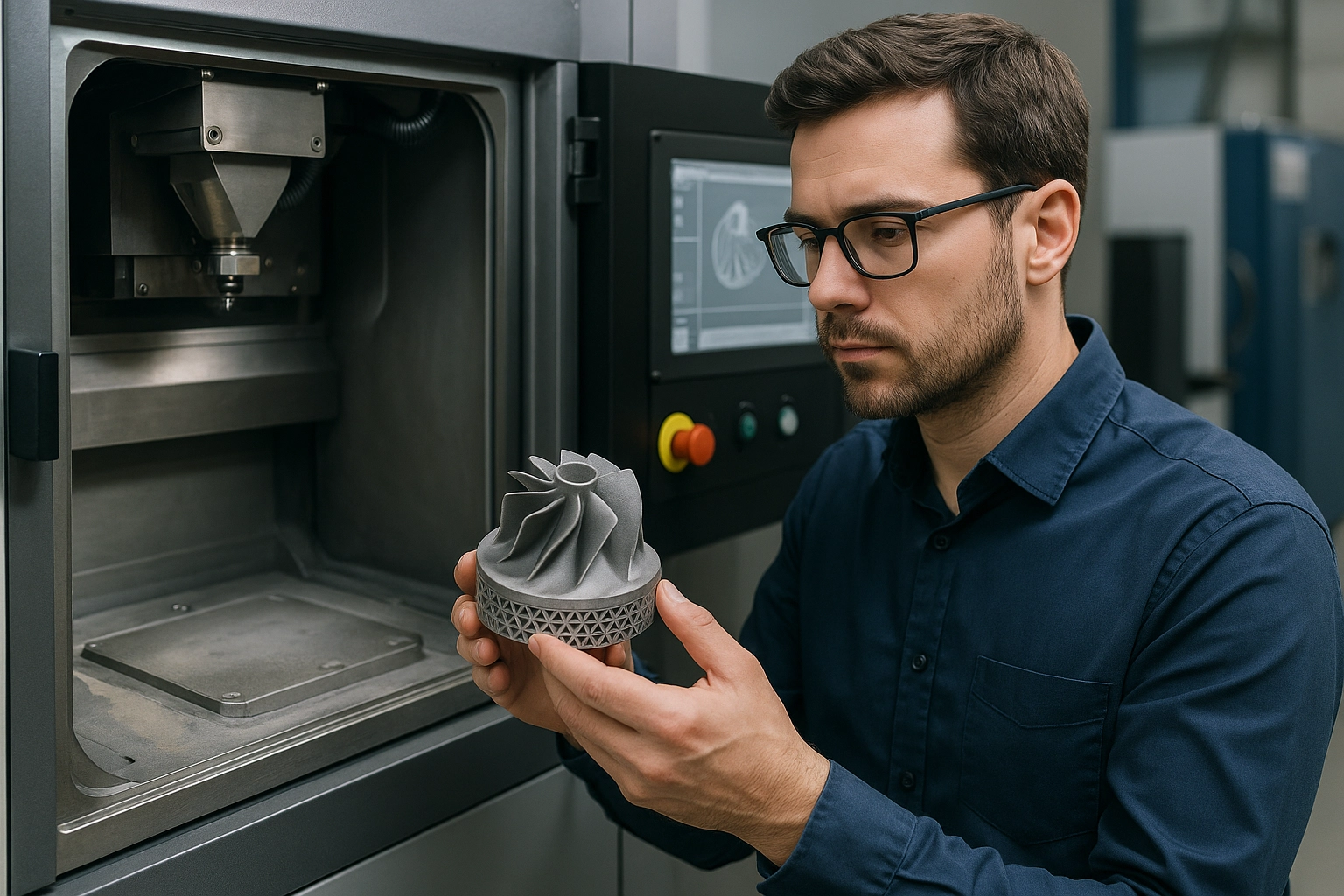
Innovation is the core utility. Hubs compress iteration through rapid prototyping, DfAM reviews, and quick-turn testing, then scale to bridge production. Collaboration improves when designers work alongside process engineers and materials specialists. Crucially, metal-capable hubs support bound-metal filament plus sintering, producing pure metal parts on accessible gear with kiln finishing. This broadens access for manufacturers, artists, and research teams that need true alloys without large-footprint systems.
Two archetypes dominate. Physical maker hubs provide hands-on access, safety infrastructure, and hybrid toolchains that pair printing with machining and finishing. Virtual platforms connect users to distributed capacity for instant quotes, DfAM checks, and certified production. A practical playbook is to prototype locally for fast feedback, then route validated designs to virtual networks for scale.
Adoption and market signals
Adoption spans core industries. Automotive represents about one quarter of industrial applications, aerospace reports broad uptake for lightweight, topology-optimized parts, and healthcare expands with patient-specific models, guides, and implants. The business backdrop is strong. According to 3D printing industry statistics compiled in 2025, the market was near 13.2 billion dollars in 2022, with projected CAGR around 20 percent through 2030, and North America exceeded 8.6 billion dollars in 2024. These signals validate the 3D print hub as a scalable strategy for turning digital designs into functional parts, setting up a deeper look at metal workflows in the next section.
Technological Advancements in Hub Facilities
AI-driven orchestration in hub operations
Modern 3d print hub facilities embed machine vision that makes printers self-correcting. Layer monitoring flags pores and warping in real time, then tunes speed, temperature, and cooling to stabilize the build. Research shows AI can explore parameter space and converge to higher fidelity parts faster, an approach highlighted in self-improving AI for 3D printing. In production, AI workflows have cut manual intervention by more than 40 percent and lifted throughput about 25 percent, results aligned with production-grade efficiency gains. For operators, instrument printers with cameras and thermal sensors, log failed prints to build a labeled dataset, and schedule predictive maintenance to prevent downtime.
New materials as the catalyst
Material portfolios now include biodegradable, composite, and metal filaments that expand capability without exotic machinery. Biocomposites like PLA reinforced with agricultural waste can be fully biodegradable while improving stiffness and heat resistance, as shown in biocomposite PLA with cocoa husk cellulose. Engineering composites with chopped carbon or glass fibers deliver higher specific strength for jigs, fixtures, and light-duty end-use parts. The Virtual Foundry extends this continuum with Filamet, a high metal-load filament in a polymer binder that prints on standard FFF systems, then sinters to yield pure metal. Hubs often begin with copper and bronze to simplify debinding, then scale to stainless steel, applying 12 to 20 percent linear shrink compensation and sintering profiles that target near full density.
Cost, lead time, and cross-industry reach
AI closed loops and advanced materials compress costs by trimming scrap, improving utilization, and matching part properties to the job. Combined print-sinter cells have taken metal part lead times from weeks to roughly 10 to 14 days in pilot lines, enabling bridge production without tooling. Healthcare hubs use these stacks for patient-specific guides and lab hardware; aerospace teams qualify high-temperature fixtures; automotive groups print lightweight assembly aids. To operationalize, segment parts by value and tolerance, reserve Filamet for metal-critical functions, and route the rest to biocomposites. Maintain sintering logs, shrink maps, and AI QC reports so every repeat job arrives predictably, on time, and within spec.
Unique Features of The Virtual Foundry’s Filamet™
Capabilities and applications that remove legacy barriers
Filamet™ is a high metal content feedstock that runs on standard FFF printers, then sinters to near full density metal. Independent coverage notes loadings over 88 percent metal by volume with parts reaching over 99 percent metal after sintering, which unlocks functional conductivity, magnetism, and machinability that polymer composites cannot match. The binder is a food safe thermoplastic that encapsulates powder, improving handling safety and enabling deployment in education labs and small shop environments. Material options are broad, including stainless steels, copper, bronze, and specialty alloys suited to heat transfer, wear, and aesthetic needs. For a 3d print hub, this means metal capability without retooling, paired with clear process controls like predictable linear shrink and tunable furnace profiles. Operators should standardize on a baseline alloy, document print parameters by nozzle size and flow ratio, and validate sinter curves with witness coupons to lock in repeatability. See overview and properties in Filamet on Metal AM and material options at The Virtual Foundry materials catalog.
Case studies and cross industry impact
Real programs illustrate the throughput gains. A metal flange adapter was designed, printed, and sintered in two days, compressing what would have been a multi week machining queue into a single sprint. University teams report that an open architecture approach, printer agnostic and furnace agnostic, accelerates method development and knowledge sharing across labs. Large copper heat exchanger elements have been produced and validated for thermal performance, leveraging copper’s intrinsic conductivity for efficient passive cooling. These outcomes align with broader sector dynamics, where roughly 70 percent of additive users prioritize prototyping and pilot production, and metals represent about 30 percent of material consumption, reinforcing Filamet’s fit for agile manufacturing and custom art or jewelry pieces.
Affordability, accessibility, and a community that scales
Cost is the decisive differentiator. By transforming existing FFF equipment into metal printers and using widely available furnaces, Filamet™ avoids six figure capital expense, reducing adoption risk for startups, schools, and contract service bureaus. Practical guidance covers print density targets, green strength handling, and shrink compensation, allowing teams to hit dimensional accuracy faster. The Virtual Foundry’s open ecosystem encourages shared process recipes, fixture designs, and sintering schedules, multiplying learning across the network. For implementation planning and cost comparisons, reference the company’s guide, Affordable 3D Metal Printing.
Implications for Designers and Manufacturers
Redefining processes and iteration
Within a 3d print hub, production shifts from subtractive to additive, enabling part consolidation plus lattices and conformal channels that cut weight 20 to 60 percent. With The Virtual Foundry’s Filamet, teams print pure metal on standard FFF systems, then sinter to high density, a compatible, open approach that accelerates adoption in hubs. A conformal cooled tool insert often trims injection mold cycle time 15 to 25 percent, improving throughput without new presses. Surveys show about 70 percent of additive users prioritize prototyping, and with hub access, iterations land in hours instead of weeks.
Throughput, cost, and lead-time impact
Eliminating hard tooling shifts breakeven to lot sizes in the dozens, and digital inventories replace shelves of spares. For small metal parts, printing runs in hours, sintering 12 to 36 hours, and local hubs cut logistics so lead times shrink from 6 to 12 weeks to a few days. Manufacturers often see 20 to 30 percent unit cost reductions when tooling and scrap are removed, along with faster engineering changes. Action: pick three parts for consolidation and pilot a print-sinter workflow to quantify time and cost deltas within one quarter.
Skills development and community collaboration
Adoption hinges on skills, so hubs and The Virtual Foundry’s community emphasize CAD for additive, Filamet tuning, and sintering metallurgy. A focused 24 hour track gets teams competent in support strategy, shrinkage compensation, and post processing that meets density and surface targets. Quality engineers can run design of experiments on sintering profiles, then lock parameters with standard work and statistical control. Next step: run a cross functional sprint to validate one Filamet metal application, then publish the playbook to scale.
Case Studies: Success Stories from 3D Print Hubs
Real-world applications and outcomes
When a 3d print hub is embedded in a clinical workflow, outcomes compound quickly. At a major health system, engineers created a 3D printed clip to secure an external ventricular drain, improving surgical precision and reducing contamination risk. The program reports fewer secondary procedures and avoided equipment replacements, a direct cost and safety win for patients and providers, as documented in Henry Ford Health 3D printing success stories. In aerospace, a consolidated fuel nozzle design, produced additively at scale, cut part count from 20 to 1, reduced weight by roughly 25 percent, and achieved production volumes exceeding 30,000 units per year, demonstrating serial production viability and lifecycle durability, see the fuel nozzle case overview. These outcomes illustrate the arc a hub enables, from rapid fixtures and clinical tools to flight-qualified hardware, all under shared expertise and controlled workflows.
Cross-sector inspiration for new users
Education hubs show how early exposure accelerates capability building. Classroom programs that task students with replicating local architecture have proven to boost engagement and spatial reasoning, while teaching design-for-additive fundamentals, as highlighted in Polar3D education success stories. Industry-wide, about 70 percent of users still prioritize prototyping, but hubs shorten the bridge to functional parts by consolidating training, machines, and materials. With the market growing at roughly 21 percent CAGR and a 2020 baseline near 13.7 billion dollars, access models that remove capital barriers are pulling new entrants into advanced applications. The net effect is a larger talent pool that can move from PLA mockups to metal-ready designs within a single facility.
Community learning, testimonials, and actionable practices
Experienced hub users consistently report faster iteration and higher first-pass yield when teams standardize and share process knowledge. Practical steps include maintaining versioned slicer profiles, logging material lot numbers, and publishing sintering recipes and shrinkage compensation factors for high metal content filaments. Peer reviews of failed builds, including layer images and stress points, become living documentation that prevents repeated mistakes. Short, focused office hours with hub technicians, 20 to 30 minutes per project stage, often replace days of trial and error. Collecting simple outcome metrics, time to first usable part, number of iterations, and cost per iteration, lets teams benchmark and continuously improve.
How 3D print hubs drive project success
Hubs concentrate high-end equipment, diverse materials, and expert operators, which reduces risk in early-stage design decisions. Although plastics still account for roughly half of usage and metals near 30 percent, the accessibility of FFF-compatible metal workflows lets teams prototype, then transition to pure metal through sintering without changing venues. For project owners, the playbook is clear, start with polymer to validate geometry, move to metal for performance, and apply design of experiments to dial in density and shrinkage. This staged path compresses schedules while preserving traceability and quality gates. These cases show the practical levers a 3d print hub pulls, from risk reduction to speed, setting the stage for deeper implementation strategies.
Conclusion and Future Predictions
3D print hubs have matured into collaborative engines that pool high-end equipment, materials, and expertise to accelerate product cycles and reduce risk. The global additive market surpassed 13 billion dollars in 2020 and has continued to expand at roughly a 20 percent annual rate, powered by on-demand prototyping and localized production. Around 70 percent of users still focus on prototyping, yet production applications are rising as metals approach about one third of material volume and process control improves. Within this context, a material-first, open-platform approach has proven resilient, as seen in the adoption of Filamet™, which brings pure metal capability to standard FFF systems without locking users into proprietary ecosystems. The result is a 3d print hub model that scales across universities, public libraries, and industrial labs while keeping costs predictable and training transferable.
The next wave will blend AI with new materials to push reliability and performance. Expect computer vision to detect flaws in layer images, automated scheduling across print farms, and predictive maintenance that lifts machine uptime by double digits. On the materials side, accessible metal, glass, and ceramic feedstocks, combined with sintering-aware design rules, will broaden use in aerospace, medical devices, and energy. Act now by piloting one production-intent part, adopting a DfAM checklist that includes sintering shrink compensation, and tapping community-shared profiles for faster tuning. As these practices diffuse through every 3d print hub, localized manufacturing, shorter supply chains, and circular material flows will compound into a powerful driver of global innovation.