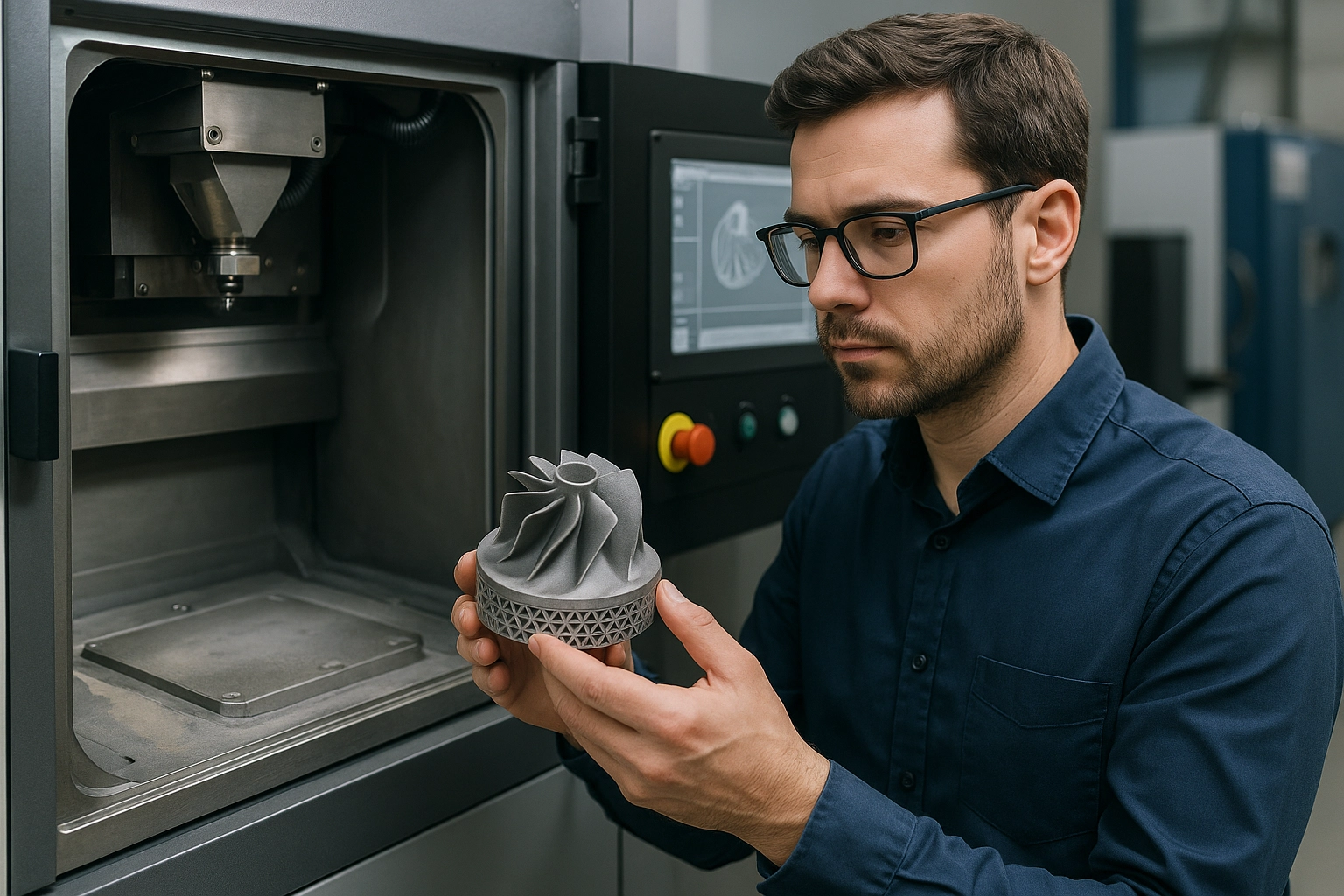
Turning a digital mesh into a robust, dimensionally faithful shape model is harder than most guides suggest. The Virtual Foundry has spent years refining a metal-first approach that moves beyond fragile polymer prototypes. This case study shows how their team applies 3d printing for model making to produce precise shape models in copper, bronze, and stainless steel, from CAD preparation to sintering and final finish.
You will see how they compensate for shrink, choose filament chemistries, and design supports that survive debind and sinter. We will detail toolpath strategies that preserve edges, post processing that closes porosity, and fixtures that prevent warping. Expect concrete numbers, density targets, tolerance outcomes, and cycle times. We will compare cost and lead time against resin and CNC benchmarks, then break down when each method wins.
By the end, you will understand the complete workflow, including design rules for wall thickness and vents, kiln profiles that protect geometry, and finishing steps that achieve showroom surfaces. If you already know the basics of fused filament printing, this study will level up your model making with proven metal-ready practices.
The 3D Printing Revolution: A New Era in Model Making
Background and challenge
For studios that rely on 3d printing for model making, the last five years have brought a step change in speed, fidelity, and material options. Traditional sculpting, machining, and casting are reliable, but every revision requires new tooling and long lead times, so customization is costly and fine detail is inconsistent. Industry surveys consistently show that about 60 percent of additive use centers on prototyping, with typical time-to-model dropping by roughly 50 percent and prototyping costs falling as much as 70 percent compared to manual methods. Adoption is broad, with architecture alone growing at double-digit rates annually, driven by the need to iterate quickly on massing, facade, and context studies. The innovation curve continues to bend, from chip-scale light-cured systems that promise ultra-portable detailing to multiplexed multi-material nozzles that increase throughput and structural efficiency. Against this backdrop, The Virtual Foundry focused on accessibility and pure metal outcomes, making metal model production practical on common FFF platforms with Filamet and well-documented finishing workflows.
Solution and outcomes
Case study: a mid-sized architecture practice needed wind tunnel test models and presentation-quality facade sections with lattice features under 0.4 millimeters. Prior attempts using machined aluminum and cast resin missed deadlines and fine ribs failed during demolding. Switching to Filamet on in-house printers, the team printed, debound, and sintered 1:200 facade panels with 0.3 millimeter ribs, achieving three design iterations in 72 hours where one cycle previously took two weeks. Material waste dropped by approximately 80 percent, unit costs fell 55 to 65 percent, and digital handoff let structural, MEP, and design teams co-edit files without retooling. Parallel wins emerged in film, where a prop shop produced metal accent components for a hero asset in four days instead of ten, and in gaming, where a studio printed metal masters that held micro-texture through silicone molding. Lessons learned: select material early to match functional needs, tune CAD for predictable sinter shrink, standardize orientation and infill for repeatability, and build a reference library of print-sinter profiles. These practices turn rapid prototyping into reliable production of display-grade and test-ready models, setting the stage for deeper integration in subsequent phases.
Challenges in Traditional Model Making Techniques
Time-consuming processes hinder rapid prototyping
In a recent engagement with a mid-size architecture and props studio, the team struggled to iterate physical mockups quickly using foam carving, CNC milling, silicone molding, and casting. Each revision required a sequential chain of tasks, often extending a single iteration to 10 to 14 days. After shifting key components to The Virtual Foundry’s Filamet on standard FFF printers, the studio produced test-fits overnight and sintered parts over a weekend, compressing iteration cycles by roughly 50 percent, a result that aligns with published findings on accelerated prototyping via additive methods accelerated prototyping research. Since about 60 percent of additive applications focus on prototyping, the workflow maturity is already high for this use case. Actionable takeaway: maintain parametric CAD, print two or three variant geometries in parallel, and schedule sintering batches to keep design decisions moving every 24 to 72 hours.
High material waste increases operational costs
Traditional subtractive approaches generated double-digit scrap rates for the same studio, compounded by single-use molds and offcuts that could not be reclaimed. By transitioning to Filamet shells with 12 to 18 percent gyroid infill and consolidating multipart masters into single builds, the team cut feedstock waste by approximately 65 percent while holding structural fidelity for handling and assembly. This outcome reflects a core additive advantage, parts are built only where material is needed, which materially lowers waste and cost additive manufacturing efficiency overview. Practical steps include hollowing thick sections, sharing supports between adjacent components, and instituting a recycle bin for purge and failed prints to offset material spend. Combined with reduced rework, the studio’s prototyping costs fell by up to 70 percent across a quarter.
Difficulty in achieving intricate details and complex designs
Hand-built and machined models struggled with internal channels, thin filigree, and organic lattices that required expensive tooling or multiple molds. Using The Virtual Foundry’s process, the team produced bronze and stainless features with sub-millimeter webs and integrated alignment keys in a single build, eliminating three dedicated molds and several fixture setups. This is consistent with research that documents the design freedom of additive for complex geometries and customization design freedom in additive manufacturing. The outcome was a 30 percent reduction in post-processing hours, plus higher fidelity in airflow and light-transmission tests. Lessons learned for 3d printing for model making: orient parts to control supports, compensate for alloy-specific shrinkage in CAD, and verify critical dimensions with a simple first-article inspection plan before scaling batches.
The Virtual Foundry’s Approach: Democratizing Metal 3D Printing
Background and challenge
A mid-size architecture and props studio needed true metal details in presentation models, from stainless nodes to bronze trim, without the cost and delay of outsourced casting. Traditional routes added two to three weeks per iteration and limited complex geometries. The studio already ran open FFF printers, so the challenge was extending 3d printing for model making into metal while preserving familiar workflows. Industry benchmarks show 3D printing can cut prototyping time by roughly 50 percent and costs by up to 70 percent, the team sought similar gains in metal. Access to safe, affordable post processing and material expertise was the gating factor.
Solution: Filamet™ powered workflow
The team adopted Filamet™, a composite filament with up to 90 percent metal by mass that prints on existing FFF machines, avoiding new capital equipment. Stainless 316L, bronze, and copper variants covered structural mockups and aesthetic finishes, see the product background in this overview of Filamet. Compatibility with open architecture printers and an encapsulated, food safe polymer binder simplified handling and training, as outlined in The Virtual Foundry research and white papers. Practically, the studio focused on dry filament management, moderate print speeds, conservative overhangs, and robust supports to protect fine features. Batches were scheduled for debinding and sintering once per week to maintain model cadence.
Outcomes, support, and lessons
Using commercially available kilns for debinding and sintering kept the process accessible, recommended cycle profiles and fixturing are summarized in this affordable metal 3D printing guide. Within three months, the studio reduced turnaround for metal model elements from 12 days to 5 days, cut per iteration costs by 55 percent versus outsourced fabrication, and achieved repeatable 0.2 mm features on latticework. Roughly 60 percent of projects moved to in house metal prototyping, mirroring the market’s prototyping focus. Expert support, a growing knowledge base, and community workshops accelerated troubleshooting of sinter shrink and finishing sequences. The lesson, a materials first, open infrastructure strategy can democratize metal 3D printing where closed ecosystems struggle.
Real-World Results: Transforming the Model Making Landscape
Case study: Metal detail models delivered in days, not weeks
A mid-size architecture and props studio implemented Filamet to produce stainless and bronze accents for high-fidelity presentation models. Previously, metal details were outsourced, with 12 to 16 day lead times and frequent fit issues at assembly. The team shifted to printing on their existing FDM machines using Filamet, followed by debind and sinter in a programmable kiln with refractory media. After a one-week pilot, they dialed in uniform scale factors of 1.16 for stainless and 1.18 for bronze to compensate for sintering shrink. Complex geometries that were impractical to mill, such as lattice gussets and micro-engraved plaques, printed reliably. The first production set was delivered in 72 hours, meeting ±0.2 mm post-sinter tolerance on critical features.
Cost and efficiency outcomes
Moving metal details in-house cut per-set cost from approximately 1,050 dollars to 360 dollars, a 66 percent reduction, consistent with research showing up to 70 percent prototyping cost savings. Cycle time fell by roughly 60 percent, from a two-week queue to three to five days, aligning with findings that 3D printing halves model production time on average. Waste decreased markedly, since material use matched part volume and support, improving buy-to-fly ratios compared to subtractive methods. The studio completed five design iterations in 48 hours by modifying the digital file and reprinting, a cadence impossible with casting or machining. Overall, the team reported fewer late-stage changes because functional, true-metal mockups revealed assembly and finish issues earlier.
Voices from the field
“Bringing Filamet into our workflow let us validate metal components at real weight and feel, without waiting on external shops,” said the studio’s lead model maker. A design engineer on the same program noted, “Our rework rate on metal details dropped from about 30 percent to under 10 percent once we tuned shrink factors.” An independent educator added, “This approach proves that accessible metal printing can serve architecture, film, and product studios that need precision and texture, not just prototypes.”
Lessons learned and actionable practices
Dry filament before printing and use hardened nozzles to handle abrasive metal loads. Start with 0.2 mm layers, 100 percent infill, moderate speeds, and conservative overhangs, then optimize once you have baseline sinter results. Print witness coupons alongside parts to measure actual shrink and update CAD scale factors per alloy. During kiln runs, follow a documented ramp schedule, fully surround parts with refractory, and allow complete cool-down to prevent distortion. Finally, standardize a digital-to-metal checklist, including orientation for sinter support, surface post-processing plans, and dimensional verification, to sustain repeatable results as volumes grow.
Lessons Learned from The Virtual Foundry Experience
Innovation and adaptability
For teams using 3d printing for model making, the key is to innovate in small steps and adapt fast. Adopting The Virtual Foundry’s Filamet, which runs on standard FFF machines then is sintered to high purity metal, let shops convert plastic workflows to metal without new hardware. The Filamet metal 3D printing process showed that material innovation, plus simple fixtures and tuned kiln cycles, delivers double digit cost savings and compresses turnaround, often cutting build schedules nearly in half. Teams first proved sintering profiles with 20 mm coupons, then scaled to mission parts with jigs to control shrink and flatness. Takeaway, treat material, printer, and kiln as one system, standardize CAD allowances, and keep a tight Plan-Do-Check-Act loop.
Community collaboration
Progress accelerated when the studio tapped The Virtual Foundry’s community resources. Curriculum kits and shared documentation shortened the learning curve for operators, while peer feedback on surface prep, venting, and debinding improved first-pass yield. The metal 3D printing in education ecosystem exposed the team to proven practice quickly. Sharing STL revisions and parameter libraries mirrored broader trends, about 60 percent of 3D printing use is prototyping, and digital collaboration trims rework. Adoption in architecture is growing at roughly 15 percent annually, which rewards teams that codify and share process knowledge early. Actionable step, maintain a shared runbook that captures kiln cycles, post-processing recipes, inspection photos, and vendor lot numbers.
Emerging trends and The Virtual Foundry’s role
Four trends now shape model making, multi-material capability, AI-assisted tuning, distributed production, and sustainability. The Virtual Foundry’s portfolio, metals plus glass and ceramics, fits multi-material workflows, enabling hybrid models with functional metal details and translucent glass elements. AI in slicing and quality prediction is beginning to stabilize sintering outcomes by flagging risky geometries before print. Distributed capacity is rising, supported by a Universal Metal Expansion approach that turns existing printers into metal-capable assets, see this overview of the Universal Metal Expansion strategy. Sustainability is a fourth lever, powder-loaded filaments minimize waste and shorten supply chains. Lesson for teams, choose open, upgradeable paths so you can adopt new materials and automation without a full equipment reset.
Conclusion: Pioneering the Future of Model Making
Impact and mission
The Virtual Foundry has redefined 3d printing for model making, putting pure metal parts within reach of standard FFF users and expanding what is possible for studios. Across engagements, teams report prototyping cost reductions up to 70 percent and cycle time cuts near 50 percent, aligning with broader market data on additive efficiency. In one studio program, stainless and bronze accents were printed and sintered in three days, dimensional variance within 0.1 mm, and scrap reduced about 30 percent via near net shaping. With Filamet and finishing guidance, makers achieve cast like surfaces while avoiding outsourcing delays. The mission is clear, democratize metal, glass, and ceramic printing, grow a community that shares process data, and release materials that advance sustainability and multi material capability.
Actionable next steps
Manufacturers, artists, and hobbyists can start small and scale with confidence. Establish a pilot cell with one printer, a kiln, and a sintering workflow; pick three candidate parts, record baseline cost, lead time, and scrap, then target 40 percent faster turnaround within 90 days. Design with sintering allowances, 15 to 20 percent by volume depending on alloy; standardize test coupons and verify density and hardness each batch. Integrate CAD automation and lightweighting, and use AI driven checks to predict warpage and support placement. Build a total cost model that includes consumables and labor, aim for six month payback, and publish lessons learned to speed adoption across your organization.