If you already kitbash, cast, and scribe panel lines with confidence, the next performance gain is turning your printer into a precision tool rather than a novelty. This post examines 3d printing for modellers as a repeatable, measurable workflow that delivers scale fidelity, not just quick prototypes. We focus on the parameters that matter to intermediate builders, including how FDM and SLA differ in dimensional accuracy, surface finish, and material behavior, and where each shines in 1:72 to 1:16 scales.
You will learn how to choose layer height, nozzle or pixel size, and resin or filament to hit target tolerances. We analyze orientation strategies that minimize stair stepping on curved surfaces, support placement that protects show faces, and clearance rules for press fit subassemblies. File preparation is covered in depth, from CAD export settings, STL versus STEP handoffs, and mesh repair, to slicing profiles that manage anisotropy, warping, and resin shrinkage. We also quantify post processing, from UV cure schedules to sanding grits and primer selection, and provide cost and time estimates per part. By the end, you will have parameter baselines, troubleshooting checklists, and a workflow you can tune to your kit scale and material.
Current Landscape of 3D Printing in Modeling
Precision, accuracy, and iteration
For modelers, additive processes unlock geometries and surface fidelity that are difficult with casting or machining. Stereolithography and digital light processing routinely deliver 25 to 50 micron XY resolution, and FFF machines achieve 100 to 200 micron layer heights with fine nozzles and tuned flow. Recent material advances in photopolymers, including high temperature matrices, push detail further, as shown in DLP research on high-performance architected plastics. In practice, approximately 70 percent of 3D printing use cases center on prototyping, which aligns with how studios iterate miniatures, props, and architectural components. Lead times often drop by up to 90 percent compared to outsourcing or subtractive methods, while typical desktop systems in the 500 to 2,000 USD range keep capital costs manageable. Actionable tip, standardize a parameter sweep, layer height, exposure, temperature, and cooling, and manage STL revisions with version control to compress design loops.
Materials, sectors, and sustainability
3D printing for modellers now spans plastics, metals, and resins, enabling the right balance of stiffness, toughness, and finish. PLA, ABS, PETG, and engineering blends like nylon and PC are widely available, see this concise guide to leading 3D printing plastics for mechanical and process tradeoffs. On the metals side, bound metal filament workflows let studios create real metal parts on familiar printers and kilns; The Virtual Foundry’s Filamet produces pure metal after sintering, which is valuable for weight, conductivity, and authentic patina in scale builds. Resin ecosystems add ultra-smooth surfaces and functional variants, summarized in this industrial materials and resins overview. Adoption is broad, architecture firms print context and massing studies, game designers produce character maquettes and custom tokens, and educators integrate CAD to part workflows across STEM programs. Sustainability improves because additive processes place material only where required, support use of bio-based or recycled feedstocks, and reduce scrap relative to milling; practical steps include sparse infill for mockups, tree supports to cut waste, and consolidating assemblies into single prints.
With these capabilities understood, teams can map technology choices to the fidelity, material, and throughput targets of their modeling pipeline.
Role of The Virtual Foundry in Democratizing Access
Affordable metal on existing FFF hardware
Filamet™ is a high metal content composite, up to 90 percent metal powder in a thermoplastic binder, that prints on standard FFF or FDM machines. Leveraging existing printers in the 500 to 2,000 dollar range reduces capital expense while enabling dense green parts that sinter to greater than 99 percent metal. Practical setup includes hardened nozzles, slower perimeter speeds, and active filament drying to limit porosity and ensure consistent extrusion. Dimensional control improves when users apply a calibrated scale factor for predictable shrink, validate with small coupons, and combine solid perimeters with sparse lattices to relieve internal stress. For 3d printing for modellers, this approach retains desktop simplicity while delivering metallurgical performance.
Community, collaboration, and advanced applications
Education is operationalized through step by step tutorials, kiln recipes, and troubleshooting guides that shorten the path from print to sinter. Community forums and classroom programs seed STEM and STEAM environments, where parameter sets by alloy and printer class are shared and iterated, turning isolated experiments into repeatable methods. Collaboration in an open architecture drives new applications, from jewelry filigree and patinated art to RF shields, heatsinks, and conformal cooling inserts used in demanding prototypes. Actionable practices include orienting parts to balance gravity and grain growth during sinter, packing vessels uniformly with refractory media, and using sacrificial setters to prevent slumping. With reliable support across art, jewelry, and high tech programs, the platform becomes a trusted partner for intricate designs and rapid iteration that 3D printing can compress by up to 90 percent compared to traditional methods.
Advancements and Impacts: 3D Printing for Intermediate Modelers
Multi‑material capability and functional complexity
Multi‑material workflows now let intermediate modelers co‑print rigid, flexible, transparent, and even conductive features, reducing assembly steps and unlocking functional mechanisms. Research on multiplexed nozzles that switch or blend materials in a single pass points to higher precision and throughput, a trajectory validated by demonstrations of a multi‑material, multi‑orifice toolhead from national lab teams, see this overview of a multiplexed nozzle system for multi‑material printing. For 3d printing for modellers, practical gains include integrated gaskets, compliant hinges, light pipes, and embedded conductive traces. In metal, glass, and ceramic workflows, composite filaments allow green parts to be printed on standard FFF machines, then densified, enabling assemblies that progress from polymer carriers to fully sintered functional components. Actionable tip, tune purge volumes and toolchange temperatures, use thin interface shells to manage interlayer adhesion, and pre‑compensate for post‑processing shrink appropriate to the chosen material.
Software, simulation, and lead‑time compression
Design tools are converging on automated workflows that blend parametric modeling, generative lattices, and AI‑assisted build planning. Emerging platforms highlight intelligent part adaptation, constraint‑driven lattices, and automated post‑processing handoffs, as summarized in this review of future trends in 3D software and automation. In practice, simulation of warpage, anisotropy, and thermal masses reduces failed builds and accelerates iteration. Many teams report early design cycles dominated by prototyping, often over half of total prints, and time to first article can drop dramatically, with additive workflows cutting production time by large margins versus subtractive setups. Automotive examples show how multi‑jet powder processes enable faster prototyping and shorter lead times, as noted in HP’s Formnext update on polymers and metals 3D printing deployments. For cost control, leverage desktop systems in the 500 to 2,000 dollar range for design validation, then scale only the steps that bottleneck.
Customization at scale and expansion in education
Parametric configurators let modelers expose key dimensions, textures, and branding, producing individualized parts without redrawing. This improves user satisfaction, especially for small‑batch kits, scale accessories, and jewelry variants. Educational programs increasingly use additive to teach design for manufacturing, materials science, and post‑processing, from polymer tuning to sintering workflows. The Virtual Foundry’s ecosystem supports classroom translation of theory into practice, guiding learners from CAD through green part printing to finished metal, glass, or ceramic artifacts. As curricula adopt these pipelines, graduates arrive industry‑ready, and communities share validated settings that intermediate modelers can apply in their next build.
The Economic Impact: Cost Efficiency and Market Growth
Cost efficiency for modelers
For intermediate practitioners, additive workflows deliver measurable unit cost reductions versus machining, casting, or hand fabrication. In controlled comparisons, per‑piece costs near 1 dollar have been reported for small, intricate parts, compared with 15 to 25 dollars using conventional routes, while cycle times dropped from several days to a few hours, see this comparative cost and time analysis. Material utilization is another lever; additive methods commonly reduce waste by 40 to 60 percent relative to subtractive stock removal, which directly lowers bill of materials and disposal costs, as summarized in this benchmarking of printing versus casting. For modelers adopting metal‑capable FFF workflows from The Virtual Foundry, printing green parts on existing hardware and consolidating geometries that would otherwise require multipart assemblies compounds savings. A practical approach is to print multiple small detail components in a single build, then finish them together, yielding batch economics that rival short‑run casting without tooling risk.
Market growth and application mix
The macro picture supports continued investment in 3D printing for modellers. Widely cited forecasts placed the market at roughly 34.8 billion dollars by 2024, a signal of strong adoption across professional and hobby segments. Looking ahead, analyses project expansion to about 101.74 billion dollars by 2032, a 23.4 percent CAGR, indicating sustained demand across materials and processes, see the market growth outlook. Across that growth, prototyping remains the anchor use case at approximately 70 percent of applications, because accelerated design‑build‑test loops compress risk before tooling. For modelers, this dominance translates to budget priority for iteration, test rigs, and visual proofs that inform stakeholders early. It also justifies investment in software pipelines and finishing methods that close the gap between prototype and display‑ready or end‑use parts.
Affordable entry and lead time compression
Capital barriers are low. Competent desktop printers average roughly 500 to 2,000 dollars, and many studios already own FFF machines that can process high‑metal content filaments from The Virtual Foundry, which limits new spend to materials and sintering support. In typical deployments, adoption cuts lead times by up to 80 percent, especially when replacing outsourced prototyping or low‑volume castings with in‑house prints queued overnight. One actionable tactic is to target parts with a high ratio of setup cost to unit cost, such as scale fixtures, custom jigs, or short‑run detail castings, and migrate them first. To compound ROI, group builds to maximize plate utilization, apply lattice or shell strategies where appropriate, and standardize post‑processing steps to reduce touch time per part.
Strategically Integrating 3D Printing into Your Workflow
Fit for purpose and material selection
Start by mapping where 3d printing for modellers adds unique value in your program. If your assemblies include intricate lattices, internal channels, or one-off scale variations, additive will outperform subtractive workflows on iteration speed and feature complexity. For low to medium batch sizes, cost models consistently show favorable unit economics for fused filament processes compared with traditional tooling, especially when change rates are high; see this analysis of batch thresholds and drivers in a peer reviewed cost model for FDM. Next, specify material requirements by function, not by legacy material. For polymer tasks, define targets for modulus, heat deflection, and surface finish. For metal using Filamet, plan for sintering-driven densification, surface finishing steps, and properties like conductivity or magnetic behavior. Multi material strategies can merge rigid, flexible, soluble support, and metal-filled media in a single workflow, expanding what a single print can achieve, as outlined in multi-material 3D printing.
Cost benefit and operational readiness
Build a simple total cost model that includes capital, consumables, energy, and labor. Desktop FFF hardware typically falls in the 500 to 2,000 USD range, and adding a kiln for Filamet sintering plus metrology and ventilation rounds out the cell. Operationally, track cycle time from CAD to finished part, yield through green, brown, and sintered stages, and rework rates. Savings come from compressing lead times and reducing waste; additive can cut material waste by up to 90 percent versus subtractive routes, a lever that compounds with design iteration speed, as summarized in this overview of 3D printing benefits. Run a pilot on a high mix, low volume part family, then compare unit cost, schedule adherence, and defect rates to your current baseline. Update your ROI model quarterly as the team’s print speeds, kiln schedules, and first pass yield improve.
People, process, and community acceleration
Ensure designers are fluent in parametric CAD and mesh tools, plus slicing and support strategies specific to polymers and metal filled composites. Establish a DfAM checklist that covers overhang limits, minimum wall thickness, escape holes, radii to mitigate stress risers, and calibration coupons for shrink characterization prior to production. Standardize kiln profiles, part orientation conventions, and post processing steps, then version control them as you would CAM toolpaths. Leverage The Virtual Foundry’s knowledge base, application notes, and community to source proven sintering schedules, troubleshooting guides, and finishing recipes, and feed those learnings into internal work instructions. Pair mentorship with short targeted workshops so modelers can move from STL repair and lattice design to tolerance management and surface finishing. As maturity grows, codify acceptance criteria and statistical process control so additive parts qualify alongside machined components in your release pipeline.
Future Trends and Innovations in 3D Printing
Intelligent automation, speed, and precision
AI native workflows are becoming standard across design and production. Generative design, parameter prediction, and in situ vision enable printers to adapt feed, temperature, and speed mid job, which lifts surface fidelity and dimensional stability without slowing throughput. Industry analyses project that more than 50 percent of organizations will use AI optimization tools by 2025, and field data shows lead times dropping by up to 90 percent compared with traditional routes when rapid iteration is paired with automated inspection. Cross industry collaborations are creating shared datasets for machine settings, build orientations, and sintering schedules, giving modelers validated starting points for regulated or high duty applications. For intermediate practitioners, the actionable stack is clear, log telemetry, enable input shaping and pressure advance, train simple defect detectors from camera feeds, and standardize calibration coupons so 3d printing for modellers achieves repeatable tolerances in fewer cycles.
Materials and sustainability
Advances in material science are widening the envelope for functional models. High metal content filaments with improved binders deliver better green strength and more uniform debind and sinter, while nanomodified polymers and metal mixes add conductivity, thermal resistance, and wear properties that previously required machining. Sustainability is accelerating alongside performance, bio based and recycled feedstocks are entering mainstream portfolios, and best case substitutions can lower material carbon footprints by roughly 49 percent, while additive’s near net shape deposition reduces scrap relative to subtractive methods. The Virtual Foundry’s approach, metal on familiar FFF hardware plus a community that refines sintering profiles and finishing methods, shows how open, hardware agnostic ecosystems beat complexity by distributing process knowledge. To act now, select recycled or bio based binders when feasible, design weight out with lattice infills, catalog shrink data per alloy and geometry, and reuse supports and failed prints through regrind where appropriate.
Conclusion: Precision, Speed, and Production Benefits of 3D Printing
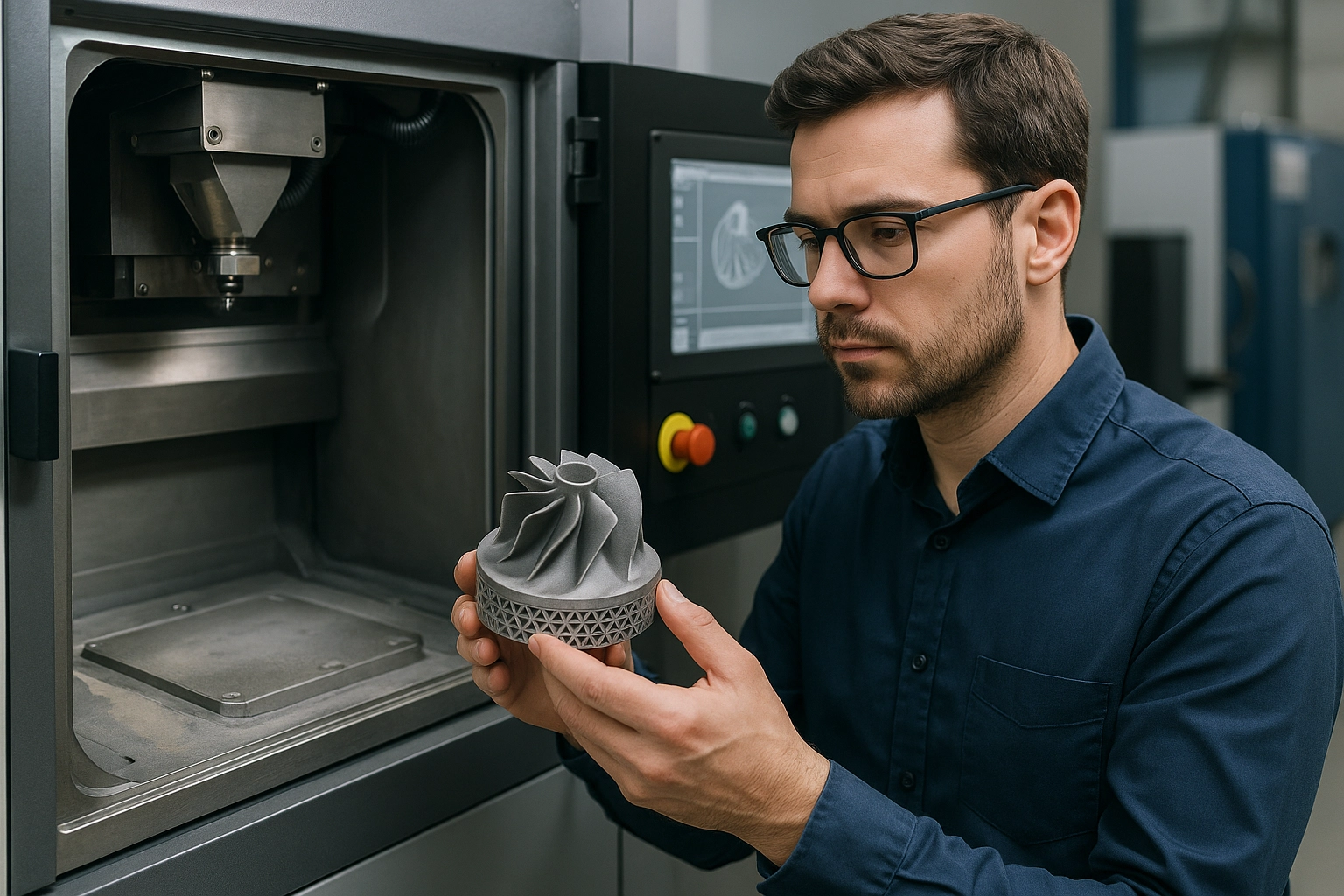
3D printing for modellers now functions as a precision manufacturing layer that captures forms and textures beyond subtractive limits. For intermediate teams, the dominant application remains prototyping, accounting for roughly 70 percent of use, but production-grade parts are expanding as build fidelity and materials improve. Typical workflows cut iteration time by up to 90 percent and enable batch personalization without tooling. Within this shift, The Virtual Foundry has led with accessible metal capability that runs on widely available FFF hardware, then finishes to pure metal. Modellers apply it to small-run fittings, architectural details, and jewelry masters, achieving sub-millimeter features and surface continuity that minimize downstream handwork.
Modernize your pipeline by piloting additive where complexity is high and volumes are modest. Start with a 30-60-90 day plan, establish design rules for minimum wall thickness, overhang angles, and allowable shrink, standardize slicing profiles, and quantify KPIs like cycle time, rework rate, and material yield. Track trends that matter, AI assisted design for lattice optimization, automated support generation, and growing use of recyclable and bio-derived media to reduce scrap. With The Virtual Foundry’s community and process guidance, intermediate practitioners can scale from proof of concept to repeatable production without specialized capital outlays. Join the global movement that is replacing rigid, tool-centric methods with agile, digital manufacturing across modeling, prop making, and educational labs.