You already know how to dial in a first layer, tune profiles, and swap materials. The next challenge is choosing projects that stretch your skills, deliver real utility, and justify time on the machine. This analysis maps the landscape of 3d printing ideas for adults with a focus on functional designs, finish quality, and repeatable results. We will move beyond trinkets to projects that integrate hardware, hold tolerances, and survive daily use.
Expect a clear framework for selecting and executing builds across home, workshop, office, and outdoor categories. You will learn how to pair part function with the right filament, from PLA for dimensionally stable jigs to PETG, ABS, nylon, and carbon fiber composites for parts that take heat and stress. We will cover orientation for strength, wall and infill strategies, and when to use heat set inserts, magnets, bearings, and off the shelf fasteners. You will also see how to adapt community models or design parametrically from scratch, how to estimate cost and print time, and how to validate parts with simple tests. By the end, you will have a roadmap of 3d printing ideas for adults that are practical, durable, and worth your spool.
The Evolving Landscape of 3D Printing for Adults
From prototyping to production
Adults are increasingly using 3D printing to produce durable end-use parts, not just mockups. A 2024 industry survey found 21 percent of respondents now primarily print end-use parts, and runs over 1,000 pieces grew to 6.2 percent, signaling serial production maturity Protolabs 3D printing trend report. For home labs and small shops, that shift means fixtures, sensor mounts, and electronics enclosures can move from bench to field with minimal rework. Validate additive design rules early, control tolerances for press fits and threads, then pilot small batches before scaling.
Affordability and access at home
Cost barriers have dropped sharply, opening the door for more adult makers and side businesses. Reliable machines under 200 dollars now bring auto bed leveling and direct-drive extrusion, as shown in this roundup of the best 3D printers for home use. High speed at low prices is emerging too, for example the Anycubic Kobra X high speed multi filament announcement targets 259 dollars. Prioritize rigid frames, 32-bit controllers, build volume, and enclosure options for ABS or sinterable composites, and budget for hardened nozzles and dry storage when using abrasive or specialty filaments.
Personalization for gifts and art
If you are searching for 3d printing ideas for adults, personalization delivers standout value in gifts and art. Parametric CAD and customizable models enable monogrammed vases, fitted phone docks, ergonomic drawer pulls, and made-to-measure organizers. Artists combine multi-material printing with sanding, polishing, plating, and patination to reach gallery-grade finishes, while lithophane lamps and jewelry masters make highly personal gifts. Reduce waste by choosing project-specific infill, tracking material consumption, and printing on demand.
How The Virtual Foundry democratizes metal
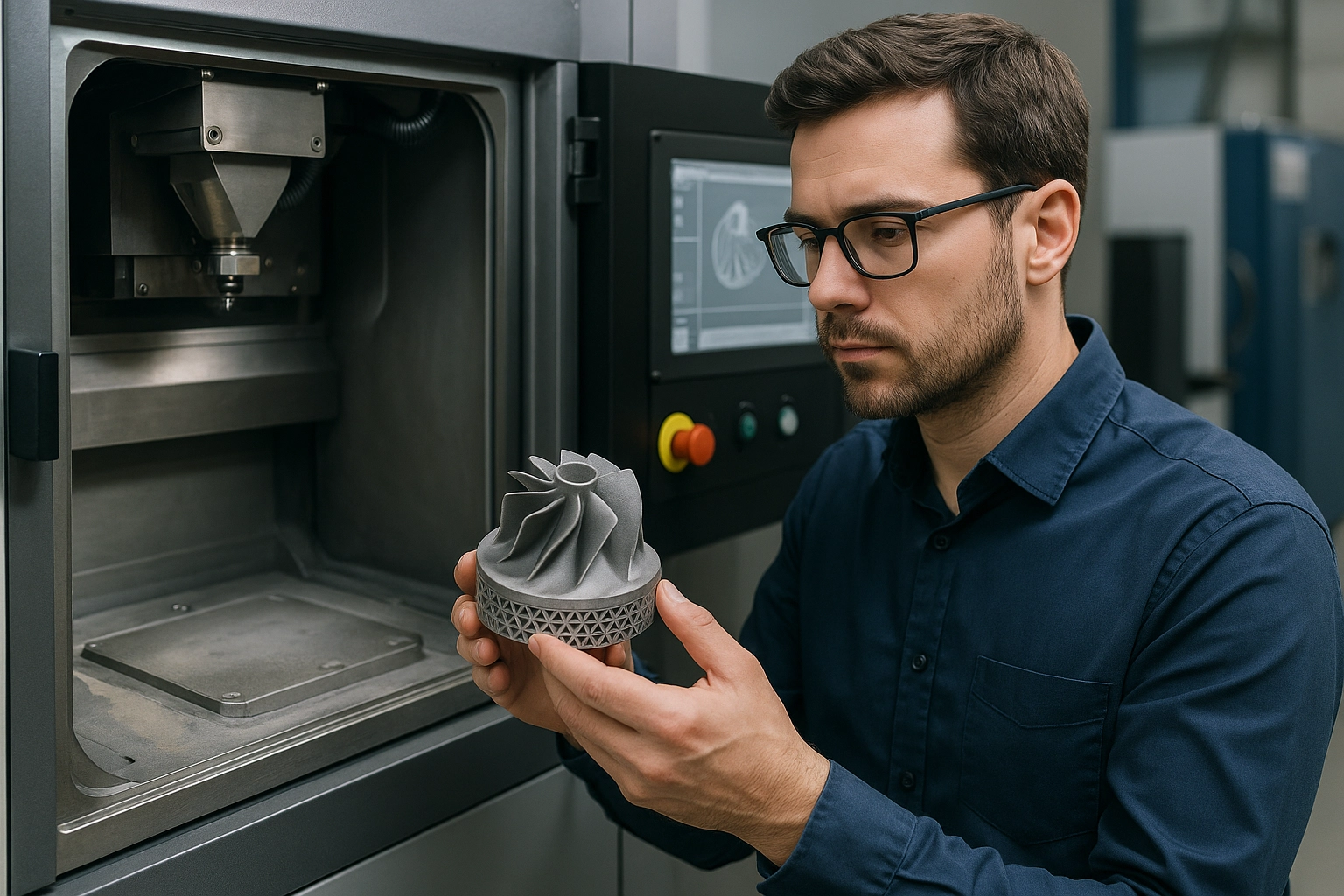
The Virtual Foundry advances this evolution by making metal practical on everyday FFF printers. Filamet, a high metal content filament, prints like a stiff composite, then debinds and sinters in a kiln to deliver pure metal properties without industrial capital. A printer-agnostic, workflow-centered model lowers switching costs and invites stepwise adoption across education, studios, and small manufacturers, succeeding where closed, capital-heavy approaches struggle to reach desktops. Use a hardened 0.4 to 0.6 millimeter nozzle, moderate speeds, design for predictable shrink, maximize contiguous infill for metallurgical continuity, and rely on community guidance for finishing. These capabilities set the stage for advanced applications discussed next.
Beyond Prototyping: End-Use Products & Art
Functional household items
For adults exploring 3d printing ideas for adults, the most immediate wins are functional parts that solve daily problems. Research on home applications shows desktop printers readily produce customized essentials such as nameplates, soap cases, and pens, validating household-scale manufacturing as practical, not novelty home applications study on customized household products. Repair workflows are equally compelling, for example reprinting broken drawer pulls, appliance knobs, and cable organizers to extend product life. Choose PETG for parts that face handling, light heat, or moisture, and tune walls to 2 to 4 perimeters with 30 to 50 percent infill for strength practical household items you can 3D print. Small batches reduce inventory risk and support on-demand, low-waste production in the home or microshop.
Jewelry and home decor creativity
Jewelry and decor benefit from geometry that traditional subtractive tools struggle to achieve. High-resolution pattern printing in castable media has matured, supporting fine pavé settings and crisp micro-textures that survive investment burnout portfolio of jewelry pattern manufacturing solutions. Parametric modeling enables size-specific rings, custom bezels, and topology-optimized pendants tailored to the wearer. In home decor, lattice vases, acoustic diffuser tiles, and space-specific hooks illustrate how form follows function when you can iterate overnight. Actionable tip, constrain minimum feature size to your printer’s realistic XY resolution, then elevate finish with vapor smoothing for polymers or media tumbling for tougher filaments.
Filamet in diverse applications
The Virtual Foundry’s Filamet transforms standard FFF printers into accessible metal-making tools, with filaments that contain up to 85 percent pure metal by weight. Parts can be sintered to deliver true metallic density and feel, then finished through polishing, patination, or plating. This enables end-use objects like bronze door hardware, copper switch plates that develop natural patina, and stainless bottle openers that resist wear. Plan for predictable shrink during sintering by oversizing features according to the specific alloy’s guidance, and design flats or sacrificial supports to maintain geometry. This material-first, open-hardware approach is how The Virtual Foundry has democratized metal printing, letting makers, studios, and small manufacturers move from prototypes to durable products without costly, closed ecosystems.
Customization and Sustainability in 3D Printing
Reducing waste and lowering total cost
Additive manufacturing builds only what you need, layer by layer, which sharply lowers scrap and storage costs. Independent reviews estimate material waste reductions up to 90 percent compared with subtractive methods, and on-demand, local production can cut transportation emissions by as much as 60 percent, which often tracks with freight savings as well Sustainability statistics overview. For practical 3d printing ideas for adults, consolidate multi-part brackets into a single print, use lattice or gyroid infill to maintain stiffness while trimming mass, and orient parts to minimize support. Many users see prototype cycles drop from weeks to a single day, with two or three design iterations costing only a few dollars of filament. For small-batch runs like custom drawer pulls or camera mounts, this translates into lower unit costs and minimal overproduction, since you print exactly the quantity required.
Eco-friendly material choices that perform
Sustainability improves further when you select low-impact materials. PLA, a plant-derived plastic, is widely used for fixtures, organizers, and aesthetic parts, and it is biodegradable under industrial composting conditions Eco-friendly filament options for makers. Recycled PETG combines toughness with a circular feedstock, making it suitable for shop tooling, jigs, and phone or tablet stands. Wood-filled PLA blends natural fibers with PLA for warm finishes on art objects, lampshades, and cabinetry details. Actionable tip set: choose larger nozzles to shorten print time and energy draw, use variable infill to place material only where loads demand it, and track filament usage per part to benchmark cost and waste reduction.
Filamet, customization, and sustainable metal making
The Virtual Foundry’s Filamet unlocks pure metal results on common FDM printers, then uses predictable debinding and sintering to achieve near net shape. This approach reduces the large offcuts and coolant waste typical of milling, since geometry is created additively and only light finishing is needed. Designers can pack bronze jewelry blanks tightly on a build plate, or print copper heat spreaders and shop fixtures that would be costly to machine. Plan for a mid-teens percent linear sintering shrink, compensating in CAD, and reference material-specific profiles to get first-time-right density. The Virtual Foundry’s process guides and community knowledge base shorten trial and error, which saves powder, energy, and post-processing time, and makes sustainable metal printing accessible rather than capital intensive.
Applications of 3D Printing in Various Industries
Healthcare, from planning to patient specific devices
The healthcare 3D printing market was about 8.52 billion dollars in 2023 and could reach 27.29 billion by 2030, a 18.5 percent CAGR, per Grand View Research. Customized implants and prosthetics represent about 40 percent of revenues, confirming demand for patient specific devices, per Verified Market Reports. Hospitals rely on anatomical models for surgical planning, which reduces operative time and improves outcomes. Research labs are advancing bioprinting, with over one third adding the capability, reports Global Growth Insights.
Automotive and fashion, iteration that ships
In automotive, additive now underpins rapid prototyping, fit checks, and production tooling that shortens development cycles. Shops print jigs, fixtures, ducts, and brackets, then apply lattice infill to cut weight while holding stiffness. On demand production buffers supply chains by delivering spares and custom parts where they are needed. Fashion studios use similar methods to create intricate accessories, personalized jewelry, and microbatch garments. For intermediate users exploring 3d printing ideas for adults, focus on design for additive, part consolidation, and pilot runs to prove cost and performance.
The Virtual Foundry, practical metal AM at desktop scale
The Virtual Foundry brings metals, glass, and ceramics to standard FFF printers with high loading Filamet that debinds and sinters into pure material. This accessible workflow lowers capital cost, avoids lock in, and lets manufacturers, educators, and artists add metal capability inside existing labs. Teams print copper for RF shielding, stainless for heat resistant fixtures, and bronze for jewelry, then finish with tumbling, burnishing, or plating. With a patented filament process and open guidance on sintering profiles and shrink compensation, it is moving metal additive from pilot to production across healthcare, automotive, and fashion.
Key Findings: Trends and Market Potential
Market growth snapshot
The 3D printing market expanded in 2023 to about 14.7 billion dollars, up 13 percent year over year, per Additive Manufacturing Research’s 2023 market data. Projections indicate roughly 34.5 billion dollars by 2028, an 18.1 percent CAGR, as production use accelerates. Metal additive manufacturing grew near 22.6 percent in 2023, driven by aerospace and healthcare demand, while healthcare applications overall rose about 24.3 percent. North America held approximately 36.8 percent share, supported by strong R&D and supply chains. For those exploring 3d printing ideas for adults, this momentum reduces material risk and improves access to capable systems and service partners.
Consumer adoption and behavior
Adoption is shifting from trial to production. A 2023 industry survey found 67 percent of organizations already print end use parts, consistent with the rise of desktop systems in education and small business. Unit sales for desktop printers climbed about 32.4 percent in 2023, and entry level machines under 2,500 dollars grew 15 percent year over year in early 2025. Adults leverage this capacity for functional home fixtures, bespoke tools, and jewelry, validating in polymers before moving to metal. The Virtual Foundry’s open, filament based metal pathway lets designers and makers print and sinter pure metal on accessible hardware. Start with a pilot that replaces a purchased metal bracket, record time and cost, then scale to a 25 unit run.
AI as a force multiplier
AI is optimizing the full lifecycle. Generative design produces lighter, stiffer geometries and has even informed desktop 5 axis printer concepts that enable complex toolpaths. On the factory floor, computer vision and thermal sensing automate print recovery and part handling, cutting labor and improving predictability. Machine learning based anomaly detection flags layer shifts, porosity, and warping in real time, reducing scrap and reprints. AI also accelerates material discovery and tuning, which helps define sintering profiles for metal filament workflows like Filamet. Practical next steps, use topology optimization in CAD, enable camera based monitoring, and log prints to build reliable parameter libraries.
Implications for the Future of Metal 3D Printing
Industry adoption accelerated by Filamet
The Virtual Foundry’s Filamet removes the capital barrier that stalled broader metal AM adoption by letting standard FDM printers produce metal-rich green parts that sinter to near fully dense metal. With roughly 88 percent metal content in the filament and post processing that yields over 99 percent pure metal, users achieve functional properties without specialized machines. Instead of six figure systems, teams pair a desktop printer with a commercially available kiln, often under a few thousand dollars, and a validated sintering profile. This model taps into the millions of installed desktop printers worldwide and the fact that a majority of users are hobbyists and small businesses, converting polymer know-how into metal outcomes. In practice, small manufacturers report 30 to 60 percent reductions in prototype lead time by moving inserts, jigs, and heat spreaders in house.
Innovation and creativity, what comes next
Expect AI assisted design to couple with Filamet workflows, generating lattices and internal channels that account for shrinkage and densification during sintering. Multi material paths are emerging, mixing metals or pairing metal with ceramic to tune thermal conductivity, wear, or electrical behavior within a single build. Sustainability will move from narrative to metrics as recycled feedstocks and right sized prints cut scrap and inventory. Real time thermal profiling and predictive sintering analytics will raise first pass yield, reducing trial and error for complex alloys. Over the next three to five years, watch for graded metal structures, thin wall heat exchangers, and antenna components to become routine desktop projects.
What it means for manufacturers
Filamet enables agile bridge production and fast repair parts, reducing supplier dependence and freight risk. Start with bronze or copper to qualify the workflow, then advance to stainless once dimensional control is dialed in. Build a DfAM checklist that includes target density, expected linear shrink of 14 to 20 percent by alloy, sacrificial support strategy, and post process steps. Document performance with simple ASTM based coupons so engineering can release parts with confidence. Many teams see 20 to 40 percent part cost savings when tooling or machining can be deferred until after sintering.
What it means for hobbyists and creators
For adults exploring 3d printing ideas for adults, Filamet unlocks studio grade jewelry, architectural accents, RF shielding, custom knife guards, and heat sink brackets on a modest budget. Use a 0.6 millimeter nozzle, dry filament thoroughly, print near solid infill for consistent mass, and design with known shrink factors. Calibrate with test coupons to tune kilns and verify density before committing to final pieces. Tap community recipes for alloy specific profiles, then iterate creatively on textures, patinas, and mixed metal assemblies. As knowledge spreads, the line between hobby and micro manufacturing will continue to blur.
Conclusion: Empowering Creativity and Innovation with Filamet
3D printing has shifted from novelty to a practical engine of design and production, with more than 2 million printers shipped in a year and adoption accelerating. Adults convert ideas into functional objects on desktop machines, from customized organizers to purpose built tools, while on demand fabrication reduces waste and compresses iteration cycles from weeks to hours. In this landscape, The Virtual Foundry expands capability by enabling pure metal outcomes on FDM workflows through Filamet, letting users print metal rich geometries and consolidate them by debinding and sintering into parts fit for art, jewelry, thermal management, fixtures, or RF aware components. To get results fast, start with small calibration coupons, record sinter profiles by alloy, and apply finishing methods like tumbling, stone polishing, or patination to reach surface and density. Explore 3d printing ideas for adults, where roughly 70 percent of users are hobbyists or small businesses, to turn niche needs into durable products and new revenue streams with confidence.