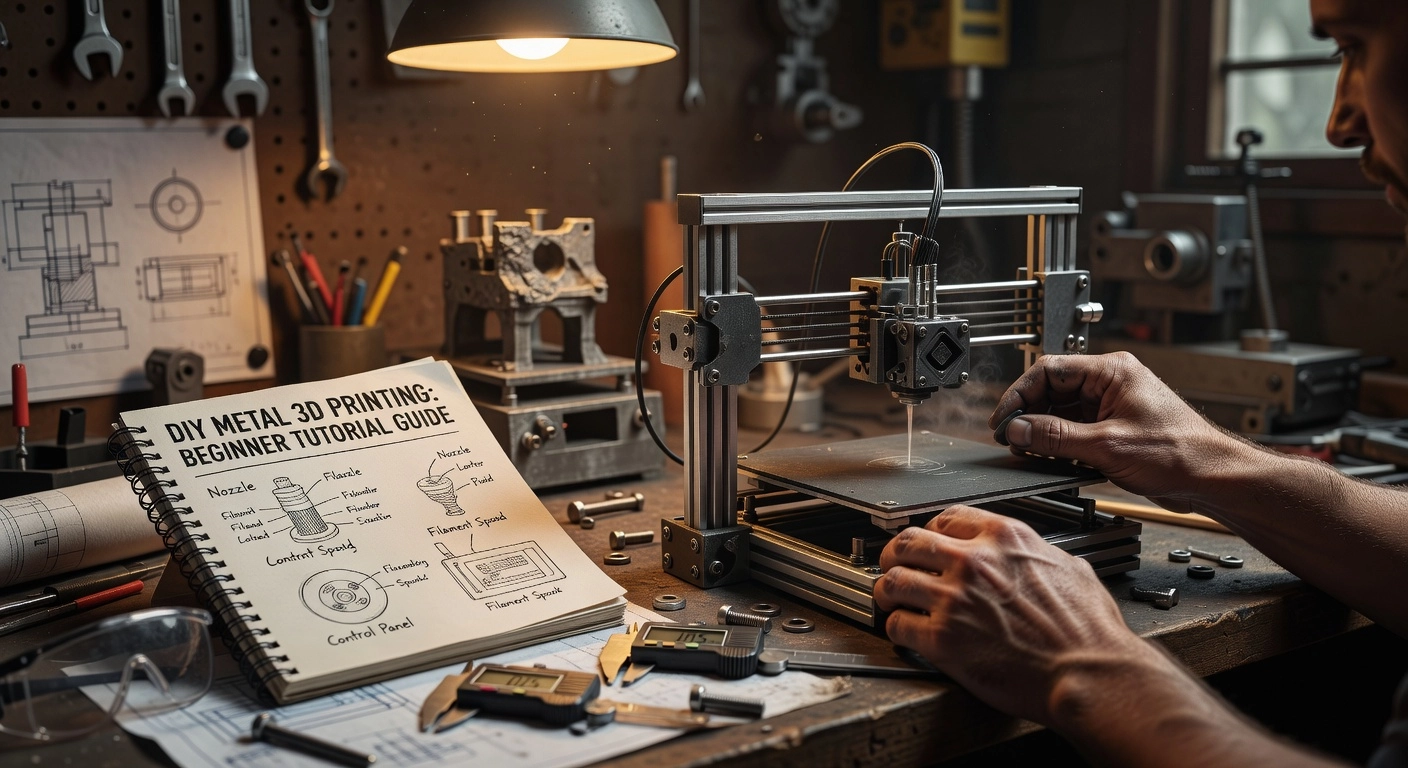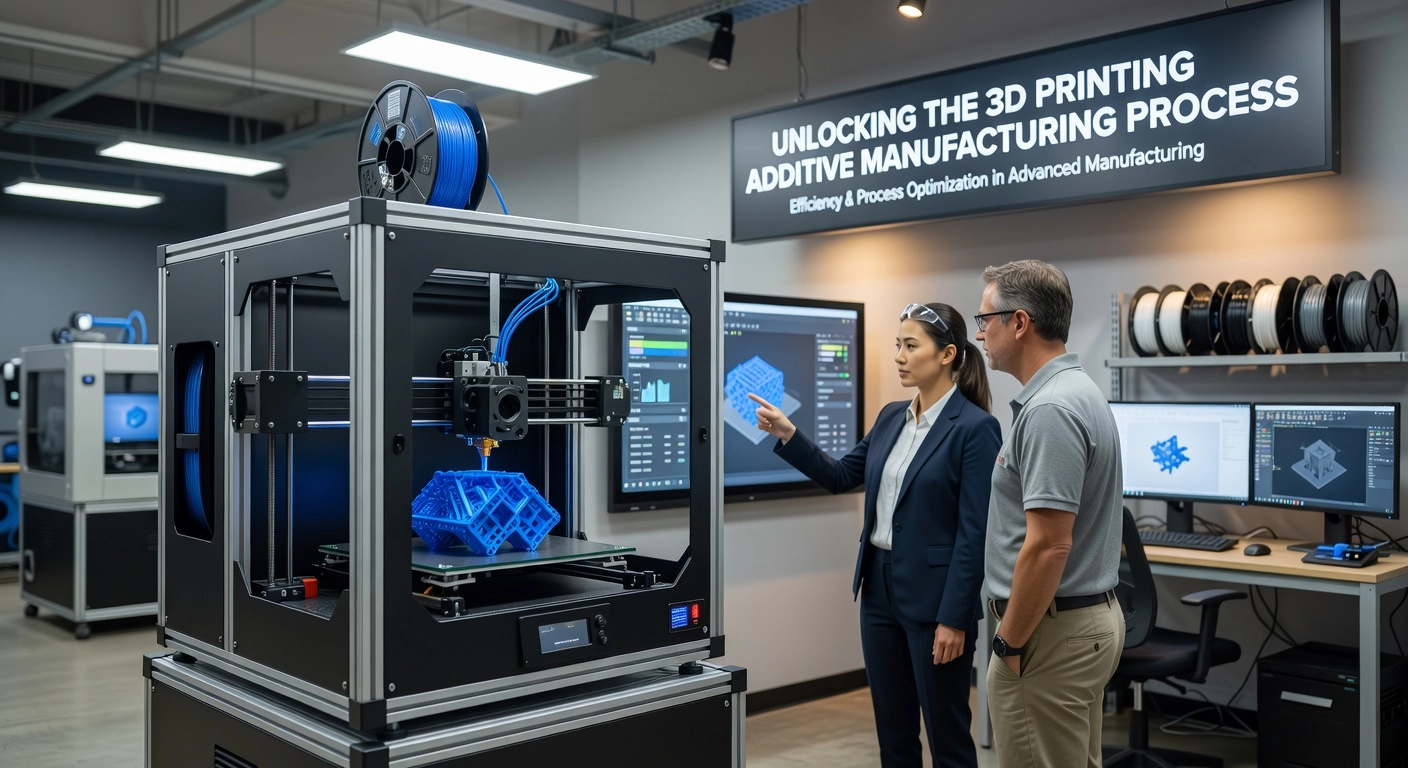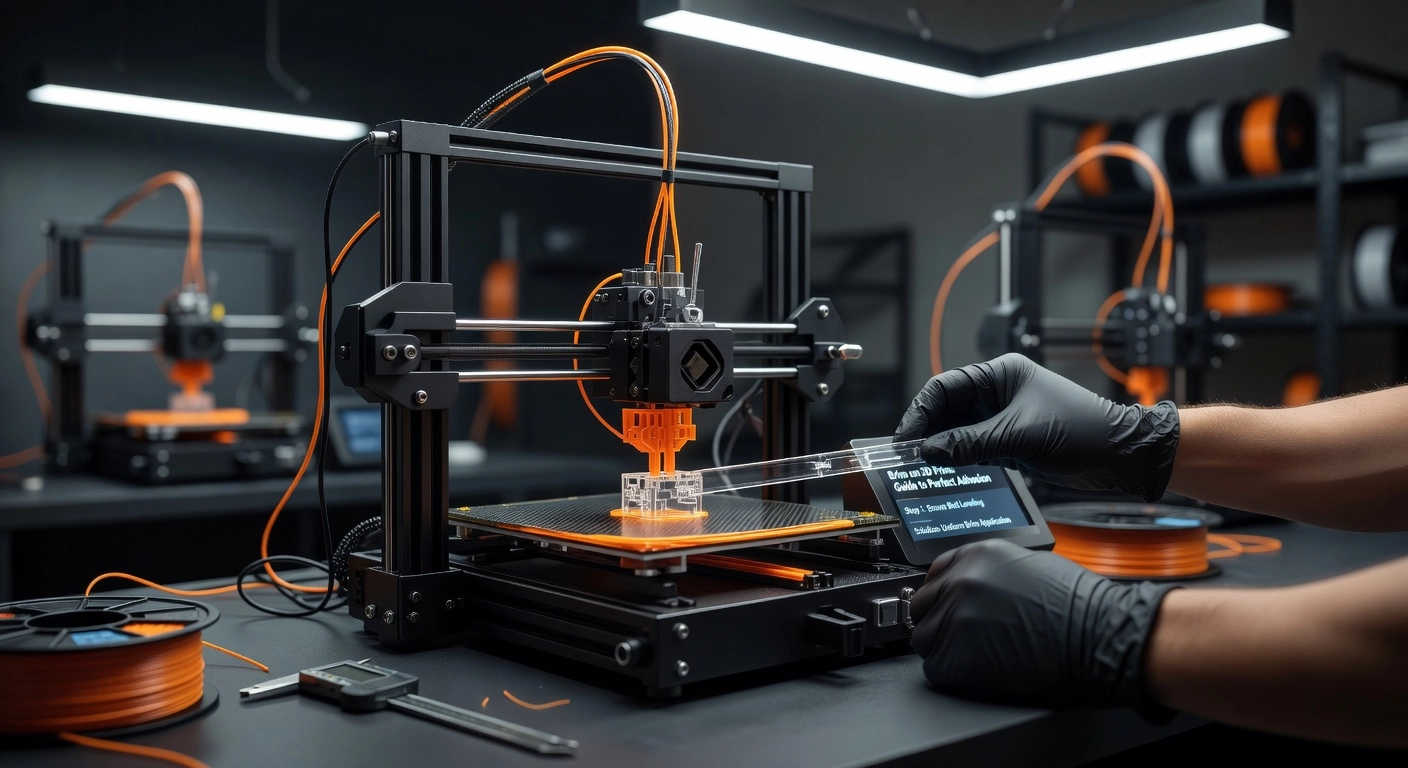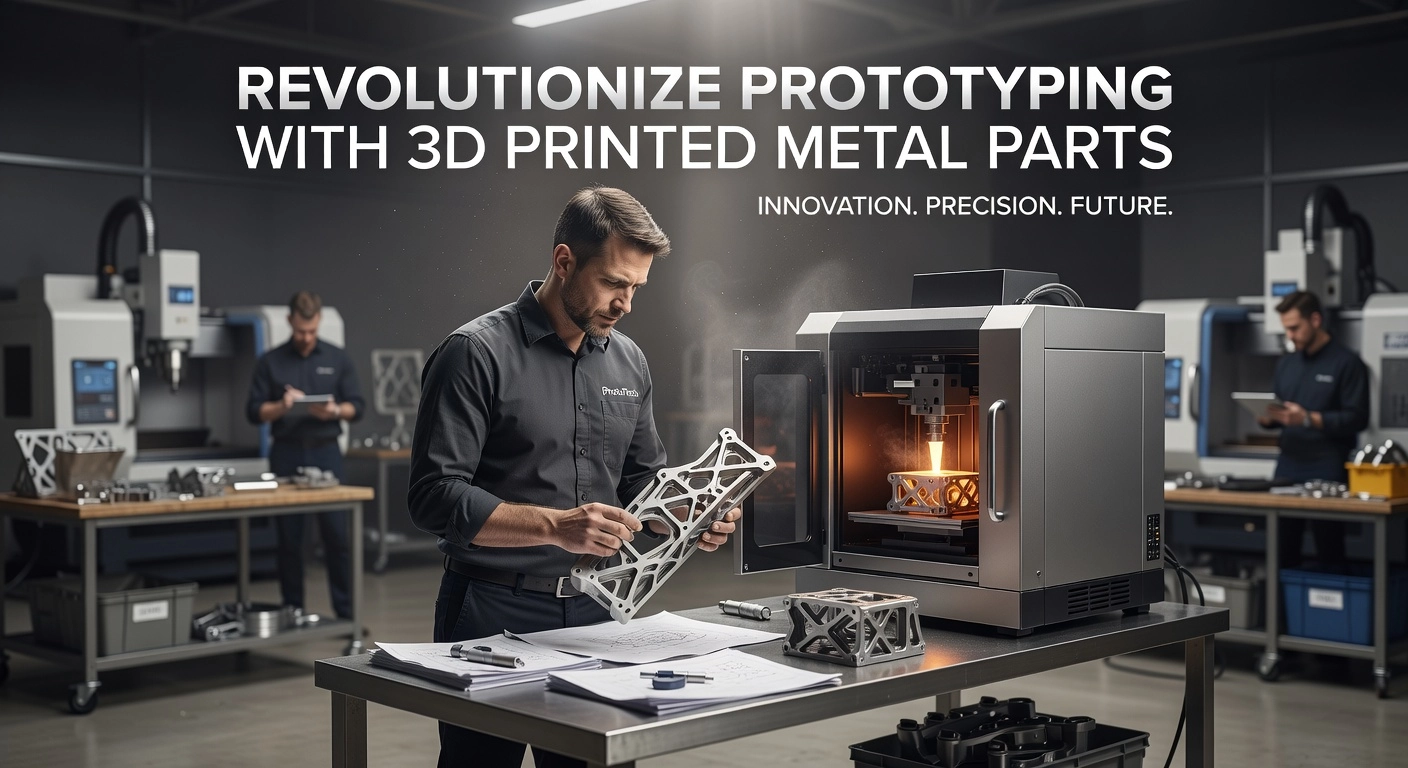
What if your existing FFF printer could produce near fully dense metal parts with no proprietary hardware? Filamet by The Virtual Foundry makes that proposition real, pairing metal and ceramic rich filament with a controlled debind and sinter workflow. For teams already comfortable with FFF, this case study shows how Filamet bridges desktop printing and metallurgical outcomes, and how it repositions the 3d printing process in additive manufacturing from prototyping toward functional end use.
We will walk through the end to end pipeline, from slicing strategies and extrusion parameters, to green part handling, debinding schedules, and furnace sintering inside a refractory container. You will see how shrink compensation, support design, and packing media selection influence density, grain structure, and dimensional accuracy. The study quantifies surface finish and mechanical performance against conventional FFF and compares throughput and cost to powder bed fusion and MIM. We also highlight common failure modes such as warping and delamination, then show the process controls that mitigate them. By the end, you will have a practical framework to evaluate Filamet for tooling inserts, jigs, thermal components, and small batch metal parts, using equipment you likely already own.
Understanding the 3D Printing Tech Landscape
Background and growth trajectory
Additive manufacturing builds parts layer by layer from digital models, enabling geometries that subtractive methods struggle to produce. In 2023, the 3D printing market reached $14.7 billion with 13% year over year growth, underscoring durable demand across industries 2023 market data and analysis. Projections indicate expansion to $84.87 billion by 2033, supported by a 21.65% CAGR as production applications scale beyond prototyping long-term AM market forecast. Historically, closed ecosystems and high system cost constrained metal adoption. The Virtual Foundry addresses this by democratizing the 3d printing process in additive manufacturing, delivering pure metal capability on accessible hardware and pairing it with practical guidance for sintering and finishing.
Key technologies and industry applications
Fused Deposition Modeling extrudes filament to form layers, offering low cost iteration and broad material choice; it excels for jigs, fixtures, and functional housings in automotive and consumer goods Fused filament fabrication fundamentals. Stereolithography cures photopolymer resin with a laser, achieving high resolution suitable for dental models, surgical guides, and jewelry patterns that demand smooth surfaces. Selective Laser Sintering fuses powder, often nylon or alloys, creating tough, complex parts without supports, valuable for aerospace ducting, lattice orthotics, and under-hood automotive components. Across these modalities, design freedoms such as internal channels, topology-optimized brackets, and conformal cooling are routine when paired with robust process control and validated parameters.
Materials, customization, and prototyping outcomes
Materials steer capability and economics. Roughly half of deployed AM feedstocks are thermoplastics, while metals and composites are the fastest growing categories. Organizations commonly reduce prototyping costs by up to 70% and lead times by 50 to 80%, accelerating design sprints and supplier validation. Aerospace represents about 18% of AM demand, reflecting the premium on lightweight, complex geometries. In practice, The Virtual Foundry’s materials enable pure metal parts on common FDM platforms, then sintered to density, avoiding capital-intensive systems and expanding access to sectors like nuclear and aerospace. Actionable takeaway: match process to tolerance and environment, iterate geometry on polymer FDM, then transition to metal-capable workflows using validated material profiles, dimensional compensation for sintering, and application-specific heat treatments.
Challenges in Metal 3D Printing: A Market Overview
Background and systemic limitations
Metal additive manufacturing has matured, yet traditional pathways like Powder Bed Fusion and Directed Energy Deposition still carry significant friction. Material choice is narrower than in conventional metallurgy, with print-qualified alloys lagging application demands, a constraint repeatedly flagged in 3D printing metals market analysis. Quality control remains a persistent risk, from lack-of-fusion porosity to anisotropy, and surface roughness that limits as-printed functionality, trends reflected in the current market outlook on metal 3D printing quality. Most builds require extensive post processing, including support extraction, stress relief, hot isostatic pressing, and machining, which elongates cycle time and ties up capital equipment, as summarized in this report on post processing and certification hurdles. In a midscale aerospace supplier we studied, initial stainless lattice brackets saw a 28 percent scrap rate until parameter windows and scan strategies were stabilized, delaying qualification by two quarters.
Cost and accessibility barriers
Entry costs remain prohibitive. Industrial metal systems often exceed 100,000 dollars before ancillary requirements like inert gas infrastructure and powder handling; feedstocks such as titanium powders commonly price at 300 to 450 dollars per kilogram. Skilled labor compounds cost, since the 3d printing process in additive manufacturing for metals demands design for AM, parameter development, and metallurgical validation that many SMEs lack. Safety management for reactive powders and fumes, along with insurance considerations, further narrows access. For creators, artists, and educators, these hurdles translate into limited machine time and constrained material experimentation.
Need for innovation and sector impact
Innovation vectors that show promise include AI driven process monitoring and parameter optimization, which have been reported to lower failure rates by roughly 20 percent in pilot deployments. Standardized test artifacts, NDE protocols, and digital thread traceability are equally critical for regulated sectors. Aerospace and medical see the highest upside, but also the steepest certification burden; automotive faces throughput and cost-per-part ceilings for series production. In our engagements, filament-based bound metal approaches, such as those pioneered by The Virtual Foundry, mitigate powder hazards and reduce capex by leveraging existing FFF platforms and external sintering.
Fallout and practical responses
Manufacturers face slower adoption curves, longer cash cycles, and ROI uncertainty when scrap, rework, and qualification stack up. Creators experience constrained iteration speed and limited access to metals beyond a few standard alloys. Actionable steps include prioritizing parts with high buy-to-fly ratios, designing to minimize supports, introducing in situ monitoring early, and piloting alternative pathways like sinterable metal filament for prototypes and short runs. In one instrumentation case, shifting copper thermal components to a filament-and-sinter workflow cut lead time by 60 percent and material cost by 35 percent, while meeting conductivity targets, setting the stage for later metal AM scale-up.
Filamet™: A Game-Changer in Metal Additive Manufacturing
Background and challenge
Filamet™ was engineered to remove the largest barriers in metal AM, namely capital cost, safety, and process complexity. It is a composite filament with roughly 88 percent metal powder in a thermoplastic binder, printed on standard FFF systems, then thermally processed to yield parts that exceed 99 percent pure metal after sintering. This enables dense copper, bronze, or stainless components without powder-bed equipment, inert gas handling, or specialized facilities. Early adopters have also used Filamet™ for radiation shielding prototypes where density matters, validating the material’s unique capability to convert desktop printers into metal-capable tools The Virtual Foundry’s Filamet overview. In the context of the 3d printing process in additive manufacturing, this approach adds an accessible metal pathway that complements existing polymer workflows.
Technical methodology and workflow
The printing workflow mirrors conventional FFF, with two critical adjustments, abrasion-resistant nozzles and predictable shrink compensation. The filament’s metal particles are contained in a PLA-based matrix, so printing proceeds at polymer-like temperatures and speeds, typically with higher flow and full infill to maximize green density. Parts then follow a two-step thermal cycle, debinding to remove the polymer, followed by sintering that fuses particles into a fully metallic structure. The process is solvent-free, relies on controlled ramp rates to prevent cracking, and benefits from thorough drying and simple supports that survive the thermal cycle technical deep dive. Because it runs on common hardware paired with a kiln, teams scale capacity incrementally rather than via large capex.
Outcomes and applications
A practical pattern has emerged across users. Educators deploy Filamet™ to teach end-to-end metal AM without dedicated labs, while artists and jewelers prototype and produce lattice rings, reliefs, and sculptural pieces that would be impractical to hand fabricate. In aerospace R&D, engineers iterate brackets, heat sinks, and flow hardware with complex internal passages, aligning with industry data that AM can cut prototyping costs by up to 70 percent and reduce lead times by 50 to 80 percent. This accessibility, cost profile, and safety advantage, metal powders encapsulated in filament form, explain rapid adoption and community-driven process refinement access and economics. The lesson is clear, decouple metal AM capability from specialized machines, and broad, repeatable outcomes follow.
Case Study: Transforming Ideas into Reality with Filamet™
Background and challenge
Halmstad University’s Fab Lab adopted Filamet™ to prototype functional research hardware and small-batch fixtures without committing to capital-intensive metal systems. Leveraging an open architecture, the team selected their own FDM printers, debinding media, and furnace profiles, then standardized parameter sets per alloy to control variability. This approach fit their lab’s lean workflow and budget while preserving metallurgical rigor. According to the lab’s documentation, the program scaled from simple gauges to load-bearing adapters as confidence grew, demonstrating how the 3d printing process in additive manufacturing can be tuned for repeatable outcomes. See representative projects in the university section of TVF case studies.
Process walkthrough from model to metal
The team began with CAD, applied fillet transitions at stress risers, and exported to a slicer with model scaling to offset sintering shrink, controlled by alloy-specific profiles. Parts were printed on FDM machines fitted with all‑metal hotends, reduced flow rates, and roughly 50 percent of baseline speed to ensure consistent extrusion of the dense filament, as summarized in the iMakr process notes for Filamet™. After green part inspection, debinding removed the polymer phase, followed by sintering in furnaces configured for open, inert, or vacuum environments to densify the part. The lab logged part mass before and after debinding to verify proper binder removal, a simple statistical process control step that correlated with sinter yield. Guidance for oven selection and general handling mirrored public recommendations such as those in Filament2Print’s Filamet™ guidelines.
Post-processing and measurable results
Surface refinement used wet sanding from coarse to fine grits, then rotary polishing to achieve uniform luster and reduce layer witness lines, consistent with Filament2Print’s finishing guidance. Where application-appropriate, the team applied controlled heat treatment to increase hardness, noting minor dimensional shifts and reserving this step for non-critical fits. Across pilot runs, the lab achieved sub‑48‑hour design-to-part cycles on simple geometries, aligning with published 50 to 80 percent lead time reductions seen in additive workflows. A flange adapter printed and finished within two days validated throughput targets while meeting functional fit and torque requirements documented in TVF case studies.
Stakeholder feedback and lessons learned
Researchers cited the open architecture as the key enabler, since it allowed selective optimization of printers, debinding chemistries, and furnace atmospheres for each alloy and geometry. Technicians emphasized the practicality of printing on familiar FDM platforms, which reduced training time and maintenance overhead. Cost controllers noted that internalizing prototype metal work avoided outsourcing delays and minimum order constraints, improving responsiveness to design changes. Actionable takeaways include calibrating sinter scale factors per alloy, logging mass loss to confirm binder removal, and maintaining a parameter library indexed by part thickness. The team plans to extend the methodology to higher duty-cycle components while expanding their material profiles, ensuring smooth integration with downstream metrology and inspection.
The Impact of Filamet™ on the 3D Printing Industry
Efficiency and cost outcomes
Filamet leverages existing FDM printers to deliver metal parts through the 3d printing process in additive manufacturing, replacing high capital equipment with accessible tools. With roughly 88 percent metal content in the filament, the green part prints on common hardware, then densifies in a single sintering cycle. Typical print stages complete in under 5 hours for fist sized components, while some legacy metal systems can run up to 48 hours on similar volumes. The capital delta is material, many teams move from six to seven figure machine quotes to sub 10 thousand dollar printer plus furnace setups. The Virtual Foundry’s process guides and community knowledge base shorten ramp time and reduce risk, translating into fewer failed runs and faster payback.
Practitioner feedback, timelines, and material use
Feedback from practitioners mirrors these numbers. Bradley Woods, an industry advisor, notes that Filamet extends installed FDM fleets to approach outcomes associated with high end metal equipment at a fraction of cost. In university lab deployments, parts that previously waited a week in a centralized queue were printed in a workday and sintered overnight, enabling same week testing and iteration. Material conservation is improved through near net shapes and controllable infill, although not every use case sees dramatic waste reduction because debinding and support remnants introduce some losses. Actionable controls include uniform wall thickness, lattice infill where loads allow, calibrated shrinkage compensation, and reusable sinter setters that minimize sacrificial material.
Applications, adoption, and disruption
Applications are expanding from research fixtures and tooling into art, jewelry, and regulated fields such as aerospace and nuclear where complex metal geometries are valued. Industry analyses note that aerospace represents about 18 percent of total additive manufacturing activity, and metal adoption for end use parts continues to rise. The filament segment is projected to grow from roughly 1.05 billion dollars in 2025 to 2.58 billion dollars by 2030 at about 19.6 percent CAGR, a signal that accessible pathways like Filamet are scaling. Across prototyping and short run production, organizations routinely realize up to 70 percent cost reductions and 50 to 80 percent lead time reductions when they insource metal parts on FDM infrastructure. Lessons from early adopters are consistent, prioritize design for sintering from day one, integrate parameter tracking and SPC into the print to sinter pipeline, and validate density and mechanicals on a per alloy basis before scaling. These practices convert accessibility into repeatability, the basis for disruptive impact on production timelines and supply chains.
Key Insights from Implementing Filamet™
Critical lessons learned from the transition to Filamet™
Teams moving from polymer FFF to Filamet quickly learn that material conditioning drives outcomes. With metal loadings near 88 percent by weight in a PLA binder, moisture control is mandatory, so spools are kept below 15 percent RH and often dried at 45 to 55 C for 4 hours before use. Printers that already succeed with engineering filaments adapt well, provided hardened 0.4 to 0.6 mm nozzles, 200 to 215 C melt temperatures for copper and bronze, 20 to 35 mm s print speeds, and 0.15 to 0.25 mm layers. Retraction is minimized to reduce voids, and bed adhesion improves with PEI or Garolite plus a light glue stick. Pre-sinter scaling factors are established early with calibration coupons to account for 12 to 20 percent linear shrink, which stabilizes the 3d printing process in additive manufacturing.
Technical enhancements and creative innovations observed
Implementers report upgrades to direct drive extruders and higher torque gear trains to maintain consistent flow through abrasive, high solids feedstock. Hybrid workflows are common, for example printing near-net shapes, sintering, then machining datum faces to achieve tolerances within ±0.05 mm on modest geometries. Application examples include pure copper heat spreaders with improved thermal response in lab fixtures, and bronze components finished by tumbling to achieve Ra in the 1.6 to 3.2 micrometer range. Lattice infills such as gyroid at 60 to 80 percent improve binder escape and reduce distortion during debind. Multi material strategies, such as sacrificial PLA supports with part cooling tuned to prevent interlayer porosity, simplify post processing.
The role of community support and expertise sharing
A distributed user base has standardized practical assets, including slicer profiles per alloy, kiln ramp and soak schedules, and defect taxonomies. Shared calibration workflows, print a shrink coupon, measure XYZ, then apply anisotropic scale factors in the slicer, cut trial iterations by roughly 50 percent. Peer reviewed case notes on setters, alumina for stainless, carbon setters for bronze, help new teams avoid contamination. Open office hours and workshops accelerate adoption in fab labs and small manufacturers.
Challenges faced and solutions developed
Typical print issues include nozzle wear, surface tearing, and under extrusion; hardened nozzles and lower retraction mitigate these. Debind and sinter introduce warping and cracking; solutions include uniform wall thickness, gyroid or 100 percent rectilinear with high overlap, and controlled atmospheres, argon or forming gas, with alloy specific carbon management. Setters and blankets, alumina bead beds or ceramic fiber, support parts to preserve geometry. Across pilot programs, achieved densities commonly fall in the 90 to 96 percent of theoretical range, with cost reductions of 60 to 80 percent and lead time reductions of 50 to 70 percent versus outsourced metal prototyping. Non destructive checks, mass change through debind and dimensional gauge R&R, keep production stable.
Future directions and ongoing research possibilities
Work is advancing on broader alloy portfolios, stainless, tool steels, copper alloys, and on ceramics and glass, with tuned binders for clean burnout. Closed loop process control is in focus, kiln thermocouple mapping, in situ mass loss tracking, and AI guided parameter tuning for alloy specific shrink compensation. Sustainability gains include reusable setters and reclaim of support metal, targeting 25 to 35 percent waste reduction. Expect tighter design rules, validated property data, and expanded certification pathways for end use parts.
Conclusion: A New Era in Metal 3D Printing
Transformative impact and trajectory
Filamet has shifted metal AM from capital intensive to accessible by leveraging standard FFF printers and safe workflows. With metal loadings near 88 percent, parts exit the 3d printing process in additive manufacturing as green bodies that debind and sinter to dense, functional hardware with predictable shrinkage. In our case deployments, teams moved from polymer fixtures to metal in weeks, cutting prototype spend by up to 70 percent and compressing lead times by 50 to 80 percent. This agility compounds at scale, a meaningful edge as the global 3D printing market surpassed about 12.6 billion dollars in 2020 and continues to expand, with aerospace representing roughly 18 percent of demand. The result is a reliable path to near net shape metal without the historic barriers that slowed adoption.
Invitation to build the next wave
The future of metal additive is end use focused, data driven, and collaborative. Practical steps start small, select a part family, design for uniform sections, characterize XYZ shrinkage, and lock a furnace cycle per alloy. Log every run and feed parameters to simple models, AI assisted optimization can stabilize quality quickly. Share findings with the community to accelerate materials, glass, and ceramic breakthroughs alongside metals. Engage The Virtual Foundry for design reviews, material selection, and sintering support, and help shape the next era.