Metal components grown layer by layer have moved from prototypes to flight hardware. Mastering the technology requires more than basic familiarity with printers and powders. This analysis advances 3d printing understanding additive manufacturing by exposing the mechanisms that actually control part integrity, repeatability, and cost.
We will compare the dominant metal AM routes, laser and electron beam powder bed fusion, directed energy deposition, and binder jetting. Expect a clear treatment of energy density, melt pool behavior, powder size distribution, gas flow, and scan strategies, and how these interact to create microstructure. You will see why porosity, lack of fusion, and residual stress occur, and how preheating, contour passes, support design, heat treatment, and hot isostatic pressing mitigate them. We will translate design for AM into measurable rules for orientation, overhangs, thin walls, internal channels, and lattice features. We will also cover in situ monitoring, post processing for surface finish and tolerance, mechanical property verification, and emerging standards. By the end, you will be able to choose processes and materials with quantitative criteria, tune parameters for quality, and build a cost model that scales from prototype to production.
Understanding Metal 3D Printing
History, evolution, and impact
Metal 3D printing evolved from early polymer AM in the 1990s into metal capable processes like laser and electron beam powder bed fusion. Through the 2010s, better lasers and process control lifted AM from prototyping to flight and surgical hardware. Aerospace, automotive, and medical applications report 30 to 60 percent weight reductions using lattices and topology optimization. More than 60 percent of manufacturers prototype with 3D printing, often cutting costs by up to 90 percent, with the market near 13 billion dollars in 2020 and about 23 percent projected CAGR.
Additive manufacturing basics and principles
Additive manufacturing constructs parts layer by layer from a digital model, enabling internal channels, conformal cooling, and graded lattices that are impractical with machining. The process improves material efficiency by depositing only what is needed, which raises buy to fly ratios and lowers waste. It also supports on demand, point of use production that reduces inventory and shortens lead times across the supply chain. For 3d printing understanding additive manufacturing means practicing DfAM, choosing orientations that minimize supports, and using simulation to validate builds before committing material.
Filamet™ for accessible metal printing
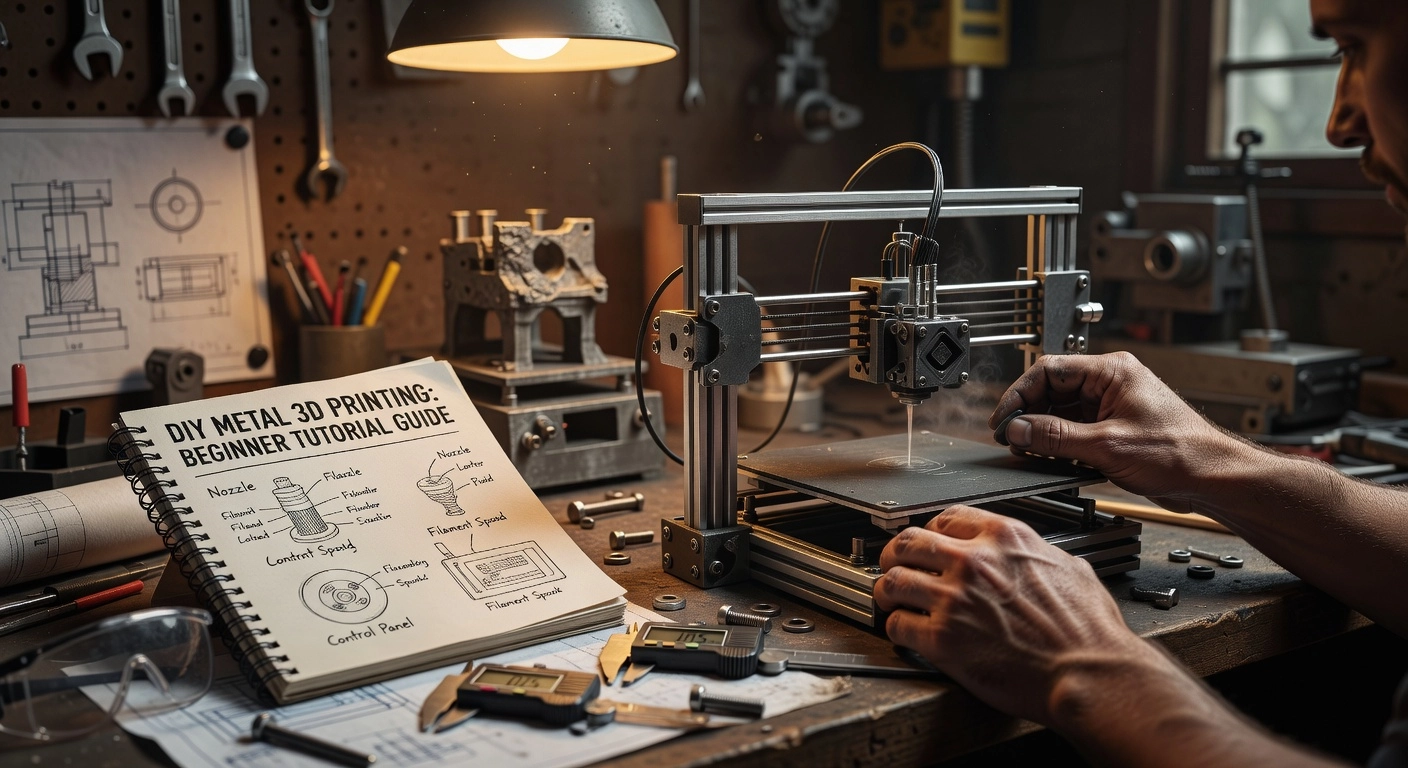
Filamet™ combines a thermoplastic binder with high metal loading for use on open architecture FFF systems, followed by debinding and sintering to form metal parts. The Stainless Steel 316L Filamet™ lists 80 to 85 percent metal and about 3.5 g per cubic centimeter filament density, useful for shrink and mass estimates. The Virtual Foundry’s open ecosystem, sintering guidance, and community support help teams move from concept to metal quickly while avoiding loose powder handling. A concise workflow overview appears in this Filamet metal 3D printing filament video.
Technological advancements and benefits
Recent improvements include stronger green parts, refined debinding chemistries, and furnace profiles that raise density and limit distortion. Printer upgrades such as hardened nozzles, active drying, and heated chambers stabilize high metal loading. AI driven monitoring is emerging to predict warping and accelerate qualification. Construction use cases include custom nodes and brackets that cut waste and schedules, as shown in 3D printing in metal construction.
Key Applications and Market Insights
Aerospace, automotive, and medical
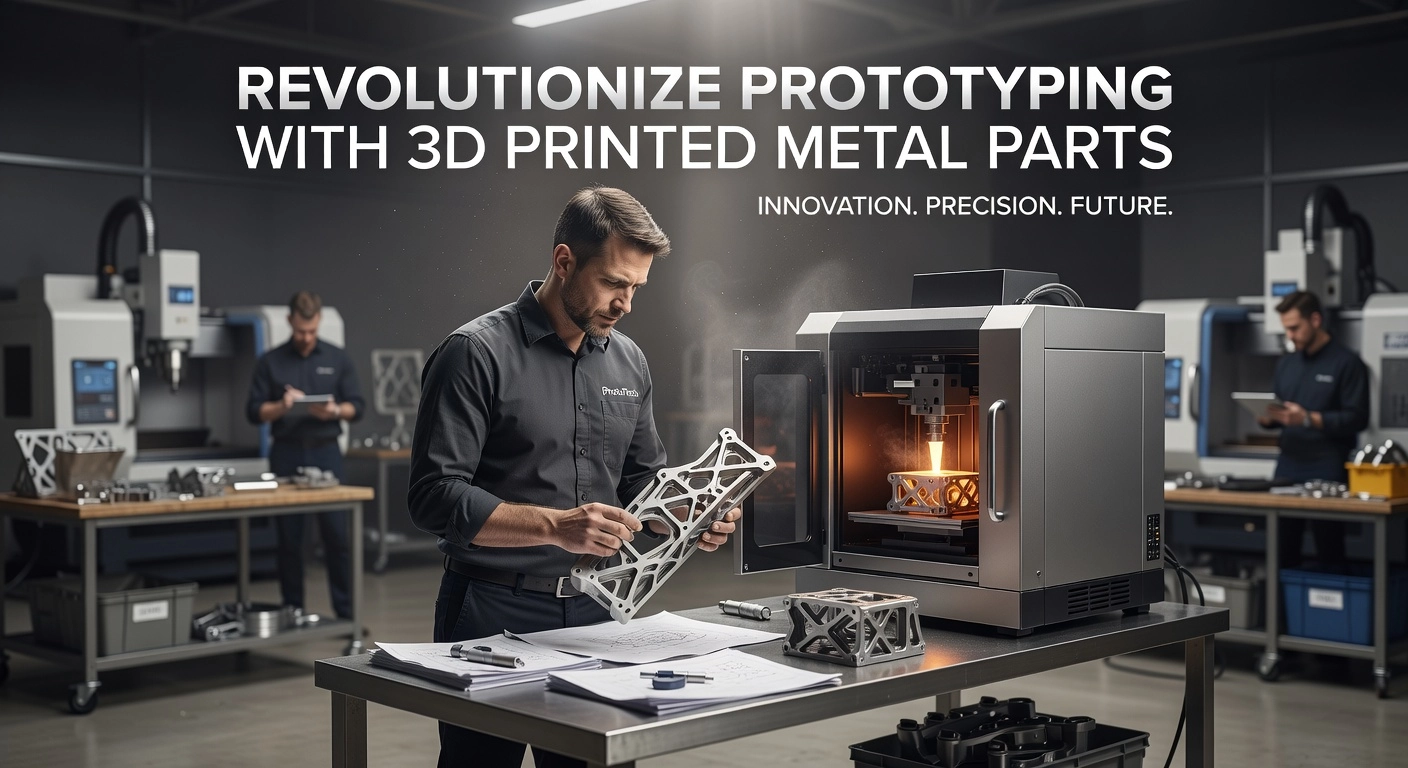
In aerospace, additive manufacturing delivers lightweight brackets, thermal management hardware, and conformal internal channels that cannot be machined, improving performance per weight and enabling rapid design iteration. The Virtual Foundry’s Filamet, compatible with common FFF printers and simple sintering workflows, lets teams prototype and field low-volume metal tooling without expensive capital equipment. Automotive programs use the same pathway for jigs, fixtures, conformal cooling inserts, and copper heat sinks that shorten cycle times. In healthcare, labs create patient-matched surgical guides and training models, then translate validated geometries into sterilizable metal instruments, with aerospace and medical adoption trends documented in industry sources such as aerospace and medical adoption examples.
Custom solutions, fashion, art, and jewelry
Artists and designers leverage copper, bronze, and stainless Filamet for complex lattices, filigree, and surface textures that finish to mirror polish or controlled patina. Practical settings include 0.1 to 0.2 mm layers, small nozzle diameters for fine detail, and strategic breakaway supports that reduce post processing before sintering. Sintered copper enables warm-toned, high-thermal-conductivity pieces, while stainless provides rigidity and wear resistance for clasps and hinges. The workflow scales from single bespoke pieces to short-run collections, and because it uses accessible printers and kilns, iteration costs remain low while preserving artisan-level control over geometry and finish.
Market data, adoption rates, and financial impact
The global AM market was valued near 13 billion dollars in 2020, with sustained growth projected around the low 20 percent CAGR range through the mid 2020s. Automotive accounts for roughly 15 percent of demand, and more than 60 percent of manufacturers report using 3D printing for rapid prototyping, with cost reductions up to 90 percent versus conventional methods. Metal adoption continues to accelerate, driven by weight reduction mandates and supply chain localization. Analysts and case studies highlight rising use of AM for tooling and production components, as detailed in 2023 market and application trends in 3D printing.
Dual purpose, prototyping and end-use parts production
A practical path is design, print, sinter, and iterate for function first, then qualify for end use with controlled shrink compensation, typically 14 to 20 percent linear depending on alloy and furnace profile. For production, lock down print orientation, green-part handling, and sintering soak cycles, then validate density, hardness, and tensile properties. Finish critical surfaces with light machining or tumbling, and apply heat treatment where applicable. This approach unifies prototyping and production, enabling aerospace ground-support fixtures, automotive service parts in copper or stainless, and medical instrument handles that withstand sterilization, all from the same 3d printing understanding additive manufacturing toolchain.
Technological Advancements Driving Change
Integration of AI and machine learning
AI is pushing additive manufacturing from parameter guesswork to closed-loop control. Supervised and reinforcement learning models ingest layer images, bead geometry, and thermal histories to predict defects, then adjust temperature, feed rate, or toolpath in real time to stabilize quality. Studies outline how neural networks enhance reliability by recognizing emerging anomalies before they cascade, a foundation for repeatable metal printing at production scale. For deeper context, see this overview of machine learning for AM process optimization. AI is also accelerating materials R&D, where data-driven multi-objective optimization narrows experimental searches and converges faster on compositions that balance strength, ductility, and printability, as shown in accelerated materials discovery for 3D printing. Actionable steps include adding vision to monitor every layer, logging full parameter traces, and using small design-of-experiments guided by ML to converge on sinter-ready settings.
Increased speed and material innovation
Throughput is rising via coordinated motion control, multi-extrusion, and smarter scheduling. For example, a CoreXY platform with a rapid toolhead swap can accelerate jobs up to five times and cut filament waste by 80 percent, enabling multi-material work without lengthy purges, as reported for a production-grade system in this performance overview. On the materials side, bound metal filaments and heat-responsive composites are enabling finer surface control, tighter bead cohesion, and reduced post-processing. Practical gains come from path aggregation, pressure advance tuning, synchronized accelerations, and purge-free color or material changes that minimize downtime.
Case study: from prototyping to full-scale production
A precision manufacturer transitioned from lab prototypes to monthly batches of copper heat spreaders by combining FFF-printed metal filament with kiln sintering. The team implemented AI-guided DOE to prune parameter space, layered in-situ imaging with automatic anomaly alerts, and established SPC on critical dimensions. With calibrated shrinkage compensation and controlled debind ramps, they achieved production repeatability while maintaining thermal performance targets. Scheduling prints in nested sintering vessels allowed parallel kiln utilization, unlocking steady output without large capital equipment.
The Virtual Foundry in progressive techniques
The Virtual Foundry operationalizes these advances with Filamet, which turns standard FFF printers into metal-capable systems supported by kiln-based sintering, detailed finishing guidance, and a community-driven knowledge base. Where high-cost, closed ecosystems often struggle with accessibility, TVF’s open, incremental approach reduces barriers, simplifies safety and facilities requirements, and shortens time to capability. Users in manufacturing, art, jewelry, nuclear, and aerospace benefit from iterative AI tuning on accessible hardware, then scale with multi-printer cells and disciplined kiln workflows. For teams deepening 3d printing understanding additive manufacturing, this pathway delivers resilient, cost-aware production that evolves with data.
Challenges Facing Metal 3D Printing
High equipment costs and limited material diversity
Industrial metal AM requires heavy capital. Powder-bed systems range from about 100,000 dollars to over 1 million dollars, with entry-level LPBF pricing near 90,000. Powders cost 50 to 500 dollars per kilogram, see powder pricing and DMLS considerations. Material choice remains focused on steels, titanium, aluminum, nickel superalloys, cobalt chrome, and copper, see available metal AM alloys. The Virtual Foundry lowers barriers by using filament-based metal on standard FFF hardware, shifting spend to sintering expertise.
Post-processing requirements for optimal finishes
Post-processing often dominates cost and schedule. Support removal, stress relief, debind and sinter for bound-metal parts, plus secondary machining or polishing are typical. As-printed surfaces rarely meet sealing or bearing requirements, so media tumbling, vibrofinishing, electropolishing, or milling are planned upfront. Practical steps include minimizing supports, specifying durable datums, and adding stock to critical faces. The Virtual Foundry’s finishing guides and community recipes help predict shrinkage, tune ramp rates, and balance density against distortion.
Balancing innovation with practical application
AM-friendly designs reduce part count and mass, but the business case must include total cost of ownership. Prioritize candidates with high buy-to-fly ratios, internal channels, tooling elimination, and variability in short runs. Validate with pilot builds capturing porosity, tensile, and surface data, then lock parameters using process control. Over 60 percent of manufacturers use AM for rapid prototyping, yet production metal adoption accelerates only when repeatability is proven and inspection workflows are efficient.
Community solutions, collaborative problem solving
Community knowledge accelerates maturity. The Virtual Foundry’s ecosystem, including shared sintering profiles, material notes, and post-processing case studies, closes gaps that isolated teams rediscover. Practically, maintain build logs, share failure modes and micrographs, and contribute parameter sets back to the group. For readers pursuing 3d printing understanding additive manufacturing, this collective workflow shortens learning cycles and de-risks adoption.
The Virtual Foundry’s Unique Approach
Journey to democratizing metal 3D printing
Founded in 2015, The Virtual Foundry pursued a simple premise, put pure metal parts within reach of anyone who can run an FFF printer and a programmable kiln. By shifting metal additive manufacturing to widely available equipment, the company lowered the capital barrier by an order of magnitude and broadened participation across classrooms, makerspaces, and small factories. This pathway aligns with broader 3D printing understanding additive manufacturing, where accessibility accelerates iteration and skill development. TVF’s process preserves AM’s core advantages, rapid prototyping, complex geometries, and on-demand production, while avoiding specialized facilities. The result is practical metal AM that can start on a desktop and scale into production cells as workflows mature.
Contributions to the industry: Filamet™
Filamet™ is a high metal content, up to roughly 90 percent by weight, composite filament engineered for standard FFF hardware, then consolidated by debinding and sintering to yield near-fully metal parts. The portfolio spans stainless steels, copper, bronze, and more, enabling thermal, electrical, and corrosion performance that polymers cannot deliver. Typical linear shrinkage during sintering falls in the 10 to 20 percent range, so dimensional compensation in CAD is essential; calibration coupons are recommended to lock in alloy and furnace profiles. Achievable densities depend on alloy and cycle but commonly reach engineering-grade values suitable for tooling inserts, fixtures, and thermal hardware. Because Filamet™ uses a chemical-free debind pathway, labs avoid solvent handling and reduce EHS overhead compared to resin or solvent-based routes.
Support mechanisms: expert guidance and community-building
To compress learning curves, TVF publishes process guides, material datasheets, and furnace recipes, and curates user-to-user knowledge exchange around design, fixturing, and sintering media. Practitioners can start with evaluation kits to validate printers, kilns, and shrink factors before committing to production. Actionable practices include using setters and refractory media to support overhangs, monitoring mass loss to confirm complete debind, and iterating ramp rates to minimize warpage. The company’s technical white papers document case studies, microstructures, and tuning methods that translate directly into higher yield. This structured support converts first prints into repeatable processes.
Impact assessment: real-world applications and transformations
Filamet™ is now present in education, research labs, and SMEs, where it unlocks metal AM without specialized operators. Users report prototyping cost reductions approaching the often-cited up to 90 percent benchmark for additive, with cycle times measured in days instead of weeks. Common wins include stainless alignment jigs that survive shop environments, copper heat spreaders for electronics with improved thermal mass, and bronze parts for art and jewelry that finish to exhibition quality. Broader trends reinforce the approach, more than 60 percent of manufacturers already use AM for rapid prototyping, and the market is expanding at roughly 20 percent plus annually. As users integrate AI-driven print parameter search and kiln telemetry, TVF workflows are moving from exploratory to statistically controlled, setting the stage for higher-volume, on-demand metal production in supply chains.
Future Trends and Opportunities
Expanding market potential and innovations
Additive manufacturing is entering a scale-up phase, with the global market estimated near 24 billion dollars in 2024 and forecast above 130 billion dollars by the early 2030s at roughly 21 percent CAGR. Adoption remains anchored in prototyping, with more than 60 percent of manufacturers using AM to accelerate iterations and cut prototyping costs by up to 90 percent. The growth engine now is production, driven by AI-assisted generative design, topology optimization, and automated build-prep that improve part performance and print success rates. Multi-material printing and embedded functional features, such as conformal cooling and internal lattices, are moving AM from parts to integrated systems. Within metal AM, accessible, filament-based routes have found product-market fit by leveraging existing FFF infrastructure, a strategy The Virtual Foundry has proven at scale with Filamet, lowering capital barriers while enabling pure metal results after sintering.
Bioprinting and material diversity prospects
Bioprinting continues to mature through cell-compatible hydrogels, conductive nanomaterials for bioelectronic interfaces, and scaffold architectures that mimic native tissue anisotropy. Near-term value is in high-fidelity tissue models and custom implants, while long-term research targets vascularized tissues. Material diversity is expanding beyond polymers and metals into glass and ceramics, including bioactive glasses and calcium phosphate systems. For teams building 3D printing understanding additive manufacturing, a practical step is to maintain a materials map that links target properties, allowable sterilization methods, and regulatory classifications to printing and post-processing parameters.
Metal 3D printing and sustainability
Metal AM advances sustainability through material efficiency, part consolidation, and localized, on-demand production. Layerwise fabrication can reduce buy-to-fly ratios and scrap by more than half compared to subtractive workflows, while lattice infills often achieve 30 to 50 percent weight reductions without compromising stiffness. The Virtual Foundry’s filament-based approach further decreases waste by printing near-net shapes that sinter to dense metal, minimizing machining stock. Actionably, teams should track per-part energy and material yield, select recycled or lower-embodied-energy feedstocks where feasible, and prioritize designs that eliminate fasteners and multi-part assemblies.
Continuous improvement, enhancing understanding and expertise
Sustained gains come from disciplined DfAM and process control. Recommended practices include design-of-experiments on sintering cycles, shrink-compensation calibration coupons per alloy, in-process imaging for layer anomaly detection, and statistical process control on density and dimensional fidelity. Leverage AI-enabled lattice generation and thermal simulation to reduce support mass and hotspots. The Virtual Foundry’s open ecosystem and community knowledge base accelerate this learning loop, turning shared sintering profiles, kiln atmospheres, and fixture strategies into repeatable, production-grade outcomes.
Conclusion and Actionable Takeaways
Metal 3D printing builds parts layer by layer to unlock topology, internal channels, and rapid iteration that conventional machining cannot duplicate. In practice, more than 60 percent of manufacturers use additive for prototyping and many report up to 90 percent cost reduction per prototype, with industry growth near 23 percent CAGR. To turn capability into impact, apply a stage-gate plan: screen parts for low volumes, complex passageways, or frequent ECOs; define KPIs such as cost per part, relative density, dimensional error, cycle time, and scrap. Combine design for additive guidelines with monitored builds and basic AI image checks to accelerate process tuning. Ground decisions in 3d printing understanding additive manufacturing principles to ensure repeatable outcomes.
The Virtual Foundry advances accessibility by enabling pure metal output on common FFF equipment followed by sintering, which lowers capital hurdles while keeping materials open. A 30-day starter plan is pragmatic: pick a Filamet alloy aligned to function, for example 316L for corrosion resistance or copper for conductivity; print five tensile coupons and one bracket; measure X, Y, Z shrink, target repeatability within 0.5 percent; and baseline relative density above 90 percent using Archimedes. Iterate debind and sinter schedules to hold tolerances, then scale from fixtures and jewelry to aerospace heat sinks. Engage the community, share parameter sets and finishing recipes, and explore what is possible with The Virtual Foundry today.