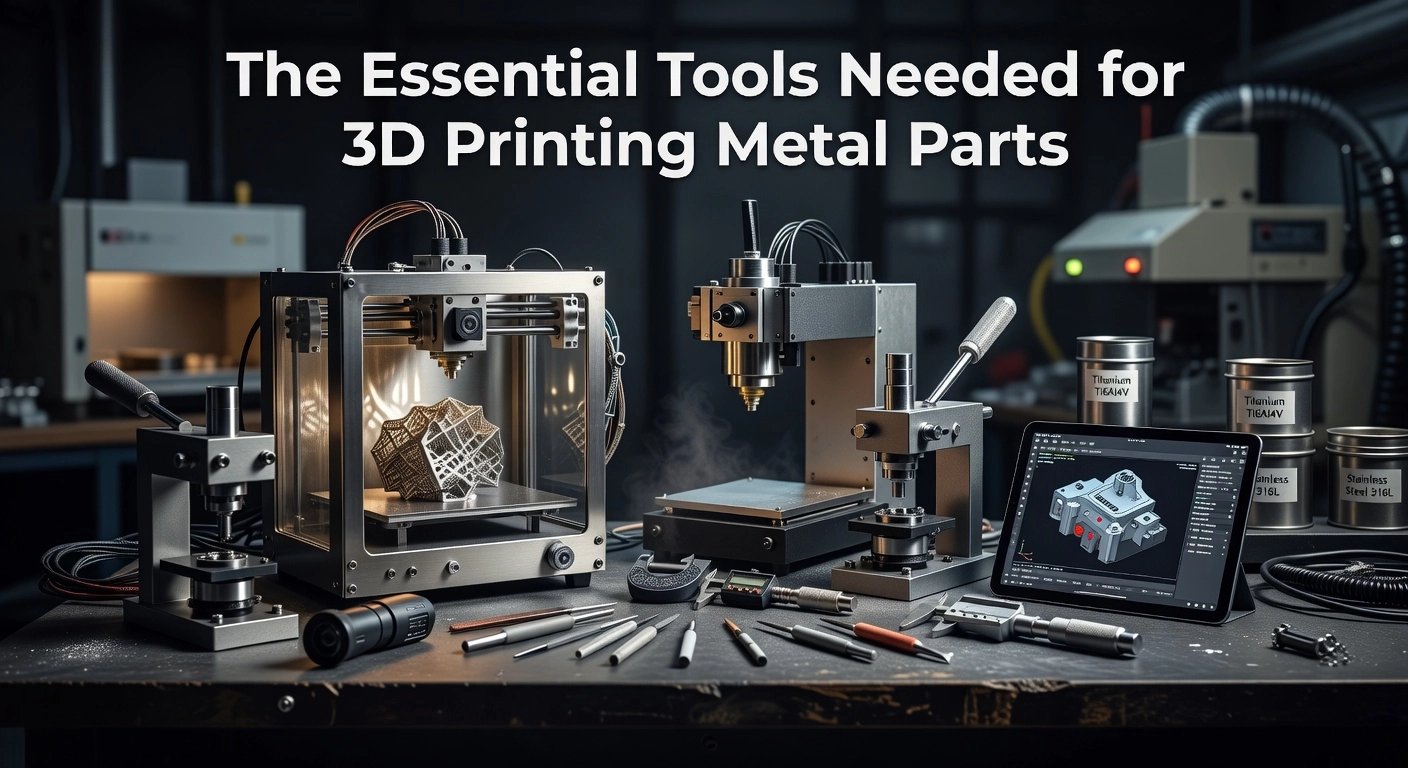
Metal 3D printing sounds advanced, yet much of what you need to understand begins with a familiar process. This post examines how fused deposition modeling connects to metal, and what is realistically achievable on beginner-friendly systems. If you have ever searched for fdm meaning 3d printing, you will learn that FDM stands for fused deposition modeling, a technique that extrudes thermoplastic filament through a heated nozzle to build parts layer by layer.
We will unpack how this polymer process intersects with metal applications. You will see the spectrum of approaches, from metal-filled composite filaments that provide metallic appearance, to bound metal filament workflows that require debinding and sintering to create near-fully metal parts. Expect a clear explanation of materials, key print parameters, thermal management, shrinkage, and post-processing. We will compare strength, density, accuracy, and surface finish against standard polymers and against true metal additive methods like powder bed fusion. Cost, safety, and equipment requirements will be covered in practical terms. By the end, beginners will have a framework to choose the right route, set realistic expectations, and avoid common pitfalls when exploring metal with FDM.
The Current Landscape of FDM and Metal 3D Printing
FDM’s surge in adoption and what it means for beginners
For readers seeking clarity on FDM meaning 3D printing, it refers to Fused Deposition Modeling, an extrusion process that builds parts layer by layer from thermoplastic filaments. FDM remains the most widely used modality due to cost efficiency, material range, and ease of operation. In 2024, FDM accounted for roughly 44.8% of the global 3D printer market, a signal of broad adoption across education, prototyping, and light manufacturing, as reported in the global 3D printers market analysis. Market outlooks indicate sustained growth as users adopt higher performance polymers and composites, with FDM revenue projected to expand significantly through 2033, according to this FDM market forecast. For beginners, actionable steps include calibrating extrusion flow and temperature with PLA, then advancing to functional materials that match application requirements, such as PETG for chemical resistance or fiber‑filled filaments for stiffness.
Why metal 3D printing demand is rising across industries
Metal additive manufacturing addresses complex geometries, weight reduction, and short supply chains. Aerospace and defense lead adoption due to lightweight, high‑strength parts and validated reliability gains for critical components, a trend reinforced by recent research demonstrating stronger, safer parts for high‑stress environments. Automotive programs apply metal AM to consolidate multi‑part assemblies and reduce mass, while healthcare accelerates personalized implants, guides, and dental prosthetics. The competitive landscape is intensifying in 2025, with lower cost machines expanding access, and new trade agreements improving cross‑border access to materials and services. For entry‑level teams, the winning approach is to start with small functional geometries, define performance targets early, and budget for finishing steps that drive final part quality.
How The Virtual Foundry is democratizing metal AM with Filamet
The Virtual Foundry enables metal parts on standard FDM and FFF printers through Filamet, a metal‑rich filament designed for approachable workflows. Users can print common alloys such as 316L stainless steel, bronze, copper, and even tool steels, then follow debinding and sintering to achieve dense metal parts suitable for art, jewelry, fixtures, and advanced R&D. Safety is enhanced since metal powders are bound in a thermoplastic, and overall costs are reduced versus capital‑intensive systems, which aligns with education and small lab budgets. Practical guidance, active community knowledge sharing, and evolving material options help newcomers progress from aesthetic prints to functional, testable hardware. As FDM matures and metal demand grows, this pathway bridges prototyping and production, preparing teams for deeper industrial workflows in subsequent phases.
Understanding FDM: Foundation for Beginners
FDM as an affordable, accessible starting point
Fused Deposition Modeling builds parts by extruding thermoplastic filament through a heated nozzle, placing material layer by layer with precise motion control. The hardware is mechanically simple, which keeps machine and maintenance costs low, and filament comes on standardized spools that are easy to source and store. Entry workflows are straightforward, slice a CAD model, choose layer height and temperatures, and print. This simplicity, plus a vast open community, explains why classrooms, makerspaces, and home studios often begin with FDM. For users at The Virtual Foundry, FDM also serves as the bridge to printing with metal-filled consumables that can be transformed into pure metal parts, extending the same toolchain into art, jewelry, and engineering contexts.
Materials that boost strength, ABS and nylon
Material selection drives performance. ABS offers good impact resistance and heat tolerance, making it suitable for fixtures and snap-fit housings, but it benefits from a 90 to 110 C heated bed and an enclosure to mitigate warping, as outlined in the material guidance from FDM material decision guides. Nylon provides higher wear resistance and fatigue strength, ideal for gears, hinges, and living mechanisms. Because nylon is hygroscopic, store spools in a dry box and dry at 60 to 70 C before printing, then use a 240 to 270 C nozzle and a heated bed to reduce warpage, practices reinforced in this FDM materials overview. Both materials often print best with 0.2 mm layers, 30 to 60 percent infill for functional parts, and three to five perimeters for robust walls.
Why educators and hobbyists favor FDM
FDM balances cost, safety, and learning value, so students can iterate rapidly while seeing direct cause and effect from settings to part quality. Open ecosystems enable quick upgrades, from hardened nozzles for abrasive composites to simple enclosures. A practical path is to tune with PLA, then transition to ABS or nylon once dimensional accuracy and bed adhesion are consistent. As industries adopt higher performance AM, highlighted in these 2025 innovation roundups, FDM skills map naturally to advanced materials, including metal-focused projects using Filamet powered workflows.
How The Virtual Foundry Innovates with Filamet™
Turning standard FDM into metal AM with Filamet™
Filamet is a bound metal filament that lets open‑architecture FDM printers produce real metal parts. The filament encapsulates fine metal powders in a PLA‑compatible binder, with certain variants reaching up to 90 percent metal by mass, which is crucial for dense, predominantly metal outcomes after sintering The Virtual Foundry’s Filamet press announcement. Users print parts much like PLA, then debind and sinter in a controlled furnace cycle where the polymer is removed and metal particles fuse into a solid, near‑net‑shape object Overview of Filamet on desktop systems. For predictable results, plan for linear shrink of roughly 14 to 20 percent, model scale‑up accordingly, and target high density with 100 percent infill and robust perimeters. Provide vent paths so binder volatiles can escape during heat treatment, and support complex geometries in refractory media to limit distortion. For beginners exploring fdm meaning 3d printing, this workflow extends familiar extrusion techniques into true metal additive manufacturing with minimal changes to toolchains.
Cost, safety, and applications from art to aerospace
Leveraging existing printers avoids the capital, facilities, and training burden typical of high‑energy metal systems, cutting both initial and operating costs. Because Filamet keeps powders bound in a thermoplastic matrix, it simplifies handling and improves shop safety compared to loose powders, aligning with an open, safe, and cost‑competitive approach Analysis of Filamet’s cost and safety advantages. Market dynamics in 2025, including intensified competition and new trade agreements, further reduce barriers to material access and global collaboration. Applications span bronze sculptures and jewelry with post‑sinter patinas, copper EMI shields and heat spreaders, and stainless tooling inserts for jigs or low‑volume forming. In aerospace and nuclear research contexts, recent breakthroughs highlight enhanced reliability and strength for critical metal parts, supporting rapid prototyping of lightweight brackets and flow hardware that later transitions to certified production routes. Actionable starting points include selecting alloy to match requirements, for example 316L for corrosion resistance, orienting for uniform cross‑sections to aid debinding, and validating density via Archimedes testing. This accessible pathway prepares users for finishing and qualification workflows covered in subsequent sections.
Emerging Trends: Metal 3D Printing and FDM
Market trajectory and implications
Metal additive manufacturing is entering a scaling phase, with analyses indicating roughly 25 percent annual growth. Recent data values the sector near 9.3 billion dollars in 2024 and 11.7 billion in 2025 at 26.2 percent CAGR, with a forecast of 29.4 billion by 2029 around 25.9 percent CAGR, see Metal 3D Printing Market Report 2025. Key drivers are lightweight aerospace parts, patient specific implants, on demand spares, and energy applications. For beginners clarifying FDM meaning 3D printing, fused deposition systems paired with bound metal feedstocks expand access to this growth at low capital cost. Actionable step, pick one part family, map an FDM to sinter workflow, estimate shrinkage and finishing, then compare total cost to machining.
Sustainable materials and faster processes
Sustainability and throughput are converging. Researchers showed a fully recyclable 3D printed PCB using PVA and liquid metal, recovering up to 99.4 percent of the polymer and 98.6 percent of the metal, see recyclable 3D printed PCB results. Faster photopolymer routes such as Continuous Liquid Interface Production, which cures resin continuously through an oxygen permeable window, demonstrate minute scale cycle times. While CLIP targets resins, the same expectation for speed is pushing FDM improvements and, for metal FDM, quicker green builds that accelerate design iteration. Sustainability also improves because near net shapes reduce machining scrap and allow lighter lattices that meet strength targets.
Industry impact and next moves
These advances are reshaping aerospace, healthcare, automotive, and energy. Aerospace teams apply internal channels for lightweight, stronger parts, and nuclear and energy users pursue reliability gains in critical components. Hospitals adopt patient matched metal implants, and automakers deploy AM for high performance tooling and low volume end use parts. New 2025 trade agreements are easing cross border material flow, and intensified competition is lowering entry costs, catalysts for adoption. To start, choose an alloy aligned to the duty cycle, for example stainless steel for corrosion resistance or copper for thermal transfer, pilot a small geometry with Filamet from The Virtual Foundry, then plan debinding, sintering, and finishing, leveraging community guidance.
Applications and Benefits Across Industries
Manufacturing and aerospace
For readers mapping fdm meaning 3d printing to real use cases, metal additive manufacturing turns design intent into functional components with complex internal features, part consolidation, and rapid iteration. In manufacturing, teams use metal AM for conformal-cooling inserts, custom end-of-arm tooling, and durable jigs that cut lead time from weeks to days, while reducing material waste typical of subtractive workflows. Aerospace programs leverage lattice structures and internal channels to reduce mass and improve thermal management, which directly supports fuel savings and reliability improvements reported in recent studies of critical parts in aerospace and nuclear settings. Beginners can start by redesigning a legacy bracket or fixture for consolidation, applying basic DfAM rules like keeping overhangs under 45 degrees, orienting to minimize supports, and validating with simple load calculations. For additional context on typical use cases and benefits, see these overviews of applications of metal 3D printing in manufacturing and aerospace and metal 3D printing in aerospace and defense.
Arts, jewelry, and accessibility
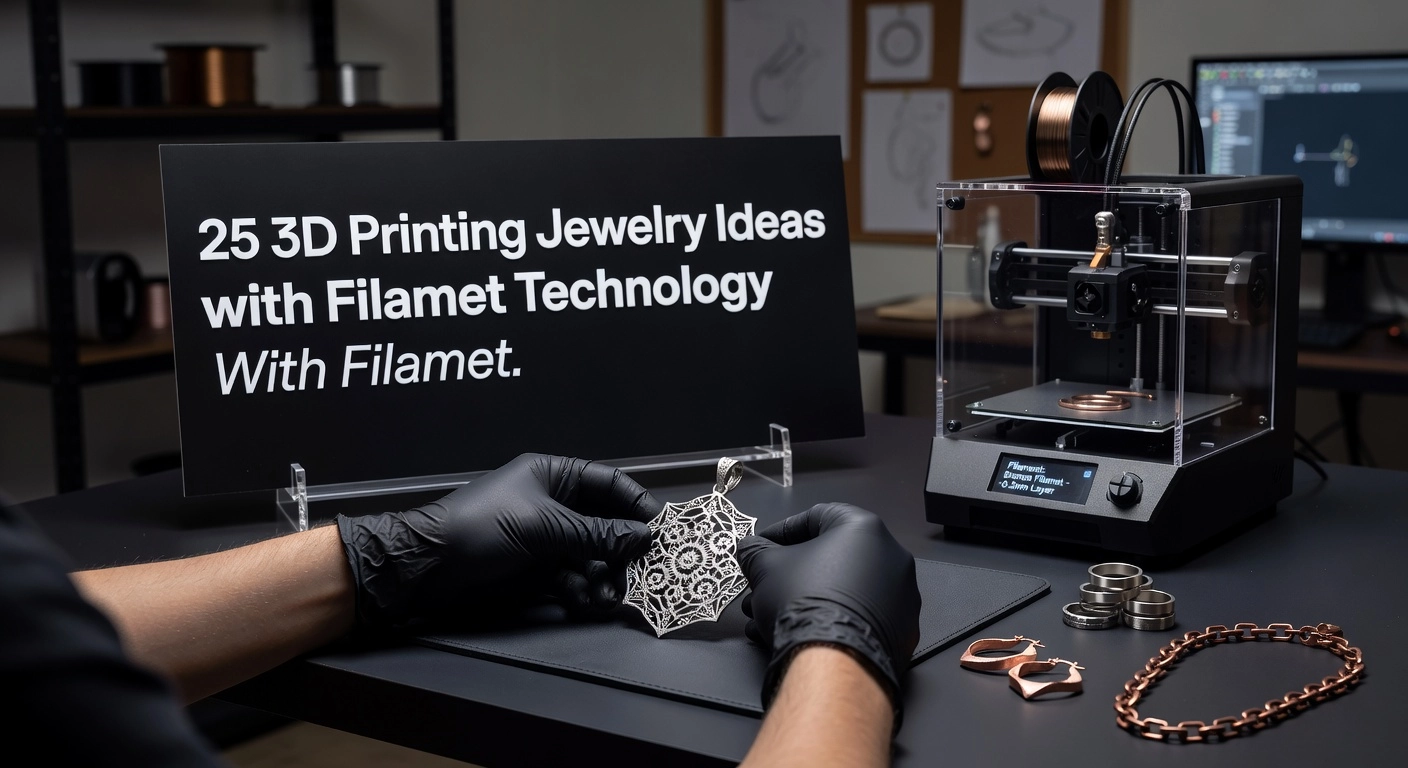
Metal FDM workflows lower the barrier for artists and jewelers by enabling studio-scale production of intricate forms without foundry infrastructure. Designers print a dense “green” part, then debind and sinter to achieve a metallic result suitable for finishing processes like tumbling, brushing, patination, or light machining. Practical starting points include 0.2 mm layer heights for fine detail, generous fillets at internal corners to mitigate stress concentrations, and orientation that keeps visible surfaces free of supports for minimal post-processing. Bronze, copper, and stainless materials support different visual and functional outcomes, from high-polish jewelry to conductive artworks and durable display hardware. Early test coupons, such as simple bars or medallions, help dial in density and surface finish before committing to complex pieces.
Bridging traditional and new age workflows
The Virtual Foundry connects open-architecture FDM tools with metallurgical outcomes, which lets manufacturers and creators adopt metal AM without specialized laser systems. This bridge aligns with industry trends in 2025 that favor cross-border collaboration and material accessibility, simplifying how schools, studios, and small shops source filaments and share processing knowledge. By pairing printable feedstocks with guidance on debinding, sintering, and finishing, the workflow integrates seamlessly with traditional steps like polishing, brazing, and light CNC refinement. Actionable practice includes accounting for predictable sintering shrinkage in CAD, using orientation to protect critical dimensions, and validating parts with simple metrology before production. This combination of accessible printing and robust finishing closes the gap between prototyping and end-use metal parts across industries.
Key Insights on the Impact of Metal 3D Printing
Democratization and its implications
Metal 3D printing built on FDM meaning 3d printing shifts advanced fabrication from specialized labs to desktops. Bound metal filament workflows produce pure metal parts on open architecture printers, then consolidate them through debinding and sintering. This access decentralizes production, reducing single point supply risks and enabling local spares for maintenance. Evidence from recent breakthroughs shows safer, stronger critical parts for aerospace and nuclear applications, increasing trust in printed components. In 2025, new trade agreements and intensified market competition are lowering cost and easing cross border material access, accelerating adoption in schools and small plants.
Low cost entry, high leverage for small firms
Affordable entry enables rapid iteration, short tooling cycles, and custom products without minimum order constraints. A jewelry studio can print a bronze concept, sinter it over a weekend, and deliver client ready samples in days. A job shop can trial internal cooling channels in a stainless insert before committing to machining, cutting redesign risk and minimizing waste. Practical tips include modeling for uniform walls, adding fillets at stress risers, and budgeting for isotropic sintering shrinkage of roughly 10 to 20 percent. Plan for surface finishing, for example tumbling or light machining, to reach tolerance and cosmetic targets.
The Virtual Foundry’s ongoing role
The Virtual Foundry sustains this shift with materials, guidance, and a collaborative ecosystem. Its Filamet options, including stainless steel, bronze, and copper, support use cases from art to functional fixtures. Education kits and structured curricula bring hands on metal AM to classrooms and labs, building a skilled pipeline. Active community channels surface parameter sets, kiln profiles, and case studies that shorten learning curves. By connecting users and documenting best practices, the company turns accessibility into repeatable, production grade outcomes.
Conclusion: Embracing Metal 3D Printing for the Future
Metal FDM is moving 3D printing from plastic prototypes to functional parts with complex geometries and low material waste. Breakthroughs reported for aerospace and nuclear show improved reliability and strength in critical components, confirming the pathway to robust metal AM. In 2025, new trade agreements are boosting cross-border material and process exchange, while innovations are transforming aerospace, healthcare, and construction. For readers exploring fdm meaning 3d printing, Fused Deposition Modeling becomes a metal workflow when paired with bound metal feedstock and carefully managed sintering. Filamet from The Virtual Foundry enables this transition across stainless steel, bronze, copper, and more, letting beginners progress to dense, pure metal parts on familiar machines.
Choose material by application, stainless for jigs, bronze for jewelry, copper for thermal or RF prototypes. Print calibration coupons, record X, Y, Z shrinkage, then tune infill, shells, and extrusion width to hit dimensional and density goals. Plan post processing early, including safe depowdering, thermal debind when required, sintering schedules, and finishing such as tumbling or bead blasting. Leverage The Virtual Foundry community, share slicer profiles and kiln curves, explore Filamet, and turn individual learnings into repeatable, production-ready workflows and verified quality metrics.