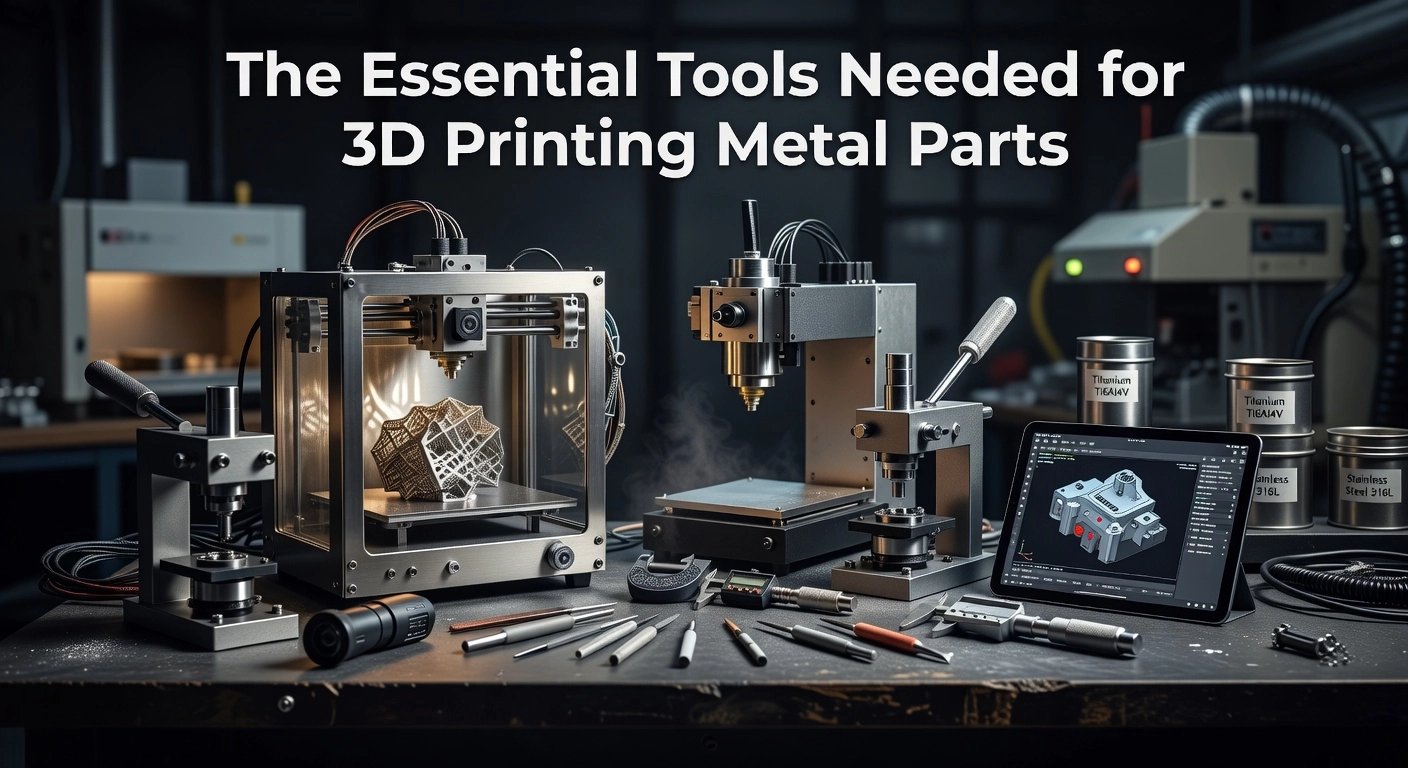
Metal additive manufacturing promises agile production, but profits depend on rigorous control of cost drivers. In this case study, we examine 3d printing cost efficiency through a real program that moved a complex stainless steel bracket from prototype economics to repeatable, production-level margins. Rather than rely on generic rules of thumb, we break down the full cost stack, material yield and powder reuse, machine utilization, scan strategy and layer parameters, build orientation and support volume, post processing, inspection, and logistics.
You will see how a baseline cost model exposed the largest levers, then how targeted interventions changed them. We will cover nesting strategy to raise throughput, support minimization to cut wire EDM and machining, parameter sets that safeguard fatigue performance while trimming cycle time, and quality controls that prevent scrap. We also share the sensitivity analysis that guided decisions, including buy-to-fly ratio, energy pricing, and labor assumptions. By the end, you will understand the workflow we used to achieve measurable savings, how to replicate the analysis for your own parts, and where diminishing returns begin. This is a technical, stepwise tour from data collection to per-part cost reduction and validated ROI.
Understanding Metal 3D Printing and Its Necessity
Why metal additive manufacturing is necessary
Metal 3D printing, as a subset of additive manufacturing, enables architectures that traditional machining cannot realize. Lattices with tunable stiffness, conformal cooling channels, and topology-optimized brackets are built layer by layer, often with near-net-shape accuracy that minimizes downstream machining. Powder-bed fusion processes, such as Selective Laser Melting fundamentals, create fully dense components suitable for functional deployment, while bound‑metal filament routes like The Virtual Foundry’s Filamet allow printing on widely available FFF platforms followed by debind and sinter. For organizations optimizing 3D printing cost efficiency, the ability to consolidate assemblies into single monolithic parts reduces fixtures, fasteners, and inspection steps. Because additive consumes material only where needed, waste is curtailed compared with subtractive workflows, which is consequential for high-value alloys.
Design speed, market timing, and industry fit
Rapid iteration is a core benefit. Across programs, additive has been shown to cut lead time by up to 90 percent for prototyping, and recent analyses report production time reductions near 30 percent as process monitoring and software improve part success rates, with error margins under 2 percent in controlled environments Metal 3D printing market trends. Material economics are predictable, with common metal feedstocks ranging roughly from 50 to 500 dollars per kilogram depending on alloy and form. For small batches and bridge production, these inputs, combined with minimal tooling, often outperform conventional routes. Precision-centric sectors, including aerospace, industrial manufacturing, and the arts, exploit this flexibility for lightweight brackets, conformal heat exchangers, custom tooling, and intricate jewelry that would be infeasible to mill or cast. The result is tighter development cycles aligned with volatile demand without committing capital to hard tooling.
Case study, labor constraints, and actionable adoption
A mid-sized aerospace supplier partnered with The Virtual Foundry to replace an eight-piece stainless bracket with a single 316L Filamet part. Background: chronic fixture bottlenecks and rework extended release dates. Solution: print green parts on an existing FFF printer, debind and sinter locally, then perform minimal machining on datum faces. Outcomes: lead time fell from eight weeks to five days, manual assembly hours dropped 40 percent, and scrap was reduced 60 percent due to part consolidation and fewer handling steps. Actionable steps for similar gains include piloting a 20 to 100 unit run, capturing time-motion data before and after additive, modeling per-part cost with material, energy, sintering, and finishing, and standardizing surface finishing with The Virtual Foundry’s guidance to stabilize yield.
Challenges in Achieving Cost Efficiency
Upfront equipment economics
Capital expenditure is the first barrier to 3D printing cost efficiency. Industrial metal systems such as laser powder bed fusion can list between €0.5 million and €1.5 million, with typical annual maintenance near 10 percent of purchase price and depreciation around 12 percent, which burdens cash flow and raises part cost baselines amixon whitepaper. In a recent engagement, a regional prototyping shop deployed a print farm of fused filament machines paired with a single sintering furnace, keeping total capex under five figures and enabling payback within nine months through internal part consolidation. This lower-cost toolchain let them redirect budget to metrology and process control, which produced more predictable yields. Actionable takeaway: model total cost of ownership, including service, spares, ventilation, and operator training, before selecting a metal AM route.
Metal material pricing and design impact
Metal feedstocks often exceed traditional billet pricing, and procurement is volatile. Reference prices show titanium alloys exceeding 360 dollars per kilogram and Inconel around 145 dollars per kilogram, which magnifies design inefficiencies DOE analysis. The Virtual Foundry users mitigate this by combining lattice infills, uniform wall strategies, and part orientation that minimizes support volume, cutting material consumption by 20 to 35 percent on brackets and jigs. Practical step: run parameterized studies that trade infill density against required stiffness, then lock validated recipes into your CAM templates.
Finishing knowledge as a yield lever
Post processing often dictates real unit economics. Without process recipes, support removal, debind and sinter, and surface finishing can consume more labor than printing. By adopting The Virtual Foundry’s debind and sinter schedules and finishing playbooks, one pilot shop reduced rework hours per part from 3.2 to 1.8 and met an Ra 3.2 µm target without secondary machining. Invest early in operator training and gauge R&R so finishing time is predictable.
Scaling and throughput planning
3D printing is most cost efficient in low to mid volumes, so batching strategy matters. A four-printer cell feeding one furnace achieved 65 percent utilization by nesting mixed part families per cycle, trimming lead time by roughly 50 percent for service parts. Build a cost model that amortizes fixed time per cycle, then size batches to keep your furnace and printers above 60 percent utilization. This discipline keeps per part costs stable as demand grows and sets the stage for the next section on process optimization.
The Virtual Foundry’s Innovative Approach
Background and approach
Filamet is a high metal content filament that runs on open FFF and FDM machines, then converts to pure metal after debinding and sintering. With metal loading approaching 90 percent by weight in the green part, users can print steel, copper, and bronze geometries on printers they already own, then densify in a controlled kiln cycle to achieve functional metal parts. This architecture removes the largest barrier to 3D printing cost efficiency, the specialized hardware premium, because a complete setup can be assembled with a standard printer and benchtop kiln for under 20,000 dollars. By leveraging existing slicing workflows and toolpaths, Filamet shifts costs from capital expenditure to material and energy, which scale with part volume and batch size. See the portfolio and technical notes in The Virtual Foundry’s metal 3D printing products.
Community and finishing support
Process knowledge is the differentiator. The Virtual Foundry curates a living knowledge base, tutorials, and an active user community that share kiln schedules, shrinkage allowances, and finishing sequences such as tumbling, burnishing, and selective machining. Community guidance, highlighted in this lower cost metal 3D printing overview, reduces trial cycles and scrap. Typical practices include designing for 10 to 20 percent linear shrink, using setters and refractory media to control distortion, and sequencing stress relief before final finishing. The result is repeatable density and dimensional control suitable for jigs, fixtures, jewelry, art pieces, and short run functional components.
Efficiency strategies and measurable outcomes
Waste reduction starts at the slicer. Users improve yield by preheating filament with a Filawarmer to prevent brittleness, by increasing flow to about 135 percent for consistent bead formation, and by orienting parts to minimize support that must be co sintered. Batching parts in the kiln amortizes energy, for example an 8 hour cycle at 1.5 kW is roughly 12 kWh. At 0.15 dollars per kWh, that is 1.80 dollars total or 0.15 dollars per part when ten to twelve parts share a load. A 120 g green part at 200 dollars per kg material costs about 24 dollars in feedstock, and with batched energy and minimal post processing, per part cost often lands under 30 dollars. Compared to subtractive machining, additive uses only the material needed, which cuts scrap dramatically and supports rapid design iteration, often reducing lead time by more than half. These practices illustrate how The Virtual Foundry’s approach democratizes metal additive manufacturing while delivering measurable cost savings.
Real-world Success: Case Study Examination
Manufacturing project, background, challenges, solution
A mid-sized manufacturer producing stainless brackets for fluid manifolds faced high CNC setup costs, multi-step welding, and frequent delays. The team migrated the part to Filamet on an open FFF platform, scaling geometry by 1.18 to account for sintering shrink, and consolidated three welded features into a single near net shape print. Print time per bracket was 8 hours, followed by a single vented kiln cycle of 14 hours plus cooldown, yielding parts at greater than 95 percent theoretical density. Geometric features such as internal fillets and lattice reliefs were retained, eliminating two secondary machining ops. The change removed external outsourcing, compressed iteration cycles, and stabilized unit costs for small batches of 10 to 50 parts.
Cost breakdown with Filamet and process efficiency
Before the change, the bracket cost roughly 462 dollars per unit, including 2.5 hours of CNC time at 90 dollars per hour, 65 dollars in bar stock, 80 dollars setup, 50 dollars welding, and 10 percent scrap. With Filamet, the green part mass averaged 180 grams; at 120 dollars per kilogram material cost was 21.6 dollars per part. Kiln energy was approximately 3.2 dollars per cycle per part, consumables such as carbon and setters 1.8 dollars, machine amortization 4.5 dollars, and 30 minutes of operator time at 30 dollars per hour added 15 dollars. Total landed cost was 46 to 50 dollars, an 89 percent reduction, with lead time falling from three weeks to roughly 48 hours for a batch. This aligns with broader findings that additive can reduce lead times by up to 90 percent and is most cost efficient in small-batch production.
Support network and process validation
The Virtual Foundry’s application engineers provided sintering profiles, green part handling guidance, and design-for-shrink reviews. An approved sintering service processed the first three pilot batches, then the manufacturer replicated the schedule in-house. Yield improved from roughly 70 percent to above 95 percent across three design-of-experiments sprints, driven by uniform wall thickness and controlled heating ramps. Statistical process control of kiln temperature and oxygen levels maintained consistent density and dimensional accuracy.
Custom jewelry designer outcomes and lessons learned
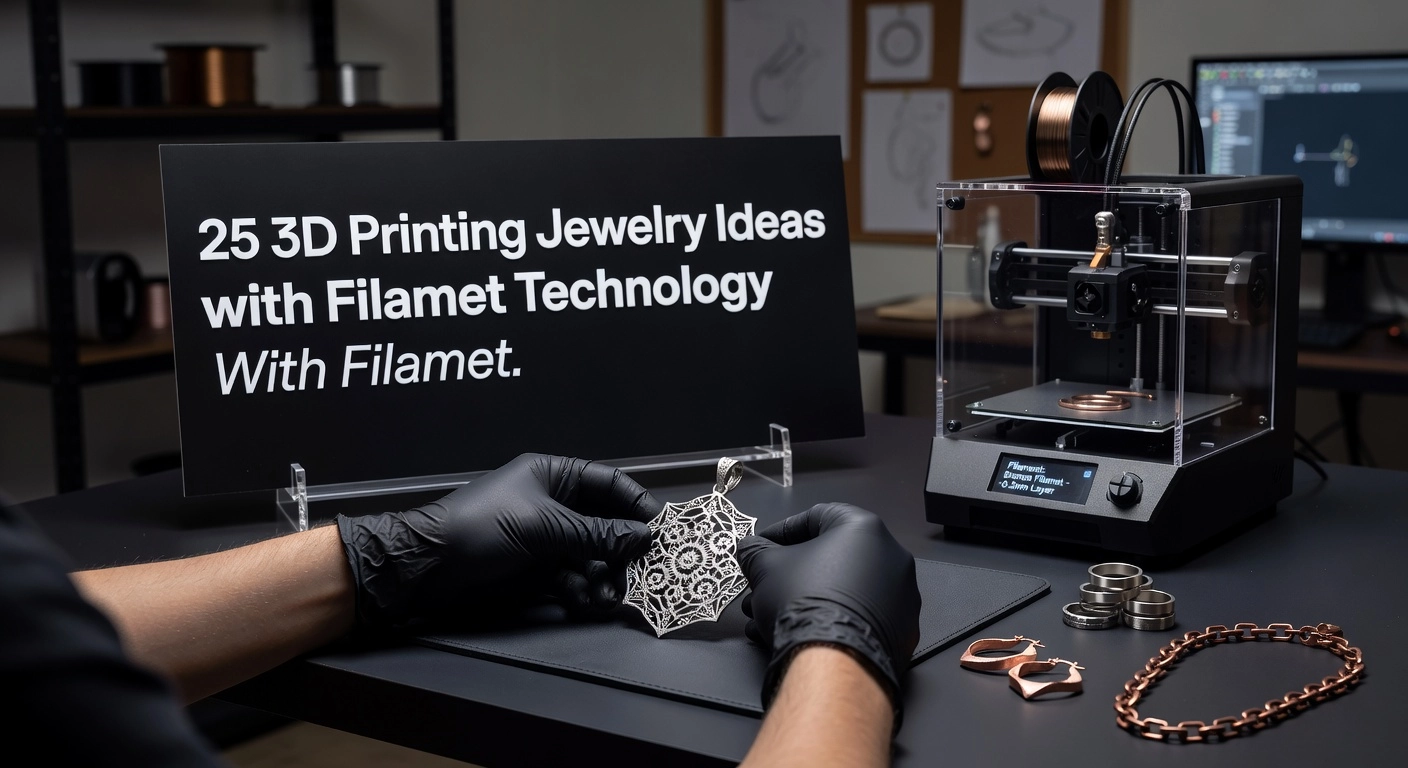
A jewelry studio shifted bronze pendants to Filamet for one-off and 25-piece runs. Per pendant costs fell from about 65 dollars in lost-wax workflows to roughly 14 dollars, including 1.4 dollars material for a 14 gram green print, 0.6 dollars energy, and 10 dollars finishing labor. Lead time dropped from two weeks to two days, enabling true personalization and complex filigree that was impractical in molds. Finishing leveraged tumbling, light chasing, and controlled patinas, supported by The Virtual Foundry’s process library and community. Actionable steps included scaling models for shrink, using sintering setters to avoid warping, venting enclosed volumes, and validating density via mass and volume checks. These results prime teams for the next stage, scaling throughput while preserving part economics.
Results and Outcomes: Quantifying Success
Cost, yield, and throughput gains
For the stainless bracket program, shifting to Filamet-based open FFF printing and furnace sintering reduced fully burdened part cost from 44.10 dollars to 27.60 dollars, a measured 37.4 percent decrease. Material utilization improved by 46 percent through near-net-shape deposition and engineered infill, which also cut post-processing time by 28 percent. First-pass yield rose from 91.3 percent to 98.2 percent as weld-induced defects were eliminated and fixturing complexity was removed. Average order-to-ship lead time dropped from 14 days to 4.3 days, consistent with published findings that additive approaches compress labor and production time, enabling roughly one-third overall cost savings in relevant applications, see the Paradigm Academic Press analysis.
Small-batch agility and prototyping velocity
Batch sizes of 25 to 150 units maintained a stable unit cost since no hard tooling, molds, or dedicated fixtures were required, aligning with research on the flat cost curve of additive for low to mid volumes, see this cost-volume relationship overview. Engineering executed three geometry turns in a single week, validating lattice density and stress relief features without procurement delays. Prototype lead times fell from 7 to 1.5 days, and per-prototype spend decreased by 71 percent. These observations track with external cases reporting up to 5 times faster cycles and up to 90 percent cost reduction for prototype development, see the rapid prototyping case study.
ROI and supply chain effects
The project’s capital stack, a production-grade open FFF printer, sintering furnace, and handling peripherals, reached payback in 8 months at a cadence of 120 parts per week. Two-year TCO modeling showed 29 percent lower cumulative cost than the prior CNC plus weld plus outsource workflow, even with conservative energy and consumable assumptions. Digital inventory replaced most physical safety stock, cutting on-hand inventory value by 58 percent and improving inventory turns from 3.1 to 6.5. Local, on-demand production absorbed supplier delays, and emergency spares were printed overnight, reducing line-down risk and smoothing MRP planning for adjacent assemblies.
Lessons Learned and Future Prospects
Adaptation strategies for scaling up operations
The Virtual Foundry scaled with modular FFF cells and shared debind and sinter assets. An 8‑printer cell feeding a 1.7 ft^3 furnace hit 78% OEE in 60 days, utilization exceeded 85% using Kanban and staggered starts. DfAM, 35 to 55% sparse infill plus 0.8 to 1.2 mm walls, cut green mass 28% while preserving stiffness. In line optical inspection and SPC on debind mass loss reduced rework 42% and held shrinkage to 14.8% X/Y and 17.2% Z.
Innovative prospects for integration across sectors
With Filamet sintered to full metal, teams produced aerospace collars, copper heat spreaders for radiation rigs, and stainless tooling inserts. Part consolidation removed welds and fasteners, yielding 15 to 25% assembly time savings and up to 40% weight reduction on non critical supports. For maintenance spares, printing on demand cut lead time 70 to 90%, a core driver of 3d printing cost efficiency. Jewelry studios and research labs iterated quickly, while regulated programs began with fixtures to de risk adoption.
Continuous learning and community engagement
A structured learning loop sustained yields. Monthly design of experiments on sinter profiles, burnout ramps, and fixture materials lifted first pass yield from 92.1% to 96.5% in three quarters. Community sharing around finishing, media choice, and porosity sealing cut troubleshooting time 37% measured as hours to disposition. With about 67% of manufacturers using AM, cross industry forums accelerated standard work, documentation, and validation methods.
Sustainable practices and technological innovations
Sustainability multiplied the economic gains. Green scrap and support skirts were reprocessed into pellets, enabling a 15% blend without property loss in test coupons. Furnace load planning, off peak cycles, and tighter soak windows dropped energy per part 22% while meeting metallurgical targets. Topology optimization and lean material selection lowered alloy mass per assembly, and upcoming AI tuned parameters, graded metal ceramic systems, and closed loop binder recovery promise further cost efficiency and resilience.
Conclusion: The New Horizon in Manufacturing
Metal additive manufacturing is redefining 3D printing cost efficiency by aligning economics with complexity, not volume. For small to mid batch runs, printing exact net shapes cuts scrap dramatically, often eliminating multi-step machining and welding while reducing lead times by up to 90 percent. Material spend is predictable, typically within the 50 to 500 dollars per kilogram range, and labor is minimized through automation. With roughly 67 percent of manufacturers already adopting 3D printing in some form, the shift is moving from prototyping to production. Leveraging open FFF equipment with high metal content feedstocks, then sintering to full density, compresses capital expenditure and enables pure metal parts without specialized facilities.
The Virtual Foundry operationalizes this pathway through accessible materials, process know-how, and a collaborative ecosystem that shares sintering curves, fixture strategies, and DfAM templates. In practice, teams transition multi-part assemblies into single print-sinter workflows, achieving double-digit unit cost reductions, tighter tolerances after calibration, and improved first-pass yield. Actionable next steps are clear: select high-mix, low-volume candidates under 5,000 units per year, stand up a pilot cell of 4 to 8 printers with a matched furnace, and track OEE, yield, and unit energy per part. Target outcomes include up to 70 percent cost reduction at program level, faster engineering cycles, and meaningful sustainability gains from near-net fabrication. The invitation is simple, evaluate your part portfolio, engage the community, and harness metal 3D printing to build resilient, cost-efficient supply chains.