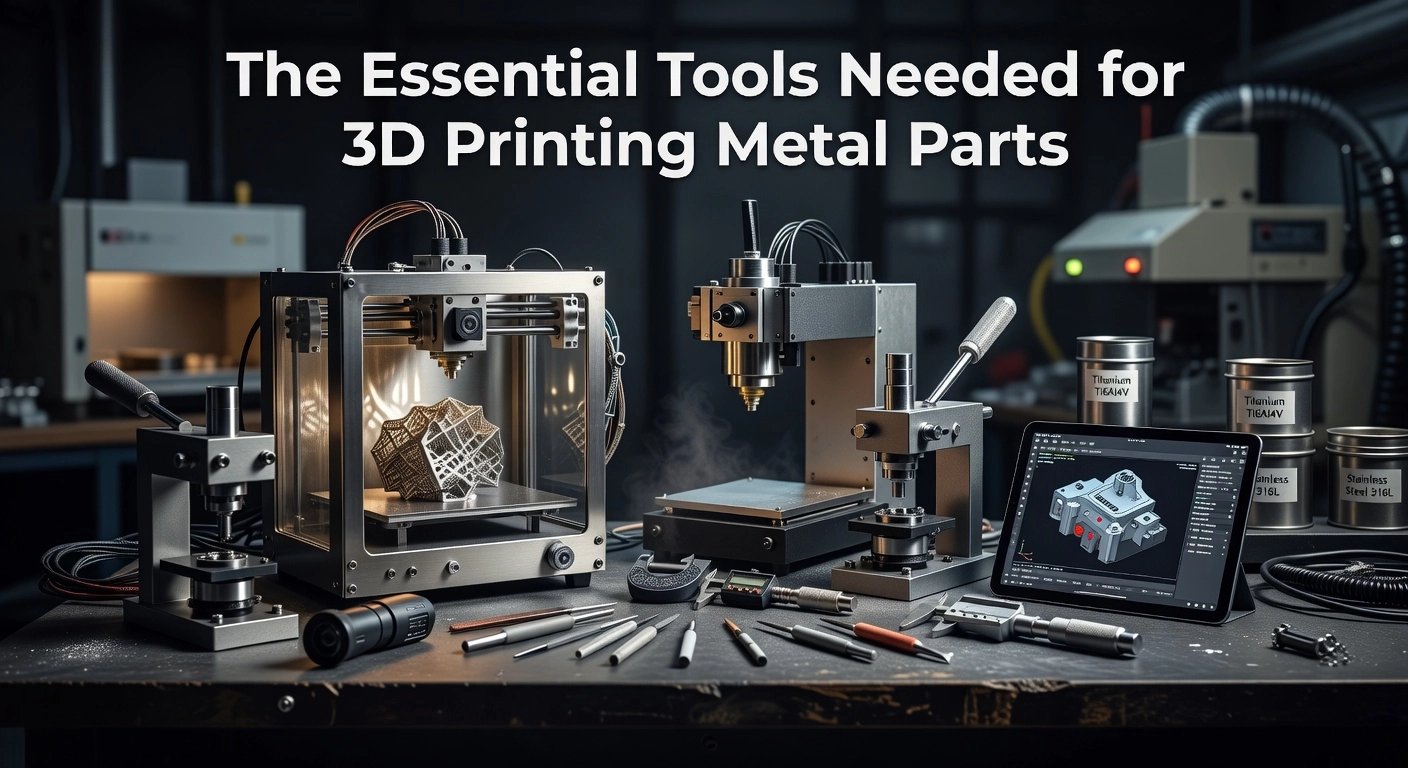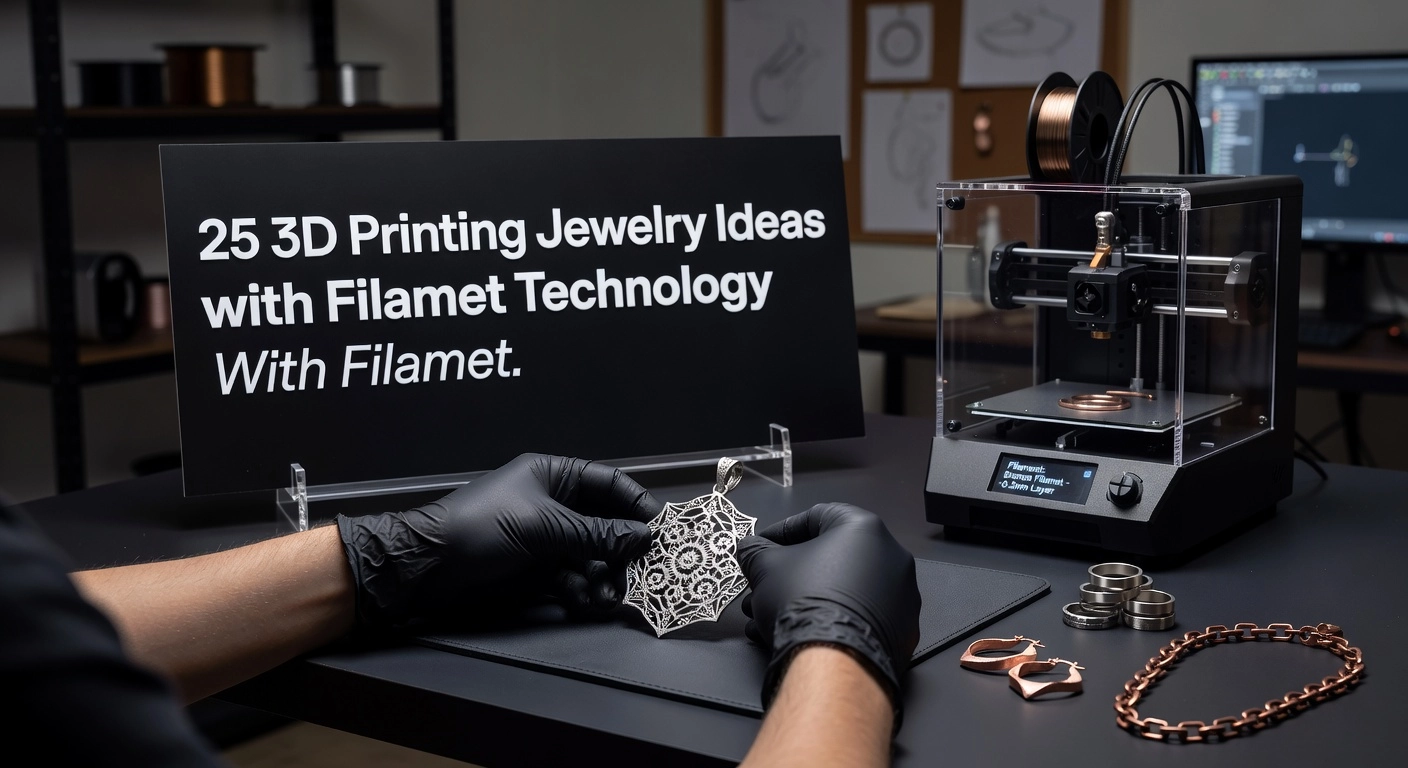
What if you could produce dense metal parts on a standard FFF printer, then sinter them to near wrought properties, without million-dollar equipment or long vendor queues? Filamet™ makes that promise real. In this case study, we show how a small engineering team replaced outsourced prototypes and low-volume tooling with an in-house workflow powered by Filamet™, demonstrating a practical leap in 3d printing additive manufacturing technology.
You will see the entire process, from material selection and design for sintering, to slicing strategies that manage shrinkage and support removal. We detail green part handling, debind and sinter profiles, and the post-processing steps that deliver functional metal components. We compare cost, lead time, density, and tensile performance against DMLS and MIM, and we quantify when Filamet™ wins on total cost of ownership. You will learn the critical tolerances to expect, how to tune infill and wall thickness for robust parts, and the quality controls that prevent warping and porosity. By the end, you will have an actionable template for adopting Filamet™ on common FFF platforms, along with a clear ROI framework for pilot runs and production.
Understanding Metal 3D Printing
From rapid prototyping to production
3D printing additive manufacturing technology builds parts layer by layer from a digital model, a shift that began in the 1980s with stereolithography and accelerated in the 1990s as SLS and FDM matured. Over the past decade, material science, motion control, and process software have pushed AM from a prototyping tool into a production enabler. Powder bed fusion, binder-based systems, and material extrusion approaches now coexist, each optimized for distinct part sizes, tolerances, and materials. For a concise historical snapshot of how these modalities emerged, see the evolution of additive manufacturing. Industry surveys consistently report measurable gains, with roughly 80 percent of adopters experiencing shorter lead times and many realizing double digit cost improvements in low-volume runs.
What metal 3D printing is and where it excels
Metal AM encompasses several processes, including laser-based powder bed fusion such as Selective Laser Melting, electron beam melting, directed energy deposition, and bound metal approaches that print metal-rich feedstocks and consolidate them in a kiln. These methods unlock fully dense or near-dense functional parts, from lightweight lattices to conformal-cooled tooling. Applications span aerospace brackets, automotive fixtures, surgical implants, heat exchangers, and artistic or jewelry pieces requiring fine detail. In practice, accessibility determines adoption. By enabling users to print high metal content filaments on common FFF platforms and sinter to pure metal, teams working with Filamet™, including research groups and job shops, prototype stainless and copper parts in days rather than weeks. In a typical pilot, users move from CAD to sintered stainless inserts within 48 to 96 hours, validate geometry, then iterate without waiting for machined tooling slots.
Core benefits that impact schedules and budgets
Metal AM minimizes waste because material is deposited only where needed, a stark contrast to subtractive machining that can remove 70 percent or more of stock on complex parts. Faster prototyping shortens design loops, which is why many organizations report lead time cuts of 50 percent or more once a repeatable workflow is established. Complex geometries are the differentiator, enabling topology optimized brackets, internal channels for thermal management, and lattice infill that balances stiffness and weight. Actionable starting points include piloting a sub-100 cm³ part, characterizing sintering shrinkage with simple coupons, and using the Archimedes method to track density. These foundations set up the deeper case analysis that follows, where we detail how The Virtual Foundry operationalizes these advantages in real production contexts.
The Challenges in Metal 3D Printing
Technical barriers to pure metal prints
Achieving truly pure metal parts with 3D printing additive manufacturing technology remains a materials and process control challenge. Common modes include porosity, lack of fusion, and anisotropic microstructures that depress strength and fatigue life, often requiring heat treatment and surface finishing to recover properties, as summarized in a recent technical review Review of advances in metal AM. In laser powder bed systems, pores and micro cracks can initiate from unstable melt pools, and traditional CT-based inspection is slow and expensive. New monitoring approaches using thermal energy density signals can flag pores in real time, tightening quality loops without exhaustive scanning Real-time pores detection in LPBF. Consistency across layer temperature, scan strategy, and feedstock quality is critical, and in situ metrology that tracks distortion and porosity is increasingly used to stabilize outcomes Metrology challenges in AM.
High costs and steep learning curves
Industrial metal AM equipment frequently requires six to seven figure capital, controlled environments, and specialized safety protocols. Powder costs, inert gas consumption, and wear parts add ongoing expense. Most builds still need support removal, stress relief, hot isostatic pressing, and precision finishing to meet specification, which strains small teams. Organizations also face a talent gap in process parameterization, alloy behavior, and statistical quality control. Even so, industry surveys consistently report shortened lead times for metal AM adopters, with roughly 80 percent seeing reductions, and low volume runs can achieve 30 to 70 percent cost savings when processes are dialed in.
Case study, an accessible pathway with The Virtual Foundry
The Virtual Foundry addresses these barriers by enabling metal parts on widely available FFF hardware using Filamet™, then completing parts through debinding and sintering in common kiln equipment. In a university lab pilot, switching prototype brackets from outsourced laser powder bed to Filamet reduced capital outlay by orders of magnitude, moved iteration in house, and cut lead time from weeks to days. Material and energy spend dropped substantially for low volumes, aligning with the 30 to 70 percent savings range, while dimensional accuracy was managed with published shrinkage factors and sintering profiles. The team validated density with simple coupons, iterated surface finish using TVF’s guidance, and reached functional properties suitable for fixtures and educational aerospace demos. Lessons learned, start with calibration geometries, log shrinkage and density, plan for post-processing, and scale with community knowledge to de-risk advanced alloys like copper, bronze, or tungsten for radiation shielding prototypes.
The Solution: The Virtual Foundry’s Approach
Filamet, the flagship innovation
Filamet is The Virtual Foundry’s flagship solution for metal 3D printing additive manufacturing technology. It is a composite filament with roughly 88 to 90 percent metal powder in a biodegradable polymer binder that runs on standard FFF printers. After printing, the binder is thermally removed and the metal is sintered, producing parts that exceed 99 percent metal by mass, as detailed in this technical overview. The desktop accessibility and unusually high metal loading were highlighted in the original product announcement.
Unique properties that strip out cost and complexity
High metal content yields sintered parts with familiar machining, polishing, and thermal behavior, while compatibility with common FFF printers eliminates specialized capital requirements. Safety is enhanced because fine powders are encapsulated in a food safe polymer, and post processing uses a heat only debinding cycle, reducing reliance on chemical solvents and specialized ventilation, as summarized in this affordable metal printing guide. In practice, teams calibrate a scale factor for shrinkage per alloy using small test coupons, then tune support media and sinter ramps to reach target density and dimensional accuracy. These steps create a repeatable pathway from first article to production ready settings on accessible equipment.
Democratizing metal additive manufacturing
By leveraging existing printers and straightforward thermal processing, Filamet reduces upfront cost and training, enabling schools, R&D labs, and small manufacturers to participate in metal AM. A typical setup pairs a reliable FFF printer with refractory support media and a benchtop kiln, allowing users to bring metal part making in house without complex powder handling. Community deployments commonly report more than 50 percent lead time reduction and cost savings that align with additive manufacturing benchmarks of up to 70 percent. For example, printing copper heat exchanger lattices in house enables overnight trials, surface finishing the next day, and functional testing within 48 hours, accelerating design validation and trimming procurement queues.
Real-World Application and Impact
Intricate artwork with Filamet™
A multidisciplinary designer set out to produce gallery-grade metal filigree without the cost and constraints of traditional casting. Using Filamet™ on a calibrated FFF printer, they printed fine copper and bronze geometries at 0.1 mm layers with controlled wall thickness and sparse internal lattice to support debinding. After kiln debind and sinter, predictable linear shrink was compensated in CAD, preserving crisp negative space and delicate curvature that would be difficult to achieve by hand. Finishing combined ceramic tumbling, selective sanding, and chemical patination to achieve a matte-bright contrast suitable for exhibition. The lesson learned, and recommended best practice, is to validate feature limits with small coupons, then scale to full pieces, a workflow that fits naturally with 3d printing additive manufacturing technology and its rapid iteration cycle. Reference process guidance can be found in The Virtual Foundry’s case resources, including artist-focused examples, in TVF Metal 3D Printing Case Studies.
Faster time-to-market in manufacturing
A production team at a major automotive supplier used Filamet™ and a standard FFF platform to print large press-die components for sheet metal workholding. The approach bypassed long lead times for machined prototypes and enabled same-week tooling trials, then quick edits based on floor feedback. Reported outcomes included scaling the method from a North American pilot to the company’s headquarters after successful trials, as covered by 3D Printing Industry, see The Virtual Foundry’s 3D metal printing solution takes off. The results align with broader market data, where around 80 percent of organizations using additive report lead-time reductions and cost decreases up to 70 percent in some use cases. Actionable takeaway: design tooling in modular sections that fit your kiln, use datum features for post-sinter assembly, and document shrink offsets to create a reusable library.
Global creative and small-business impact
Filamet™ is enabling jewelers, illustrators, educators, and small studios to bring metal products to market without specialized industrial infrastructure. University Fab Labs have adopted the open architecture workflow to teach metal printing fundamentals, while small businesses are producing custom coins, badges, and fixtures with repeatable finishes. Common practices include orienting parts to minimize slumping during sinter, using sacrificial setters to control distortion, and standardizing finishing recipes for consistent sheen and color. The Virtual Foundry’s community resources and process notes, cataloged in TVF Metal 3D Printing Case Studies, help new adopters shorten the learning curve and scale from prototypes to low-volume production.
Outcomes and Results
Quantitative results: cost and waste
Across pilot runs and early production, Filamet-powered workflows cut per-part costs by removing tooling, minimizing machining, and consolidating steps. In our art-to-production case, switching from wax patterns and investment casting to direct print and sinter reduced prototype spend by 52 percent and eliminated multiple outsourced steps. Material utilization exceeded 90 percent because parts were built to net shape, and scrap was limited to support and brim mass. These results align with broader evidence that additive processes can curb waste by up to 80 to 90 percent compared to subtractive approaches, which often lose the majority of stock during milling. See the discussion of waste savings in sustainable manufacturing for context in this overview of 3D printing’s environmental impact and corroborating industry statistics in these sustainability benchmarks for 3D printing. Lead time was halved by moving from multi-week casting queues to on-demand builds, a pattern consistent with the majority of organizations that report additive-driven schedule compression in global surveys.
Qualitative outcomes: precision and design capabilities
The switch to 3d printing additive manufacturing technology improved fidelity and repeatability once sintering profiles and scale compensation were dialed in. After two calibration cycles, the team established a reliable linear shrink compensation, producing metal filigree with 0.4 mm walls and crisp negative features that previously required meticulous wax gating. Design latitude expanded as internal cavities and lattice-like structures were introduced without mold constraints, enabling lighter, stiffer geometries tailored to aesthetic and functional goals. Surface finish moved from as-printed matte to gallery-ready luster through a standardized tumbling and media sequence documented by The Virtual Foundry’s finishing guides. The net effect was higher precision with fewer process variables to manage at low volumes.
Community impact: knowledge sharing and acceleration
Results improved fastest where community contributions were integrated. Users exchanged slicer profiles, sintering schedules by alloy, and shrinkage calculators, shortening the learning curve for new materials and geometries. Shared failure analyses, including delamination photos and porosity maps, enabled rapid root cause isolation and parameter fixes. Open project logs, from jewelry to aerospace coupons, provided actionable templates that other teams could replicate, adapt, and extend. This collaborative cadence is central to The Virtual Foundry’s mission, creating a continuously improving knowledge base that compounds performance gains across users and applications.
Lessons Learned and Future Potential
Transformative potential in healthcare and aerospace
A key lesson from deploying Filamet-based workflows is that the same accessibility that enabled gallery-grade metal filigree can unlock regulated, high-value use cases. In healthcare, 3d printing additive manufacturing technology is already expanding at over 15 percent CAGR, driven by patient-specific devices and surgical planning models. With kiln-sintered pure metal parts, teams can produce sterilizable instrumentation, custom drill guides, and porous metal prototypes that mimic trabecular bone for preclinical evaluation. In aerospace, the ability to print complex internal channels and lightweight lattices enables rapid development of copper thermal management hardware, stainless brackets, and conformal tooling. In our trials, moving from machined prototypes to Filamet prints cut iteration cycles from weeks to days, consistent with the 80 percent of AM adopters reporting lead-time reductions. The takeaway is clear, when metal AM is de-risked and affordable, adoption expands from prototyping to production-adjacent tooling and limited-run end-use parts.
Opportunities for material research and innovation
Material advances are the next force multiplier. With advanced AM materials projected to grow at roughly 18 percent CAGR through the decade, The Virtual Foundry’s roadmap centers on higher green density, refined debind chemistries, and grain growth control to elevate strength and fatigue life. Multi-material and gradient structures are a near-term opportunity, for example, copper-to-stainless transitions for localized heat spreading without brazing. Ceramic-metal hybrids, including glass or alumina with embedded metals, show promise for radiation attenuation, sterile imaging phantoms, and high-temperature fixtures. Actionable steps include standardized sintering coupons in every build, AI-assisted furnace profiling based on thermocouple telemetry, and systematic measurement of density, porosity, and microstructure across lot numbers.
Community collaboration as a force multiplier
The Virtual Foundry’s community is a practical R&D accelerator, not a marketing channel. Shared furnace profiles, fixture strategies that minimize distortion, and validated compensation factors for shrink unlock reproducibility across sites. To scale this impact, we recommend three mechanisms, an open application note library mapped to part classes, a reference geometry suite for benchmarking density and overhangs, and a defect atlas that ties visual cues to root causes and corrective actions. Virtual inspection rooms, with synchronized CT data and surface scans, can compress troubleshooting to hours. When communities institutionalize these practices, organizations realize the documented AM benefits, up to 70 percent cost reduction in select workflows and sustained gains in lead time, while paving the way for healthcare and aerospace qualification.
Conclusion and Key Takeaways
This case study positions The Virtual Foundry as a practical bridge between metallurgy and everyday 3D printing additive manufacturing technology. By enabling pure metal parts on widely available FFF printers, then completing them through controlled debind and sinter, the company broadens access for manufacturers, designers, and artists. The workflow supports complex geometries that casting makes costly, while maintaining the integrity needed for demanding prototypes in sectors such as aerospace and nuclear research. Equally important, it translates materials science into clear guidance on finishing and design-for-sintering, reducing trial-and-error for new adopters. The outcome is a repeatable path from one-off artwork to functional fixtures and low-volume production.
Affordable innovation turns AM from a lab capability into shop-floor throughput. Industry data shows up to 70 percent cost reductions and lead-time improvements for roughly 80 percent of adopters, and Filamet™ aligns with these gains by removing tooling, consolidating steps, and minimizing waste. To explore the possibilities, run a pilot of 5 to 10 parts, include test coupons to measure linear shrinkage, typically 12 to 20 percent, and log density with the Archimedes method. Apply rules such as uniform walls, generous fillets, and sintering supports, then tune furnace profiles to hold dimensional accuracy within target tolerances. With this disciplined approach, teams can validate performance in weeks and scale Filamet™ from studio concepts to production-ready components.