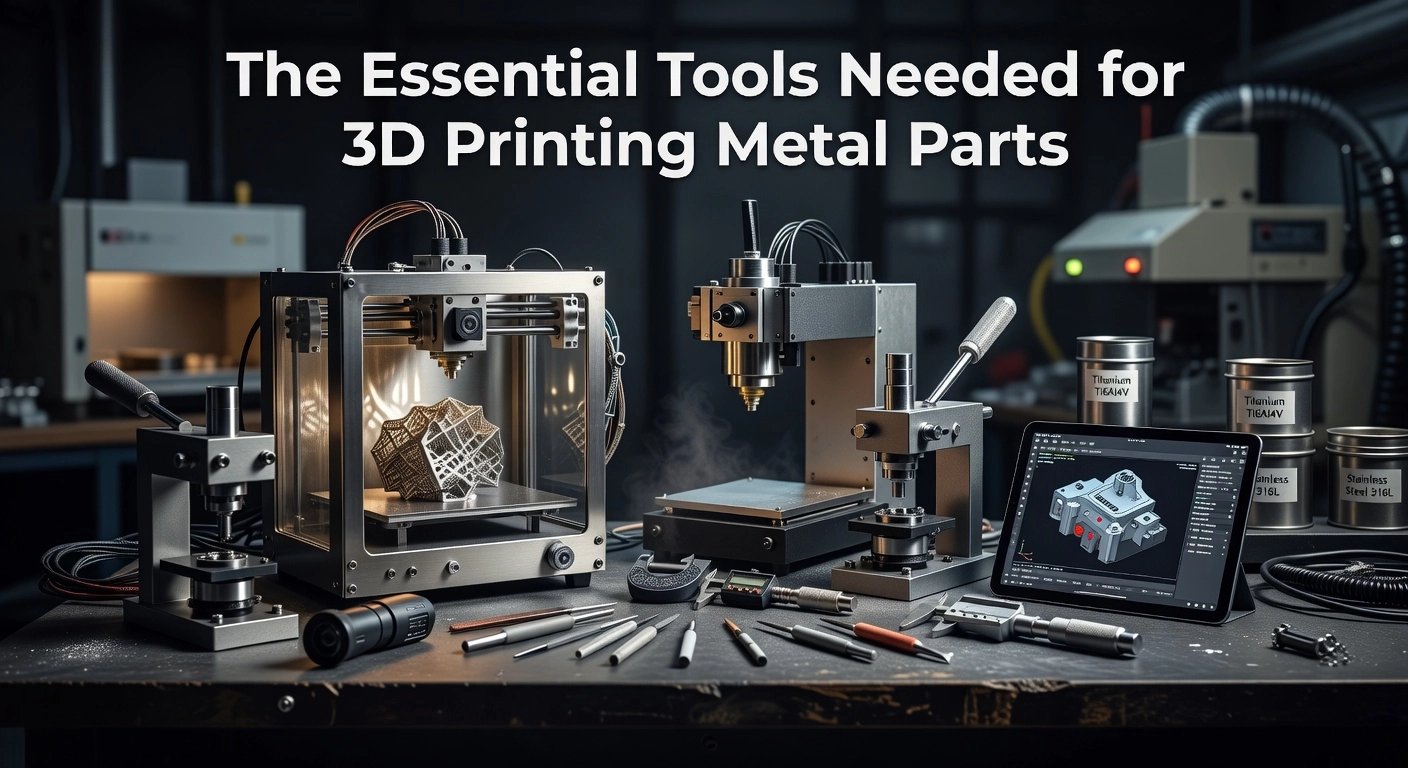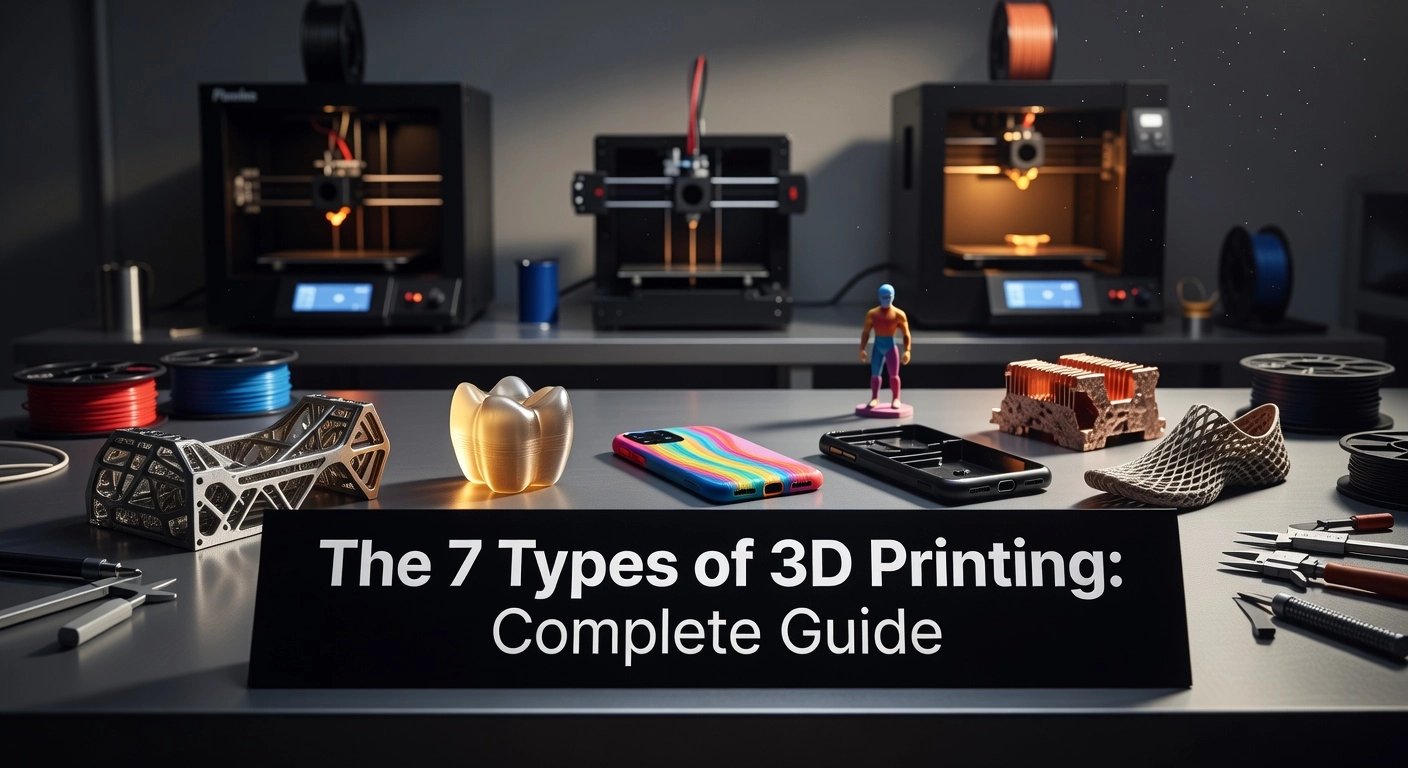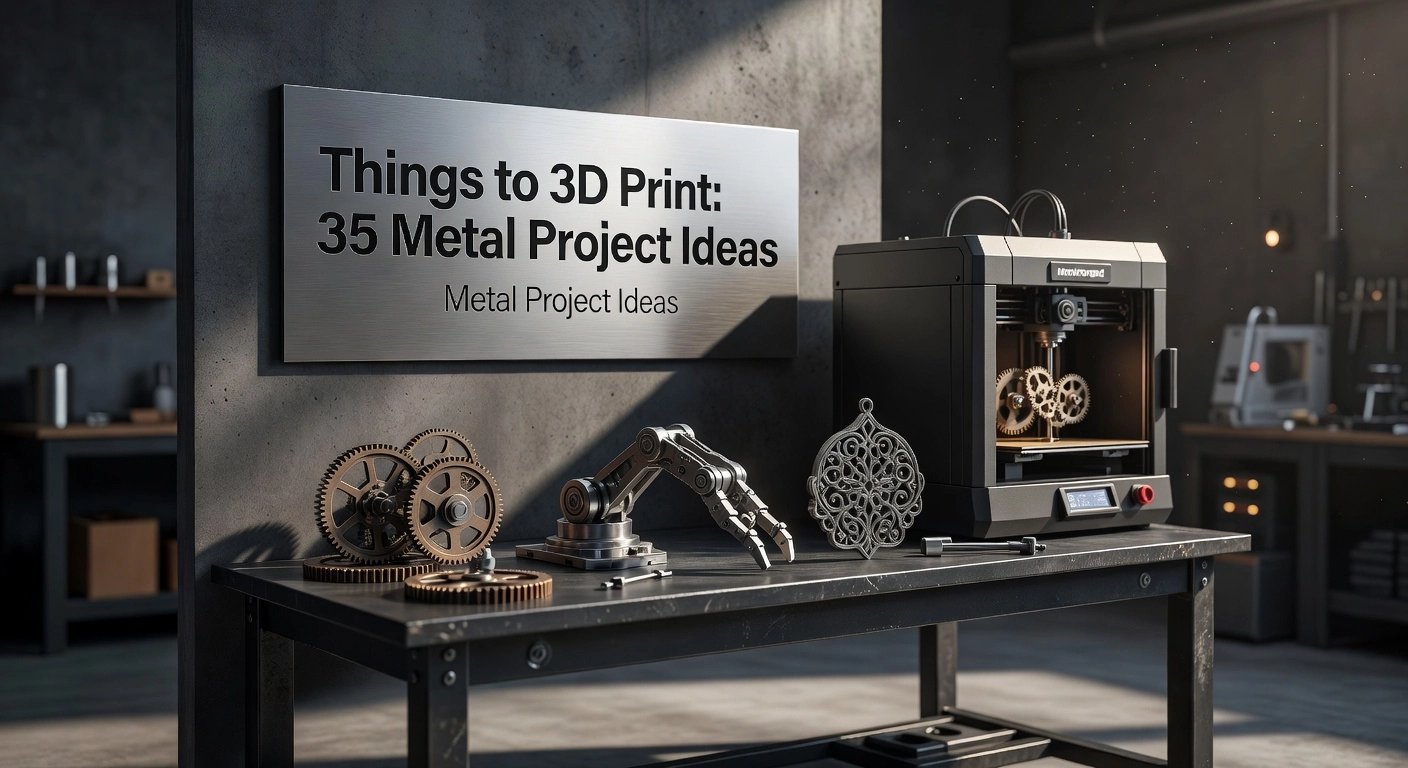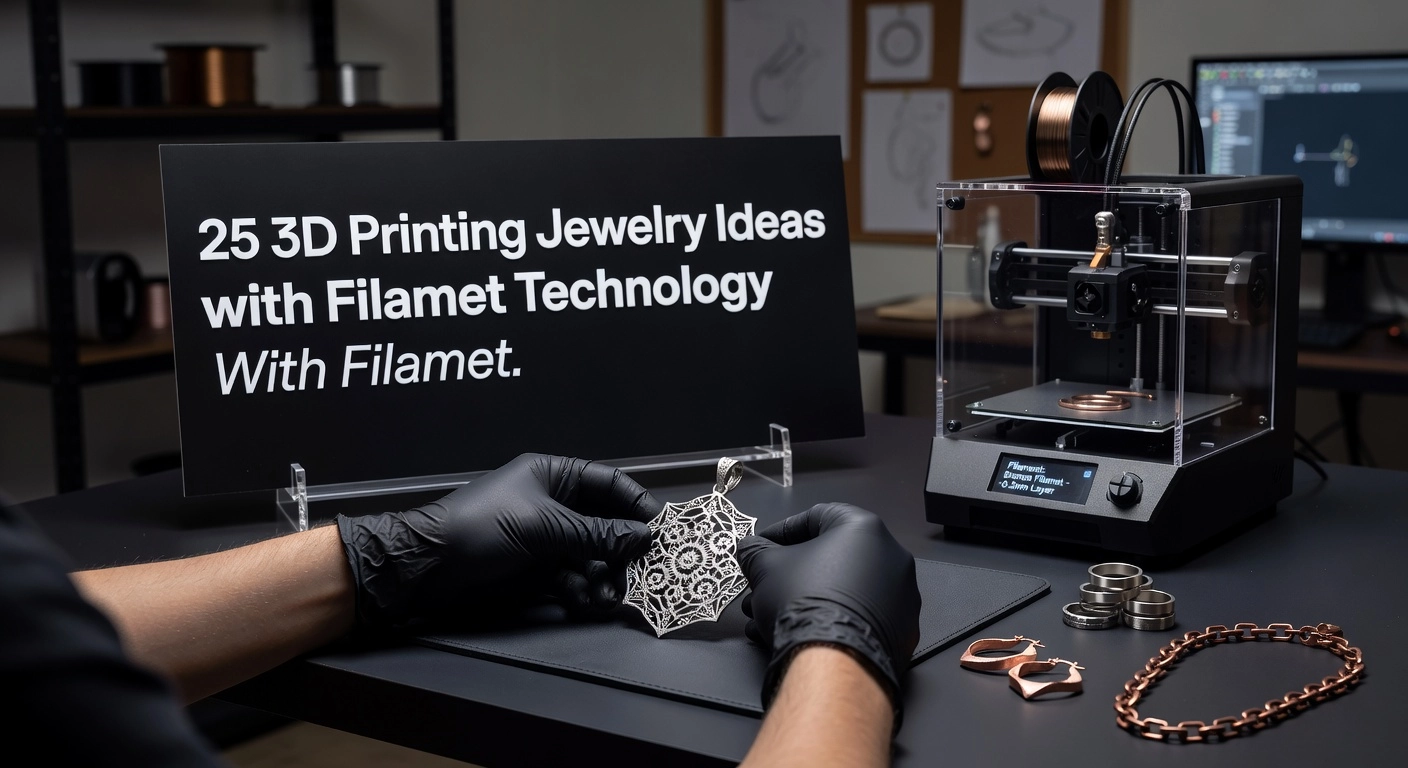
Metal 3D printing has moved from lab curiosity to production tool, reshaping how high‑value components are conceived and built. Within the broader family of additive manufacturing technologies: 3d printing, metal processes like laser powder bed fusion, directed energy deposition, and binder jetting are redefining performance limits through topology optimization, lattice architectures, and rapid iteration. The implications are technical and systemic. Design rules change. Qualification and economics must be reconsidered. Supply chains compress.
This analysis examines why metal additive adoption is accelerating now, and what constrains it. You will see a clear comparison of process architectures, energy input strategies, and material systems. We will dissect parameter windows, layer thickness, laser power, scan strategies, and their links to porosity, microstructure, and residual stress. Expect a critical look at in situ monitoring, feedstock variability, and standards, along with the true cost model that includes post processing, heat treatment, machining, and inspection. We will close with guidance for process selection and part candidacy, including failure modes, certification pathways, and the trade space with high performance subtractive workflows.
Understanding Additive Manufacturing’s Innovation Curve
From prototyping to production
Additive manufacturing technologies, including 3D printing, have progressed from form-and-fit mockups to certified, end-use parts as materials, process controls, and qualification frameworks matured. Surveys indicate that production use is steadily rising, with 21 percent of organizations reporting end-use applications in 2023, up from 20 percent in 2022, reflecting a shift toward low-volume and mass-customized manufacturing From prototyping to production analysis. This evolution aligns with broader trends in distributed manufacturing and inventory reduction as companies produce on demand rather than stock. In metals, the transition has been accelerated by accessible feedstocks and sintering workflows that allow engineers to iterate geometrically complex components, then finalize them as functional parts. The Virtual Foundry’s powder-binder filaments fit this trajectory, enabling print-to-sinter workflows on widely available FFF platforms and lowering the barrier to metal part creation for research, aerospace, nuclear, and art applications. The net effect is a tighter loop from digital design to validated hardware, with fewer handoffs and reduced tooling risk.
Technique spectrum: FDM to DMLS
AM encompasses multiple process families chosen by required resolution, material system, and economics. At one end, Fused Deposition Modeling deposits thermoplastic or composite filaments through a heated nozzle, a method pioneered in 1989 and now ubiquitous due to simplicity and cost efficiency Fused Deposition Modeling history and principles. Metal-filled filaments extend this FDM toolchain, adding debind and sinter steps to yield pure metal parts without powder bed infrastructure. At the other end, Direct Metal Laser Sintering uses a laser to consolidate metal powders into near fully dense components with intricate internal features, valuable for high-stress applications and conformal cooling DMLS advantages overview. Between these poles are vat photopolymerization, binder jetting, and material jetting, each with distinct tradeoffs in throughput, surface finish, and post-processing. Selecting the right modality hinges on tolerance stack, volumetric build rate, and post-sinter or post-cure dimensional change.
Efficiency and speed as innovation drivers
AM’s layer-wise deposition can reduce material waste by up to 90 percent relative to subtractive methods, particularly when topology optimization and lattice infills are applied. Rapid prototyping compresses design sprints from weeks to hours, enabling statistically significant iteration cycles before committing to production tooling. Actionably, teams should map requirements to process: use FDM for fixtures and polymer housings, FDM-derived metal filament plus sintering for affordable pure-metal parts, and DMLS when microfeatures or extreme mechanical properties dominate. Coupled with disciplined process characterization, this mix lowers capex, shortens supply chains, and builds resilience for subsequent scaling.
The Virtual Foundry’s Approach to Metal 3D Printing
Mission-driven access
Democratization in metal additive manufacturing is engineered into The Virtual Foundry’s model. By leveraging open-architecture FFF systems, the company reduces the capital, safety, and workflow constraints that have limited metal 3D printing to specialized cells. Makers and manufacturers can start on existing desktop hardware, then scale capability through material selection rather than platform replacement. This approach aligns with the shift of additive manufacturing technologies, particularly 3D printing, from prototyping to distributed production. The company’s process notes and application briefs translate tacit know-how into repeatable methods, as documented in its research and white papers.
Filamet to pure metal parts
Filamet is a high solids, metal-loaded filament that runs on standard FFF toolchains, enabling a print, debind, and sinter route to pure metal parts. Green bodies are printed near net shape, the polymer binder is thermally removed, and the remaining particles fuse to yield components with up to 98 percent of the base material’s purity. The company’s patent on extrudable, metal-loaded materials underpins this simplification. Practically, engineers model 14 to 20 percent linear shrink depending on alloy, maintain uniform wall sections, and use setters or powder beds to control distortion. Thermal profiles often ramp 1 to 3 Celsius per minute with targeted holds at debind and sinter plateaus to optimize densification and grain growth.
Community as process control
Community is treated as a process control lever. Certified sintering partners, shared parameter libraries, and case-study feedback loops allow practitioners to benchmark density, dimensional accuracy, and surface finish, then iterate with evidence. Academic collaborations, including studies of Filamet’s biocompatibility, are expanding pathways to desktop fabrication of medical devices that can proceed to formal validation. The cross-material scope, metals alongside glass and ceramic, supports gradient structures, embedded conductors, and thermal barriers that are difficult to realize with single-material systems. In practice, small labs have produced stainless brackets and copper heat spreaders with sub 5,000 dollar equipment, outsourcing sintering when needed to de-risk scale-up.
Transformative Applications Across Industries
Aerospace and automotive
Additive manufacturing technologies, including 3D printing, are now core to lightweighting and thermal management strategies in flight and mobility platforms. In aerospace, topology-optimized brackets, fuel system components, and ECS ducting leverage lattice infill and integrated channels to cut mass while preserving stiffness, directly improving specific fuel consumption. 3D printed fuel nozzles with integrated passages illustrate the design consolidation possible with metal AM, improving durability while reducing part count and weight, as documented in industry analyses such as advancements in 3D printing. In automotive, additive tooling, conformal-cooled mold inserts, and low-volume end-use parts compress development cycles and stabilize late-stage design changes. Demonstrations of large titanium brake calipers and series-produced fixtures show that parameterized, simulation-driven designs paired with validated heat treatment can meet fatigue and thermal performance targets, as summarized in key insights into additive manufacturing.
Healthcare and custom devices
Patient-specific implants and instruments exemplify additive manufacturing’s strength in mass customization. Surgeons use CT-derived models to design porous titanium implants that match anatomical curvature and feature graded lattice porosity to promote osseointegration while controlling elastic modulus. Hospitals apply anatomical models and drill guides to reduce operative time and enhance accuracy, and dental aligner workflows scale to hundreds of thousands of units per day through digitally orchestrated print farms. For regulated parts, process capability hinges on validated scan-to-part pipelines, statistical process control on porosity and roughness, and surface chemistry that supports tissue integration. The Virtual Foundry’s Filamet-based workflows extend this customization to accessible FFF platforms, enabling clinical researchers and device developers to prototype pure metal geometries, validate fit and fixation strategies, and iterate sintering profiles before locking down final manufacturing routes.
Metal AM process transformation
Beyond part innovation, metal 3D printing recasts factory operations through repair, redesign, and decentralization. Turbomachinery repair centers rebuild hot-section features with AM, compressing turnaround from months to weeks while integrating cooling enhancements. Foundries and OEMs deploy additive to front-load DFM, printing iron or steel prototypes to de-risk gating, shrinkage, and machinability before tooling, which shortens PPAP timelines and reduces scrap. The Virtual Foundry enables similar gains with open-architecture filament metal, where kilns and validated debind-sinter cycles create a low-capex path for distributed manufacturing cells, ideal for spares, jigs, and flight-capable prototypes subject to subsequent HIP or machining. Actionably, teams should co-optimize alloy choice, part orientation, and sinter allowance, instrument runs with density and microstructure coupons, and standardize NDE and post-processing to move from prototype to production-ready configurations.
Economic and Environmental Benefits
Cost performance in low-volume runs
Low-volume runs benefit disproportionately from additive manufacturing technologies, 3D printing, because tooling is eliminated and setup overhead is minimal. Using The Virtual Foundry’s Filamet on open FFF hardware keeps capex low, so unit cost scales mainly with print time and sintering. Automation from slicing to overnight builds cuts labor; the economic analysis of 3D printing in construction cites reductions near 60 percent in automated deployments. For batches of 10 to 500 units using lattice infill and near-net-shape, buy-to-fly approaches unity, compressing raw material spend. Distributed production removes freight and inventory; a white paper on additive manufacturing supply chain optimization reports shorter lead times and lower logistics costs on site. Practically, teams should consolidate assemblies, schedule sintering in full furnace loads, and tune extrusion parameters to raise deposition efficiency without sacrificing density.
Environmental and material sustainability
Environmental gains track the same mechanics. Additive builds place material only where needed, with audits reporting waste reductions up to 90 percent compared with subtractive, as summarized in sustainability statistics for 3D printing. For metal filament workflows that sinter to pure metal, designers can exploit topology optimization and sparse infill to reduce mass while meeting stiffness and thermal targets, which lowers both embodied material and in-service energy. Localized production reduces transport legs and packaging, consistent with observed supply chain carbon reductions in distributed networks, and reclaimed green power can push process emissions down further. Material circularity is improving as recycled feedstocks gain share, and post-sinter scrap, support, and failed builds can be reintroduced to metal recycling streams without polymer contamination once debound. Energy is the main counterweight, particularly during debinding and sintering; actionable mitigations include power metering at the printer and furnace, optimized thermal profiles, inert gas recirculation, and batching to increase furnace utilization.
The Future of Additive Manufacturing
Multi-material printing and bioprinting
Multi-material additive manufacturing has accelerated from concept to deployable capability, enabling single-build parts with co-located stiffness, damping, electrical conductivity, and thermal pathways. A recent systematic review characterizes design rules for functionally graded materials and cellular metamaterials, emphasizing voxel-level control of composition and topology for property tailoring across a single component systematic review of multi-material additive manufacturing. In parallel, bioprinting is moving beyond hydrogels to biocompatible thermoplastics, where PCL and PLA support resorbable scaffolds and PEEK and PMMA serve long-term, load-bearing constructs state-of-the-art on biocompatible thermoplastics for bone defect fillers. Hybrid bioprinting that deposits multiple cell types with graded biomaterials is closing the gap to native tissue heterogeneity, improving nutrient diffusion and mechanical matching. For advanced manufacturers, the implication is clear: design must shift from monolithic parts to property maps, with CAD and slicers defining spatially variant materials and microstructures.
Future applications for high-strength and biocompatible materials
High-strength trajectories include metal-matrix composites for orthopedic fixation, conformal heat exchangers with copper-rich channels embedded in steel shells, and lattice-reinforced tooling that maintains stiffness at a fraction of mass. Biocompatible directions favor degradable polymer and bioactive ceramic hybrids that resorb while promoting osteogenesis, along with surface-engineered metals that tune protein adsorption and cell adhesion. Additive manufacturing technologies, 3D printing, reduce material waste by up to 90 percent compared to subtractive methods, and when coupled with lattice topologies they unlock stiffness-to-weight ratios unattainable by machining. Actionable practice pairs topology optimization with material grading, then validates via CT-based porosity analysis and mechanical testing under physiologic or thermal loads. Process analytics should combine in situ thermography, closed-loop extrusion control, and machine-learning models that predict defect formation from path planning and thermal history.
The Virtual Foundry’s path to next-gen leadership
The Virtual Foundry’s materials-first, printer-agnostic model positions it to lead as multi-material and bio-adjacent use cases mature. Filament-based metal printing that densifies through sintering lowers capital barriers, scales across open FFF platforms, and invites rapid iteration on green density, infill strategy, and sinter geometry control. By enabling copper for thermal management, stainless for corrosion resistance, and high atomic number materials for radiation attenuation, the portfolio maps directly onto aerospace, nuclear, and medical workflow needs. Multi-material roadmaps are practical today, for example co-printing metal-loaded filaments with sacrificial polymers to form internal channels, or printing porous metal preforms for post-sinter infiltration with bioactive ceramics. Teams can operationalize success by running design-of-experiments on shrinkage and distortion, building sintering profiles from small coupons to functional subassemblies, and codifying best practices in a shared process library that compounds learning across sites.
Conclusion: The Path Forward for Metal 3D Printing
Strategic summary
Metal additive manufacturing has moved from prototyping to qualified production, driven by process control, material breadth, and distributed workflows. The market was about 13 billion dollars in 2020 and is projected to exceed 60 billion dollars by the mid‑2020s, as on‑demand, low‑inventory models scale in aerospace, automotive, and healthcare. Sustainability remains a hard advantage, with up to 90 percent less material waste than subtractive baselines and geometry that embeds performance features like internal lattices and conformal channels. The Virtual Foundry accelerates this shift by decoupling capital intensity from capability, using open‑architecture FFF paired with kiln sintering to deliver pure metal parts in alloys such as copper, bronze, stainless steel, and tungsten. By coupling Filamet with community‑driven finishing know‑how, the company closes the gap between lab curiosity and shop‑floor reliability, particularly for high‑mix, low‑volume needs.
Actionable integration
Professionals can phase adoption through a structured pilot. First, select parts with complex geometry, thermal or electrical benefits, and low annual volumes, for example copper heat exchangers, tungsten radiation shields, or 316L fixtures, then target a sub‑6‑month ROI. Apply design for sintering, model 13 to 20 percent linear shrinkage by alloy, add machining stock, and design setters to control distortion. Calibrate the kiln with multi‑zone thermocouples, use appropriate sintering media to manage oxygen, and implement SPC on green‑body mass and dimensions. Qualify output with Archimedes density, hardness, and tensile coupons to ASTM or ISO subsize, then close microstructure gaps with optional HIP or heat treatment. Institutionalize the digital thread, capture slice parameters, furnace profiles, and lot traceability, and link to MES for repeatability at scale.