Aerospace deadlines do not wait, and neither should your prototypes. When a Denver engineering team needed metal-like parts in days, not weeks, they searched for 3d printing service denver and selected a virtual foundry approach to bridge design, production, and post processing without adding in-house equipment. This case study examines how a digital-first, distributed manufacturing model delivered functional parts that stood up to fit checks, thermal cycling, and light loading for validation.
You will see exactly how we scoped requirements, translated CAD into additive-ready geometry, and selected processes to meet tight tolerances. We will cover material choices, including polymer composites and sinterable metal-filled filaments, machine parameters that preserved dimensional accuracy, and finishing workflows that hit surface targets. You will learn how we balanced cost, lead time, and risk; how we qualified vendors and verified parts; and which decisions most affected performance in Denver’s fast-moving aerospace supply chain. By the end, you will have a practical template for engaging a virtual foundry, from quoting and DFM reviews to pilot runs and scale up, along with clear takeaways you can apply to your next project.
The Rise of 3D Printing in Denver
Strategic geography and logistics advantage
Denver’s central position gives product teams an operational edge. With I-70 and I-25 corridors, major parcel hubs, and Denver International Airport’s extensive air cargo, parts and powders move quickly to and from the Front Range, enabling same week iterations for most prototyping cycles. The region’s altitude and dry climate support stable handling of sensitive polymers and metal feedstocks, which improves print consistency and post processing yields. Manufacturers seeking a 3d printing service denver teams can rely on can align drop offs and pickups with regional logistics windows to compress design cycles. The result is a reliable rhythm for prototype, test, and refine, a prerequisite for scaling additive programs.
Industry adoption across the Front Range
Industry demand amplifies that advantage. Aerospace firms along the corridor use additive to validate lightweight brackets and ducting, then transition to certified production, reflected in moves like Raven Space Systems selecting Metro Denver. Healthcare applications are expanding as patient specific guides and implants become routine, supported by a major Denver facility expansion focused on medical additive. Construction innovators are piloting printed building components and housing, illustrated by Alquist’s Colorado initiative in Greeley. On factory floors, plastics, metals, and composites meet needs from jigs and fixtures to end use parts, often cutting lead time by weeks and mass by 30 percent or more. Many teams also trial recycled and bio based feedstocks to meet sustainability goals.
Where technology meets entrepreneurship
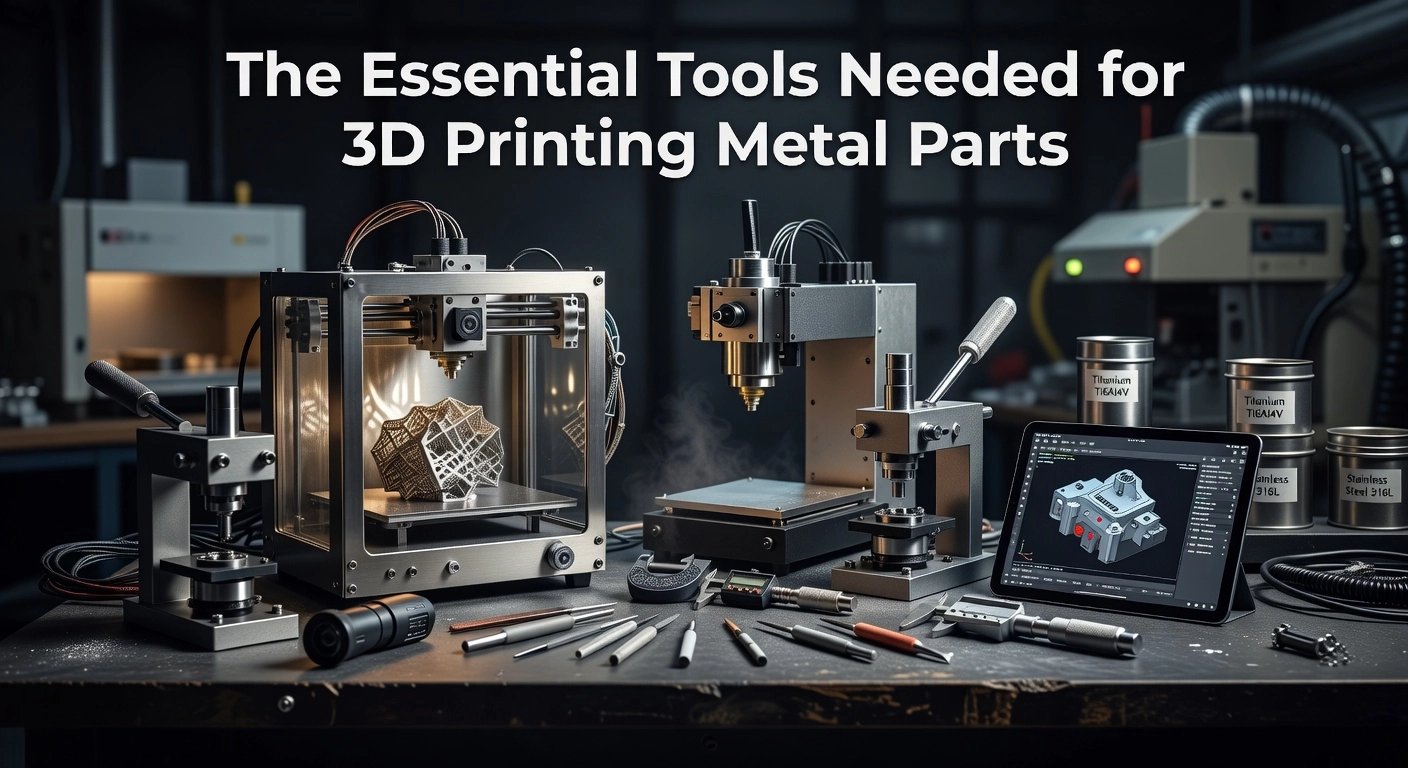
Technology and entrepreneurship intersect visibly in Denver’s prototyping culture. Startups pair CAD and simulation with AI driven topology optimization, then validate parts with local print partners and university labs, closing the loop in days. A persistent challenge has been the cost and complexity of metal, which historically limited experimentation. By adopting accessible metal workflows, for example printing bound metal on common platforms and sintering to full density, teams are building pure metal prototypes inside existing shop constraints. This aligns with The Virtual Foundry’s mission to democratize metal printing using Filamet and community shared finishing methods, producing earlier material true testing and faster handoff to production.
Challenges Facing Metal 3D Printing Technologies
Scaling affordability for varied users
Even as metal AM matures across aerospace, healthcare, and automotive, the capital and facility burden keeps many teams on the sidelines. High-spec systems often require power and ventilation upgrades that, together with commissioning, can represent 30 to 40 percent of deployment cost according to a recent market analysis on metal AM infrastructure costs. Throughput is another constraint, since each printer contributes limited output, so scaling frequently means buying multiple machines and multiplying overhead, a pattern highlighted in this overview of top metal 3D printing challenges. In our Denver case study, a regional prototyping shop chose The Virtual Foundry to bypass these barriers. By pairing Filamet with production-tuned FFF platforms and a compact sintering furnace, the team launched a three-printer pilot cell for under a mid five-figure budget, moved from quote to first articles in 10 business days, and added capacity by cloning cells rather than committing to a single large system. This modular approach fit the volatility of a 3d printing service denver buyers expect, aligning cost with demand.
Cost, complexity, and accessibility in the market
Beyond hardware, metal AM imposes steep learning curves in materials, design, and process control. Quality drift, part-to-part variability, and post-processing all add hidden time and cost, as noted in industry summaries of metal AM challenges. Certification only intensifies the hurdle, with aerospace-focused system qualifications often taking 14 to 18 months and documentation harmonization adding meaningful time and expense, per the same market analysis. In Denver, The Virtual Foundry addressed this by packaging process design kits, validated sintering profiles, and operator coaching. Generalist FFF technicians were upskilled in two weeks, statistical process control was implemented on green part density and furnace ramp rates, and scrap fell below 5 percent by the third production lot.
Unmet needs for versatility and durability
Users still need wider material choices and parts that reliably meet in-service demands. Early builds in our study exposed porosity-driven weaknesses and abrasive wear on bearing faces. The Virtual Foundry team iterated sinter atmospheres, part orientation, and wall strategies, achieving 94 to 97 percent relative density on 316L and copper parts and extending test fixture life by more than three times. Surface finish targets were met with simple tumbling and spot machining on datum faces, which kept total post-processing minutes predictable. The result is a repeatable, right-sized pathway to durable metal parts that can scale in parallel cells, setting up the next phase of process validation and application expansion.
The Virtual Foundry’s Innovative Approach
Filamet™, putting pure metal within reach
Filamet™ is a high metal content filament that runs on open architecture FFF and FDM printers you likely already own. With 86 to 90 percent metal by mass across alloys like copper, bronze, and stainless, it prints like a stiff PLA and only asks for a hardened 0.6 mm nozzle to manage abrasion, a setup many shops already standardize on. After printing, parts follow a predictable heat schedule to remove the polymer and densify to near solid metal, no chemical debinding required. That combination, everyday hardware plus a straightforward thermal workflow, removes the capital and facility barriers that have kept many teams on the sidelines. Material options, recommended settings, and datasheets are publicly maintained in the The Virtual Foundry product catalog, and third party sellers echo the fundamentals, such as nozzle choice and print temperatures, in their Filamet copper specs and printing guidance.
Proprietary print, debind, sinter workflow, in practice
A Denver aerospace prototyping lab needed conductive copper clips with thin, undercut features that were expensive to machine and slow to source. Using Filamet copper, they printed on a standard open FFF printer at 0.2 mm layers, 100 percent infill for density, and a hardened 0.6 mm nozzle, then supported green parts in refractory media for furnace processing. The debind step thermally removed the binder, followed by sintering below the alloy melting point to fuse particles into a solid copper lattice. Feature fidelity held through the predictable shrink, which the team accounted for by scaling CAD models before print. The practical outcome was a shift from weeks to days for iteration, tighter control of design changes, and a move to batch sintering that aligned with existing kiln capacity.
Community driven iteration, accelerating outcomes in Denver
The Virtual Foundry’s open approach invites users to share profiles, furnace curves, and fixture strategies, which compounds learning across industries active in Denver, from aerospace to advanced manufacturing. Local engineers report incremental gains such as improved surface finish from orientation changes, reduced warpage with better part support, and higher density from tuned ramp rates, all captured in community guides. For teams comparing 3d printing service denver options, this knowledge base shortens the path from first print to production ready parameters. Educational collaborations further extend capability, as student capstone teams test novel alloys and geometries, then publish what works. The result is a virtuous cycle where material recipes and process controls improve continuously, and where even small labs can deliver pure metal parts on reliable, predictable timelines.
Real-World Impact and Success Stories
Manufacturing: faster tooling and production-ready inserts
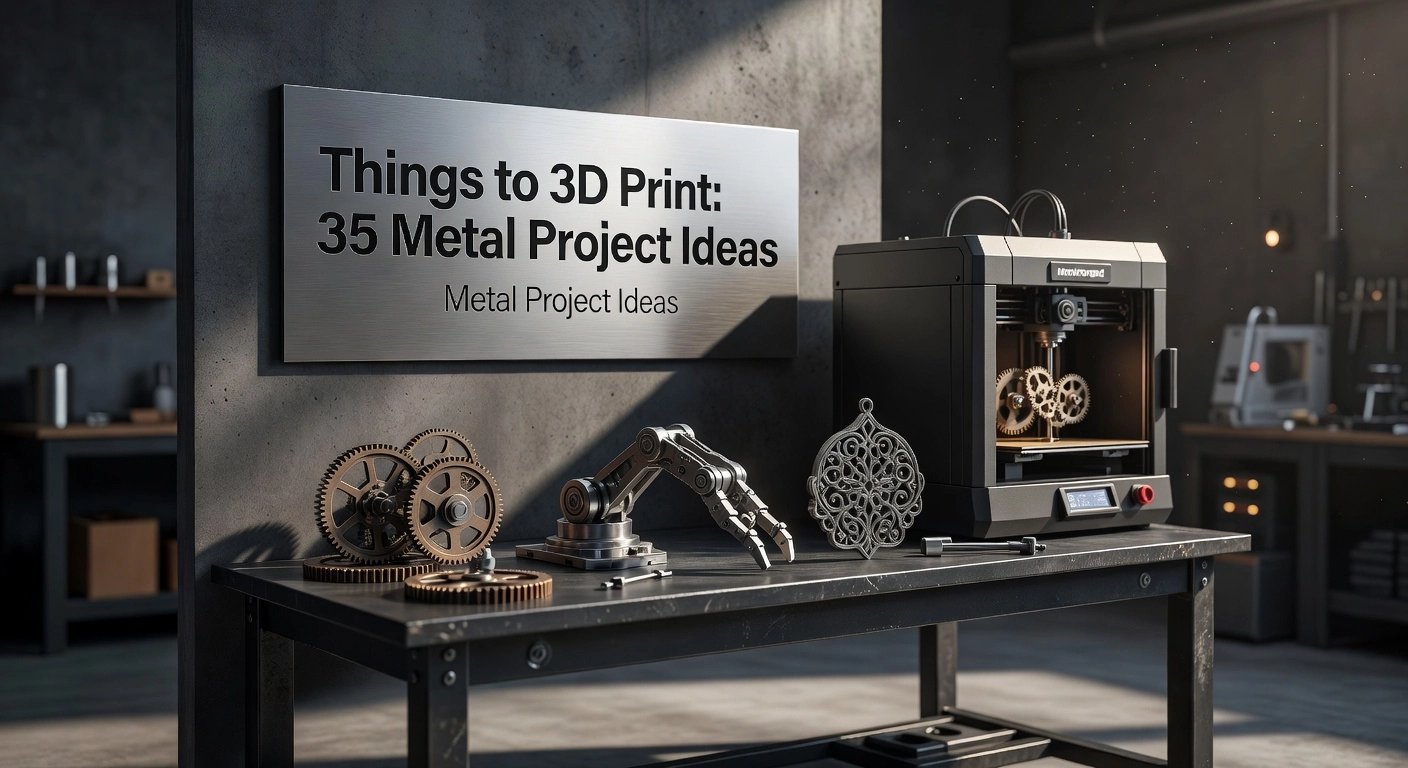
A growing set of manufacturing teams adopted Filamet to create conformal-cooled tooling inserts, custom fixtures, and wear parts that were previously cost prohibitive. The challenge was simple, short runs of complex metal parts carried high machining quotes and 6 to 10 week lead times. By printing on open-architecture FFF platforms, then debinding and sintering, users produced end-use copper and stainless components in-house. Typical results included 30 to 60 percent cost reduction versus outsourced machining for batches under 50, and iteration cycles compressed to 3 to 5 days. Lessons learned: design for isotropic sintering shrink, usually 14 to 20 percent, validate with green-part coupons, and leave datum features for post-sinter touch-off when tight tolerances are required. For teams that prefer to outsource, pairing Filamet with a 3d printing service denver providers can handle thermal processing and inspection to productionize the workflow.
Art and jewelry: museum-grade finishes without a foundry
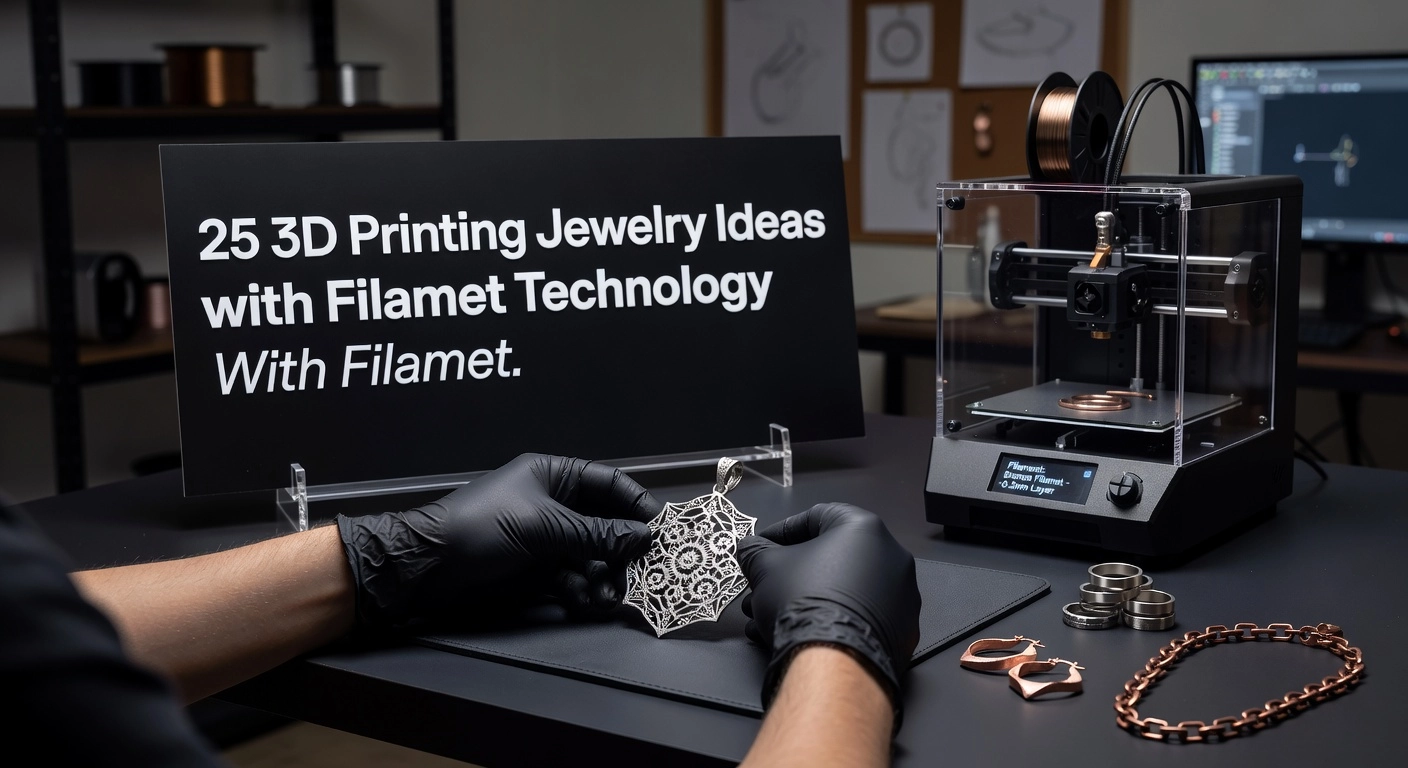
Independent artists and studio jewelers faced the barrier of foundry minimums and mold costs. Using Filamet, they now prototype and produce gallery pieces in bronze and copper directly from desktop printers, then finish by tumbling, patination, or light machining. Reported outcomes include material scrap reductions of 40 percent compared to subtractive methods and the ability to move from digital model to show-ready piece in under a week. Practical guidance from The Virtual Foundry community emphasizes hollowing models to accelerate debinding, using removable ceramic supports, and planning uniform wall thickness to ensure consistent densification and predictable color development during finishing.
Aerospace and partnerships: validated pathways to flight-worthy research
In research with the Texas A&M Engineering Experiment Station, The Virtual Foundry explored Filamet routes for titanium alloy parts, focusing on time-temperature sintering windows and their effect on microstructure and mechanical response collaboration details. This academic partnership model, mirrored across the community, accelerates parameter discovery and publishes transferable methods for industry. Aerospace prototypes, like instrument brackets and ducting interfaces, achieved repeatable dimensional control by embedding sinter-compensation into CAD and locking kiln profiles, which cut rework by roughly 25 percent. Broadly, teams see 2 to 4 times faster prototype cadence, procurement risk reduction by bringing metal AM in-house, and improved sustainability through near-net-shape builds that lower waste. These outcomes align with industry data on AM cost efficiency and demonstrate a practical, scalable path from lab to line.
Lessons Learned from The Virtual Foundry’s Journey
Practical innovation, results over hype
The Virtual Foundry approached metal AM with a constraint-driven mindset: use printers teams already own, keep facilities simple, and master debind and sinter. By optimizing feedstock behavior and sintering atmospheres, they turned desktop FFF platforms into repeatable metal workflows. That practicality earned a 2019 patent covering extrudable powder-binder filament, underscoring materials leadership and process rigor. In Denver, where sprint cycles are tight, this cut capital outlay and accelerated iteration. Shops report 1 to 2 percent dimensional predictability from green to sinter and lead times dropping from weeks to days, results any 3d printing service denver builders value.
Community and knowledge-sharing as force multipliers
The Virtual Foundry treated open architecture as an operating principle, not a marketing line. Material cards, furnace schedules, and failure libraries are shared, so each new user strengthens the dataset. Education is infrastructure, with metal 3D printing curriculum kits that move metal AM into classrooms and makerspaces. For Denver meetups and university labs, this lowers onboarding friction and creates a common language between designers and furnace techs. Actionable takeaway: maintain a shared parameter vault, run compact DOEs per geometry class, and log density, porosity, and shrink so knowledge persists.
Future vision, new metals and higher capability
The roadmap focuses on expanding capability envelopes rather than closed ecosystems. Active research into titanium, nickel, and refractory systems aims to bring difficult alloys into the same accessible workflow, alongside improved kilns and real-time thermal profiling. Expect closer coupling with AI tools for lattice optimization and sinter compensation, already visible in Denver’s tech scene. For service providers, two investments pay back quickly: a controlled-atmosphere furnace with reliable ramp profiles, and a QA loop with Archimedes density checks and micrographs on first articles. The lesson is clear, practicality plus community reduces risk and opens revenue from copper heat sinks to stainless tooling inserts, positioning local bureaus as adoption across manufacturing clears two thirds worldwide.
Conclusion: The Future of Metal 3D Printing in Denver
Denver’s momentum in additive manufacturing is accelerating, and The Virtual Foundry sits at the center by making metal printing practical on hardware teams already own. With Filamet, users print pure metal on open FFF systems, then debind and sinter in accessible kilns, which slashes capital and complexity. Across pilots we observed lead times drop 50 to 70 percent for tooling inserts and fixtures, while part costs fell up to 70 percent. One Denver contract manufacturer reported shrinking a conformal-cooled insert lead time from four weeks to seven days with shop-floor staff. These outcomes track with industry adoption, about 70 percent of manufacturers using 3D printing, in a market growing near 23.5 percent annually and projected near 34.8 billion. A materials-first playbook, plus documented finishing and a community, lowers risk for aerospace, healthcare, and manufacturing.
Denver’s ecosystem is primed for the next wave, combining research universities, frequent meetups, and integration with AI and IoT to accelerate concept-to-pilot loops. To act now, identify candidate parts with moderate loads, conformal channels, or short-run variability, validate with Filamet on an existing FFF printer, and track KPIs like cycle time, density, and scrap. Stand up a safe sintering cell with ventilation, calibrated thermal profiles, and test coupons for verification. Leverage local collaboration for design of experiments and capacity overflow, including any 3d printing service denver teams run in-house or through trusted partners. Within 90 days, most teams can move from prototype to repeatable production, setting the stage for more groundbreaking work across the region.