Are 3D printing and additive manufacturing the same thing? In casual conversation, often yes. In engineering practice, not quite. The terms evolved from different contexts, and that gap affects how teams scope projects, qualify parts, and estimate cost and lead time. This article clarifies the 3d printing additive manufacturing difference, using technical criteria that matter in design, procurement, and production.
You will learn how ISO/ASTM 52900 defines process families, how print technologies map to industrial AM workflows, and where the terminology breaks in real projects. We compare materials and process capabilities across polymers, metals, and composites; accuracy, repeatability, and surface finish; build volume and throughput; post processing, inspection, and certification. We also examine digital workflows, from CAD and slicing to MES and quality records, and we analyze cost drivers such as machine utilization, powder management, support removal, and heat treatment. By the end, you will know when to say 3D printing, when to specify AM, and how that choice shapes requirements, vendor selection, and risk.
Comparison Criteria
Definitions that matter
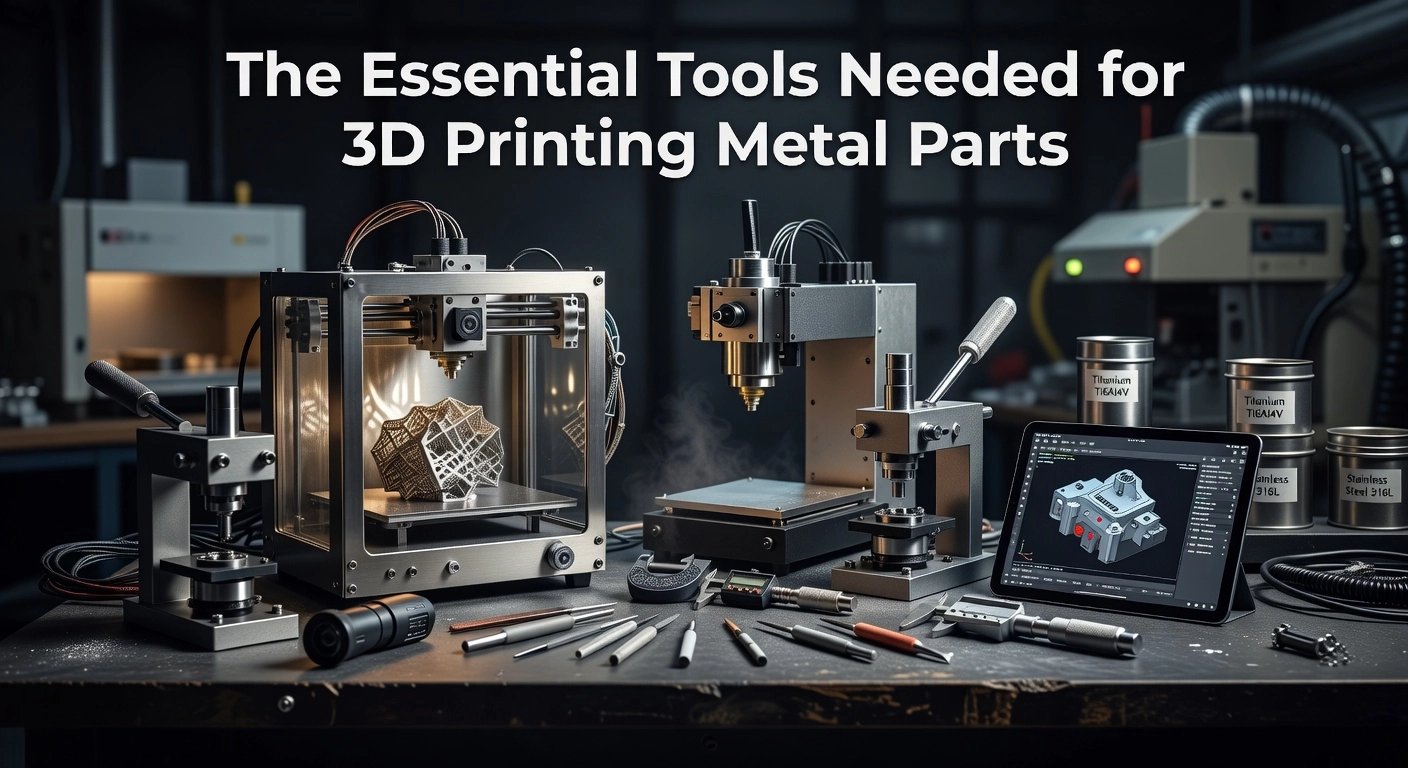
3D printing refers to building objects from a digital model by depositing material layer by layer, typically on desktop or benchtop systems used for models and prototypes. In contrast, additive manufacturing, per ISO and ANSI usage, is the umbrella term for all layerwise processes that join materials from 3D data, including polymers, metals, ceramics, and composites. Examples span FFF, SLA, SLS, MJF, and metal routes like bound metal plus sintering. For foundational context, see the 3D printing overview and the ANSI definition of additive manufacturing. The Virtual Foundry’s metal workflow with Filamet fits within additive manufacturing, using standard FFF printers for green parts followed by debind and sinter to achieve pure metal, which is central to understanding the 3D printing additive manufacturing difference.
Common ground and key distinctions
Both approaches are CAD driven, layer based, and enable complex lattices, internal channels, and topology optimized geometries while reducing waste versus subtractive processes. They share similar digital threads, from slicing to in situ monitoring, and both support rapid iteration. Distinctions emerge in scale, materials, and certification pathways. Approximately 70 percent of 3D printing use remains prototyping, while additive manufacturing is increasingly used for certified end use, with aerospace representing about 16 percent of the market. Cost profiles differ too, with quality desktop systems ranging roughly 500 to 3,000 dollars, while industrial metal AM requires higher capital but delivers density, repeatability, and throughput suited to production.
Criteria for side by side analysis
- Performance targets: required tensile strength, elongation, hardness, density goals above 95 percent, thermal limits, and fatigue performance after sintering or heat treatment.
- Geometry and tolerance: minimum wall thickness, overhangs, support strategy, surface finish targets such as Ra, and post machining allowances.
- Production metrics: build rate in cubic centimeters per hour, effective yield, batch size economics, and per unit cost at lots of 1, 10, and 100.
- Quality and compliance: process control, porosity limits, NDT options, and alignment with relevant AM standards.
- Workflow and accessibility: debind and sinter capability, furnace profile control, total cost of ownership, and operator skill requirements.
For accessibility and scalability, The Virtual Foundry’s open, FFF based metal path leverages existing printers and kilns, enabling fast prototyping that can mature into low volume production. Define these criteria upfront to select the right path and to plan validation runs that de risk material and process parameters.
Technological Differences
Layer-by-layer construction as the shared foundation
All additive processes build geometry by stacking discretized slices of a CAD model, then bonding each new layer to the last. This enables internal gyroid lattices and conformal cooling channels that cannot be machined. The tradeoff is anisotropy, interlayer adhesion often governs Z strength and fatigue life, so orientation planning and parameter control matter. Compared with subtractive methods, material utilization is higher and scrap is lower, which is central to the 3d printing additive manufacturing difference.
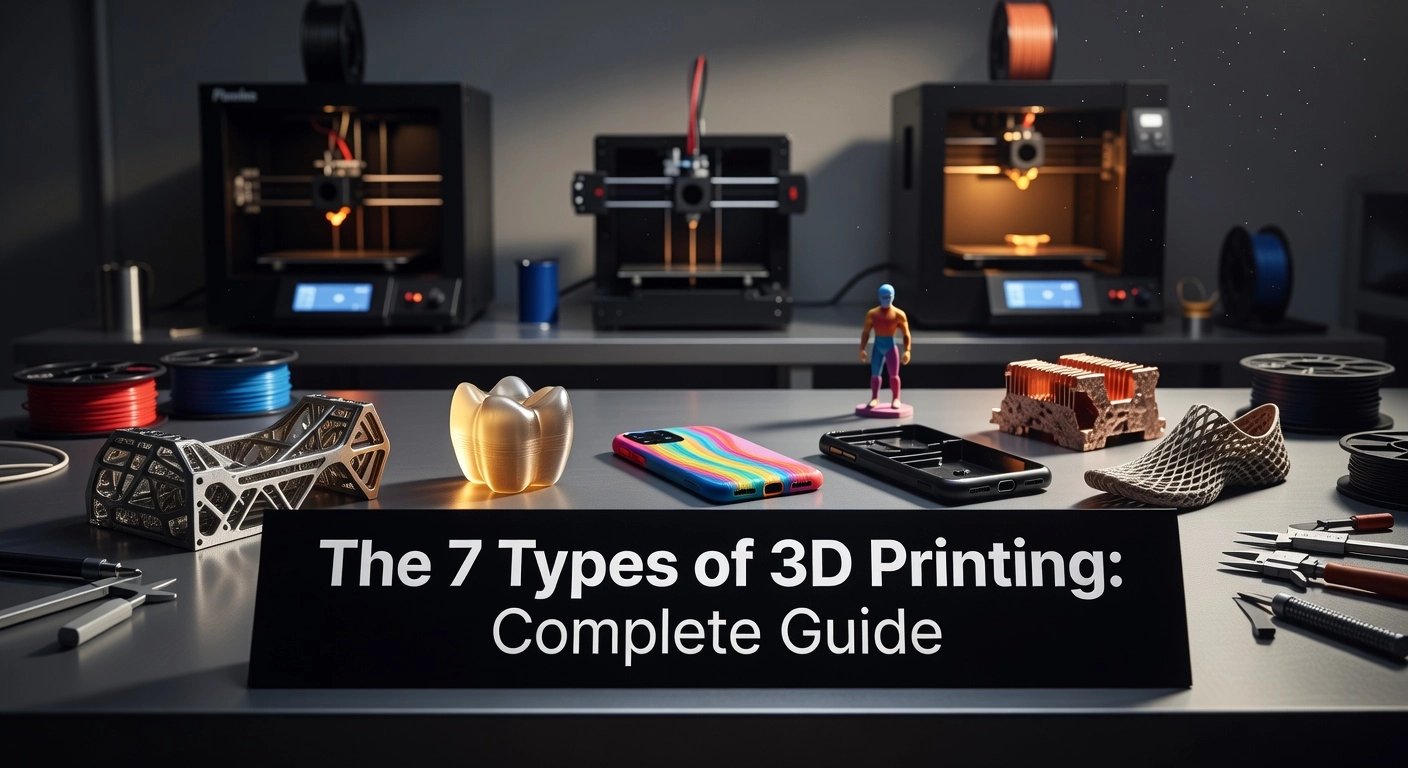
Diverse techniques: FDM, SLA, and SLS
With FDM, a heated nozzle deposits thermoplastic or composite filament, typical layer heights are 0.10 to 0.30 mm. Pros include low equipment cost and broad material availability; cons include visible layer lines and supports for overhangs beyond roughly 45 degrees. SLA photopolymerizes liquid resin using a laser or projector, delivering 50 to 100 micron features and excellent surface finish, but parts need post cure and may have limited long term UV stability. SLS fuses polymer powder with a laser, the powder bed self-supports overhangs and yields near-isotropic nylon suitable for functional prototypes and short-run production at higher machine and powder cost.
Materials scope and metal on accessible platforms
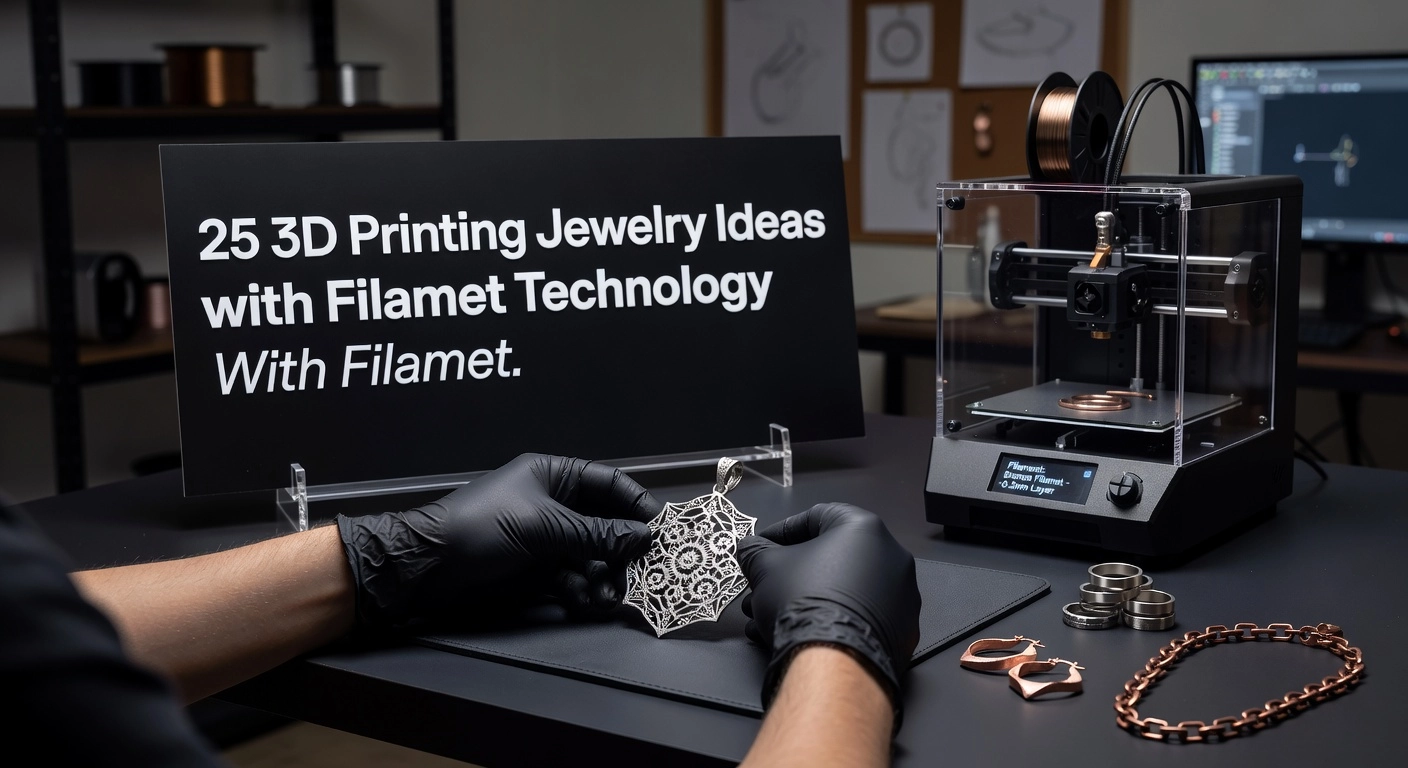
Colloquially, 3D printing often implies polymers and photopolymers, while additive manufacturing spans metals, ceramics, and composites. The Virtual Foundry extends FDM into metal AM using Filamet, a high metal loading filament that prints on common 1.75 mm systems, then debinds and sinters to yield pure metal. Designers account for predictable isotropic shrinkage, about 10 to 20 percent, by scaling CAD and using ceramic setters to control distortion. This approach reduces capital expense, desktop printers typically cost 500 to 3,000 dollars, and leverages existing FDM know-how. It unlocks copper heat sinks, stainless fixtures, jewelry, and radiation compatible components in glass or ceramic. Recommendation, use FDM for quick polymer jigs, SLA for tight tolerance visuals, SLS for rugged nylon parts, and Filamet when you need accessible, end-use metal without a specialized metal printer.
Applications and Industry Use
Prototyping vs. end‑use production
In practice, “3D printing” is still weighted toward design validation, while “additive manufacturing” spans the full production workflow, from DfAM and materials to post processing and QA. That distinction matters for planning budgets, equipment, and quality gates, as outlined in this overview of the difference between additive manufacturing and 3D printing. Recent surveys show about 67% of use focuses on prototyping and roughly 21% on end‑use parts, with the remainder in tooling and jigs, a split that is steadily shifting toward production as materials and process control mature (prototyping vs. production share data). The Virtual Foundry’s Filamet approach compresses this gap further. Teams can iterate in polymer on the same open FFF hardware, then print green parts in a metal-filled filament, and sinter to pure metal using accessible kilns. Actionable tip: validate a shrinkage factor with a 20 to 40 mm calibration coupon, then apply CAD scaling to move from concept to production with predictable dimensional accuracy.
Leading sectors: aerospace and healthcare
Aerospace and healthcare continue to lead metal AM adoption due to lightweighting, topology optimization, and patient specificity requirements. Industry analyses identify these sectors as primary demand drivers for metal AM equipment, reflecting stringent performance targets and certification roadmaps (metal AM market analysis). Typical aerospace use cases include bracketry with lattice infill, conformal heat exchangers, and fuel system components that consolidate multiple parts into one. In healthcare, customized orthopedic implants, dental frameworks, and surgical instruments benefit from porous architectures that tune stiffness and promote osseointegration. For organizations without powder-handling infrastructure, The Virtual Foundry’s bound‑filament plus kiln workflow avoids loose metal powders and inert gas, enabling labs and small manufacturers to create testable, near‑net shape metal components safely and cost effectively. Recommendation: map regulatory deliverables early, then select either powder bed systems for established certification paths or bound‑filament for distributed, lower‑capex deployment.
Emerging trends in metal additive manufacturing
Three trends are reshaping adoption decisions. First, process capability is consolidating around high‑density laser powder bed for critical parts, while electron beam adoption grows for high‑temperature alloys, a pattern reflected in equipment demand and R&D priorities (market dynamics overview). Second, the production shift is accelerating as more organizations treat AM as a digital supply chain node with serial builds, statistical process control, and automated post processing. Third, accessible metal AM is expanding through material innovations in bound‑filament systems, which lower barriers for schools, labs, and job shops. The Virtual Foundry’s open‑architecture model lets teams pair common FFF printers with Filamet materials, then apply published sintering schedules to reach pure metal outcomes. Actionable next step: implement a three‑run validation plan, dimensional coupon, mechanical coupon, and application part, to lock in scaling, density, and surface finish before moving to pilot production.
Benefits and Limitations
Material efficiency and waste reduction
Additive workflows meter material only where needed, which contrasts with subtractive removal. Analyses cite up to 90 percent less scrap and a projected 35 percent rise in biodegradable feedstocks by 2025, see this sustainability statistics roundup. Tool-less, localized builds reduce transport and rework, which can lower total energy per part, see this benefits overview. With The Virtual Foundry’s Filamet, spool-fed metal eliminates loose powder handling, and unused brims or supports can be consolidated for reuse, improving yield at bench scale.
Complex geometry capabilities
3D printing and the broader AM toolkit enable lattices, internal channels, and part consolidation that are impractical with tooling. DfAM unlocks conformal cooling and topology-optimized ribs, adding functionality without fixtures. With Filamet, users print near-net pure metal that survives debind and sinter, including enclosed passages that would complicate powder removal in powder-bed systems. Plan for continuous load paths, uniform walls above about 1.2 to 1.5 millimeters, and isotropic linear shrink near 13 to 20 percent depending on alloy.
Cost-effectiveness in practice
Understanding the 3D printing additive manufacturing difference helps frame cost, which varies with volume, complexity, compliance, and finishing requirements. For prototypes and low to medium runs, tool-less builds avoid mold amortization and often deliver the lowest total cost per part. Capital entry is accessible; capable desktop printers typically cost 500 to 3000 dollars, letting teams pair existing motion platforms with Filamet and standard debind and sinter equipment. Yield is high because filament feeds minimize unused inventory, but cycle time, thermal energy for sintering, and operator skill remain limiting factors. Prioritize AM when geometries change frequently or when consolidation deletes assemblies; at high, stable volumes, conventional methods can still win on cost.
The Virtual Foundry’s Edge in Metal Printing
Overview of Filamet, an innovative solution
Filamet is a high metal load composite for standard FFF printers, enabling metal parts without specialized hardware or powder handling. Metal powders are bound in a non toxic, biodegradable polymer compatible with PLA temperature windows, so baseline setpoints mirror common PLA or PETG profiles with minor flow tuning. Published variants reach about 90 percent metal by mass, per the original press release introducing Filamet. Printed parts debind and sinter in a kiln to yield over 99 percent pure metal, documented in this Metal AM overview. Relative to powder bed or jetting systems, Filamet lowers capital and removes loose powder handling, with the tradeoff of predictable isotropic shrink that is compensated via CAD scale factors.
Case examples in complex sectors
Aerospace teams iterate brackets, manifolds, and thermal hardware that later face environmental tests, exploiting lattices and conformal channels that are hard to mill. In nuclear research, high atomic number variants enable custom shielding, collimators, and beamline fixtures sized to instrumentation, compressing lead time from weeks to days. Education programs teach end to end workflows, from design for sintering to metallurgical finishing, without industrial powder infrastructure. These cases illustrate the practical 3d printing additive manufacturing difference, accessible prototyping that converges on end use performance after sintering.
Community and expert support that accelerates results
The Virtual Foundry supports an open architecture, letting teams select printers, kilns, and atmospheres to match budgets and alloys, guided by material cards and process recipes in its Affordable Metal 3D Printing primer. Community members share parametric test coupons, setter designs, and sintering schedules, accelerating convergence on density and dimensional accuracy. Actionable practices include orienting for vapor pathways, adding vent holes, using setters to control flatness, and designing generous fillets at stress risers. For production like outcomes, standardize green part infill, track mass loss during debind, compensate 12 to 20 percent isotropic shrink with axis scaling, and verify density by sectioning or Archimedes testing. This collaborative loop steadily advances real world performance.
Recommendations for Choosing the Right Option
Factors to consider based on project needs
Start by mapping requirements to the 3D printing additive manufacturing difference. If your objective is design validation with fast iteration, polymers on desktop systems are efficient, especially for geometries under 200 mm and tolerances above ±0.2 mm. For end use parts, prioritize mechanical properties, thermal exposure, and regulatory constraints, then choose AM processes that meet fatigue, corrosion, and sterilization needs. Industry surveys consistently show about 70 percent of 3D printing use is still prototyping, while AM increasingly targets production in aerospace and medical, which signals different validation burdens and documentation needs. Evaluate build envelope, support strategy, and post processing, then run a design of experiments using test coupons that represent wall thickness, overhangs, and hole sizes to confirm strength and surface roughness before committing to hardware.
Evaluating technology readiness and cost
Assess technology readiness by pairing application risk with process maturity, for example TRL and MRL checkpoints for material allowables, repeatability, and NDE options. Desktop 3D printers typically cost 500 to 3,000 dollars, which favors decentralized prototyping, while production AM involves higher capital and more rigorous quality systems. Model total cost of ownership, include material cost per kilogram, machine hourly rates, sintering or curing energy, consumables, scrap, and labor for finishing. A useful rule is to simulate a full build, then measure part per hour throughput and cost per cubic centimeter, including post processing, to compare scenarios. Given AM market growth above 20 percent CAGR, revisit the model quarterly, because maturing materials, software, and automation can shift the breakeven between bridge production and tooling.
Leveraging The Virtual Foundry for advanced applications
The Virtual Foundry enables a practical ramp from prototypes to metal parts using Filamet, a high metal loading filament for standard FFF printers, followed by debind and sinter to achieve high purity metal. This reduces capital risk, improves safety compared to loose powder handling, and supports distributed teams that need stainless, copper, or refractory metal parts. Typical use cases include copper RF fixtures, stainless tooling inserts, and dense shielding components for nuclear research. Success hinges on predictable shrinkage, so print calibration coupons, characterize linear shrink, then scale CAD and sintering profiles accordingly. For background on the underlying process innovation, see The Virtual Foundry’s metal 3D printing patent awarded, then align workflow to your QA and throughput targets.
Conclusion
Recap and key differences
The 3d printing additive manufacturing difference centers on scope and maturity; 3D printing is the accessible subset for fast iteration, additive manufacturing is the end-to-end framework for qualified production. 3D printing relies on layer wise deposition for models and fixtures, typically on desktop or benchtop systems. Additive manufacturing spans stereolithography, selective laser sintering, fused filament fabrication, and tightly integrates DfAM, heat treatment, metrology, and QA. Value profiles diverge, 3D printing minimizes cost and lead time for prototypes, additive manufacturing emphasizes repeatability, certification, and throughput for end-use parts. Data reinforces the split, about 70 percent of use remains prototyping, aerospace represents roughly 16 percent of adoption, and market growth exceeds 20 percent CAGR.
Industry takeaways and next steps
For industries, select processes by material class, strength targets, and takt time; stainless for corrosion-resistant tooling, copper for thermal management, and ceramics for wear and insulation. Establish a qualification path, begin with coupons to validate dimensions, density, and surface finish, then scale to tooling and production parts as tolerances stabilize. The Virtual Foundry advances this transition with Filamet, a high metal load feedstock for standard FFF printers that enables safe handling, low capex, and pure metal after debinding and sintering. By decoupling metal printing from powder bed systems and proprietary machinery, this model reduces barriers that commonly stall scale up. Teams in aerospace, energy, jewelry, and research use it for conformal cooling, assembly consolidation, and RF or radiation shielding. Engage The Virtual Foundry for application reviews, Filamet design rules, and furnace tuning to reach reliable end-use properties.