
This technology was invented in the founders basement. It grew out of a series of hobbies that coalesced into a patented invention that’s now the foundation of this entire segment of the metal 3d printing industry. As of 2023, #FFFmetal is the fastest growing segment of Metal 3D Printing.
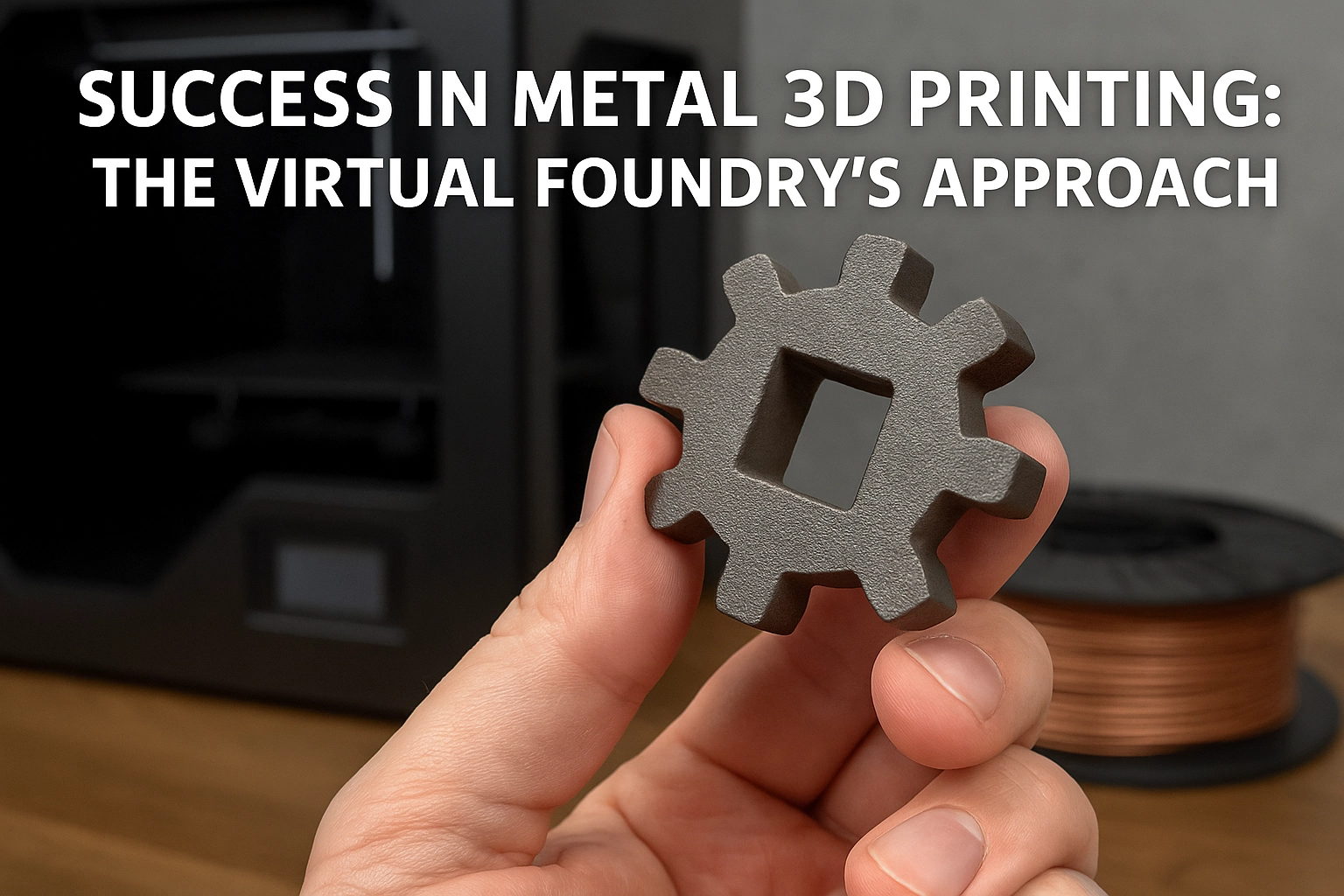
The Virtual Foundry is a company that specializes in FFF metal 3D printing. They offer a variety of metal filaments that can be used with common FFF/FDM 3D printers. The filaments are made from a combination of metal powder and a thermoplastic binder. When the filament is printed, the thermoplastic binder melts and flows, leaving behind a porous metal structure. The structure is then sintered in a furnace to remove the binder and fuse the metal particles together.
The Virtual Foundry’s FFF metal 3D printing process offers a number of advantages over traditional metal manufacturing methods. It is more cost-effective, faster, and allows for greater design freedom. The process is also relatively easy to learn and use, making it a good option for hobbyists and small businesses.
Here are some of the benefits of using The Virtual Foundry’s FFF metal 3D printing process:
Cost-effective: The Virtual Foundry’s FFF metal 3D printing process is more cost-effective than traditional metal manufacturing methods. This is because it eliminates the need for tooling and other expensive equipment.
Faster: The Virtual Foundry’s FFF metal 3D printing process is faster than traditional metal manufacturing methods. This is because it does not require the same amount of time for cooling and post-processing.
Greater design freedom: The Virtual Foundry’s FFF metal 3D printing process allows for greater design freedom than traditional metal manufacturing methods. This is because it can be used to create complex parts with intricate features that would be difficult or impossible to manufacture using traditional methods.
If you are looking for a cost-effective, fast, and versatile way to manufacture metal parts, then The Virtual Foundry’s FFF metal 3D printing process is a good option to consider.
Here are some of the applications of FFF metal 3D printing:
Prototyping: FFF metal 3D printing is a great way to create prototypes of metal parts. This can be useful for testing designs, for getting feedback from customers, and for manufacturing small quantities of parts.
Tooling: FFF metal 3D printing can be used to create tooling for traditional metal manufacturing processes. This can be used to create molds and dies for casting and forging, as well as fixtures and gauges for machining.
Direct manufacturing: FFF metal 3D printing can be used to manufacture metal parts directly. This can be useful for creating small quantities of parts, for parts that are difficult or expensive to manufacture using traditional methods, and for parts that require complex geometries.
Overall, FFF metal 3D printing is a versatile process with a wide range of applications. It is a good option to consider for prototyping, tooling, and direct manufacturing of metal parts.
For more information please reach out to TVF at [email protected] or give us a call at +1 (608) 509-7146
fff printer advantages, fffmetal, fff 3d printing technology, metal fff, 3d printer fff technology, fff 3d printers
Advantages of FFF Metal 3D Printing
The FFF metal 3D printing process offers several advantages over traditional manufacturing methods. It significantly reduces costs and lead times, making it an attractive option for businesses looking to streamline their production processes.
In addition to cost savings, FFF metal printing provides unparalleled design freedom. This technology allows for the creation of complex geometries that are often impossible to achieve with conventional methods, enabling innovative product designs and prototypes that can be tested before full-scale production.
Applications of FFF Metal Technology
The applications of The Virtual Foundry's FFF metal technology are diverse, spanning various industries including aerospace, automotive, and medical. This flexibility allows companies to utilize metal 3D printing for prototyping, tooling, and even direct manufacturing of end-use parts.
For example, in the aerospace sector, lightweight components that require intricate designs can be produced efficiently, reducing material waste and enhancing performance. Similarly, in the medical field, custom implants and tools can be created quickly, catering to specific patient needs.
How to Purchase FFF Metal Filaments
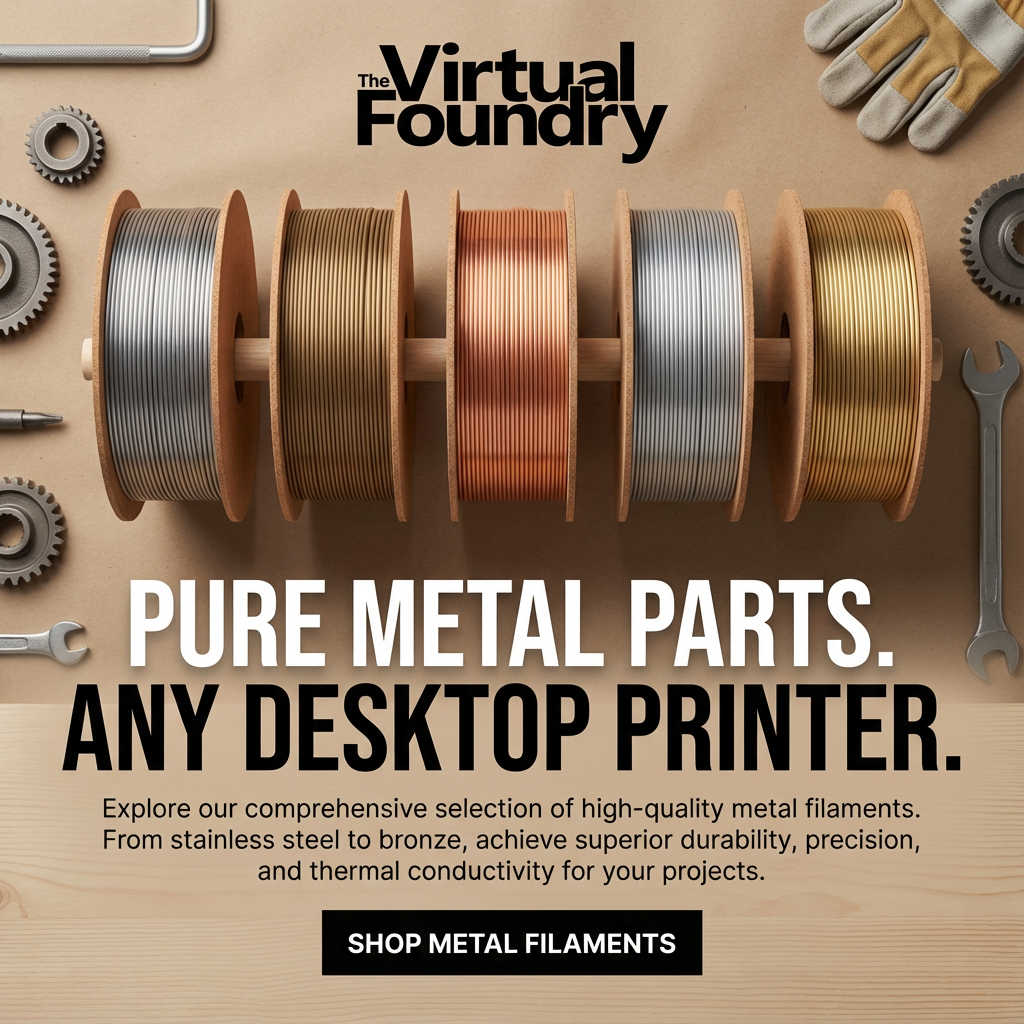
Purchasing FFF metal filaments from The Virtual Foundry is a straightforward process. Customers can visit the online store, where a variety of metal filament options are available, tailored to different applications and printer compatibility.
The website also provides detailed specifications and guidelines for each filament type, ensuring users can select the right material for their specific needs. Additionally, customers can reach out to the support team for assistance with any questions regarding their purchases.
Contacting The Virtual Foundry
Getting in touch with The Virtual Foundry is easy for those seeking more information about their products or services. The company offers multiple contact options, including phone, email, and a direct link to their online store.
For inquiries, customers can call +1 (608) 509-7146 or email [email protected]. The team is committed to providing prompt support and guidance to help users make informed decisions regarding metal 3D printing solutions.
Post-processing is often required for metal 3D prints to enhance surface finish, achieve precise dimensions, and improve mechanical properties. This can include processes like sanding, polishing, or heat treatment, depending on the desired outcome.
What are the common applications of metal 3D printing?
The common applications of metal 3D printing include aerospace components, automotive parts, medical implants, and tooling. These industries benefit from the ability to create complex geometries and lightweight structures, enhancing performance and reducing material waste.
What is the process of metal 3D printing?
The process of metal 3D printing involves using advanced filaments, like those from The Virtual Foundry, to create parts layer by layer. This technique allows for intricate designs and efficient production of metal components tailored for various applications.
What are the benefits of using a metal 3D printer?
The benefits of using a metal 3D printer include the ability to create complex geometries, reduced material waste, faster prototyping, and the production of durable parts suitable for various industries, enhancing both efficiency and innovation in manufacturing processes.
Can metal 3D printing produce complex geometries?
Metal 3D printing can produce complex geometries. This technology allows for intricate designs and structures that are often impossible to achieve with traditional manufacturing methods, making it ideal for various applications in multiple industries.
What types of metals can be 3D printed?
The types of metals that can be 3D printed include stainless steel, aluminum, titanium, and various metal alloys. These materials offer diverse properties suitable for numerous applications across different industries.
Can metal 3D printing be used for aerospace applications?
Metal 3D printing can be effectively used for aerospace applications. Its ability to produce lightweight, complex geometries and custom parts makes it ideal for enhancing performance and reducing costs in the aerospace industry.
What is the cost of metal 3D printing?
The cost of metal 3D printing varies based on factors such as material type, print size, and complexity. Generally, it can range from a few hundred to several thousand dollars per part, depending on these variables.
What are the limitations of metal 3D printing?
The limitations of metal 3D printing include high material costs, slower production speeds compared to traditional methods, and the requirement for specialized equipment and expertise to achieve optimal results. Additionally, certain geometries may be challenging to print effectively.
What metals can be used in 3D printing?
The metals that can be used in 3D printing include stainless steel, aluminum, titanium, and bronze. These materials are ideal for creating durable and complex parts across various industries.
How does metal 3D printing differ from traditional manufacturing?
Metal 3D printing differs from traditional manufacturing in that it builds parts layer by layer, allowing for complex geometries and reduced material waste, whereas traditional methods often involve subtractive processes that can limit design flexibility and increase waste.
How does a metal 3D printer differ from a plastic one?
Metal 3D printers differ from plastic ones primarily in the materials they use and the printing processes involved. While plastic printers utilize thermoplastics that melt and solidify, metal printers work with metal powders or filaments, requiring higher temperatures and specialized techniques for effective metal part production.
Can metal 3D printing be used for aerospace industry?
Metal 3D printing can be effectively utilized in the aerospace industry. It allows for the production of lightweight, complex components that enhance performance and reduce costs, making it an ideal solution for aircraft manufacturing and parts replacement.
How strong are 3D printed metal parts?
The strength of 3D printed metal parts can be comparable to traditionally manufactured metals, depending on the material and printing process used. High-quality filaments like those from The Virtual Foundry can produce durable and functional components suitable for various applications.
How does metal 3D printing improve product design?
Metal 3D printing enhances product design by enabling complex geometries, reducing material waste, and allowing for rapid prototyping, which accelerates the design process and fosters innovation in creating tailored solutions for specific applications.
How does metal 3D printing compare to traditional machining?
Metal 3D printing offers greater design flexibility and reduced material waste compared to traditional machining, enabling the production of complex geometries and customized parts more efficiently.
What are the benefits of metal 3D printing?
The benefits of metal 3D printing include reduced material waste, complex geometries that traditional methods can't achieve, faster prototyping, and the ability to create lightweight yet strong components, making it ideal for various industries.
What are the applications of metal 3D printing?
The applications of metal 3D printing are diverse and include aerospace components, automotive parts, medical implants, and intricate tooling. This technology enables the production of lightweight, customized, and complex designs that traditional manufacturing methods may not achieve.
Can a metal 3D printer be used for jewelry making?
Metal 3D printers can indeed be used for jewelry making. They allow for intricate designs and precise detailing, enabling jewelers to create unique and customized pieces with metal materials.
Can a metal 3D printer produce functional parts?
Metal 3D printers can indeed produce functional parts. Utilizing advanced materials like those offered by The Virtual Foundry, these printers create durable and precise components suitable for various applications across multiple industries.
Can metal 3D printing be used for medical implants?
Metal 3D printing can be effectively used for medical implants. It allows for the creation of custom, biocompatible components tailored to individual patient needs, enhancing the fit and functionality of implants in various medical applications.
What materials enhance metal 3D printing durability?
The materials that enhance metal 3D printing durability include high-strength alloys, such as stainless steel and titanium, as well as specialized filaments like those offered by The Virtual Foundry, which provide improved mechanical properties and resistance to wear.
How does temperature affect metal 3D prints?
Temperature significantly influences metal 3D prints by affecting material flow, adhesion, and overall print quality. Proper temperature settings are crucial for achieving optimal layer bonding and minimizing defects in the final product.
What are best practices for metal 3D printing?
The best practices for metal 3D printing include ensuring proper material preparation, optimizing print settings for temperature and speed, maintaining a clean build environment, and using appropriate post-processing techniques to enhance the final part quality.
Can metals be recycled in 3D printing?
Metals can indeed be recycled in 3D printing. Many metal 3D printing processes allow for the reuse of metal powders, reducing waste and promoting sustainability in manufacturing.
What industries benefit most from metal 3D printing?
The industries that benefit most from metal 3D printing include aerospace, automotive, medical, and manufacturing. These sectors leverage the technology for creating lightweight, complex parts, reducing material waste, and enabling rapid prototyping.
What advancements are being made in metal 3D printing?
Advancements in metal 3D printing include the development of more efficient printing techniques, improved material formulations, and enhanced post-processing methods, all aimed at increasing accessibility, reducing costs, and expanding application possibilities across various industries.
How to select metal for 3D printing projects?
Selecting metal for 3D printing projects involves considering factors such as the desired mechanical properties, the specific application, and compatibility with your 3D printer. Evaluate options like strength, weight, and thermal conductivity to make an informed choice.
What post-processing methods improve metal print quality?
Post-processing methods that improve metal print quality include heat treatment, which enhances strength and ductility, and surface finishing techniques like polishing or sandblasting, which refine surface texture and remove imperfections for a smoother final product.
Are there safety concerns with metal 3D printing?
Safety concerns with metal 3D printing include potential exposure to harmful metal powders and fumes, which can pose health risks if proper ventilation and protective equipment are not used. Additionally, the high temperatures involved can lead to fire hazards if not managed correctly.
metal 3d printing, metal 3d printer, virtual foundry, metal printing, 3d print metal, 3d metal printing