Industries That Use Filamet™ Metal 3D Printing
Applications and solutions for a wide range of Industries
FFF Metal by The Virtual Foundry offers a development platform that reaches across industries. Researchers in the lab, students working on a thesis project, prosumers at home and our military troops are all benefitting from this innovation that allows them to make metal, glass and ceramic into new shapes using regular, off-the-shelf equipment.
What industries are using Filamet™?
With Basalt Moon Dust Filamet™, you can 3D print the moon!
Get ready to blast off into the cosmos without leaving your lab!
Discover Basalt Moon Dust Filamet™, the game-changing filament made from lunar regolith simulant, courtesy of Astroport Space Technologies and The Virtual Foundry.
Just imagine printing lunar-inspired creations with your regular 3D printer! Basalt Moon Dust Filamet™ lets you dive headfirst into the lunar experience, right from your workbench.
Looking for something Moon-ish to print?
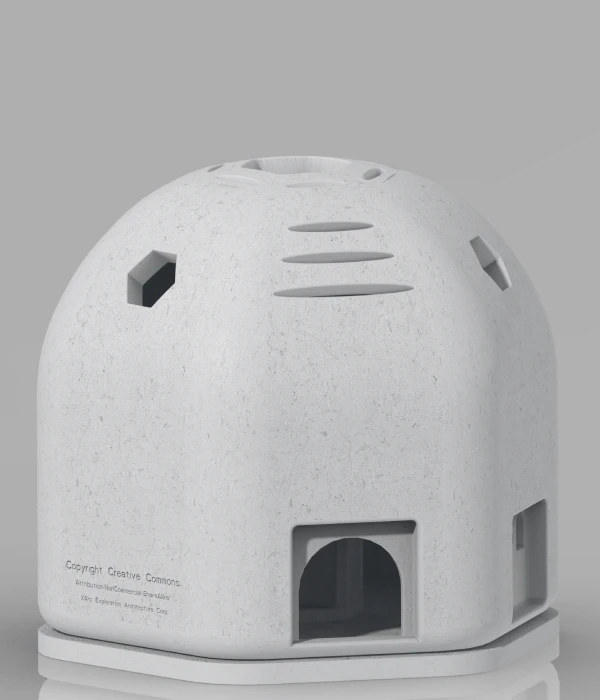
Try this Planetary Habitat Model created by Exploration Architecture Corp, the people behind Astroport Space Technologies. Clicking the image will take you to a Google Drive download for the stl file.
Planetary Habitat Model Created by Exploration Architecture Corp
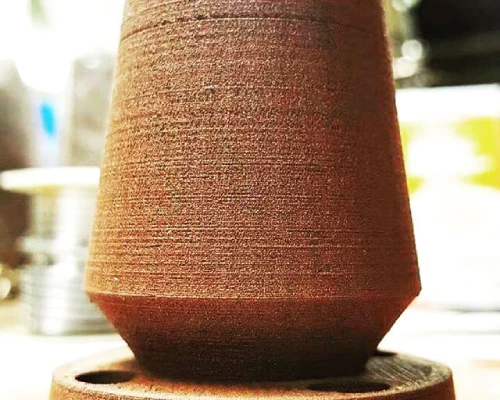
Examples of 3d prints using Filamet™ and Applications.
This drill bit is used to drill through ice in the Antarctic for the
IceCube Neutrino Observatory at the South Pole. It’s about 4lbs of copper.
Hot water is run through the bit to melt the ice, rather than cutting like a normal drill bit. It has internal structure for managing water flow which makes it extremely difficult to machine or cast, but pretty easy to 3D print – at a quarter of the cost.
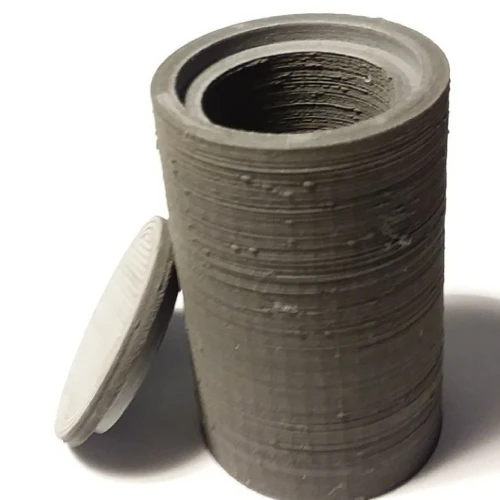
This is a 3D print of a bottle with lid used for transporting radioactive medicine it is equal (or very close to) the density of pure lead.
This print is about 94% metal by mass. It’s made with tungsten, which is 1.6 times heavier than lead. The whole point of this product is weight, to make the heaviest filament humanly possible. It will be used mostly in radiation management, vibration control and counterweights, marketed under a brand name that already has traction as an injection moldable, super high mass material.
This print weighs about a half pound. The container is 8.4cm high without the lid and 8.7cm with it. The outer diameter measures 4cm.
I just wanted to write a quick email to tell you how much I am enjoying your product. I found the copper based filament I got from you to be so easy to use and without issue from the very first print I tried. I was initially worried that it would be hard to get good results or difficult to print correctly. Nothing could be further from the truth, it prints easy and smoothly on my Prusa i3 mk2 without any funny setup issues or special problems I have experienced with other specialty filaments.
Thanks for a great product!
— Gordon Novak
Frequently Asked Questions
What are the benefits of metal 3D printing?
The benefits of metal 3D printing include enhanced design flexibility, reduced material waste, faster production times, and the ability to create complex geometries that traditional manufacturing methods cannot achieve. This technology significantly improves efficiency across various industries.
foundry industries, the virtual foundry, virtual foundry, heaviest 3d printer filament, foundry walls manufacturers
Biomedical Applications of Filamet™
Filamet™ technology has revolutionized the biomedical field by enabling the production of intricate medical devices and prosthetics. This innovation allows for custom solutions tailored to individual patient needs, enhancing the overall quality of care.
For instance, Filamet™ can be used to create biocompatible implants that integrate seamlessly with human tissue. Additionally, its application in surgical tools has improved precision and reduced recovery times, showcasing the significant impact of metal 3D printing in healthcare.
Aerospace Innovations with Filamet™
The aerospace industry is increasingly adopting Filamet™ technology to manufacture lightweight and durable components. This adoption is driven by the need for materials that can withstand extreme conditions while minimizing weight.
Examples include the production of engine parts and structural components that enhance fuel efficiency. Companies are utilizing Filamet™ to create prototypes and final products that meet rigorous safety standards, demonstrating the technology's potential to transform aerospace engineering.
Educational Uses of Filamet™ Technology
Filamet™ is making waves in educational settings by providing students and researchers with the tools to experiment with metal 3D printing. This hands-on experience fosters creativity and innovation among learners in various disciplines.
Educational institutions are using Filamet™ to teach engineering principles, design thinking, and manufacturing processes. By incorporating this technology into curricula, students gain valuable skills that prepare them for careers in advanced manufacturing and engineering fields.
Environmental Impact of 3D Printing with Filamet™
The environmental implications of 3D printing with Filamet™ are significant, as it offers a more sustainable alternative to traditional manufacturing methods. By using materials efficiently and reducing waste, this technology contributes to greener production practices.
Moreover, the ability to produce parts on-demand minimizes the need for extensive inventory and transportation, further lowering the carbon footprint. As industries aim for sustainability, Filamet™ stands out as a viable solution for eco-conscious manufacturing.
Frequently Asked Questions
What are the benefits of metal 3D printing?
The benefits of metal 3D printing include enhanced design flexibility, reduced material waste, faster production times, and the ability to create complex geometries that traditional manufacturing methods cannot achieve. This technology significantly improves efficiency across various industries.
foundry industries, the virtual foundry, virtual foundry, heaviest 3d printer filament, foundry walls manufacturers
Biomedical Applications of Filamet™
Filamet™ technology has revolutionized the biomedical field by enabling the production of intricate medical devices and prosthetics. This innovation allows for custom solutions tailored to individual patient needs, enhancing the overall quality of care.
For instance, Filamet™ can be used to create biocompatible implants that integrate seamlessly with human tissue. Additionally, its application in surgical tools has improved precision and reduced recovery times, showcasing the significant impact of metal 3D printing in healthcare.
Aerospace Innovations with Filamet™
The aerospace industry is increasingly adopting Filamet™ technology to manufacture lightweight and durable components. This adoption is driven by the need for materials that can withstand extreme conditions while minimizing weight.
Examples include the production of engine parts and structural components that enhance fuel efficiency. Companies are utilizing Filamet™ to create prototypes and final products that meet rigorous safety standards, demonstrating the technology's potential to transform aerospace engineering.
Educational Uses of Filamet™ Technology
Filamet™ is making waves in educational settings by providing students and researchers with the tools to experiment with metal 3D printing. This hands-on experience fosters creativity and innovation among learners in various disciplines.
Educational institutions are using Filamet™ to teach engineering principles, design thinking, and manufacturing processes. By incorporating this technology into curricula, students gain valuable skills that prepare them for careers in advanced manufacturing and engineering fields.
Environmental Impact of 3D Printing with Filamet™
The environmental implications of 3D printing with Filamet™ are significant, as it offers a more sustainable alternative to traditional manufacturing methods. By using materials efficiently and reducing waste, this technology contributes to greener production practices.
Moreover, the ability to produce parts on-demand minimizes the need for extensive inventory and transportation, further lowering the carbon footprint. As industries aim for sustainability, Filamet™ stands out as a viable solution for eco-conscious manufacturing.