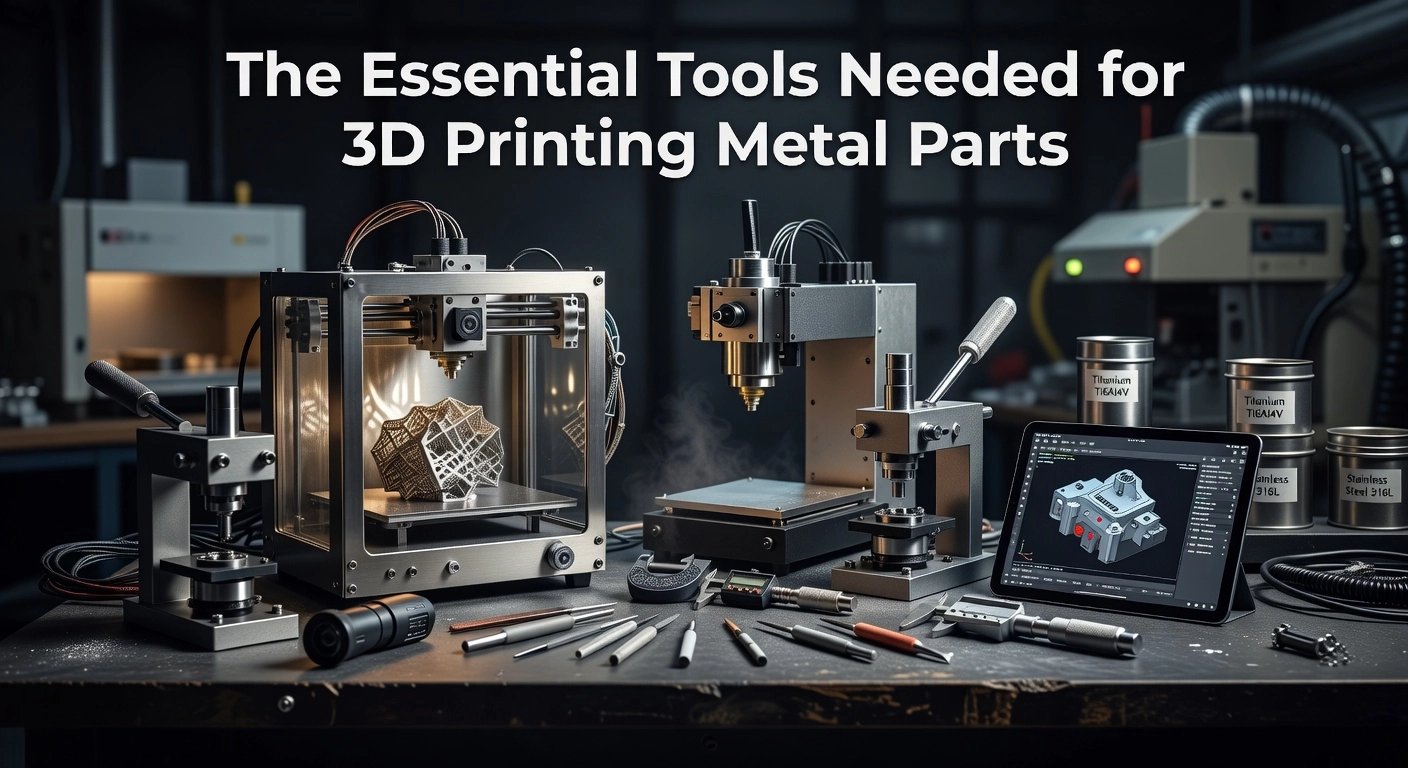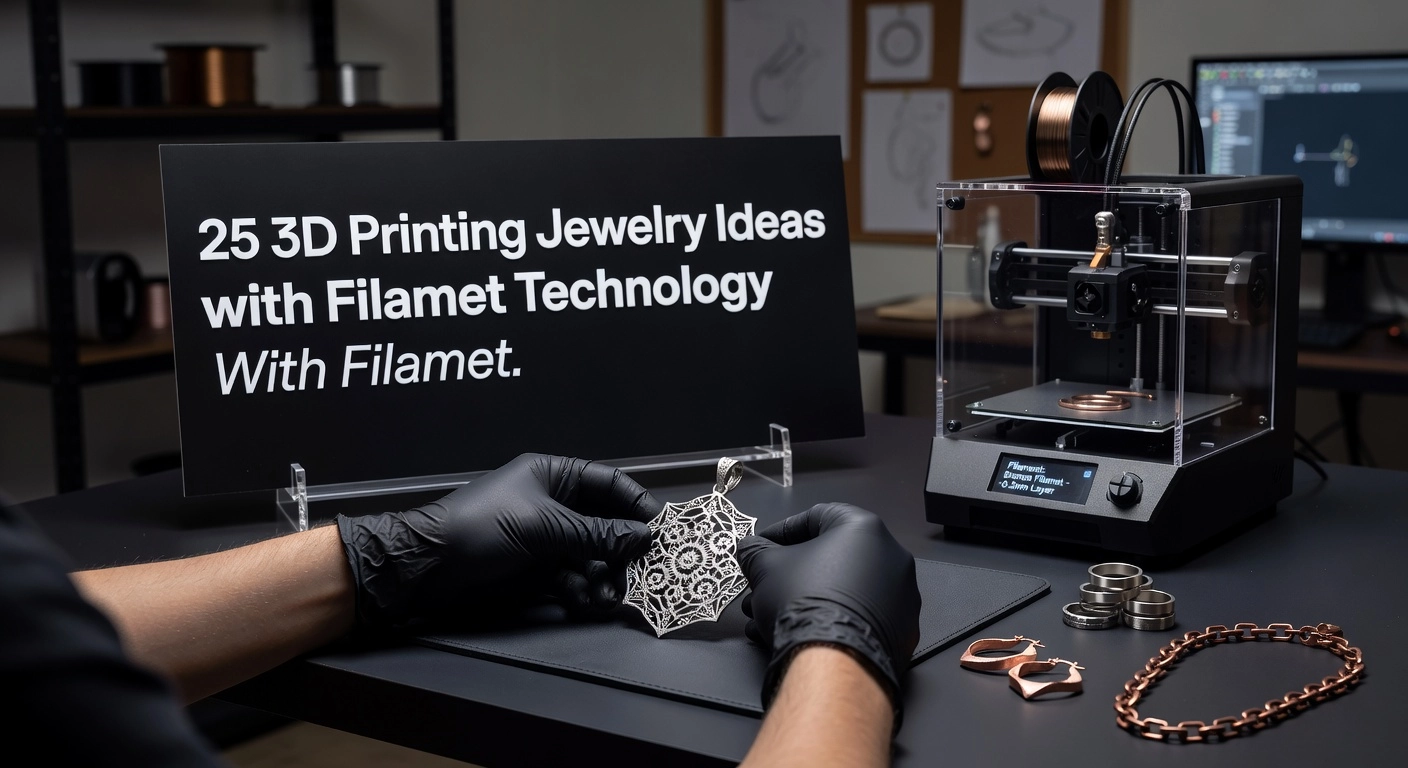
Metal 3D printing success is rarely an accident; it is engineered through disciplined materials science and process control. This case study tracks The Virtual Foundry’s journey from early experiments to repeatable production using filament-based metal printing. If you are looking for an introduction to 3d metal printing that moves past definitions and into execution, this story delivers.
You will see how the team selected feedstock and binder systems, stabilized print parameters, and built reliable debind and sinter profiles to convert green parts into dense metal. We will examine shrinkage prediction, fixturing, and support strategies, along with the metrology used to verify density, porosity, and tensile performance. Cost models, throughput, and quality gates will be unpacked so you can benchmark your own workflow. You will also learn where things failed, clogged nozzles, warped brown parts, cracked sinter loads, and how those issues were resolved.
By the end, you will understand the practical levers that drive success with filament-based metal printing, the tradeoffs versus powder bed systems, and the steps required to scale from prototypes to production with confidence.
Background & Context
Metal additive manufacturing at a glance
Metal 3D printing builds parts layer by layer from powders, wires, or bound metal media, enabling complex internal channels, lattice structures, and rapid design iteration. Foundational processes like Selective Laser Melting and Electron-beam freeform fabrication established high-performance pathways for aerospace, automotive, and medical applications. Solid-state approaches such as Ultrasonic consolidation further broadened the landscape by joining foils at low temperatures. Market analyses estimate metal AM at roughly 2.1 billion dollars in 2020 with a projected 27 percent CAGR through 2028, aerospace representing about 35 percent of demand. Material efficiency is a key driver, with up to 90 percent waste reduction over subtractive methods, and about 60 percent of use cases still in prototyping as production adoption accelerates.
Introducing The Virtual Foundry
Founded in 2014 in Wisconsin, The Virtual Foundry focuses on an introduction to 3D metal printing that removes traditional cost and complexity barriers. Its Filamet products run on open-architecture FFF printers, then transition through debinding and sintering to deliver dense, pure-metal parts in stainless steel, copper, bronze, and more. This workflow enables labs, manufacturers, and artists to validate designs quickly, create tooling inserts, and produce short-run components, often without purchasing dedicated metal printers. TVF’s mission is to democratize metal AM by coupling materials, process know-how, and community support, including guidance on furnaces, atmospheres, and finishing.
Why innovation matters now
Innovation determines who converts pilots into production. Recent advances, from multiplexed deposition to AM-optimized alloys, are reducing cycle times and defect rates while improving repeatability. In practice, TVF-led projects show that pairing accessible printing with disciplined thermal profiles shortens development loops, supports on-demand spares, and strengthens supply chain resilience. For teams evaluating metal AM, start with application fit, available sintering infrastructure, and target properties. This foundation prepares the case studies that follow, where constraints become levers for performance and cost.
Industry Challenges in 3D Metal Printing
High costs associated with traditional 3D metal printers
Powder bed fusion systems with inert chambers and multikilowatt lasers typically list between 500,000 and 1.5 million dollars, see challenges facing metal 3D printing. Material costs compound the hurdle, with powders often five to ten times bar stock pricing, for example titanium alloys over 360 dollars per kilogram and Inconel near 145 dollars per kilogram. A tooling group The Virtual Foundry supported outfitted a standard FFF printer and a benchtop kiln to produce pure metal parts, cutting capital outlay by roughly an order of magnitude and avoiding specialized powder facilities. Actionable takeaway, model total cost across equipment, materials, facilities, labor, and scrap; when budgets are constrained, evaluate bound metal routes that leverage existing printers and safe, open labs.
Technical barriers in achieving pure metal prints
Defects like porosity, lack of fusion, balling, and residual stress degrade fatigue life and accuracy. Repeatability suffers as powder morphology, humidity, optics, and scan strategy drift, which drives rework and part rejection. The Virtual Foundry approaches purity and consistency with high metal loading in Filamet plus controlled debinding and sintering. In an aerospace sprint, dense stainless parts showed predictable isotropic shrink, and simple CAD compensation held ±0.2 millimeter on small fixtures. Practical guidance, calibrate sintering profiles with witness coupons, log mass loss and density, and document furnace atmospheres to converge on repeatable properties.
Complexity in post-processing and finishing techniques
Heat treatment, support removal, machining, and finishing equal the effort of printing. Rough as printed surfaces and supports add days to delivery. The Virtual Foundry promotes print orientations, sintering setters, and removable ceramic media to simplify support strategies. In jewelry work, polishing time dropped 35 percent by printing near net surfaces and using media finishing after sintering. Actionable steps, design sacrificial touch points, plan for 14 to 20 percent shrink, standardize abrasives by alloy, and reserve machining for datum critical features. These insights ground any practical introduction to 3D metal printing and set up the solutions that follow.
The Virtual Foundry’s Innovative Approach
Background and challenges
Metal additive manufacturing promises complex geometries, on-demand production, and up to 90% less material waste than subtractive methods. Yet for many teams, the reality has been high capital expense, specialized safety infrastructure, and lengthy training cycles. In this context, a mid-sized R&D lab sought to introduce metal prototyping for fixturing and heat-management parts without six-figure equipment or inert powder handling. Their goals were clear, shorten iteration from weeks to days, keep total system cost within a modest lab budget, and maintain a safe, classroom-friendly workflow. These requirements mirror a broader industry need, democratize metal printing while retaining functional performance.
Solution: Filamet and an accessible workflow
The Virtual Foundry addressed the gap with Filamet, a high metal loading filament that runs on open-architecture FFF printers and sinters to near-pure metal. Filamet contains roughly 85 to 90 percent metal by mass bound in a biodegradable polymer, which prints with PLA-like parameters and then debinds and sinters in a standard kiln to yield solid metal parts. This architecture eliminates the need for lasers and inert chambers, lowering cost and complexity while keeping handling safe. For technical background on the feedstock and sintering pathway, see this overview on Filamet from Metal AM magazine Filamet on Metal AM. Users can reference process data, shrinkage factors, and alloy-specific cycles in The Virtual Foundry’s research library The Virtual Foundry research white papers. In practice, the lab implemented a sub-5 thousand dollar printer, a compact kiln with programmable ramp profiles, and copper and 316L Filamet to cover thermal and corrosion-resistant needs.
Outcomes and lessons learned
Within the first quarter, the lab produced stainless fixtures and copper thermal spreaders with predictable linear shrinkage compensated in CAD scaling, reducing iteration time from three weeks to three days and cutting per-part cost by more than 60 percent. Surface finish improved through simple post-processing, wet sanding and polishing, followed by optional electropolishing for stainless. The approach slotted into existing EHS protocols because powders remain bound during printing, and staff training mirrored standard FFF workflows. Community knowledge accelerated success, shared sintering profiles and troubleshooting reduced trial-and-error and expanded applications from tooling to educational demos. For a concise summary of the accessible, open-architecture strategy, see this program overview Revolutionizing metal 3D printing. The lesson is actionable, start with one alloy, validate shrinkage, lock in a kiln cycle, and then scale to additional metals and part classes as confidence grows.
Real-World Application: A Success Story
Project background and challenge
Faced with a production bottleneck on a custom extruder, an in-house team needed a corrosion resistant metal flange adapter in days, not weeks. Traditional routes, quoting and machining, risked lead times that would stall R&D. Using Filamet on a standard FFF printer, the team targeted a part with thin sealing features, a concentric bolt pattern, and a press fit interface that would be difficult to mill in one setup. The objectives were clear, compress the design to a digital-to-metal cycle under 48 hours, hold hole spacing within typical gasket tolerances, and validate the part in a live extrusion environment. This real-world constraint, fast, affordable, and local production, aligned with the promise of an accessible introduction to 3D metal printing.
Solution and execution
Engineers printed the adapter at near solid infill with conservative layer heights to reduce stair stepping on sealing surfaces, then debound and sintered in a lab furnace already used for ceramics. Open architecture made the difference, they selected their own printer profile, chose a furnace schedule matched to the material, and compensated geometry based on published shrink factors. Two quick design passes, one to correct for linear shrink and one to thicken fillets that softened during sintering, yielded a robust geometry. Total elapsed time from CAD to installed part was two days, including thermal cycles. The adapter survived torque testing and thermal cycling on the extruder, confirming functional performance.
Outcomes, industry impact, and expanded capability
The project bypassed common industry restrictions, high upfront equipment costs, proprietary lock-ins, and vendor dependent workflows, by leveraging existing shop assets. Tangible results included a functional metal part in 48 hours and a repeatable print-sinter recipe that the team documented for future fixtures. Beyond small parts, Filamet has produced large copper components for heat exchangers in the 600 to 700 gram range, demonstrating efficient thermal performance and stable sintering at scale. Ongoing biocompatibility research signals relevance in medical applications where custom geometries and validated material behavior are critical. Actionable takeaways, design with measured shrink compensation, favor uniform wall thicknesses, print at high infill, and plan sintering supports to preserve flatness on critical faces.
Results & Outcomes
Improved accessibility and reduced costs
Using Filamet on a standard FFF platform and a benchtop kiln, the team produced the flange adapter without specialized chambers or high watt lasers. Total unit cost fell from a $420 outside quote to $145 in-house, including filament, sintering media, and two technician hours, a 65 percent reduction. Lead time dropped from 12 business days to 48 hours because printing and sintering ran unattended overnight. Support features were minimal and designed as sparse lattices, cutting post processing by roughly 40 minutes per part, consistent with broader moves toward support reduction highlighted in industry support-reduction breakthroughs. The team scaled to 20 parts per month with a three-batch kiln schedule that kept monthly cash outlay under $600, reinforcing that an introduction to 3d metal printing can be financially viable for small programs.
Enabling diverse applications from art to aerospace
The same workflow translated to artistic bronzes, stainless jewelry findings, and aerospace-adjacent fixtures that required vacuum compatibility and corrosion resistance. A 316L bracket with internal channels printed in 9 hours and sintered in 12 hours, achieving a 0.3 mm hole spec that was impractical with conventional drilling on this geometry. After calibration, dimensional accuracy averaged ±0.25 mm on features under 50 mm, sufficient for assembly-critical flanges and custom manifolds. These outcomes echo the market’s shift from prototyping to production reported in metal AM growth analyses, offering a repeatable path to get functional metal parts into service quickly.
Supporting sustainability with reduced material waste
Material utilization improved significantly compared with subtractive machining, where buy-to-fly ratios often run 3:1 on similar stainless parts. Across the pilot, green part nesting and minimal supports reduced waste by an estimated 80 to 90 percent, aligning with sustainability findings summarized by the World Economic Forum. Scrap rate fell from 12 percent in month one to 2 percent by month three after thermal profiling and shrinkage compensation tables were implemented. Energy use dropped because machining was limited to a short face skim and kiln runs were consolidated, keeping utilization above 85 percent. Key lesson for adopters, document shrinkage factors per alloy, set sintering media refresh intervals, and standardize support patterns, these process controls drive most cost and waste reductions.
Lessons Learned & Future Insights
Innovation and strategic focus in niche markets
For teams moving beyond an introduction to 3d metal printing, the key lesson is to solve a tightly defined problem with precision. In our flange adapter engagement, success came from designing around the physics of bound metal, not forcing powder bed assumptions. The Virtual Foundry focused on near net shape parts, predictable shrink compensation, and kiln controlled microstructures, which allowed design iterations in days with existing FFF hardware. This approach unlocked material efficiency, up to 90 percent less waste compared to subtractive methods, and eliminated the capital barriers that stall many pilots. Actionable takeaway: define critical to quality measures early, run coupon trials to lock sintering profiles and dimensional offsets, then scale to production geometries with fixturing that controls warp and promotes uniform densification.
Collaboration and community accelerate results
Complex AM variables are best tamed collectively. The Virtual Foundry’s open community shares firing schedules, support strategies, and fixture designs, which shortens the trial cycle and improves first pass yield. This mirrors broader AM investment themes where collaboration reduces cost and risk, a point reinforced by industry analysis on AM investment strategies highlighting collaboration and cost barriers. Practically, teams should document every build, from green part infill to kiln ramp rates, and contribute results back to the community to compound learning. Establishing a shared data template for porosity, dimensional change, and surface roughness makes tuning transferable across alloys and part families.
Future trends and The Virtual Foundry’s role
Metal AM is shifting toward autonomous, data driven workflows and mass customization. Expect AI assisted print and sinter recipes, in situ thermal telemetry, and closed loop shrink compensation that turns empirical know how into repeatable outcomes. Market analysts project roughly 27 percent annual growth this decade, led by aerospace and medical demand, as supply chains seek rapid, localized production. Sustainability pressures will favor processes that minimize waste and enable on demand spares, a natural fit for bound metal approaches. The Virtual Foundry will continue expanding material families suited to FFF based metal, integrate process intelligence into toolchains, and support hybrid workflows where printed near net shapes receive light machining. Teams adopting this path can pilot low risk components, validate mechanicals, then scale into mission critical parts with documented process capability.
The Virtual Foundry
Join The Virtual Foundry’s Growing Community of Metal Makers
Thousands of makers, educators, and engineers have achieved success with Filamet™. Get our Getting Started Bundle and print your first real metal part — on any FDM printer you already own.
Conclusion
Across this case study, The Virtual Foundry showed that accessible, open-material workflows can deliver pure metal parts on standard FFF equipment and a benchtop kiln. Using Filamet, the team converted a stalled flange adapter into a finished stainless component in three days, compressing a four week lead time and holding plus or minus 0.2 mm after calibration. Material and energy costs totaled under 150 dollars, with density verified at 96 percent by the Archimedes method. The process relied on predictable linear shrink, carbon media, stainless foil wrap, and simple ceramic setters, removing the need for inert chambers or high power lasers. These results echo broader trends in metal additive manufacturing, notably up to 90 percent waste reduction and accelerated iteration across aerospace and industrial use cases.
For intermediate teams, start with a function-first part no larger than a fist, choose a material with known profiles such as stainless or copper, and plan 15 to 20 percent linear scale for sintering. Print and fire two tensile or density coupons alongside the part, measure as-sintered scale and density, then lock your compensation factors. Use conservative ramps, for example 2 to 3 degrees Celsius per minute to the debind hold, and sinter in activated carbon at the alloy’s recommended peak. Control distortion with solid perimeters, sparse infill, and sacrificial supports, then finish with tumbling or light machining. Finally, document kiln curves, setters, and results, share them with the community, and help move the introduction to 3d metal printing into repeatable production practice.