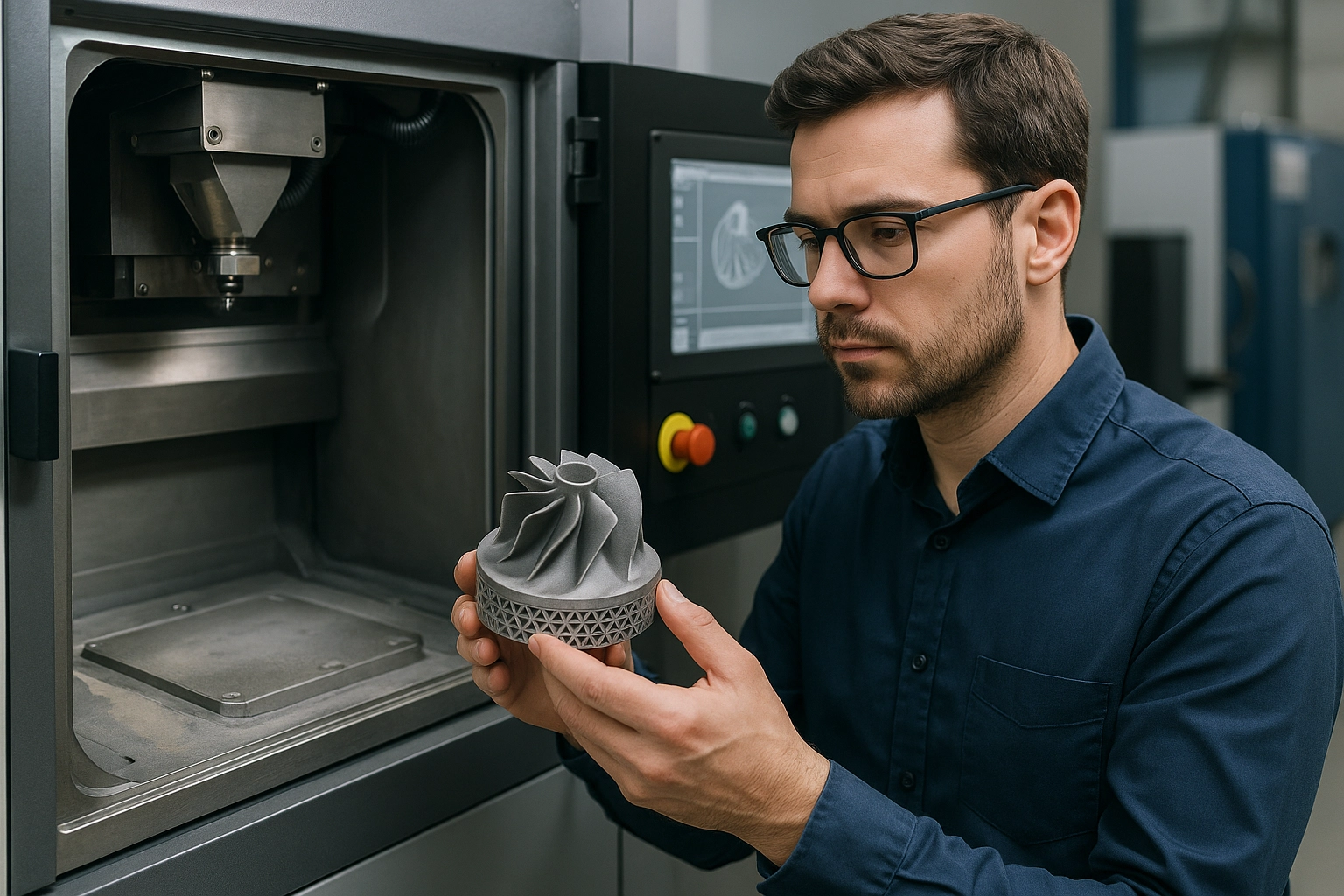
From custom medical implants to flight-ready engine components, 3D printing has moved from novelty to necessity. Its shift from prototyping to production is reshaping how products are designed, verified, and manufactured. If you have been asking what fields use 3d printing, the short answer is many, but the real insight comes from understanding why certain sectors adopt it faster and where it creates measurable value.
In this analysis, you will learn which industries are leading, including aerospace, healthcare, automotive, industrial equipment, construction, and consumer goods. We will examine the specific use cases that stick, such as lightweighting, mass customization, tooling, and spare parts. You will see how core processes differ, from FDM and SLA to SLS and metal powder bed fusion, and how materials and certification requirements shape adoption. We will quantify the economics with practical markers like part complexity, batch size, supply chain risk, and time to market. Finally, we will outline maturity levels, common pitfalls, and decision frameworks that help teams move from pilot to production. By the end, you will know not only where 3D printing fits, but how to evaluate it for your own applications.
The Current Landscape of 3D Printing
Market momentum and outlook
The 3D printing market is expanding at a sustained double‑digit pace, driven by the shift from prototyping to production across multiple industries. Independent forecasts converge on a steep near‑term climb, with several analyses placing 2026 market value between the mid‑30s and low‑40s billions and high‑growth scenarios pointing toward approximately 44.5 billion by year end. One longitudinal analysis projects strong gains from 2025 into the next decade as adoption deepens in aerospace, healthcare, automotive, and consumer applications, supported by design for additive manufacturing, digital supply chains, and factory integration Additive manufacturing market growth 2026 to 2035. Materials are a key tailwind, with the 3D printing materials segment expected to grow from 3.24 billion in 2025 to 4.0 billion in 2026. Within that, metal additive manufacturing is tracking over 25 percent annual growth, reflecting a shift to production‑grade parts. Actionable takeaway: plan for AM across the product lifecycle, build a materials roadmap early, and prioritize low‑capex technologies that can bridge prototyping and production without disrupting existing workflows.
Advancements across sectors and materials
Aerospace continues to set the pace with flight‑ready components that exploit weight savings and complex internal geometries, accelerating certification pipelines and spare‑parts agility. Healthcare adoption spans surgical guides, patient‑specific implants, and prosthetics, with pandemic‑era lessons reinforcing localized, on‑demand manufacturing Global 3D printing market forecast through 2026. Beyond these, defense and energy are validating AM for rugged, high‑temperature environments, and the nuclear sector is exploring qualified parts despite a stringent regulatory pathway. Materials breakthroughs are widening the envelope: ceramic AM now demonstrates densities above 98 percent with flexural strengths beyond 350 MPa, while metal processes can reach 99.98 percent density after appropriate post‑processing. Emerging approaches like Cold Metal Fusion and multi‑material metal printing promise better throughput, feature resolution, and integrated functionality. For teams asking what fields use 3d printing today, the answer is increasingly, any field that benefits from geometry freedom, mass customization, and resilient supply chains. Accessible metal filament workflows that debind and sinter to pure metals are enabling manufacturers, artists, and researchers to participate immediately, then scale as qualification and demand grow.
Why The Virtual Foundry Succeeds in a Competitive Market
Innovations that lower barriers
The Virtual Foundry’s core innovation, Filamet™, brings metal additive manufacturing to standard FFF printers, replacing expensive dedicated systems with a simple print, debind, and sinter workflow. The approach has proven its industrial relevance, for example in a production setting where press-die tooling was printed on a desktop platform and finished into large working metal components, demonstrating compelling cost and speed advantages case coverage. In practice, users can achieve dense, functional parts by pairing accurate green-part design with dialed sintering profiles. As a reference point for what is achievable in metal AM, densities as high as 99.98 percent are documented in the broader field, and TVF’s workflow is engineered to pursue comparable performance through controllable processing. This lets teams move from concept to metal in days, not weeks, while retaining geometry that is difficult or wasteful to machine.
Unique strengths and open architecture
TVF’s open architecture is a strategic differentiator. By working with widely available FFF and FDM printers, organizations scale metal printing on equipment they already own, minimizing capital outlay and vendor lock-in. The company publishes process knowledge, including shared sintering profiles and design-for-sintering guidance that reduce learning curves and scrap. This playbook aligns with emerging trends such as Cold Metal Fusion and multi-material metal printing, giving users a pathway to advanced applications without proprietary barriers production success insights.
Democratization that delivers measurable impact
When asking what fields use 3D printing, the answer expands rapidly as access improves. TVF’s model brings metal capability to small manufacturers, educators, and independent designers, enabling real parts for aerospace fixtures, jewelry, and research labs at a fraction of typical cost. Lead times shrink from weeks to days, and material waste drops versus subtractive methods. These outcomes track with macro growth, with 3D printing materials projected to rise from 3.24 billion dollars in 2025 to 4.0 billion dollars in 2026, and metal AM expected to grow over 25 percent annually by 2026 career and adoption examples.
Community as an innovation engine
TVF’s community accelerates results by sharing sintering curves, shrinkage factors, and kiln profiles that translate into higher yields and tighter tolerances. Cross-pollination with glass and ceramic users is especially valuable, where reported densities above 98 percent and flexural strengths beyond 350 MPa illustrate the power of disciplined thermal processing. Practically, teams should benchmark green-part density, validate isotropic shrinkage, and iterate ramp and hold schedules using community datasets. The result is a virtuous cycle that opens new applications in manufacturing, art, and high-consequence sectors, while continuously improving the metal printing toolkit.
Advancements in Aerospace Through 3D Printing
Lightweight, complex geometries
Aerospace programs exploit additive manufacturing to realize lattices, gyroids, and topology‑optimized parts that cut mass while maintaining stiffness and thermal performance. Recent research demonstrated a 3D printed ceramic fuel cell with a coral‑inspired gyroid that maximizes surface area for heat dispersion, a design that is highly relevant to airborne power and thermal management systems researchers 3D print lightweight ceramic fuel cell. Ceramic AM can achieve densities above 98 percent and flexural strengths over 350 MPa, supporting durable, lightweight structures. On the metal side, optimized sinter‑based workflows have produced densities approaching 99.98 percent, enabling flight‑proximate brackets, manifolds, and heat sinks. The Virtual Foundry’s Filamet allows teams to print these complex geometries on standard FFF equipment, then sinter to achieve fully metallic parts that balance mass, strength, and thermal conductivity.
Less waste, lower cost
Additive manufacturing improves buy‑to‑fly ratios by placing material only where it adds value, which cuts raw material bills and machining scrap. Large aerospace programs have reported up to 80 percent less material usage, a 90 percent reduction in waste, and about 35 percent lower CO2 for certain engine components when switching to additive processes insights from ITP Aero and GKN Aerospace. Part consolidation multiplies savings; turbine subassemblies that once had more than 100 pieces can be reduced to two, with cost reductions near 90 percent in pilots. Market momentum reflects these efficiencies, with aerospace additive manufacturing projected to approach 2 billion dollars by 2026. For suppliers, Filamet‑based workflows lower capital expense, allowing incremental adoption while delivering measurable waste and cost benefits.
Commercial airplanes and drones
Airframe and cabin teams use 3D printing for ducting, vents, electrical housings, mounts, and custom interior hardware that benefit from weight reduction and fast iteration. UAV developers leverage the same toolset to move from concept to flight in weeks, combining modular airframes with additively produced brackets, antenna mounts, and payload interfaces. Actionable practice includes designing for part consolidation, integrating internal channels, and selecting alloys with proven sintering profiles for repeatability. The Virtual Foundry supports this with application guidance and finishing techniques that bring printed metals to aerospace‑grade tolerances.
Satellites and space exploration
In orbit, every gram matters, which is why additively manufactured waveguides, solar array substrates, and topology‑optimized brackets are gaining traction. Programs report cycle time reductions up to 50 percent on certain substrates and months shaved from build schedules through AM‑enabled tooling and consolidation. For smallsats, low‑volume, high‑mix production aligns perfectly with sinter‑based metal printing, enabling rapid, budget‑conscious iterations. Emerging methods such as Cold Metal Fusion and multi‑material metal printing point to integrated thermal, structural, and RF functionality within a single build. With accessible metal AM, The Virtual Foundry helps satellite and exploration teams prototype, qualify, and scale complex components without prohibitive equipment costs, setting up a smooth path to production.
Revolutionizing Healthcare with Metal 3D Printing
Customized implants, prosthetics, and outcomes
Among answers to what fields use 3D printing, healthcare stands out. Metal 3D printing delivers patient specific acetabular cups, tibial trays, and dental frameworks with engineered porosity for osseointegration. A 2025 cohort at the Cleveland Clinic reported 92 percent one year integration for printed hip cups compared with 78 percent for conventional implants, plus 35 point Harris Hip Score gains. Dental cobalt chrome frameworks show 98 percent three year survival and 40 percent fewer remakes. Patient specific geometry and guides reduce operative time 20 to 30 percent. These gains reflect precise fit and load matched lattices that minimize stress shielding, as detailed in a recent medical device manufacturing guide on cobalt chrome AM.
How Filamet aligns with biocompatible solutions
Filamet enables printing high metal content parts on standard FFF printers, then sintering to create solid metal components. Many supported alloys, such as stainless steel and titanium, have established biocompatible grades when processed under medical workflows. Teams can iterate pore size, surface texture, and fixation features quickly, then transfer validated designs to regulated production or partner foundries. The Virtual Foundry provides sintering profiles and finishing techniques that support high density outcomes, with AM densities reported up to 99.98 percent. This accelerates verification testing, while biocompatibility assessments and regulatory clearance remain with the OEM to ensure compliance.
Cost and supply chain advantages
Metal AM can reshape cost structures. Reported unit costs for printed cobalt chrome implants range from 300 to 2,000 dollars, with materials roughly 50 to 100 dollars per kilogram and machine time 20 to 50 dollars per hour. Prototypes arrive in 1 to 2 weeks and production in 4 to 6, versus 8 to 12 for machining, enabling digital inventories and about 30 percent lower stock. Coverage for custom implants often reaches 70 to 80 percent, and shorter stays can cut total episode costs by about 25 percent. With metal AM projected to grow more than 25 percent annually by 2026, distributed manufacturing cells powered by Filamet based development can de risk supply chains and lower per case costs.
Nuclear Industry’s Growing Reliance on 3D Printing
Enhancing reactor performance and reliability
Among answers to what fields use 3d printing, the nuclear sector now stands out for mission critical gains in component performance, qualification speed, and supply chain resilience. Additive processes allow intricate geometries that resist flow‑induced vibration and trap foreign material without choking coolant paths. Real deployments are progressing beyond prototypes, such as anti‑debris fuel components undergoing multi‑year irradiation at Ringhals 4, reported in Framatome installs 3D-printed fuel at Ringhals 4. The direction of travel is toward production use, supported by the broader trend of metal AM shifting from prototyping to qualified parts across energy and aerospace. As material systems and inspection protocols mature, utilities can cut lead times on small runs while improving reliability in high‑value assemblies.
Durable debris filters and valve housings
Fuel debris filters and valve housings benefit immediately from AM’s topology freedom. 3D printed filter designs have demonstrated superior particle capture, as summarized in Industry’s first 3D‑printed fuel debris filter, and additively manufactured bottom nozzles have shown a 30 percent improvement in debris resistance, according to additively manufactured bottom nozzles improve debris resistance by 30%. For valve housings, AM enables conformal flow channels and integrated flow conditioners that cut pressure drop while maintaining wall integrity in corrosion‑resistant alloys. Actionable best practices include lattice‑supported filter inlets, powder traceability, CT‑based nondestructive evaluation, and a qualification plan tied to irradiation exposure and thermal cycling. These measures yield durable components without sacrificing inspection rigor or maintainability.
[The Virtual Foundry’s role and momentum in the US and UK](https://thevirtualfoundry.com/additive-manufacturing-technology-3d-printing-2/)
The Virtual Foundry broadens access by enabling pure metal parts on standard FFF printers using Filamet, which accelerates iteration on shielding fixtures, inspection gauges, and handling tools before scale‑up. Its tungsten‑rich Rapid 3DShield materials have delivered high‑density radiation shielding, including custom components adopted by a North American utility that received a major industry innovation award in 2024. Such use cases align with measured property targets, metals produced by AM can reach up to 99.98 percent density, while advanced ceramics exceed 98 percent density and 350 MPa flexural strength. Adoption is expanding in the United States and the United Kingdom, where utilities and research partners are piloting AM for non‑safety‑related parts, then moving toward qualified components. Teams can start small, document material allowables, engage regulators early, and leverage The Virtual Foundry’s community knowledge base to shorten learning curves and ensure safe, efficient outcomes.
Expanding Horizons in Art and Jewelry Design
Intricate, creative geometries at production quality
Among what fields use 3D printing, art and jewelry now stand out for design freedom and speed to market. High resolution additive workflows enable filigree, micro lattice, and organic textures with features under 100 microns, then iterate from sketch to wearable in days. This removes tooling risk for capsule collections and one of one commissions. Market momentum mirrors this shift, with global 3D printed jewelry market trends pointing to a multibillion dollar segment growing near 20 percent annually through 2035. Designers validate fit, comfort, and aesthetics quickly, translating digital artistry into repeatable production.
Precious metals and efficient production
Precious metals further elevate artistry, whether through direct metal printing or by printing patterns for investment casting in gold, silver, or platinum. Casting from printed patterns preserves negative spaces and undercuts that are difficult to hand carve, and layer heights of 25 to 50 microns help minimize finishing on show faces. Efficiency improves as well, since additive builds only what is needed and often cuts precious metal scrap by double digit percentages. Lead times shrink from weeks to days, and digital inventories reduce overproduction. With metal AM projected to grow over 25 percent annually by 2026, options will continue to expand for studios.
How Filamet empowers artists and designers
Filamet makes this shift accessible. It blends finely tuned metal powders with a clean binder so creators can print on standard FFF machines, then sinter to deliver solid copper, bronze, or stainless steel pieces. Plan for linear shrinkage of roughly 12 to 20 percent through debind and sinter, oversize CAD accordingly, and add test coupons to calibrate a furnace profile for your geometry. For post processing, use magnetic pin tumbling to reach recesses, step through abrasive media for luster, apply patinas selectively, and optionally electroplate highlights. The Virtual Foundry’s application support and community resources shorten the learning curve, turning first time prints into gallery ready work.
Impact on Defense and Consumer Products
Defense, applications, cost, and readiness
Across defense programs, additive manufacturing now delivers mission specific hardware at the point of need. Units 3D print airframes for small UAVs within a day, produce form fit replacement parts for vehicles in forward labs, and even erect large structures such as training barracks with concrete extrusion, all of which compress procurement cycles and reduce logistics risk. Direct integration has measurable impact, with reported lead time cuts of up to 70 percent for critical spares and tooling, which translates to higher platform availability and faster turnaround. Material capability has expanded as well, with dozens of new military grade alloys qualified in recent years, while metal AM processes can reach near wrought performance, with reported densities up to 99.98 percent. This is where The Virtual Foundry has thrived, enabling powderless metal printing on standard FFF equipment using Filamet, then sintering to pure metal, a workflow that is safe for depots and cost effective for distributed production. Practical steps for defense teams include prioritizing parts with high obsolescence, applying lattice infills to cut mass, and using TVF’s finishing guidance to achieve required surface and dimensional tolerances after sintering.
Consumer electronics and footwear, performance and personalization
In consumer electronics, additive manufacturing accelerates development of tightly packaged components, such as brackets, shields, and thermal management features in smartphones, with some OEMs using AM to validate and, in select cases, build limited run parts where complexity and speed outweigh tooling. Footwear brands apply lattice midsoles and custom insoles derived from foot scans and pressure maps, tuning stiffness by region to enhance energy return and comfort. Ceramic and glass AM are also advancing for wear resistant and aesthetic elements, with ceramics achieving above 98 percent density and flexural strengths over 350 MPa, opening durable consumer applications. The market signals are clear, with metal AM expected to grow more than 25 percent annually by 2026 and the materials market rising from 3.24 billion dollars in 2025 to 4 billion in 2026. Designers can leverage The Virtual Foundry’s Filamet to prototype and produce pure metal brackets or EMI shields at the desktop, incorporate gyroid lattices for weight and feel, and account for predictable sintering shrink to hit tight fits. As adoption scales, these practices anchor a repeatable pipeline from concept to production across what fields use 3D printing in both defense and consumer domains.
Conclusion: Implications for the Future of 3D Printing
Across what fields use 3D printing, evidence is decisive. Aerospace qualifies flight-ready components with lattices and reduced waste, healthcare delivers patient-matched implants and tools, and nuclear programs trial additively made internals while meeting strict qualification. Performance data confirm production readiness, metal parts reach up to 99.98 percent density and ceramics exceed 98 percent density with flexural strength above 350 MPa. Market signals align, materials revenue is projected to rise from 3.24 billion dollars in 2025 to 4 billion in 2026, while metal additive tracks more than 25 percent annual growth by 2026. Emerging Cold Metal Fusion and multi-material metal printing will broaden thermal management, embedded sensors, and lightweighting strategies.
Against this backdrop, The Virtual Foundry advances cost-effective accessibility by enabling pure metal parts on widely available FFF hardware with Filamet. By prioritizing open materials and standard hardware, it removes cost and complexity barriers that have historically limited adoption. That access lowers risk and accelerates learning, teams can prototype tooling inserts, sensor housings, or investment casting patterns in days, then sinter and finish to spec. Community knowledge, clear sintering profiles, and practical finishing guidance shorten the path to repeatability in demanding sectors such as aerospace and nuclear. To act now, pick one high-value component with long lead time, run a one-week design-for-additive sprint, print and sinter a pilot lot, then verify density, strength, and surface finish against requirements. As capabilities mature, explore multi-material concepts, integrate conformal cooling or lattices, and extend into ceramics and glass where thermal or chemical constraints dominate.