In additive manufacturing, geometry that adapts beats geometry that is fixed. Parametric design treats parts as systems of relationships and variables, so one change propagates predictably through the model. If you have wondered what is parametric in 3d printing, this analysis will ground the concept in practical, tool-agnostic terms and show why it matters for print quality, speed, and customization.
We will define parametric modeling, from sketches, constraints, and feature histories to programmatic approaches in OpenSCAD and Grasshopper. You will see how parameters encode design intent, capture tolerances, and link dimensions to print process variables such as nozzle size, layer height, shrinkage, and anisotropy. We will compare parametric workflows with direct mesh editing, explain where each excels, and demonstrate how parameters drive lattice infills, jigs, and assemblies that need consistent clearances across FFF, SLA, and SLS.
Expect stepwise strategies for building robust parameter trees, naming conventions, and change management. We will cover pitfalls like circular dependencies, overconstrained sketches, and fragile feature orders, and we will end with a checklist for validating parametric models for manufacturability and iteration at scale.
Current State of Parametric Design
Definition and principles
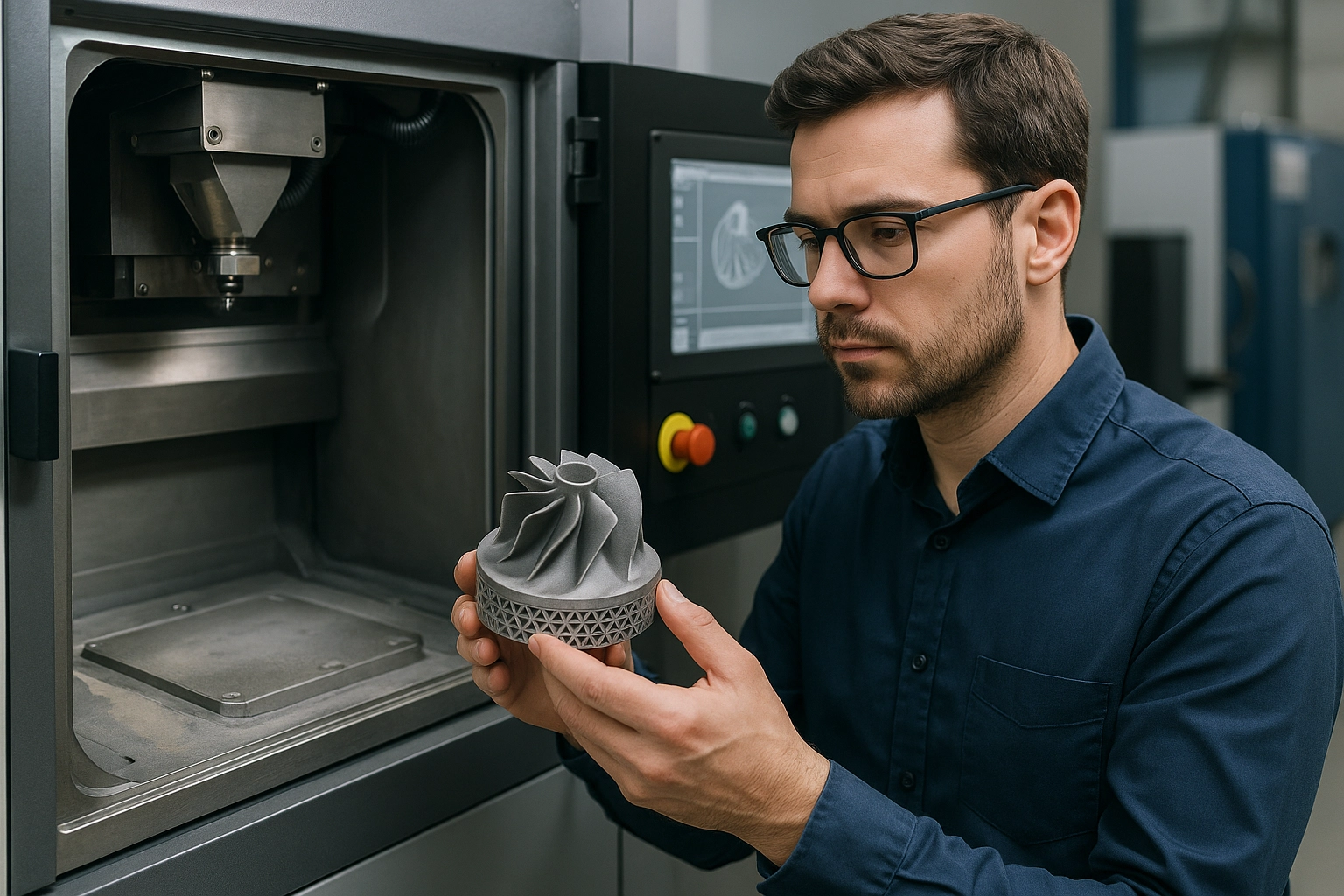
For readers asking what is parametric in 3D printing, it is a modeling strategy where geometry is driven by variables, constraints, and rules so designs update predictably when parameters change. Designers encode relationships such as wall thickness, lattice cell size, fillet radii, and tolerance offsets, then use algorithmic generation to produce valid variants without redrawing. This enables complex, lightweight structures and mass customization, while maintaining design intent across revisions. In additive workflows, parameters should also capture manufacturing realities like minimum printable feature size, anisotropy, and post-processing allowances. For metal filament workflows, adding shrinkage compensation, sintering support clearances, and binder burnout vents as explicit parameters avoids rework during densification. Core principles such as constraint logic and algorithmic form finding are well summarized in 8 principles of parametric architecture.
Adoption in architecture, automotive, and aerospace
Adoption is now mainstream across performance-driven sectors. Industry surveys commonly report that roughly 70 percent of 3D printing professionals rely on parametric modeling, with design cycle times reduced by up to 50 percent through reuse of templates and automated updates. Architecture uses parameterized panels and node systems to rationalize nonstandard facades and integrate robotic fabrication, while still enabling local variation for daylighting and thermal performance. Automotive programs apply lattice and shell parameters to trim mass in brackets and housings, often achieving double-digit weight reduction with 30 percent less material waste during printing. Aerospace teams use constraint-based ducting, mounts, and heat exchangers to meet strict stiffness and thermal targets, while rapidly iterating variants for different platforms. Custom products also benefit, with more than 60 percent of personalized prints driven by parameter sets that map to human fit, ergonomics, or site conditions.
Technological advancements, integration with CAD
Modern CAD systems embed constraint solvers and feature histories that preserve design intent when parameters change, enabling robust part families and automated drawings. Research on integrated design intent shows how associativity improves downstream reliability and revision control, see Integrated Design Intent of 3D Parametric Models. Toolchains increasingly connect parametric CAD to slicing profiles, enabling rule-based mapping of parameters to layer height, bead width, and support density. AI-assisted parameter search is accelerating, using surrogate models to optimize stiffness-to-weight and thermal paths without exhaustive prints. Within accessible metal printing, parameterized shrink factors, infill architectures, and sintering supports are codified as reusable templates, which The Virtual Foundry’s community refines for different alloys and kiln profiles. Teams can start by building a master template that captures minimum wall thickness, lattice unit cell bounds, hole-tolerance tables, and axis-specific sintering compensation, then link it to validated print-sinter workflows for rapid, repeatable outcomes.
Benefits and Efficiencies in Metal 3D Printing
Faster design and production
Parametric workflows compress the design-to-print loop by turning key dimensions, constraints, and DfAM rules into editable variables. Teams using template-driven models for brackets, manifolds, or jewelry findings routinely regenerate families of parts in minutes, not days, then feed them directly to toolpaths. Integrated environments that couple modeling with additive process setup reduce translation errors and handoffs, which shortens cycles further, as shown in platforms highlighted here, see integrated additive workflows for design-to-print. Industry sources frequently report up to 50 percent design time reduction when moving from static CAD to parameterized templates, while automated checks for wall thickness, support angles, and shrink compensation streamline build prep. Independent discussions of DfAM indicate automated routines can improve development turnaround by about 40 percent, which aligns with real-world gains users see with parameter libraries and scripted iterations, see automation impact on DfAM workflows.
Material optimization and sustainability
Parametric control of shell thickness, internal lattices, and graded density enables parts that meet stiffness or conductivity targets with less mass. Designers can sweep lattice cell size as a function of local stress, then export FFF paths for Filamet prints that debind and sinter into fully metal parts, achieving strength with 20 to 40 percent less feedstock compared to solid equivalents. This approach minimizes support volume and eliminates subtractive waste, improving buy-to-fly ratios for functional components. Academic analyses of additive workflows point to material efficiency gains and cost reductions when parts are digitally hollowed and structurally optimized, see material use and efficiency in additive. For The Virtual Foundry’s users, a practical tactic is to expose lattice pitch, rib height, and infill orientation as parameters, then validate the lightest variant that still meets sintered tolerance and load.
Enhanced customization for user-specific needs
Mass customization is native to parametric modeling, which is why industry surveys find a majority of practitioners rely on it for personalized 3D printed products. In The Virtual Foundry ecosystem, creators publish parameter tables for ring sizes, fixture offsets, or heat sink footprints, letting customers or colleagues generate precisely fitted metal parts without redrawing geometry. Embedding shrink compensation, furnace schedule identifiers, and support clearance as parameters keeps downstream processing consistent across variants. A practical workflow is to script a batch of parameter sets, generate STLs for each, then print and sinter a short run that is tailored to user measurements. This is how the question of what is parametric in 3D printing translates into tangible value, faster delivery, leaner material use, and parts tuned to the application.
The Virtual Foundry’s Innovative Approach
Open-architecture Filamet™ and democratized parametric metal AM
The Virtual Foundry lowers the barrier to metal additive manufacturing by pairing high metal content Filamet™ with standard FFF printers and commercially available kilns for debinding and sintering. This open architecture avoids specialized machines, so teams can repurpose existing toolchains, slicers, and motion systems while focusing investment on materials and process control. Compatibility across common printer platforms and kiln types increases equipment redundancy and reduces downtime, an important lever for small teams. In parametric workflows, designers treat shell thickness, lattice unit cells, and shrink compensation as variables, which shortens the iterate, print, sinter loop. Industry reports attribute up to 50 percent design time reduction and roughly 30 percent material waste reduction to parametric approaches, benefits that align with TVF’s rapid validation methodology research white papers. By emphasizing material science, compatibility, and community guidance rather than expansive infrastructure, the company has scaled access to pure metal printing efficiently TVF open-architecture overview.
Applications: art, jewelry, aerospace
Artists and jewelers use Filamet™ to parameterize ring sizing, surface textures, and inlay clearances, then apply measured X, Y, and Z shrink factors after pilot sinters to hit final dimensions. Post-processing such as tumbling and patination yields production-quality copper, bronze, and stainless finishes, a capability noted in the original Filamet product announcement. Aerospace R&D groups prototype lightweight brackets and thermal fixtures by varying lattice density, strut diameter, and sintering supports to control distortion and porosity. With about 70 percent of professionals using parametric CAD and over 60 percent of custom prints relying on personalization, these variable-driven templates let users scale from one-off art to short-run functional parts without changing hardware. Actionably, establish a parametric compensation template per alloy, include orientation and setter as inputs, then iterate with coupon arrays; add AI driven sweeps to map design envelopes that stay stable through sinter. This parametric control also improves sustainability by minimizing support mass and optimizing infill, consistent with reported waste reductions for parametric designs.
Key Trends in Parametric 3D Printing
AI-accelerated parametric workflows
Parametric design is converging with AI to automate constraint handling, performance prediction, and design-space exploration. Functionality-aware segmentation lets teams personalize models while preserving joints, clearances, and load paths, as shown by Style2Fab’s generative segmentation framework. Predictive models shorten print-test cycles by estimating properties before fabrication, for example a neurosymbolic AI approach that predicts PLA impact strength, and the same workflow applies when training on metal coupon data. Process-aware learning is also emerging, such as ShapeGen3DCP for layer shape prediction, which uses process inputs to forecast bead geometry and avoid defects. In practice, build lightweight surrogate models from your Filamet prints, then sweep parameters to pick wall thickness, lattice size, and orientation hitting strength targets with less support.
Sustainability and quantifiable waste reduction
Parametric rules enable explicit control over mass, surface area, and support exposure, which directly impacts sustainability. By standardizing orientation heuristics, limiting overhangs above threshold angles, and using graded lattices, shops routinely reach a 20 percent reduction in material waste relative to naive baselines. Key levers include variable shell thickness and fillet radii to remove stress risers, plus internal channels that consolidate fasteners, all driven by editable parameters. Implement SPC on waste metrics, track purge, raft, and support mass per build, and tie parameters to a dashboard so targets are enforced at design time. Open workflows unify slicer presets, shrink rules, and templates in one loop.
Medical applications, custom prosthetics at scale
A repeatable pipeline shows how answering what is parametric in 3D printing translates to better prosthetic sockets and orthotics. Start with a scan, fit a constrained surface, then drive thickness, venting, and relief zones from patient-specific parameters. Compliance and comfort are tuned with variable lattice density and anisotropy, while FE surrogates verify stiffness before printing. Teams often see up to 50 percent less design time from reusable templates, plus faster fit cycles through predictable edits. For metal-reinforced parts, Filamet jigs and attachment hardware follow the same rules, delivering post-sinter accuracy with fewer iterations. Overall, these trends move parametric metal AM toward repeatable production at lower cost and risk.
Building a Global 3D Printing Community
Role of The Virtual Foundry in nurturing an innovative community
The Virtual Foundry sustains an open architecture ecosystem that turns parametric know-how into shared, repeatable practice. With Filamet Kit: 3D Print Metal Parts with The Virtual Foundry on standard FFF printers, creators produce metal parts without specialized hardware. Live Discord support, Reddit threads, and tutorial collaborations converge into reproducible process recipes and parameter sets for shrinkage, bead geometry, and lattice density that the community validates through benchmark prints and structured sintering logs. Across use cases, parametric templates compress iteration time by up to 50 percent, aligning design variables with predictable print and kiln behavior.
Collaborations to enhance knowledge-share on parametric design
Structured collaborations amplify this knowledge base and validate parametric assumptions under controlled experiments. Joint projects with the University of Pécs 3D Printing and Visualization Centre focus on material development and desktop-ready medical components, generating datasets that map shrinkage and porosity to thermal profiles. The Sapphire 3D sintering partnership closes the loop from CAD to full density by translating geometry variables into axis-specific scale factors and kiln schedules. Practically, designers encode anisotropic scale matrices, binder burnout ramps, and target relative density as top-level parameters, then publish DOE tables so peers can reproduce dimensions and density by changing a few inputs.
Online forums and tutorials to empower creators and designers
Online forums and tutorials turn abstract variables into concrete design controls. Browser tools like Iteration3D, scriptable OpenSCAD, and entry platforms such as Tinkercad lower skill barriers while preserving parameter traceability. TVF tutorials and creator videos demonstrate automatic scaling for 12 to 18 percent sintering shrinkage on parts such as ring blanks, conformal heat sinks, and gyroid-filled brackets. Industry surveys indicate about 70 percent of professionals use parametric modeling, enabling up to 50 percent faster design cycles, roughly 30 percent less material waste, and more than 60 percent of custom jobs to be personalized at scale; teams should ship a parameter manifest with each model, include axis scalars for the chosen alloy and kiln, and version these assets to propagate improvements.
Implications for Future Manufacturing Practices
Impact on traditional manufacturing methods and processes
Parametric workflows replace fixed drawings with variable-driven models, which is pivotal for tool-less complexity. Conformal channels, graded lattices, and topology-optimized ribs become editable parameters rather than one-off features. Teams report up to 50 percent faster design cycles, and about 70 percent of AM professionals use parametric CAD in production toolchains. In metal FFF, The Virtual Foundry encodes sinter shrink, anisotropy, and clearance rules as named variables, so fixtures and low-volume metal parts iterate without retooling. This absorbs late changes and merges prototyping with production, cutting engineering change orders and lead times. Actionable step, capture alloy-specific xyz shrink and furnace profiles in your parameter library.
Potential for scalability and global sustainability efforts
Parametric, file-driven manufacturing scales through digital inventories and localized print nodes that produce on demand, reducing warehousing and freight exposure. Mass customization is routine, with more than 60 percent of custom 3D printed products built from parameterized templates that personalize fit and performance. Material efficiency rises as variables govern wall thickness, lattice density, and support minimization, often achieving near-net shapes with about 30 percent less material waste than nonparametric designs. With Filamet, tuning green-part density and shell-core ratios balances sinter throughput and mechanical targets across sites. Energy consumption is managed by parameterizing build orientation, layer height, and batch packing, which shortens furnace cycles and raises part-per-kilowatt metrics. Implement LCAs early, tie parameters to kilograms saved and kilowatt-hours per part, and run SPC on shrink and porosity.
Vision for future advancements in 3D printing technologies
Next, AI will assist what is parametric in 3D printing by auto-tuning constraint sets, predicting failure modes, and guiding lattice choices from performance targets. Closed-loop sensing will connect print monitoring to sintering schedules in real time, improving density, grain growth, and dimensional accuracy. Multi-material roadmaps point to metal, glass, and ceramic co-design with graded properties, where parameters control composition, porosity, and thermal behavior per region. The Virtual Foundry will continue codifying community learnings into shared parameter packs, including verified shrink maps, sinter fixtures, and alloy-specific lattice libraries. Prepare by modularizing parameter sets, integrating predictive sinter simulation, and automating reports for qualification and audits.
Conclusion and The Road Ahead
Parametric 3D printing has shifted design from static drawings to adaptable systems, which is why understanding what is parametric in 3D printing is central to modern additive workflows. By encoding geometry as variables and constraints, teams tune lattice density, wall thickness, or conformal channels in minutes, not weeks. Industry data shows up to a 50% reduction in design time and about a 30% cut in material waste when parameter libraries and rule checks are used early in the process. Adoption is already mainstream, with roughly 70% of professionals incorporating parametric modeling and more than 60% of custom parts relying on it for personalization at scale. In metal applications, parametrically driven designs also tighten mechanical performance by aligning topology with load paths while improving sustainability through targeted material placement. The result is faster iteration, higher functional fidelity, and traceable design intent across revisions and print runs.
To operationalize this, build a parameter playbook that captures print orientation policies, minimum feature rules, lattice families, and measured, axis-specific sintering shrink factors for each Filamet material. Connect CAD variables to slicer profiles and run AI assisted parameter sweeps to explore stiffness, mass, and thermal tradeoffs before printing. Establish a small design of experiments framework that quantifies how parameter changes propagate through debinding, sintering, and finishing. Implement statistical process control on key outputs like density and dimensional accuracy to lock in repeatability. The Virtual Foundry amplifies these practices by sustaining an open architecture pathway to pure metal parts, expanding materials and techniques, and curating a community that shares proven parameter sets and finishing workflows. This ecosystem will continue to guide the field as AI enhanced parametric design becomes the default for agile, sustainable manufacturing.