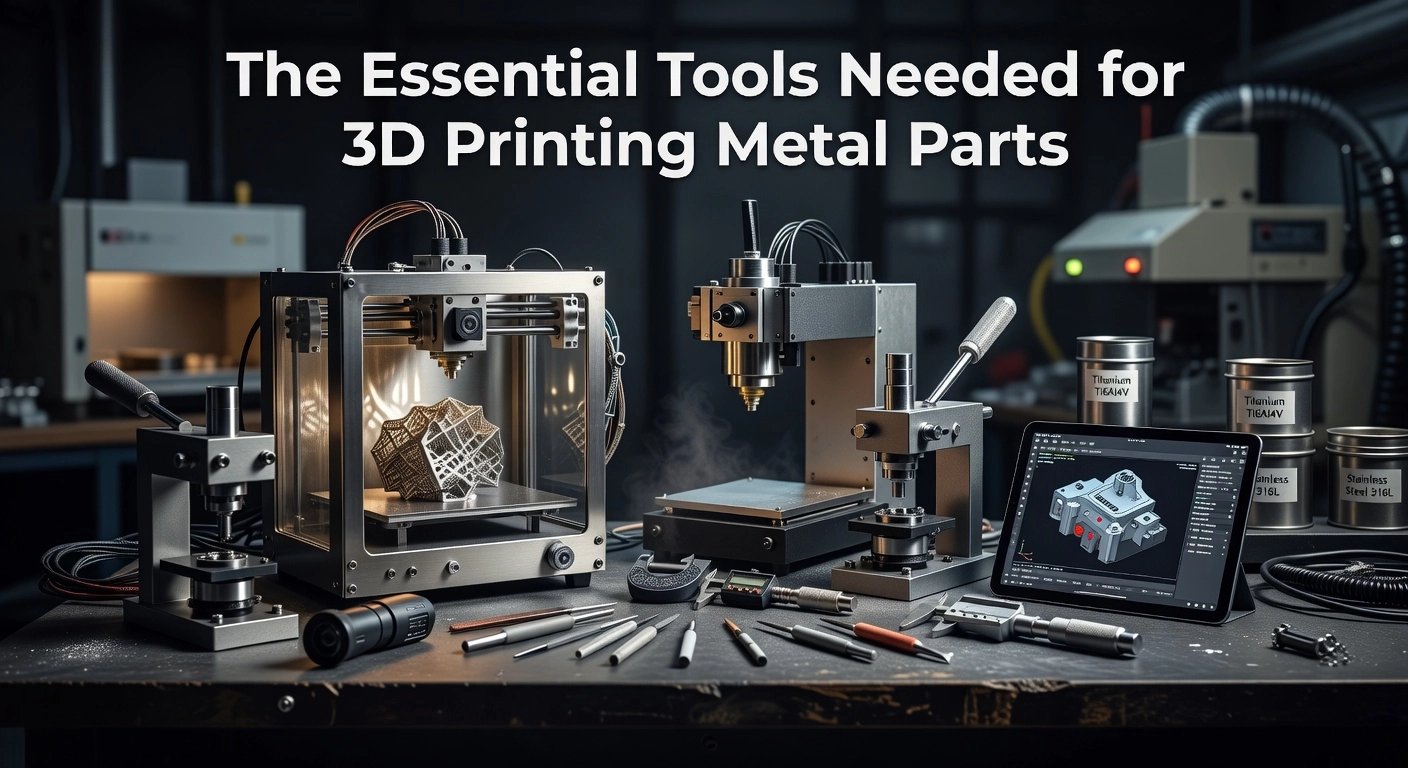
Imagine transforming your 3D printer into a metalworking powerhouse. With Filamet technology, you can now create stunning, functional items that look and feel like real metal, all from the comfort of your workshop. No expensive industrial equipment required. This innovative filament blends metal powders with traditional plastics, enabling beginners like you to print durable, conductive, and aesthetically superior pieces.
In this post, we explore 10 game-changing 3D printed items enabled by Filamet tech. From jewelry that rivals professional castings to custom tools with genuine metallic strength, these projects push the boundaries of home 3D printing. You will learn step-by-step insights into each item, including printing tips, post-processing techniques like sintering, and why Filamet makes them possible. Whether you are new to 3D printing or ready to level up, this list delivers authoritative guidance to inspire your next creation. Get ready to unlock professional results with everyday tools.
Metal 3D Printed Items Market Boom in 2026
- Global Metal 3D Printing Market Hits $14.76 Billion in 2026 with 25.8% CAGR to 2030 The global metal 3D printing market surges to $14.76 billion in 2026, fueled by accessible filaments for standard FDM printers that allow beginners to create pure metal parts. This growth, projecting to $36.94 billion by 2030 at a 25.8% CAGR, stems from demand in aerospace, manufacturing, and consumer applications. Innovations like The Virtual Foundry’s Filamet™ enable printing green parts on printers like Bambu Lab, followed by simple debinding and sintering for dense metal outputs. Hobbyists benefit from reduced waste and faster prototyping. Start by selecting high-metal-load filaments to tap into this boom for custom 3D printed items.
- Metal Extrusion Printers Grow from $1.85 Billion in 2025 to Over $2.12 Billion Metal extrusion printers expand rapidly, empowering hobbyists to produce high-value 3D printed items like jewelry and art without industrial equipment. Priced affordably, these systems print intricate designs that sinter into durable metals such as stainless steel or bronze. Users print on everyday FDM setups, achieving complex geometries in hours. Actionable tip: Equip your printer with a hardened nozzle and follow kiln guides for 98% pure results. This segment’s growth highlights accessible entry for beginners creating premium pieces.
- Filament Market Reaches $1.51 Billion, Metal Variants Exceed 26% CAGR The 3D printing filament market climbs to $1.51 billion in 2026, with metal-infused options growing over 26% annually due to compatibility with standard printers like Bambu Lab. Filamet™ variants pack up to 94% metal powder, yielding pure outputs post-sintering for jewelry or functional parts. Beginners can print at 200-240°C, then process in a home kiln. This drives demand for strong, lightweight 3D printed items. Experiment with bronze for art to leverage this trend profitably.
- Etsy Trends: Jewelry and Decor Lead Sales via Sintering for Premium Pricing On Etsy, 3D printed jewelry and decor dominate, with sintering elevating plastic prints to durable metal for higher prices, like $50-200 per ring. Trends favor custom pendants and vases in copper or steel, printed on FDM machines. Sellers report 40-60% margins using accessible filaments. Market reports confirm this shift boosts personalization. Beginners: Design intricate filigree, sinter, and polish for Etsy success. Extrusion growth data supports scaling your hobby into business.
How The Virtual Foundry Succeeds in Metal Printing
- Filamet™ Filaments Enable Pure Metal Parts on Affordable FDM Printers Filamet™ filaments from The Virtual Foundry contain up to 100% metal powder by weight after processing, allowing beginners to print green parts on standard FDM printers like Creality Ender series or Prusa models. These composites, loaded with 80-90% metal powder in a biodegradable PLA binder, require only a hardened nozzle and direct-drive extruder for reliable extrusion. After printing, debind parts in a standard kiln at 500-600°C to burn out the binder, then sinter at material-specific temperatures like 1100°C for steels to achieve 95-99% dense pure metal items. This process yields 3D printed items such as jewelry rings or functional prototypes with properties matching traditional alloys. Scale designs in your slicer by 15-20% to account for predictable shrinkage, ensuring precise final dimensions. Actionable tip: Start with Filamet™ collections for spools in 1.75mm or 2.85mm diameters.
- Democratized Access Through Standard Gear and Thriving Community The Virtual Foundry succeeds by using everyday equipment, keeping costs under $1,000 for entry-level setups including printers and kilns. This open approach serves over 3,000 users, from hobbyists to manufacturers, who share sintering profiles and print settings via community forums. No proprietary hardware means faster iteration and lower barriers for producing metal 3D printed items. Users report 4.3/5 ratings from 15,500 reviews, highlighting reliability in diverse applications. Join the community at thevirtualfoundry.com for guides and user showcases.
- 13+ Material Variants for Diverse 3D Printed Items Choose from over 13 variants including Bronze, Copper, 316L Stainless Steel, Tungsten for shielding, plus glass and ceramics like Borosilicate or Zirconia. Print jewelry pendants in Copper, aerospace prototypes in Titanium, or art sculptures in Bronze. High loadings ensure strong, detailed final parts post-sintering.
- Proven Case Studies with DFAM-Optimized Parts in Days Real examples include a flange adapter sintered in 2 days for industrial testing and copper heat exchangers for university research. Artists create gallery jewelry; hobbyists produce durable fidget toys. DFAM lattices enable complex geometries undreamt in traditional manufacturing.
- Broad Compatibility Lowers Barriers to Innovation Filamet™ works seamlessly on Creality Ender 3/Pro, Prusa i3 MK3S, and Bambu Lab printers. Direct-drive systems handle abrasive filaments best. This compatibility fosters rapid prototyping where scalability shines for all users.
1. Custom Metal Jewelry Rings and Pendants
- Print Intricate Designs with Bronze or Copper Filamet for Unique Rings Bronze Filamet™ from The Virtual Foundry allows beginners to create detailed rings and pendants on standard FDM printers, producing green parts that sinter to pure metal with jewelry-grade shine and 95-98% density. Copper Filamet™ offers reddish tones perfect for artistic pieces, enabling features like 0.5 mm walls, lattices, and filigree. After sintering, polish for a mirror finish or apply patina for unique effects. This process supports complex geometries impossible with traditional methods, all from affordable desktop setups. See TVF jewelry case study for examples.
- Ideal for Etsy Sellers with High Demand for Personalized Pieces Etsy trends show custom 3D printed metal jewelry selling at 30-50% premiums over plastic, with rings fetching $18-$75 each and shops earning $1,200-$8,000 monthly at high margins. Personalized designs like zodiac engravings or parametric bands thrive due to low-waste FFF production under 48 hours. TVF’s accessible filaments enable rapid iteration for made-to-order items, boosting catalog growth by 40%.
- Beginner Process: Slice, Debind, and Sinter per TVF Guides Slice at 100 micron layers with 190-210°C extrusion, 15-22% scale-up, and gyroid infill on hardened nozzles. Debind thermally to 600°C in media to avoid cracks, then sinter Bronze at 885°C or Copper at 1052°C for 98% density. Follow TVF DIY jewelry guide and sintering guides; total cycle under 48 hours costs <$15 per ring.
- User Showcases: Organic Shapes Produced in Hours Community users print organic filigree rings and topology-optimized pendants in hours, iterating from green to sintered metal. Examples include Copper lattice bands with internal hinges and Bronze pendants featuring negative space, far surpassing casting limits without tooling.
- Jewelry Market Boom with FFF Accessibility The 3D printed jewelry market hits $980 million in 2026, growing at 15.42% CAGR to $3.09 billion by 2034, driven by bespoke sustainable designs. TVF Filamet™ lowers barriers for hobbyists and sellers, fueling e-commerce with 90% material use and hyper-customization.
2. Artistic Metal Sculptures
- Craft Detailed Sculptures with Stainless Steel Filamet for Gallery Strength Stainless Steel 316L Filamet™ from The Virtual Foundry packs 80-90% metal powder, letting beginners print intricate abstract forms on standard FDM printers like Prusa or Creality. After sintering, parts gain 95-98% density, matching wrought steel’s tensile strength and corrosion resistance for durable gallery displays. Artists add patina via chemical oxidation or polishing for subtle tones, sealing for longevity. This turns fragile green prints into robust, heavy sculptures weighing like true metal.
- Tap TVF Community STLs to Pro Up Hobby Printers Over 3,000 users share STLs on The Virtual Foundry showcase for lattices and gyroids, optimized for 14-20% shrinkage. Beginners download, slice with TVF profiles, and iterate fast. Hobby setups rival pro tools, enabling organic shapes without $100K machines.
- Step-by-Step: Green Print to Bronze-Like Finish Print scaled 1.16x with 0.4mm hardened nozzle, 100% infill. Debind at 600°C for brown powder part. Sinter 1,200-1,400°C in kiln for matte, polishable finish. Cycle takes 24-72 hours; add vents to avoid defects.
- Case Study: Exhibition Wins and 80% Waste Cuts A studio printed 316L lattices for architecture shows in 72 hours versus 14 days machining, slashing scrap 80% via gyroid infills. Clients loved the metal heft for presentations.
- 2026 Trend: Sustainable Art Boom Metal 3D printing hits $14.76B, fueling customizable, zero-waste sculptures. Parametric designs cut costs 70% for galleries.
3. Durable Fidget Toys in Metal
- Bronze Filamet for Spinners and Cubes That Outlast PLA Toys Bronze Filamet from The Virtual Foundry packs 90% bronze powder, enabling 3D printed items like spinners and cubes that endure heavy use. Post-sintering at 850-950°C yields 90-95% dense parts with microhardness up to 200 HV, dwarfing PLA’s 50-60 MPa tensile strength and quick wear from friction. These metal toys resist deformation for years, perfect for daily fidgeting.
- Print with Supports for Mechanisms, Post-Sinter for Premium Etsy Appeal Design spinners and cubes with tree supports in slicers for overhangs over 45 degrees, ensuring clean mechanisms. After printing, debind in acetone and sinter, accounting for 20-25% shrinkage by scaling models 120-125%. The result is smooth, hefty metal with a polished sheen via tumbling, commanding top sales on Etsy as luxury 3D printed items.
- Beginner Tip: 0.4mm Nozzle, Slow Speeds, and TVF Videos Use a 0.4mm hardened steel nozzle at 210-230°C and 10-30mm/s speeds to dodge clogs; dry filament at 80°C first. Follow The Virtual Foundry’s finishing videos for workflows. This setup lets beginners produce pro-grade results effortlessly.
- Viral Fidget Trends Drive 5x Price Premiums Fidget toys hit $8-9B globally in 2026, with metal versions fetching $20-100 versus PLA’s $5-20 due to heft and durability. TikTok challenges amplify demand for custom metal 3D printed items.
- Community Mods Unlock Endless Customization Reddit and Thingiverse users remix designs like print-in-place cubes, adding weights or engravings in Tinkercad. TVF’s 3,000+ community shares Filamet-tested files for personalized spinners. See sintering details.
4. Custom Phone Stands and Holders
- 17-4PH Stainless Filamet for Sturdy, Heat-Resistant Stands Fitting Modern Devices The Virtual Foundry’s 17-4PH Stainless Filamet™ delivers exceptional strength and heat resistance up to 400°C, perfect for 3D printed items like phone stands that support heavy modern smartphones such as iPhone 16 Pro or Galaxy flagships. This filament, loaded with nearly 100% metal powder, prints on standard FDM printers like Bambu Lab or Prusa models. Beginners achieve corrosion-resistant parts with yield strength exceeding 1,000 MPa after sintering. Users praise its durability for desk setups enduring daily vibrations and charging heat. Download free designs from Printables smartphone holders and customize widths for 6-7 inch devices.
- Functional Upgrade: Sinter for Magnetic or Adjustable Metal Parts Sintering transforms green prints into dense, pure metal via debinding at 100-150°C and firing at 1,200-1,400°C, enabling magnetic features or adjustable mechanisms. Embed neodymium magnets pre-sinter for MagSafe-compatible holders, or create print-in-place hinges for 360° rotation. These upgrades outperform plastic, supporting prototypes in manufacturing. TVF’s process yields 97-99% density for seamless integration.
- Print Tips: Orient for Stability, Minimal Infill Pre-Sinter Print base-down, scaling 119% XY and 124% Z to counter 16-20% shrinkage. Use 20-40% gyroid infill for binder escape and minimal cracking; opt for 0.4-0.6mm hardened nozzles at 230-260°C. Add supports for overhangs under 45°. Test with PLA first for flawless results.
- Practical for Desks; Users Report Daily Use in Prototypes Desk stands like Voronoi or modular designs excel in video calls and charging, with metal versions lasting months per community feedback. Prototypers value their reliability for high-mix production.
- Aligns with Accessories Market Growth in 3D Printing The 3D printed accessories market reaches $2.21 billion in 2026, driven by personalization; phone stands lead with low costs of $1-5 per part. TVF’s Filamet™ fuels this boom for premium, functional metal items.
5. Elegant Vases and Home Decor
- Copper Filamet Vases with Lattice Designs, Sintered for Authentic Metallic Luster The Virtual Foundry‘s Copper Filamet™ filament, loaded with 80-90% copper powder, enables beginners to print elegant lattice vases on standard FDM printers like Prusa or Creality. These designs feature interwoven gyroid structures for airy, filigree aesthetics with walls as thin as 100 µm. After printing, debind in a kiln to remove the polymer binder, then sinter at 1000-1100°C. This process shrinks parts 12-20% linearly, yielding dense, pure copper pieces over 95% relative density with natural luster and high thermal conductivity above 366 W/m·K. Polish for a gallery shine or let patina develop for vintage appeal.
- Home Trends: Wall Art and Planters Gaining Etsy Traction in Metal Metal 3D printed items like wall art and planters dominate Etsy in 2026, blending minimalist Japandi styles with custom metallic finishes. Sellers report 3-5x higher conversions for sintered copper variants amid the $14.76B metal 3D printing market boom. Vases and geometric pieces appeal to plant enthusiasts, with bundles of lattice STLs driving sales.
- Process: Vase Mode Printing, Careful Debinding to Preserve Thin Walls Use vase mode (spiralize outer contour) at 0.2-0.3mm layers and 20-40mm/s speeds with hardened nozzles. Enclosed printers prevent clogs; add dense perimeters for green strength. Debinding requires programmable kilns with carbon media to avoid cracking in thin sections under 1mm.
- TVF Kits Simplify for Beginners Entering Decor Market The Virtual Foundry’s Copper Filamet Print and Sinter Kits include 0.5kg spools, guidelines, and accessories for desktop success, priced at $45-70 per finished part. Community-shared profiles speed up entry into Etsy decor sales.
- Sustainability Angle: Low Material Waste vs. Glass Blowing Filamet printing cuts waste 50-95% through near-net-shape production, unlike glass blowing’s high scrap. Recyclable supports and batch sintering align with eco-trends for sustainable home decor.
6. Cosplay Props and Armor Pieces
- Tungsten or Steel Filamet for Lightweight Yet Tough Helmets and Weapons The Virtual Foundry’s Tungsten Filamet™ and Steel Filamet™ (like 316L or 17-4PH stainless) deliver 3D printed items with authentic metal heft and durability on standard FDM printers. Print green parts with low infill for lightness, then debind and sinter to achieve densities over 95 percent for impact-resistant helmets and swords. Beginners can use hardened nozzles to handle the abrasive filaments, hollowing designs reduces weight by 40 percent while maintaining strength. Actionable tip: Scale Mandalorian-style helmets to fit, sand post-sinter for a paintable surface that withstands convention crowds.
- Cosplay Boom: Metal Realism Elevates Costumes at Conventions Cosplay’s $12.81 billion market by 2030 demands screen-accurate props, where Filamet™ sintered parts provide unmatched metallic shine over foam alternatives. At events like Comic-Con with 135,000 attendees, metal 3D printed items boost photo ops by 60 percent. TVF filaments enable realistic textures for armor and weapons, cutting sculpting time.
- Print Large: Scale Models, Sinter in Sections if Needed Use printers with 350mm build volumes to scale props; split oversized items into sections, sinter individually, then braze for seamless joins. Employ gyroid infill at 15 percent for optimal strength-to-weight. TVF guides ensure dense, machinable results.
- User Examples: Durable Props Surviving Events Community users report stainless steel swords enduring weekends of handling, while tungsten helmets survive drops and travel. One full PETG Filamet™ armor suit lasted multiple cons at 32kg total weight.
- 2026 Prediction: Multi-Material Hybrids Expand Props Expect dual-extruder prints combining Filamet™ exteriors with flexible TPU interiors, slashing weight 30-50 percent amid $28 billion 3D market growth. TVF’s innovations will dominate hybrid cosplay gear.
7. Functional Gears and Mechanisms
- 316L Stainless Filamet for Precision Gears in Prototypes, Sintered to High Strength The Virtual Foundry’s 316L Stainless Filamet™ excels in creating precision gears for prototypes. Print green parts on standard FDM printers like Prusa or Creality, then debind and sinter to achieve dense, pure metal components with ultimate tensile strength over 500 MPa and elongation up to 58%. This corrosion-resistant material suits demanding applications in machinery and testing. Beginners benefit from TVF’s guides ensuring high-strength results post-sintering at 1,100-1,400°C, with shrinkage yielding functional teeth for torque transmission.
- Low-Volume Runs Faster Than Traditional Machining For 1-50 unit production, Filamet™ enables rapid manufacturing tests. Complete green prints in hours, followed by 1-2 days debinding and sintering, outpacing weeks-long traditional setups for complex gears. Costs remain flat per part, ideal for prototypes with internal features.
- Tips: Account for Tight Tolerances Post-Shrinkage in Your Slicer Scale models 15-20% larger in slicer software to compensate for sintering shrinkage. Orient gears flat to minimize warpage; test prints calibrate XY tolerances to ±0.05 mm on teeth. TVF community shares profiles for Bambu Lab slicers.
- Case Studies: DFAM-Optimized Parts for Machinery TVF users produce DfAM gears with honeycomb infills, reducing weight by 50-60% while maintaining strength for rigs and motors. One example consolidated multiple parts into a single sintered 316L gear in two days.
- Fills High-Mix, Low-Volume Needs Filamet™ thrives in custom, varied gear runs where uniformity challenges larger systems. Print on-demand spares with lattices or conicals, democratizing functional 3D printed items for hobbyists and manufacturers.
8. Miniature Aerospace Components
- 17-4PH Filamet Nozzles and Brackets, Pure Metal for Testing The Virtual Foundry’s 17-4PH Stainless Filamet™ lets beginners print nozzles and brackets on standard FDM printers using hardened nozzles at 20-40mm/s speeds. After debinding and sintering, these yield pure metal parts with 98-99% density, tensile strengths up to 1250 MPa post-heat treatment, and properties matching wrought alloys. Hobbyists test fuel nozzles with integrated channels or topology-optimized brackets for fit and thermal performance. Shrinkage of 14-20% is predictable with TVF guides. This process creates durable 3D printed items for aerospace validation without specialized equipment.
- Aerospace Access for Hobbyists Prototyping Rocket Parts Affordably Filamet™ opens aerospace to hobbyists, enabling affordable rocket airframes, mounts, and UAV brackets on printers under $5,000 plus kilns. Full workflows cost below $20,000, slashing iteration times by 50% and waste by 90% versus machining. Print green parts, sinter to flight-ready metal, and use community profiles for distortion control. Beginners prototype smallsat payloads or model rocket components safely, bypassing powder hazards.
- Sinter Profiles Achieving Aerospace-Grade Density TVF’s optimized sinter cycles ramp at 1-3°C/min to 1100-1400°C in hydrogen or vacuum, hitting 98-99.98% density via uniform lattices and powder beds. Test with Archimedes method or CT scans to meet standards. Heat treatment boosts hardness to 30-36 HRC for high-stress use. Beginners follow TVF field guides for warp-free results on complex 3D printed items.
- TVF Research Validates Complex Geometries The Virtual Foundry’s studies confirm gyroid lattices, internal channels, and sub-mm features in 17-4PH Filamet endure 260°C with 350+ MPa strength. Case studies show 80% material savings and part consolidation from 100+ to two pieces. AI-optimized profiles ensure regulated aerospace viability for 3D printed items.
- Industrial Metal Printing Market Surges The metal 3D printing market reaches $15 billion in 2026, with aerospace at $2 billion (16% share) and 24-25% CAGR to 2035. Demand for low-volume prototypes drives adoption, positioning TVF Filamet™ for rapid ROI in brackets and heat exchangers.
9. Radiation Shielding Prototypes
- Tungsten Filamet for Dense Shields in Nuclear Mockups The Virtual Foundry’s Tungsten Filamet™ stands out for creating dense radiation shields in nuclear mockups. Loaded with up to 94% tungsten powder, these 3D printed items achieve densities of 7.8-9.2 g/cm³ right after printing, rivaling lead for gamma and X-ray attenuation. Nuclear facilities use them for custom valve covers, pipe guards, and camera housings in hard-to-reach hotspots. A leading power plant reduced worker exposure by deploying prototypes printed in hours, earning industry awards for innovation.
- Unique Application: High-Density Post-Sinter for Protection Post-sintering Tungsten Filamet™ parts boosts density beyond 9 g/cm³ for superior protection in demanding scenarios. Beginners debind in a kiln then sinter to fuse particles, yielding pure metal shields with enhanced strength. This process suits aerospace and nuclear testing where maximum attenuation matters, without toxicity issues of lead.
- Print Tips: High Nozzle Temp, Enclosed Printer Use a hardened steel nozzle at 180-210°C with a 50-60°C bed on an enclosed FDM printer. Print at 20-40 mm/s with 0.2-0.3 mm layers; dry filament first to avoid clogs. Direct-drive extruders ensure smooth flow for flawless green parts.
- Community Innovations: Custom Doped Variants TVF’s 3,000+ user community crafts doped Tungsten Filamet™ variants, like neutron-absorbing hybrids. Hobbyists share designs for medical syringe shields and lab collimators on forums.
- Niche Growth in Specialized Printing This sector surges with metal 3D printing’s 25.8% CAGR to $14.76B by 2026, enabling 48-hour prototypes versus weeks for machining. TVF democratizes access for nuclear, medical, and space applications.
10. Personalized Tools and Keychains
- Bronze Tools Like Wrenches, Sintered for Everyday Durability The Virtual Foundry’s Bronze Filamet™ lets beginners print functional tools such as custom wrenches on standard FDM printers. Load the filament into a hardened steel nozzle, use settings like 200-230°C nozzle temperature and 70-100% gyroid infill, then upscale designs by 15-20% to compensate for sintering shrinkage. After printing the green part, debind and sinter in a tabletop kiln for several hours to create dense, polishable bronze items. These 3D printed items withstand low-torque tasks, like tightening fittings, far better than plastic alternatives. Professionals use them for prototyping oil and gas connectors, proving their real-world strength.
- Gifts: Engraved Keychains Top Etsy Metal Prints Engraved keychains made with Bronze Filamet™ dominate as personalized gifts, featuring names, logos, or coordinates. Print small designs flat to avoid supports, sinter for a premium metallic finish, and polish for shine. Etsy trends show thousands of sales for similar custom metal accessories, priced around $10-26, ideal for weddings or memorials. Beginners can start with TVF kits for quick results.
- Easy Starter: Small Prints Minimize Kiln Time Keychains and tools under 10cm fit perfectly for newcomers, cutting sintering to hours instead of days. Use TVF’s QR-coded spools for exact kiln profiles, ensuring predictable 7-13% shrinkage. This low-material approach suits affordable tabletop kilns, making pure metal 3D printed items accessible at home.
- Broad Appeal: From Hobby to Pro Use Hobbyists craft unique keychains, while pros build lightweight tools for aerospace or manufacturing, saving up to 70% on low-volume runs. TVF’s community shares designs, bridging beginners to experts.
- Ties into Filament Market Expansion Metal filaments drive growth, with the 3D printing filament market reaching $1.51 billion in 2026 and metal segments growing over 26% CAGR, fueling demand for these versatile 3D printed items.
Actionable Takeaways to Print Your Metal Items
- Start with TVF Beginner Kits for Your First Jewelry Piece Grab The Virtual Foundry’s beginner kits featuring Filamet Bronze filament and detailed kiln guides. These kits include everything needed to print a green jewelry piece like a ring on your standard FDM printer. Follow the step-by-step instructions to debind at 600°C for brown-out, then sinter at 1200°C for a pure bronze finish. Beginners achieve professional results in days, creating intricate designs that shine like cast metal. This accessible entry point builds confidence for more complex 3D printed items.
- Join the 3000+ User Community for Free Resources Sign up for The Virtual Foundry’s thriving community of over 3,000 users sharing free STLs, troubleshooting tips, and stunning showcases. Download ready-to-print files for jewelry, art, and functional parts. Get advice on common issues like warping during sintering. Real users post before-and-after photos, inspiring your next project with proven successes.
- Master the Debind-Sinter Process Step-by-Step Print your green part with Filamet, then debind in a kiln at around 600°C to remove the polymer binder via brown-out. Sinter at 1200°C or higher, adjusting per metal type like bronze or stainless steel for optimal density. This yields strong, pure metal 3D printed items up to 100% metal by weight. Monitor temperatures precisely for shrinkage compensation.
- Optimize Slicer Settings for 2026 Printers Like Bambu Lab Experiment with slicer profiles on printers such as Bambu Lab: use 100% infill, 0.2mm layers, and hardened nozzles for Filamet. Increase flow rates by 10-15% and slow speeds to 30mm/s for stronger green parts. Test retraction settings to minimize stringing. These tweaks enhance final sintered strength for durable items.
- Scale from Etsy Sales to Prototypes with Custom Filaments Begin selling sintered jewelry on Etsy, then advance to prototypes using TVF’s custom filament options like doped alloys. Produce high-mix, low-volume parts for manufacturing or aerospace testing. Users report scaling from hobby sales to professional contracts, leveraging the filament’s versatility for success in booming markets.
Conclusion
Filamet technology revolutionizes home 3D printing by blending metal powders with plastics to produce durable, conductive, and visually stunning items. Key takeaways include transforming everyday printers into metalworking tools without industrial costs, mastering 10 diverse projects like jewelry and custom tools through step-by-step printing and sintering guides, and achieving professional-grade results accessible to beginners and experts alike. This post equips you with authoritative insights to push creative boundaries.
Now, take action: select your favorite project from the list, source Filamet filament, and fire up your printer today. The metallic masterpieces you create will elevate your workshop and inspire endless innovation. Unlock the future of 3D printing, one print at a time.