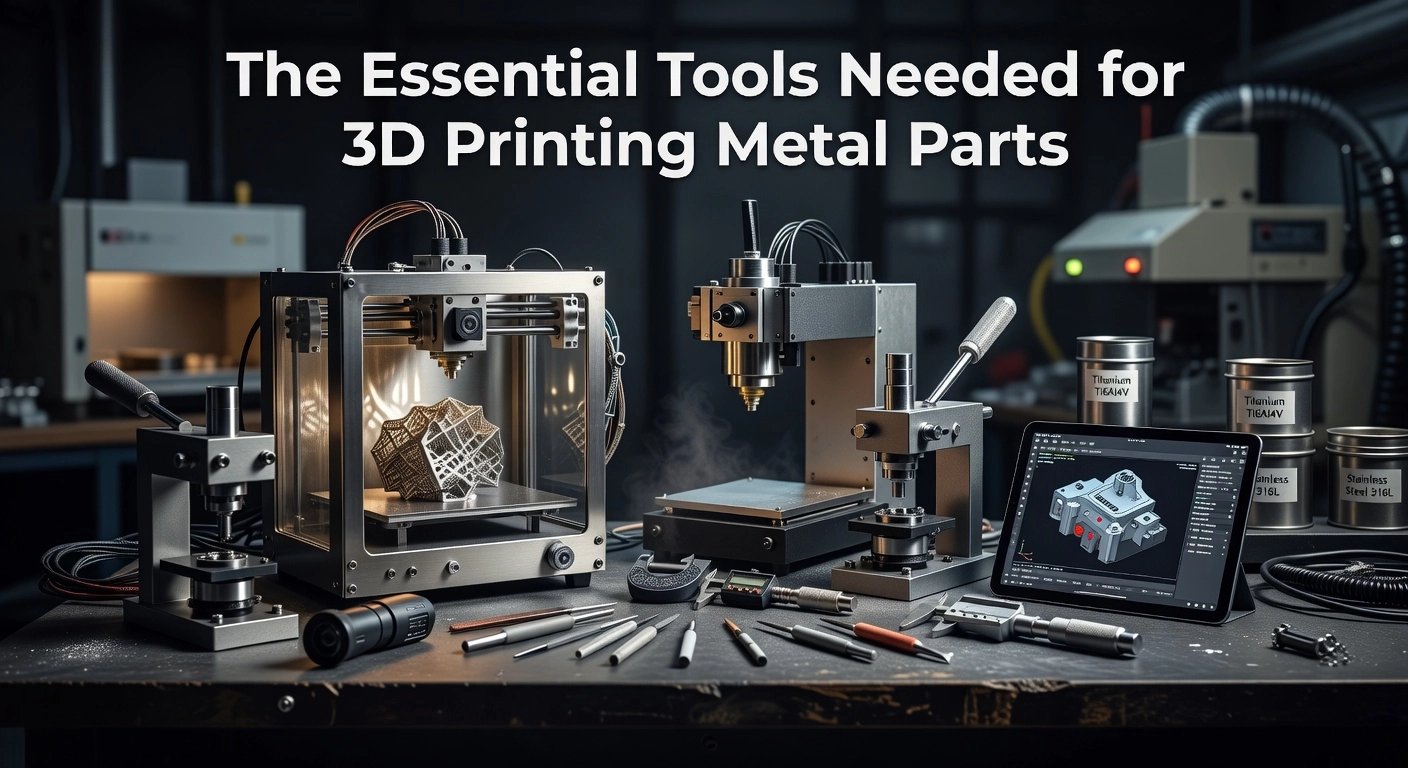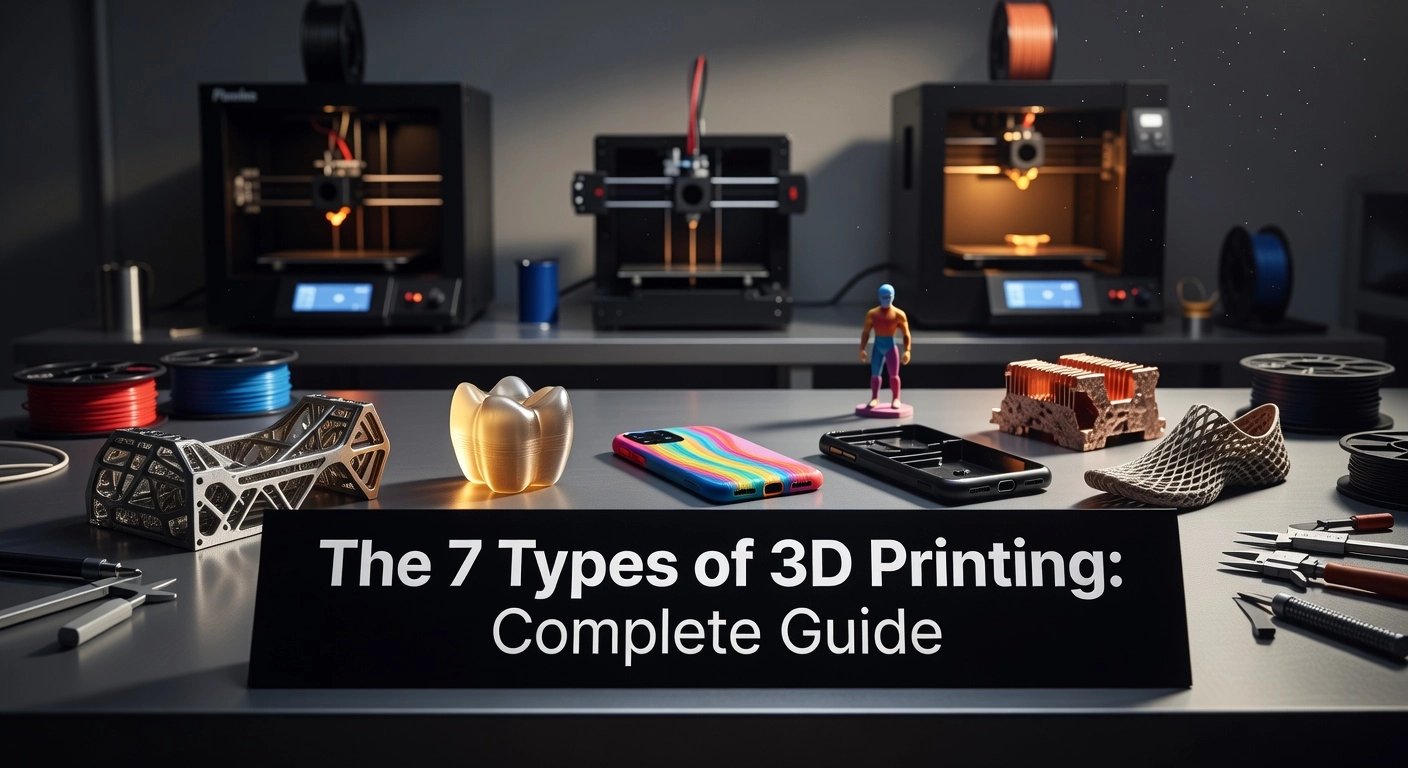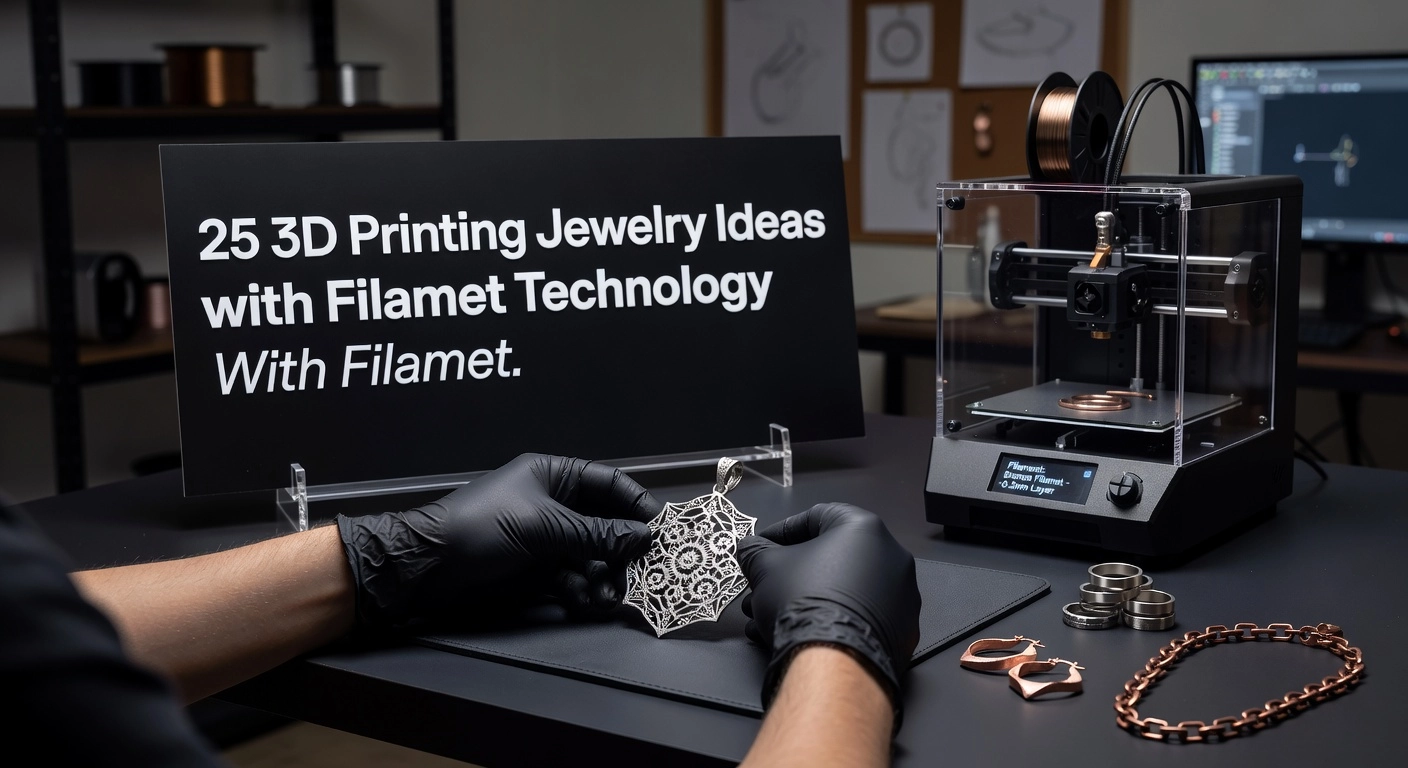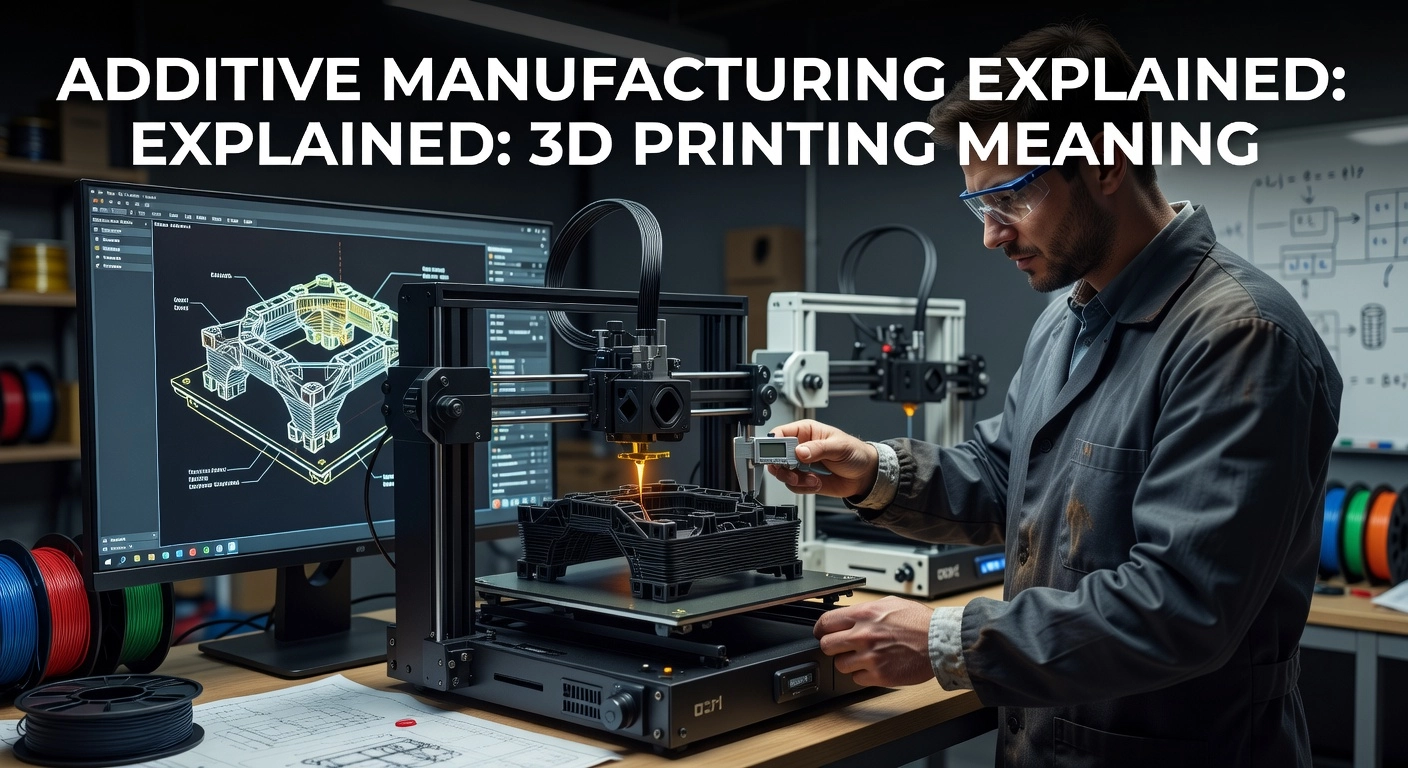
Hey, have you ever dreamed of whipping up your own custom metal gadgets right at home? Picture this: a sleek keychain that looks pro, a durable phone stand that won’t snap, or even tiny tools that feel like they came from a factory. If you’re just dipping your toes into 3D printing, that dream is closer than you think, especially with metal projects that add that extra tough, shiny vibe.
Welcome to “Things to 3D Print: 35 Metal Project Ideas,” your go-to guide for beginner-friendly inspiration. We’re talking about stuff you can actually make without needing a fancy setup or years of experience. These ideas range from super simple prints you can knock out in an afternoon to more ambitious ones that will level up your skills. You’ll discover practical everyday items, fun desk toys, and clever organizers, all optimized for metal filaments or services that make it easy and affordable.
By the end of this listicle, you’ll have a treasure trove of things to 3D print that spark your creativity and fill your printer with purpose. Grab your favorite beverage, fire up that slicer software, and let’s get printing. Which one will you try first?
The Rise of Metal 3D Printing in 2026
Imagine stepping into 2026, where metal 3D printing isn’t just for big factories anymore; it’s exploding into homes and small workshops, making it easier than ever to print durable “things to 3D print” like custom jewelry or tools. The global metal 3D printing market hits USD 14.76 billion this year, rocketing to USD 36.94 billion by 2030 at a whopping 25.8% CAGR, according to Research and Markets. This boom comes from cheaper materials and printers that let beginners create real metal parts without massive investments.
Fused Deposition Modeling (FDM) leads with a 36.7% market share, perfect for quick prototyping on everyday printers. It’s ideal for filaments like Filamet™ from The Virtual Foundry, packed with metal powder so you print green parts that sinter into pure copper, bronze, or steel. Hobbyists love it for battery organizers or phone stands that turn functional after a simple post-process.
We’re seeing a huge shift from prototypes to end-use parts in aerospace (lightweight brackets), medical (custom implants), and even consumer goods like sustainable keychains. Platforms like Printables and Thingiverse buzz with designs for personalized, eco-friendly items, such as recycled-metal fidget toys or desk gadgets, aligning perfectly with Filamet’s accessible tech.
Even in the desktop metal FDM niche, holding under 5% share, growth surges thanks to affordable filaments. Start with a standard printer, print your design, debind, and sinter, for pro-level results at home. This democratizes metal printing, letting you tackle Mordor Intelligence projections for endless creative “things to 3D print.” Ready to dive into top ideas?
How The Virtual Foundry Succeeds with Filamet Technology
Ever wondered how you can take your everyday things to 3D print like keychains or desk organizers and level them up to pure metal masterpieces? The Virtual Foundry’s Filamet™ makes it possible on your standard FDM printer. Here’s how they’ve nailed success with this game-changing tech, perfect for beginners like you.
- Pioneering Filamet™ Since the 2015 Kickstarter Boom Back in 2015, The Virtual Foundry launched Filamet™ via a smashing Kickstarter campaign that raised over $30,000 from excited backers. This filament packs an incredible 88% metal powder, letting you print “green” parts that sinter into over 99% pure metal. Just print on your Prusa or Creality, debind in a solvent, and kiln-sinter for dense bronze or copper pieces. No fancy gear needed, and shrinkage is predictable at 15-20%. Actionable tip: Start with their free sintering guide to nail your first jewelry pendant.
- Affordable FDM Focus for Hobbyists and Artists TVF keeps it simple and budget-friendly, using filaments that work on printers under $200. This opens metal printing to creators dreaming of custom tools or art without breaking the bank. Forget complex setups; just swap in Filamet™ for functional prototypes. Beginners love how it turns hobby projects into pro-level metal items, like flexi toys in stainless steel.
- Community-Driven Sharing and Expert Guides Their Community Hub is a goldmine where users swap slicer settings, shrinkage calculators, and troubleshooting tips. Expert finishing guides walk you through design rules like uniform walls to avoid warping, plus debinding and tumbling for polished results. This slashes your trial-and-error time from weeks to days. Join in to discover shared prints for everything from fidget spinners to custom fixtures.
- Versatile Applications from Jewelry to Nuclear Shielding Print intricate copper rings, bronze sculptures, or tungsten shields for radiation protection. Jewelry makers cut costs 50-70% on bespoke designs with lattices and hinges. Artists create patina-finished art in days, while nuclear pros use dense tungsten for lightweight, non-toxic parts. It’s ideal for things to 3D print that sell, like personalized home decor.
- Democratizing Metal on Standard Printers Amid Market Boom Filamet™ turns any FDM printer into a metal machine, fueling growth as industrial 3D printing hit over USD 18.3 billion in 2025 with a 15.1% CAGR through 2035. TVF’s open approach empowers hobbyists to aerospace without proprietary lock-ins. Try it: Design a phone holder, print in copper Filamet™, sinter, and wow your friends with real metal. This accessibility is changing everything for creators.
Useful Household Things to 3D Print in Metal
Hey, if you’re just getting into things to 3D print and want to upgrade your home with real metal parts, Filamet™ from The Virtual Foundry is your ticket. These metal-filled filaments let you use your standard FDM printer to create durable, pure metal items after a simple sintering step. The metal 3D printing market is exploding, hitting $14.76 billion in 2026 and projected to reach $36.94 billion by 2030 with a 25.8% CAGR, thanks to accessible desktop tech like this. Let’s dive into five practical household ideas that beat plastic every time. Grab models from sites like Printables.com or Thingiverse, scale them up 15-25% for shrinkage, print with a hardened steel nozzle at low speeds (20-40mm/s), debind, and sinter in a kiln.
- Towel Hooks from Bronze Filamet for Rust-Proof Strength Bronze Filamet, packed with 89% bronze powder, makes towel hooks that laugh at humidity and hold heavy towels up to 5-10kg without bending. Post-sinter, they boast tensile strength around 300-400 MPa and develop a natural patina for extra rust protection, perfect for steamy bathrooms. Download a parametric wall hook model, scale to 120-125%, print at 220-240°C nozzle and 60°C bed with 0.2-0.3mm layers. Debind at 100-400°C, then sinter at about 1,100°C for 4-6 hours in refractory media. Polish for a shiny finish, and you’ve got hooks stronger than aluminum alternatives. Beginners love how one spool yields 25+ hooks for gifting or selling. Check out this guide for pro tips.
- Battery Organizers in Stainless Filamet to Prevent Corrosion In damp kitchens or bathrooms, Stainless Steel 316L Filamet shines with pitting resistance over 40 and yield strength near 500 MPa, keeping battery leaks from causing rust. Modular Gridfinity-style trays hold 20+ AA, AAA, or D cells securely, outlasting plastic forever. Search Printables for designs, use 20-40% lattice infill, print slow to avoid abrasion. Sinter at 1,300-1,400°C to lock in sharp details. No more loose batteries rolling around. It’s a 2026 maker favorite for organized drawers.
- Phone and Desk Stands with Copper Filamet for Heat Dissipation Copper Filamet (89-90% copper) pulls heat away from your phone during charging at 300-400 W/m·K conductivity, plus it looks stunning with a reddish glow. Adjustable stands from Thingiverse stay stable with 5-10mm thick bases. Print with supports, sinter at 1,050°C, then tumble for shine. Great for gamers or desk warriors needing cool, aesthetic tech holders. One print transforms cluttered desks into pro setups.
- Toothpaste Squeezers or Lid Organizers in Steel Filamet for Durability Steel Filamet variants like 17-4PH hit 30-40 HRC hardness post-sinter, handling hundreds of squeezes on toothpaste tubes without wear or chemical damage. Ratchet squeezers or cap racks from Printables customize to your bathroom routine. Print gears precisely, sinter at 1,300°C for toughness. They resist moisture way better than plastic, saving you replacements. Actionable win for busy mornings.
- Keychain Holders Customized with Intricate Metal Designs via Sintering Sintering unlocks lattice patterns and engravings in bronze or stainless Filamet, with tensile strength over 400 MPa for daily pocket carry. Personalize with text or logos on MakerWorld models, keep walls 3mm thick. Thin loops hold keys post-polish, details stay crisp. Perfect for selling custom accessories. See TVF ideas to start your first batch today. These prints make metal magic accessible, right from your printer.
Fun Gadgets and Toys to 3D Print in Metal
Hey, if you’re loving those things to 3D print for your home, it’s time to crank up the fun with metal gadgets and toys using The Virtual Foundry’s Filamet™. This filament packs 80-96% metal powder, letting your standard FDM printer create “green” parts you debind and sinter into nearly pure metal masterpieces. With the metal 3D printing market hitting USD 14.76 billion in 2026 and growing at 25.8% CAGR, hobbyists are diving into premium playthings that feel worlds beyond plastic. Here are five awesome ideas to get you started.
- Dice towers with tungsten Filamet for weighted, premium gaming feel. Tungsten Filamet™ sinters to a whopping 15 g/cc density, twice that of steel, perfect for hefty dice towers that give rolls a satisfying “clunk.” Grab dragon-themed models from Printables.com, print at 110-120% scale with 0.2mm layers and 100% infill using a hardened steel 0.4mm nozzle. Debind in acetone for 24-48 hours, then sinter at 1400°C in a hydrogen-nitrogen kiln, expecting 20% shrinkage. D&D fans rave about the luxury heft; it’s a game-changer for tournaments. Gaming filament demand jumped 23% year-over-year in 2026 surveys.
- Fidget toys like flexi animals in bronze for smooth metallic action. Bronze Filamet™ (83-89% metal) delivers low-friction, patina-ready parts for silky articulation in flexi dragons or axolotls from MakerWorld, with over 100K downloads. Print-in-place at 230°C with gyroid infill and 0.3-0.5mm joint tolerances. Post-sinter, enjoy that premium “whoosh” minus plastic creaks; polish for heirloom shine. Etsy sellers mimic this with PLA, but real bronze elevates fidgets to forever toys. Trends show flexi prints topping 2026 maker lists.
- Automata such as excavator models in copper for conductive artistic displays. Copper Filamet™ yields 99% pure copper at 4.3-5.0 g/cc density, ideal for crank-driven excavators from Fab365 with glowing LED wiring thanks to high conductivity. Scale 110%, print mechanisms with supports at 220-250°C. Sinter preserves linkages for steampunk displays; patina adds vibe. Check out copper Filamet print-and-sinter kits for easy starts. Maker projects in conductive metals surged 30% in 2026.
- Cosplay props like armor pieces sintered for lightweight yet sturdy wear. Stainless 316L or bronze Filamet™ creates corrosion-resistant armor pauldrons from Thingiverse, printed thin-walled (2-3mm) for light strength post-sinter. Use enclosed printers at 240°C with rafts; tumble polish for authentic sheen. No more plastic snaps at cons; it’s durable for wear. Cosplay guides highlight metal fills for props, blending with EVA foam in 2026 trends.
- Mini sculptures or dragon figures highlighting Filamet detail retention post-sinter. Filamet™ shines in articulated bone dragons from Printables (100K+ downloads), retaining scales and claws via 0.15mm layers and 1.18x scaling for 14-20% shrinkage. Sinter at 1100-1450°C ramp; bronze or tungsten minis patina beautifully. TVF’s 3D printing ideas showcase micro-details. Display-ready in hours, per community shares.
Pro tip: Always use enclosed printers, ventilation for debinding, and kilns around $500. Dive in and share your metal fun!
Profitable Things to 3D Print and Sell in Metal
Hey, now that you’ve got the hang of printing fun gadgets and useful household items with things to 3D print in metal using The Virtual Foundry’s Filamet™, let’s talk about turning that into cash. Filamet™ lets beginners like you create pure metal parts on standard FDM printers, sinter them for that premium shine, and sell on platforms like Etsy. With the metal 3D printing market hitting $15 billion in 2026 and growing fast at 23.86% CAGR (metal 3D printing market), small sellers are raking in $1,000 to $10,000 monthly with 60-85% margins. Here are five profitable ideas to get you started.
- Custom Jewelry like Rings or Pendants in Gold or Silver Filamet for Etsy Sales Print intricate rings, zodiac pendants, or engraved earrings with gold or silver Filamet™ on your home printer. After sintering, they become 100% pure metal with real luster and durability that plastic just can’t match. Etsy sellers report $1,200 to $8,000 monthly from jewelry alone, thanks to personalization premiums of 30-50%. Start by downloading free STLs from Printables.com, customize in Tinkercad, and price at $18 to $75 per piece. Actionable tip: Offer name engravings or birthstone holders to boost sales during holidays.
- Home Decor Items Such as Metallic Vases or Planters with Unique Textures Design geometric vases or textured planters in bronze or stainless Filamet™ for that industrial chic vibe. Sintering gives them weight and a metallic sheen perfect for modern homes. Top Etsy decor sellers earn $1,500 to $7,000 monthly with 60-75% margins on $18 to $90 items. Use Thangs for sculptural models, experiment with vase-mode printing for thin walls, and highlight sustainability in listings. Pro move: Bundle with plants for upsells.
- Tech Accessories like Custom Earbud Cases in Conductive Copper Filamet Copper Filamet™ prints like PLA but sinters to 90%+ conductive copper, ideal for antimicrobial earbud cases or phone stands with EMI shielding. These fetch $8 to $40 on Etsy, netting $1,000 to $5,000 monthly. Customize grips for AirPods or wireless chargers using Thingiverse files. Beginners, print at 0.2mm layers for detail, then polish post-sinter. It’s a hot 2026 trend as mobile accessories boom.
- Miniatures for Tabletop Games in Steel for Durable Collectibles Stainless steel Filamet™ creates hefty D&D minis or Warhammer figures that outlast resin. Tabletop fans pay premium for detailed, paintable steel collectibles, with sellers hitting $2,000 to $10,000 monthly. Source STLs from MyMiniFactory, scale for heroes or terrain, and sinter for authenticity. Join Reddit’s r/3Dprinting to share and sell; part-timers report $18K yearly.
- Personalized Tools or Art Pieces Targeting the 2026 Personalization Boom Whip up custom steel wrenches, keycaps, or bronze sculptures with scan-to-print personalization. This taps 30-50% price upsells amid AI-driven customs. Scale to $10K+ monthly low-competition. Use Fusion 360 for ergonomic tools; Etsy loves originals (best-selling 3D printed items on Etsy). Tip: Start small with a $500 kiln for finishing.
Grab Filamet™ samples, price 3x your costs, and watch profits roll in as metal printing goes mainstream.
Beginner Tips for Metal 3D Printing with Filamet
Hey there, ready to dive into printing those things to 3D print like keychains or desk stands in actual metal using Filamet™? As a beginner, you’ll love how accessible this is with your standard setup. Here are five essential tips to get you started successfully.
1. Gather Your Prerequisites Start with a reliable FDM printer, ideally one with a direct drive extruder and an enclosure to keep things stable. Pick up Filamet™ filament in alloys like bronze, copper, or stainless steel; it’s loaded with 80-95% metal powder and prints like stiff PLA. You’ll need a programmable kiln that hits 800-1450°C for sintering, plus extras like a 0.6-0.8mm hardened steel nozzle (brass wears out fast), powder-coated bed, and Filawarmer tool. Store filament dry to avoid issues. These basics let hobbyists create functional metal parts without industrial gear. Test with small samples first for confidence.
2. Nail Step-by-Step Printing Prep your bed with glue stick, heat the nozzle to 220°C, and load filament slowly after warming it. Use layer heights of 0.2mm, 70-100% infill, flow at 110-125%, and speeds of 25-35mm/s for perimeters (slower at 15-25mm/s for first layers). Turn the fan to 0-20% initially, add a brim for adhesion, and print tree supports for overhangs up to 55°. Monitor for jams by easing tension. Cool completely before removal since green parts are brittle. Print a 60mm³ cube prototype to tweak settings perfectly.
3. Master Post-Processing Skip solvents; use thermal debinding in your kiln with staged ramps and ballast like alumina for bronze. Expect 15-20% mass loss, turning green parts brown. Follow alloy-specific sintering: bronze at 885°C for 1-3 hours (10-16% shrinkage), copper at 1052°C (12-18% shrink), or stainless at 1250-1350°C. Use inert atmospheres and crucibles. Polish tumbled parts for 90%+ density. Always wear PPE and ventilate well.
4. Fix Common Issues Quickly Warping? Enclose your printer at 35°C, use a 60-70°C bed with glue, and add 2-3mm corner radii. Jams happen from abrasion, so stick to larger nozzles and lower speeds. Test tiny prototypes to avoid big failures, and pack symmetrically in crucibles to prevent distortion. These tweaks boost success rates dramatically.
5. Tap into Resources Check The Virtual Foundry’s getting started guide for profiles and videos. Adapt STLs from Printables.com (search “metal”) like gears or tools, scaling 10-20% oversized. Join the community for shared tips. With metal 3D printing hitting $14.76 billion in 2026, you’re entering at the perfect time. Start small, and soon your prints will shine!
Actionable Takeaways for Your Next Metal Print
Ready to turn those things to 3D print into your first metal masterpieces? Here are five actionable takeaways to get you started with The Virtual Foundry’s Filamet™.
- Kick off with a simple household metal hook using bronze Filamet™. Grab a basic towel hook STL from sites like Snap Manufacturing’s useful prints list, print at standard FDM settings, then sinter for a durable bronze finish. It’s perfect for beginners, adds real utility to your bathroom, and builds confidence fast.
- Join the TVF community for free STLs and finishing tips. Dive into their forums to snag shared files for hooks, stands, and more, plus pro advice on polishing metal prints. You’ll connect with hobbyists sharing successes in real-time.
- Experiment with profitable jewelry amid 15.58% market growth. Print custom rings or pendants with copper Filamet™, finish them shiny, and sell on Etsy for side income. The metal 3D printing market hits $11.18 billion in 2026, fueling demand for personalized pieces.
- Scale to advanced aerospace prototypes with TVF’s tech edge. Once comfy, tackle lightweight brackets or turbine models using tungsten Filamet™ for high-strength parts that rival industrial apps.
- Download free Filamet™ project files and track 2026 trends. Head to The Virtual Foundry’s site for ready-to-print designs, then follow shifts toward end-use parts in aerospace and medical for long-term wins. Your prints will shine!
The Virtual Foundry
Ready to Print All 35 of These Metal Projects?
Filamet™ makes every project on this list possible on your existing FDM printer. Print in bronze, copper, stainless steel, and more. Just print, debind, and sinter.
Conclusion
In summary, this guide delivers 35 beginner-friendly metal 3D printing ideas that span simple afternoon projects to ambitious skill-builders. Key takeaways include practical everyday items like keychains and phone stands, fun desk toys for quick wins, clever organizers to boost functionality, and optimizations for affordable metal filaments or printing services. These projects prove you can create durable, factory-quality gadgets at home without fancy setups.
The value shines through in sparking your creativity while leveling up your skills with tough, shiny results. Ready to dive in? Pick one idea from the list, fire up your printer, and make it real today. Share your prints in the comments, inspire the community, and watch your custom metal world expand. Your maker journey starts now.