Precision at 1:50 or 1:100 scale is unforgiving. Layer height, resin viscosity, and thermal contraction determine whether a façade presses cleanly into place or demands filler and rework. For practitioners ready to move beyond hobby presets, this analysis examines advanced 3d printing for model making with a focus on repeatable accuracy, efficient workflows, and predictable surface quality.
You will learn how to choose between FFF, MSLA or SLA, and SLS based on feature size, anisotropy, and throughput. We will quantify tolerances, shrinkage, and scaling factors; map material choices, from PLA and ASA to nylons and engineering resins, to specific model tasks; and detail orientation strategies, variable layer height, support density, and antialiasing for crisp edges. The article covers segmentation and joining methods, including registration keys and negative clearances; post-processing sequences, UV cure protocols, sanding and priming stacks, and color readiness. We will also analyze file preparation and CAD tolerancing, cost modeling per part, batch nesting, and quality control using gauges and test coupons. Common failure modes, elephant’s foot, overcure bloom, moisture-induced warping, and support scarring, are addressed with corrective actions. By the end, you will have a toolkit to produce cleaner, truer, and faster models.
Current State of 3D Printing in Model Making
Adoption and precision
Model making has moved decisively into additive workflows in architecture, automotive, aerospace, and healthcare. An industry study reports that more than 68 percent of companies employ additive for prototyping and pre-series builds, underscoring its maturity global 3D printing market analysis. Precision has advanced, with resin and material jetting platforms routinely achieving fine features below 150 micrometers and smooth surfaces that minimize post processing. For scale models this resolves fillets, lattice details, and text that previously required manual craftsmanship, improving tolerance control on visual and functional mockups. The shift shortens validation loops and improves handoff to downstream tooling.
Materials and applications
Material breadth now spans thermoplastics, photopolymers, composites, metals, glass, and ceramics, mapping to diverse model making needs. ABS and PLA serve durable visual models and snap fits, while engineering blends handle heat and impact for functional tests. Metal powder bound filaments, such as Filamet, print on standard FFF machines and, after debind and sinter, yield pure metal components suited to jewelry masters, heritage replicas, and wind tunnel scale parts. Fiber filled and ceramic laden media provide stiffness or temperature stability for fixtures, and photopolymers deliver ultra fine detail for figurines and film props. This palette lets teams prototype with materials analogous to production, improving correlation between model behavior and final parts.
Throughput and accessibility
Cycle time continues to compress, with organizations reporting 50 to 80 percent reductions in prototyping time and product launch windows shrinking from roughly 18 months to about 6 in optimized pipelines. Faster motion systems, smarter slicers, and printer fleets enable overnight iteration and same day design validation. Accessibility has expanded from hobbyist desktops to certified industrial cells, with FDM projected to reach substantial market scale by 2033 FDM market growth outlook. For teams adopting 3D printing for model making, prioritize DFAM guidelines and a materials matrix keyed to part intent, then batch post processing to stabilize lead times. These practices compound speed gains while preserving accuracy and visual fidelity.
The Virtual Foundry’s Contribution and Success
Democratizing access with open FFF and standard furnaces
The Virtual Foundry lowers the barrier to metal 3D printing by building on equipment many teams already own, open-architecture FFF printers and standard sintering furnaces. This architecture enables in-house prototyping and short-run production of pure metal parts without proprietary lock-in or specialized machines. According to the company’s published analysis, an entry-level print-to-sinter setup can be commissioned for under $20,000, which is transformational for studios and labs focused on 3D printing for model making and functional prototypes. The result is a capital-light pathway that captures the general benefits of additive, faster iteration and less material waste, while keeping total cost of ownership aligned with desktop budgets. For organizations moving from plastic mockups to metal, this approach compresses the adoption curve and accelerates ROI, often aligning with industry benchmarks of 50 to 80 percent faster prototyping and up to 70 percent cost reduction compared to conventional fabrication, as reported across additive manufacturing studies. See the TVF desktop metal 3D printing whitepaper.
Filamet innovation and the print-to-sinter pipeline
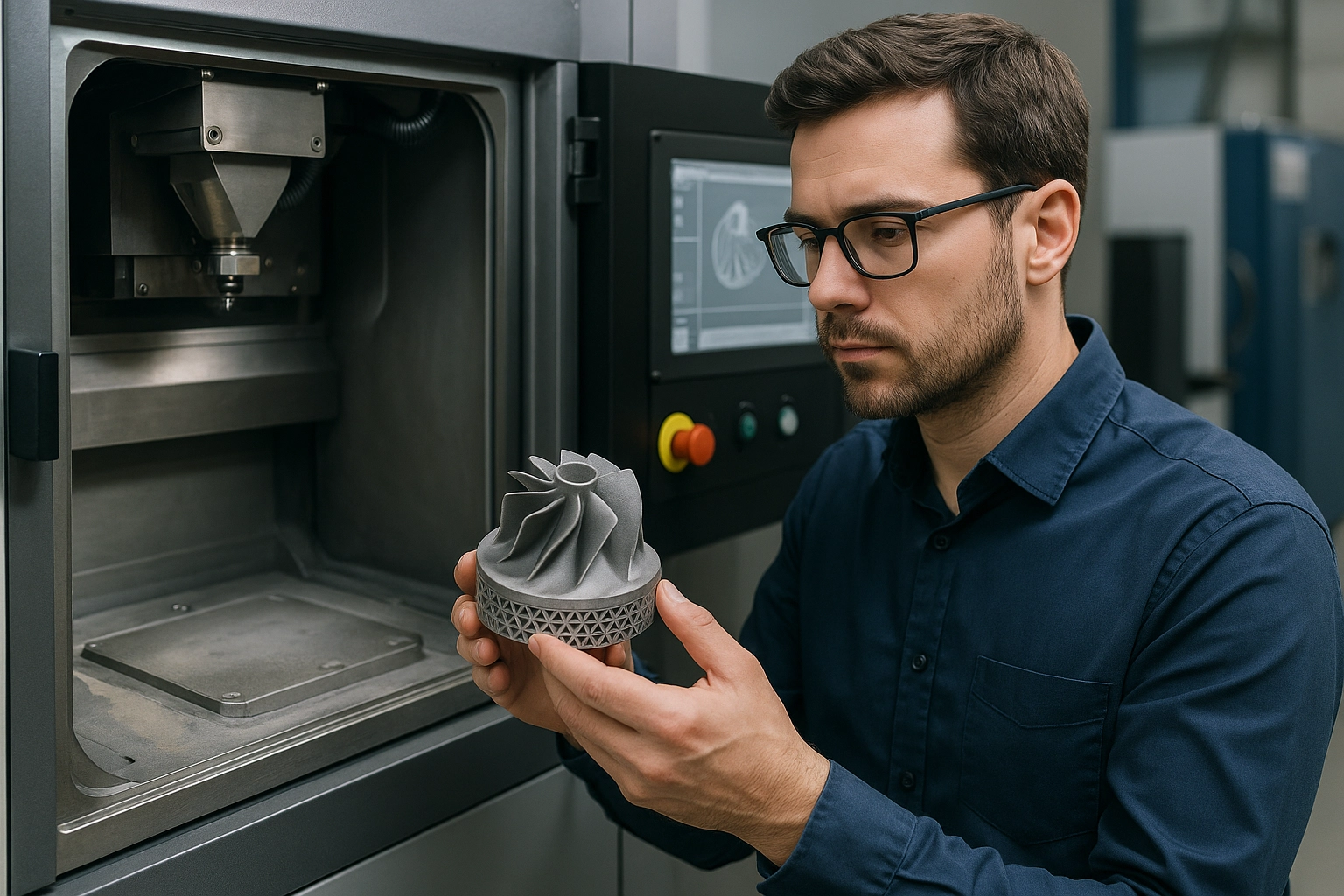
Filamet is a high metal-content feedstock, typically above 88 percent metal by volume, formulated for reliable extrusion on open FFF systems and clean conversion to metal via debinding and sintering. After the thermal cycle, parts reach up to 98 percent metal purity, enabling structural, aesthetic, or functional outcomes depending on the alloy. For model makers, this means printing intricate geometries with fine surface detail, then finishing to production-like appearance and performance. The process is predictable, supported by published sintering profiles and known shrink behavior, so CAD compensation is straightforward. TVF’s intellectual property around extrudable metal-infused materials underpins this reliability; see the company’s patent for extrudable metal-infused materials.
Community-driven problem solving
TVF backs the workflow with a robust knowledge base, process tutorials, and responsive technical support that shortens the learning curve from first print to dense metal. Collaboration with research institutions sustains continuous improvement, such as the University of Pécs biocompatibility research collaboration. Shared sintering recipes, fixture designs, and finishing methods help users converge on repeatable results. This community model is especially useful in model making, where surface finish, dimensional fidelity, and rapid iteration are critical.
Where the approach succeeds against high-capex models
By sidestepping proprietary, high-cost systems, TVF’s open approach scales from a single desktop printer to distributed fleets without vendor lock-in. Small studios replicate bronze and stainless details for architectural maquettes in days rather than weeks. Mid-size manufacturers validate jigs and end-use brackets internally, cutting change-order cycles and preserving IP. Success is reinforced by TVF’s guidance on post-processing, including debind strategies, sintering fixtures, and finishing techniques like tumbling, burnishing, and patination, which translate printed parts into production-grade outcomes.
In-depth Analysis of Technological Trends
3D printing for model making is shifting from experimental to engineered, guided by AI, sustainability, and domain-specific workflows. Across manufacturing and healthcare, teams prioritize closed-loop control, lower embodied impact, and faster iteration. The result is higher-fidelity models, tighter tolerances, and measurable reductions in cycle time and cost.
AI driven optimization
Machine learning now tunes slicer parameters in real time, improving bead geometry and layer fusion. Reported results include strength to weight gains near 20 percent from AI assisted design and up to 40 percent better defect detection via vision monitoring, see AI in the 3D printing industry statistics. Research also details intelligent controllers that adjust temperature and flow to stabilize dimensional accuracy and surface finish, summarized in AI driven innovations in 3D printing. Actionable step, add cameras and thermistors, then train CNNs on your own defect set to automate pause or parameter shifts.
Sustainable materials and material efficiency
Material portfolios now include recycled polymers, bio based composites, and sinterable metal filled filaments. Additive routes can cut waste by up to 90 percent versus machining, and AI thermal control further reduces scrap by improving layer adhesion. For metal models, near net shape printing plus debind and sinter minimizes machining. Track yield by stage, sieve and reuse allowable powders, and standardize furnace profiles to lower energy per part.
Prototyping adoption and medical anatomical modeling
Prototyping leads adoption, with roughly 70 percent of organizations using additive to shorten design loops, often trimming 50 to 80 percent from lead time. In healthcare, imaging to print pipelines produce patient specific anatomical models that improve planning and implant fit. AI accelerates DICOM segmentation and mesh repair, enabling predictable wall thickness and faster turnarounds. The Virtual Foundry maps to these trends by enabling accessible metal model making on open FFF hardware with Filamet and standard furnaces, preserving flexibility while elevating realism.
Case Studies and Real-world Applications
Architectural and miniature models
3D printing for model making enables high fidelity architectural maquettes with parametric detail, tight tolerances, and consistent repeatability. Firms blend polymer terrain bases with metal inserts produced using Filamet to communicate structure, facade texture, and joinery with realistic mass and finish. For example, site models at 1:500 can combine PLA topography with copper or bronze trusses that are printed, sintered to pure metal, then patinated for material contrast and stakeholder clarity. The workflow reduces prototyping time by 50 to 80 percent, allowing same-week iterations from CAD changes to reviewable physical models. Large-scale exemplars like the Tecla House project and the 3D Print Canal House underscore how additive approaches handle complex architectural geometries and sustainable materials, lessons that translate directly to scale modeling strategies.
Art, jewelry, nuclear, and aerospace applications
Artists and jewelers exploit metal FFF for fine detail, controlled surface texture, and post-process flexibility, including chasing, burnishing, and patination. Typical layer heights of 100 to 200 microns, combined with calibrated sinter scaling, yield reliable fit for clasps, hinges, and stone seats in small batches. In nuclear research, tungsten and stainless variants support shielding mockups, collimator studies, and equipment fixtures where high density and thermal stability are essential for test rigs. Aerospace teams use copper and stainless for RF cavities, thermal strap demonstrators, fixture hardware, and wind tunnel miniatures, validating heat transfer and modal behavior before committing to flight hardware. Broader sector patterns reflect well documented use cases across design and manufacturing, as summarized in this overview of top applications for 3D printing.
Rapid iteration, sustainability, and cost outcomes
Open-architecture metal FFF, combined with standard lab furnaces, compresses design loops into a print overnight, debind, sinter cycle that aligns with weekly engineering sprints. Additive routes deposit only what is needed, which reduces scrap compared to subtractive workflows and supports sustainability goals through hollowing, engineered infill, and part consolidation. Industry studies repeatedly show up to 70 percent cost reduction versus conventional fabrication for suitable geometries, with additional savings from fewer tooling steps and faster approvals. A representative stainless architectural node weighing 80 grams green can cost under ten dollars in material and energy, print in under three hours, and be production-ready within two days, enabling three or more iterations in a week. These efficiencies free teams to explore alternatives, improve fidelity, and converge on manufacturable designs with less waste and lower risk.
Key Findings and Implications for the Future
Trends shaping model making
3d printing for model making is converging around speed, precision, and portability. Chip-scale light engines are moving printing from gantry systems to handheld form factors, exemplified by a coin-sized silicon photonics printer. Generative AI is entering the workflow through functionality-aware segmentation, with systems like Style2Fab separating cosmetic edits from load-bearing features to preserve function. Multi material and metal-capable processes are enabling graded properties in a single build, which benefits architectural, automotive, and entertainment models. Across studies, teams report 50 to 80 percent shorter prototyping cycles and up to 70 percent lower pre-production costs, shifting model making from a bottleneck to a design amplifier.
Strategic recommendations
Operationalize AI by pairing generative ideation with rule based design-for-additive checks, then lock print parameters through versioned build recipes. Instrument printers and sintering equipment with telemetry, logging temperature, shrink, and density to close the loop on dimensional accuracy. Standardize a material palette that spans polymer, Filamet, glass, and ceramic to reduce changeover friction and training time. Build a library of shrink compensation factors per geometry class, for example thin walls, lattices, and monolithic shells. Treat print farms as distributed assets, scheduling quick-turn visual models on polymer lines and functional prototypes on metal-capable cells.
Metal printing growth areas
Innovation is concentrating in binder systems, sinter profiles, and post processing that deliver predictable density at model scale. Filamet enables near net metal models with accessible equipment, followed by bead blasting and burnishing to elevate surface fidelity. Hybrid workflows that print metal blanks and finish critical faces by CNC are reducing fixture complexity and cycle time. Expect expanded alloy families, including radiation-shielding and high temperature compositions for aerospace mockups and nuclear training aids.
Sustainability, AI, and community impact
Additive reduces waste by depositing only what is needed; further gains come from AI driven infill, truss optimization, and part consolidation. Use recycled or recyclable feedstocks where feasible, minimize supports, and capture scrap for reprocessing, then validate savings with basic lifecycle assessments. AI based vision can flag delamination or porosity early, improving first-pass yield and lowering scrap rates. Community parameter sharing, test coupons, and finishing playbooks accelerate learning curves, a dynamic The Virtual Foundry actively cultivates. This community driven feedback loop is a key reason accessible metal printing continues to outpace expectations, positioning teams for the next wave of capability.
Conclusion and Actionable Takeaways
3d printing for model making has moved from convenience to capability. Teams report 50 to 80 percent faster prototyping and up to 70 percent cost reductions versus subtractive workflows, largely by eliminating tooling and cutting iteration cycles. Additive excels at tight radii, lattice infill, and topology-optimized features that are difficult to mill, and integrates cleanly with CAD for a streamlined design to build to verify loop. As the market expands and precision improves, staying current with AI-enabled slicers, simulation-driven support strategies, and sustainable materials is now a core competency, not an option. Regular technology scans and small-scale trials keep model shops competitive while avoiding costly lock-in.
The Virtual Foundry has pioneered accessible metal printing, enabling pure metal models with Filamet and standard furnaces, which lowers capital expense and increases flexibility for studios and labs. For immediate impact, establish a material R&D cadence, for example quarterly benchmarking of at least two alloys or composites, and capture results in a shared parameter library. Use test coupons to characterize density, surface roughness, and predictable sintering shrink, then back-calculate scale factors inside CAD for first-pass dimensional accuracy. Track two operational KPIs, time to first article and dimensional deviation at critical features, to quantify gains. Finally, participate in community forums, share print and sinter profiles, and adopt proven finishing workflows, media selection, and debind schedules to accelerate learning across manufacturing, art, and jewelry use cases, and sustain momentum in 3d printing for model making.