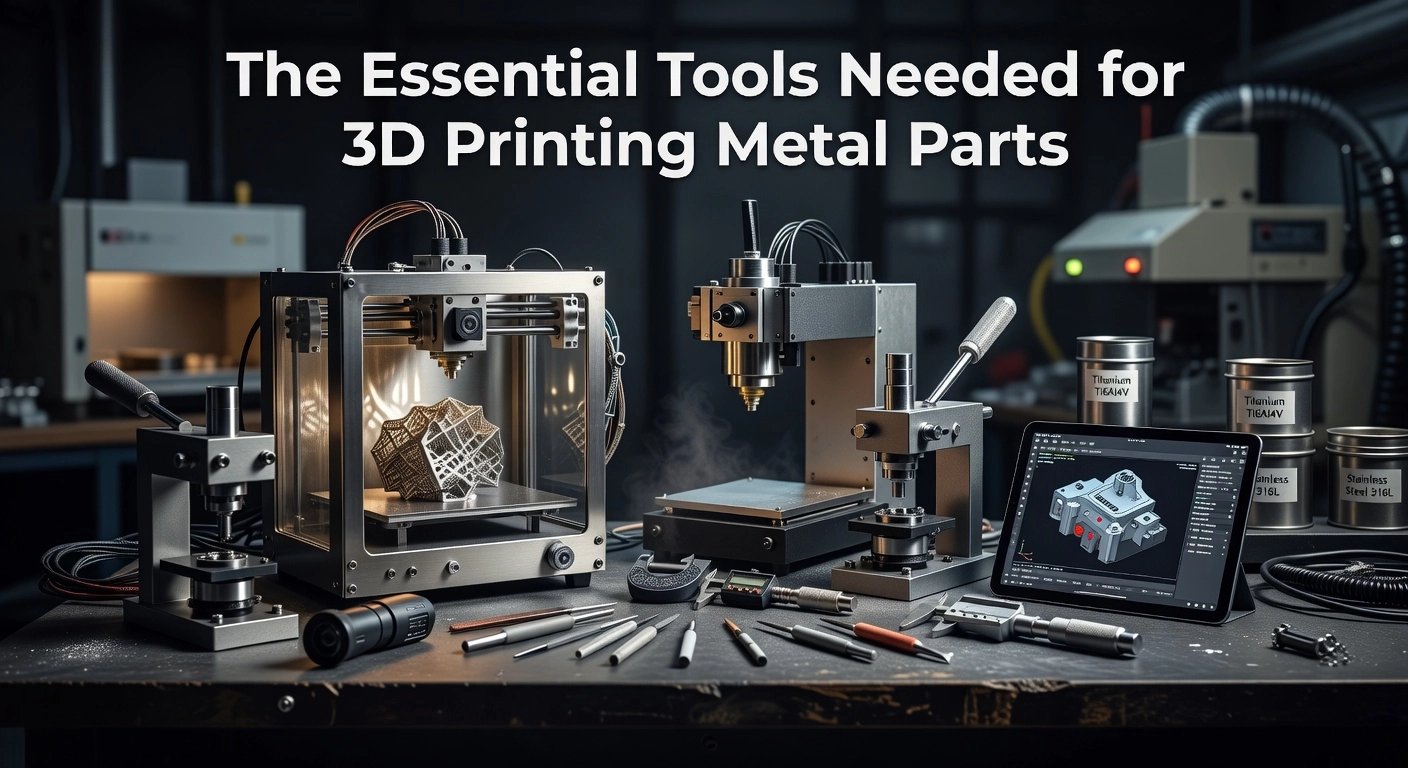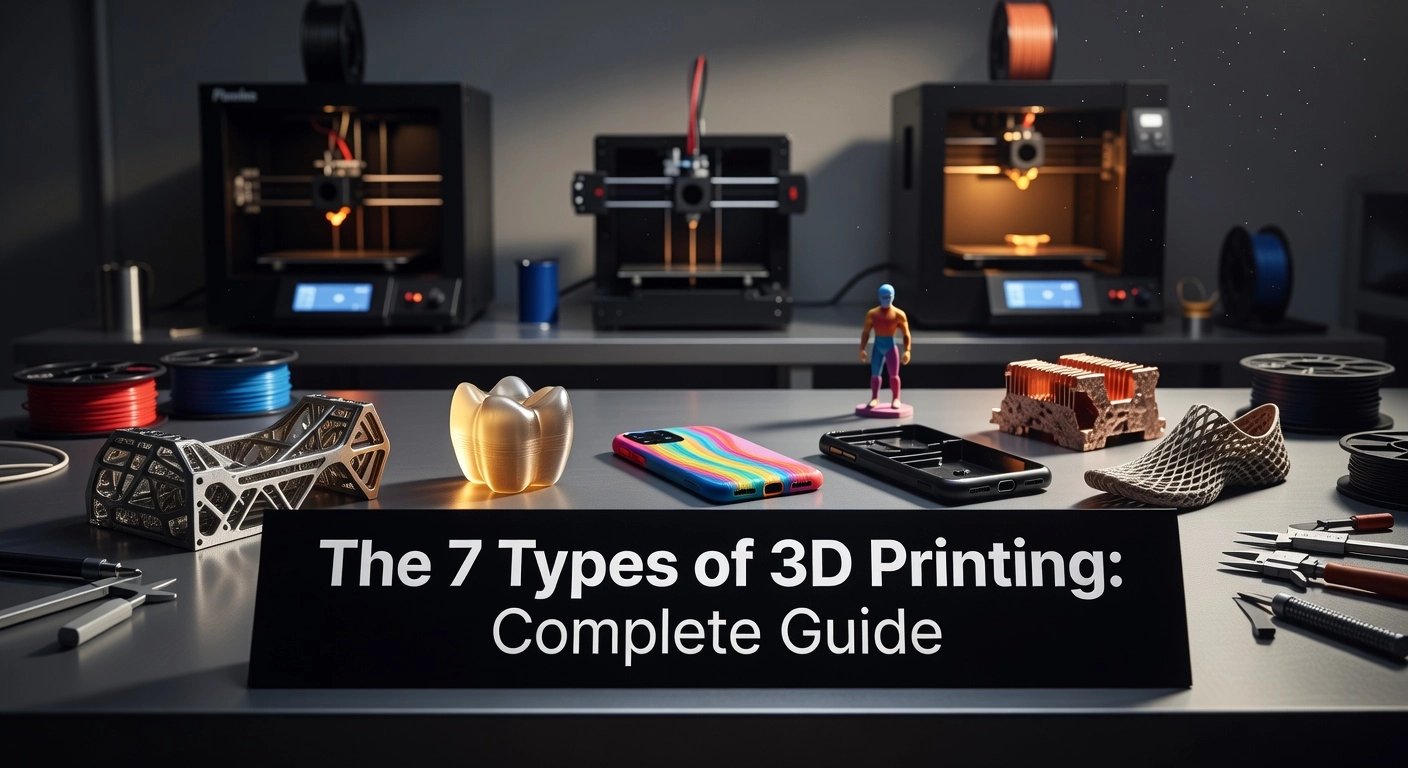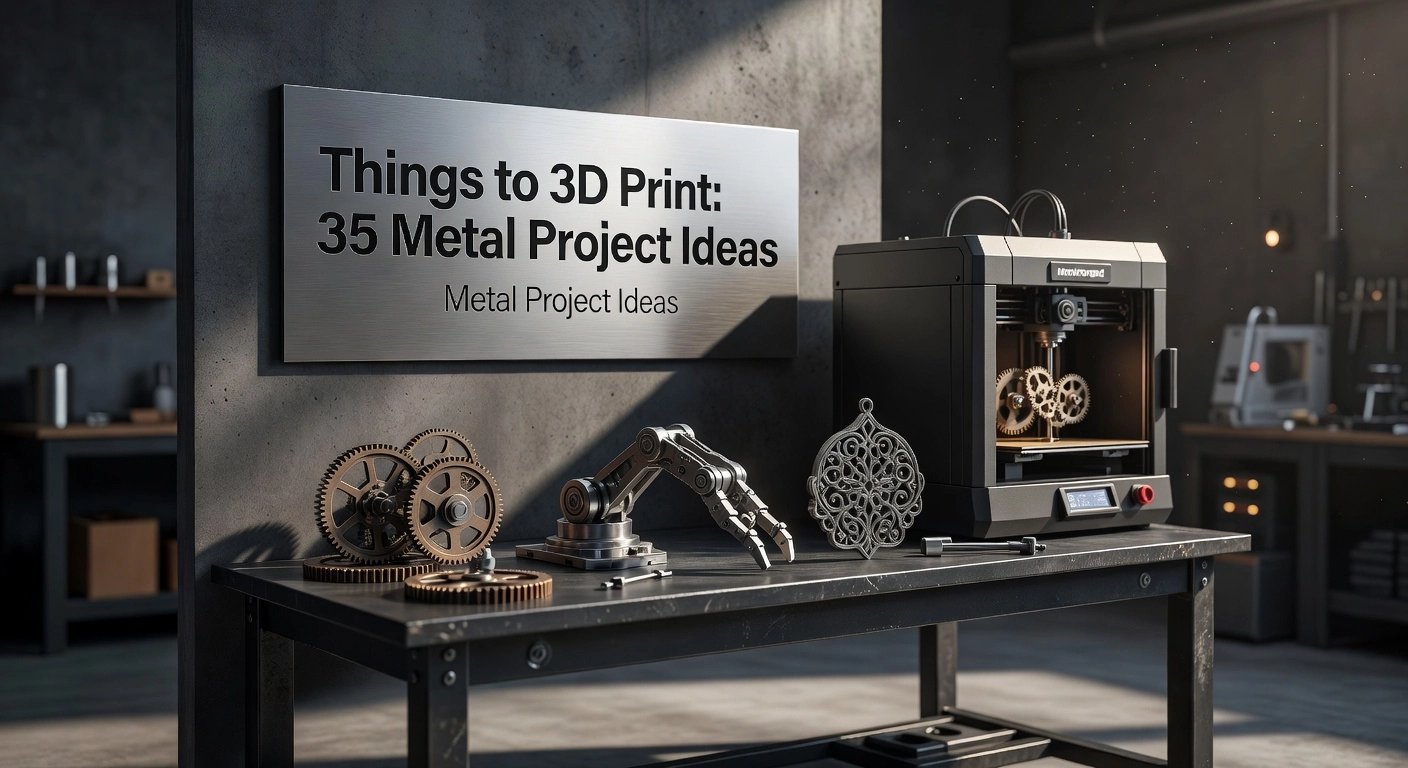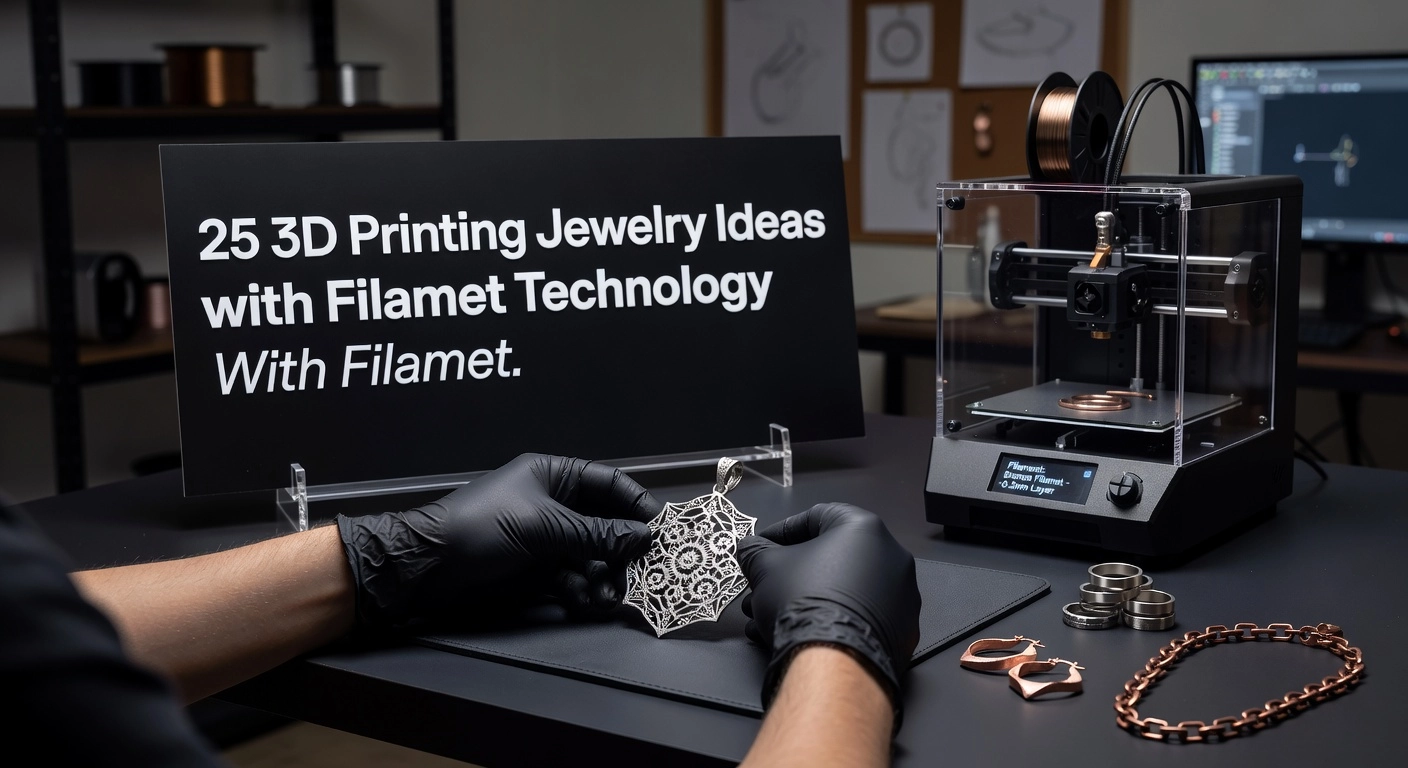
Imagine a world where prototypes become products overnight, custom prosthetics fit perfectly on the first try, and aerospace components withstand extreme conditions without compromising precision. This is the reality powered by advancements in 3D printing materials. As additive manufacturing matures, the choice of materials dictates not just feasibility, but performance, cost, and scalability.
In this analysis, we delve into the core of 3D printing materials: their diverse types, evolving trends, and cutting-edge technologies shaping the industry. From traditional thermoplastics like PLA and ABS to high-performance composites, metals, and emerging bio-based resins, understanding these options is essential for intermediate practitioners seeking to optimize prints.
Readers will gain actionable insights into material properties, selection criteria for specific applications, and forecasts on sustainable innovations driving the next wave of 3D printing. Whether you are refining workflows or exploring industrial-scale production, this guide equips you with the knowledge to make informed decisions and stay ahead in a rapidly advancing field.
Core Categories of 3D Printing Materials
Polymers: The Backbone of Accessible 3D Printing
Polymers dominate the 3D printing materials landscape, particularly in Fused Deposition Modeling (FDM) processes, holding over 60% market share according to Mordor Intelligence projections for 2026. Common filaments like PLA, ABS, and PETG offer unmatched affordability and ease of use for intermediate users printing on desktop machines. PLA, derived from renewable sources, prints at low temperatures (190-220°C) with minimal warping, making it ideal for prototypes and decorative items; however, its brittleness and low heat deflection (around 60°C) limit it to non-functional applications. ABS provides superior impact resistance and heat tolerance (up to 100°C), suiting enclosures or automotive prototypes, but demands enclosed printers to combat warping and fume emissions. PETG strikes a balance with strong layer adhesion, chemical resistance, and food-safe grades, though it can string and requires hardened nozzles due to abrasiveness. For optimal results, select based on needs: PLA for speed, ABS for durability, PETG for versatility, always calibrating bed temperatures (60-80°C) for adhesion.
Resins: Precision for Detailed Applications
Resins, used in Stereolithography (SLA) and Digital Light Processing (DLP), excel in high-resolution prints down to 25-50 microns, perfect for jewelry molds or dental models. Their photopolymer nature yields smooth, isotropic surfaces rivaling injection molding, enabling intricate geometries unattainable with FDM. Standard resins deliver exceptional detail but suffer from brittleness, necessitating post-curing under UV light for full mechanical properties. Handling involves isopropyl alcohol washing to remove uncured residue, a step that adds time and safety considerations due to toxicity. Tough or flexible variants mitigate fragility for functional prototypes, yet UV degradation remains a concern for long-term exposure. Intermediate printers benefit from engineering resins for high-temperature or biocompatible uses, with actionable tip: invest in automated washing stations to streamline workflows.
Metals: High-Performance End-Use Parts
Metals enable robust, production-grade components via powder-based Selective Laser Melting (SLM) or filament FDM, prized for near-full density (99%+) and superior strength in aerospace or medical implants. SLM alloys like stainless steel or titanium achieve flight-ready properties but require industrial setups with inert gases and extensive post-processing like Hot Isostatic Pressing. Filament-based options, such as The Virtual Foundry‘s Filamet™, load 80-96% metal powder into a PLA binder, printable on standard FDM printers like Prusa or Creality; post-debinding and sintering yield 99.98% dense parts with 5-20% shrinkage. This democratizes access for manufacturers and hobbyists crafting jewelry or radiation shields from tungsten. Metals represent the fastest-growing segment at 23-30% CAGR, per Fortune Business Insights.
Ceramics, Glass, and Composites: Specialized Enhancements
Ceramics and glass filaments, including zirconia or alumina from innovators like The Virtual Foundry, withstand extreme temperatures (up to 1600°C) and abrasion, ideal for dental crowns or engine components. Their hardness and biocompatibility shine post-sintering, though brittleness demands careful design. Composites, reinforced with carbon fiber in nylon matrices, boost tensile strength and stiffness for lightweight drone frames, outperforming aluminum in fatigue resistance; hardened nozzles are essential to counter abrasiveness. These niches, around 10% market share, drive trends in high-mix production. Overall, the global 3D printing materials market hits $3.02-4.80 billion by 2026 (MarketsandMarkets), fueling accessible innovation across sectors.
Advancements in Metal 3D Printing Materials
Metal 3D printing materials represent a pivotal evolution in additive manufacturing, bridging the gap between prototyping polymers and high-performance end-use parts. These advanced filaments, such as those with 80-96% metal powder loading bound in a PLA matrix, enable printing on standard open-architecture FDM printers like Prusa or Creality models. Users print “green” parts at typical PLA temperatures of 200-240°C with a hardened steel nozzle, achieving high infill densities of 70-100%. Post-processing involves debinding to remove the binder and sintering in a kiln at 900-1400°C, yielding parts with 99.98% theoretical density and near-wrought mechanical properties. This process supports applications from jewelry to aerospace components, with the global 3D printing materials market projected to grow from $3.02 billion to $4.80 billion by 2026 at a 22-30% CAGR global 3D printing materials market report. Metal filaments drive this surge, offering isotropic strength and minimal porosity for functional parts.
Key Filament Variants and Performance
The Virtual Foundry’s Filamet™ lineup exemplifies these advancements, featuring specialized variants tailored for diverse industries. Copper Filamet™, with 86-90.7% loading, sinters to 98-99% density (4.5-5.0 g/cc), ideal for conductive heat exchangers and intricate jewelry with customizable patina finishes. Bronze variants (86-90% loading) produce artistic sculptures or mechanical hinges at 98-99% density (4.1-4.5 g/cc) after sintering at around 1625°F. For demanding environments, 316L stainless steel (80-85% loading) delivers corrosion-resistant fixtures at 98-99% density (3.45-3.55 g/cc), suitable for medical implants and marine hardware. Inconel 718 (82-85% loading) withstands extreme temperatures in rocket engines, achieving 98-99% density (3.5-4.3 g/cc). Tungsten filaments excel in radiation shielding, offering lead-like density (19.3 g/cc) for nuclear applications with complex geometries unattainable via traditional casting metal 3D printing market analysis.
Shrinkage Rates and Design Scaling Strategies
Shrinkage during sintering demands precise CAD adjustments for accuracy. Copper and bronze exhibit low linear shrinkage of about 5-7% at 80-85% density, scaling to 20% for fuller densification, preserving fine details like threads. Steels such as 316L and Inconel show higher rates of 10-20%, influenced by alloy composition and sintering profiles. To mitigate warping, designers overscale models uniformly, prioritizing thick walls and avoiding overhangs; simulation tools predict Z-axis elongation accurately. Actionable insight: test prints with 1.15-1.20x scaling factors, verified via Archimedes density measurements, ensure tolerances under 0.1 mm post-process.
Accessibility Without Proprietary Barriers
Unlike expensive powder-bed systems costing over $500,000, metal FDM filaments require no specialized hardware, leveraging existing desktop setups for under $20,000 total investment including kilns. This democratizes access for manufacturers, artists, and hobbyists, enabling batch production of 50+ parts with 90% material efficiency and 30% CO2 savings versus machining. The filament market subset alone hits $1.1 billion in 2025, growing at 25.4% CAGR to $7.1 billion by 2033.
The Virtual Foundry leads with over 10 years of expertise, serving 3,000+ customers including NASA and national labs, backed by 15.5K reviews averaging 4.3/5. Their guides and community forums provide sintering profiles and custom alloys, fostering innovation in nuclear and aerospace sectors metal 3D printing market forecast. These materials propel 3D printing toward production-scale adoption.
How The Virtual Foundry Excels in Metal FDM
The Virtual Foundry has revolutionized metal 3D printing materials through its patented Filamet™ technology, which enables desktop production of pure metal parts using standard FDM printers. Filamet™ filaments contain 80-96% metal, glass, or ceramic powders bound in a thermoplastic matrix, allowing users to print complex geometries on open-architecture machines like those from Bambu Lab, Prusa, or Creality. This innovation serves a wide range of professionals, including manufacturers crafting functional components for nuclear reactors and aerospace applications, artists producing intricate sculptures, and jewelers creating custom designs with materials such as bronze, copper, or stainless steel. Protected by U.S. patents for the extrusion process of powder-infused thermoplastics, Filamet™ democratizes access to high-performance 3D printing materials, eliminating the need for expensive specialized equipment. With over 10 years of expertise, the company supports more than 3,000 customers worldwide, including NASA and national labs, by offering custom formulations like doped Molybdenum Telluride for thermoelectric applications.
Key Success Factors: Accessibility and Compatibility
The Virtual Foundry’s triumph lies in its low entry barrier and seamless compatibility with existing FDM ecosystems, making metal printing viable for hobbyists and enterprises alike. Users require only a hardened nozzle, enclosed printer, and basic kiln, keeping startup costs under $1,000, far below traditional metal additive manufacturing setups. This materials-first strategy drives scalability, with high-volume filament sales and rapid iterations fostering broad adoption across high-mix, low-volume production. Customer satisfaction reflects this reliability, evidenced by 15.5K reviews averaging 4.3/5 stars, praising consistent results in density up to 99.98% post-processing. Custom filaments, such as those for radiation shielding or piezoelectric research, further highlight the company’s agility in meeting niche demands. By prioritizing open standards, The Virtual Foundry builds loyalty through performance rather than hardware dependencies.
The Filamet™ Process: From Print to Pure Metal
The Filamet™ workflow is straightforward, scalable, and supported by comprehensive kits for all skill levels. First, print using standard FDM settings: select a 0.4mm hardened steel nozzle, maintain enclosure for temperature stability, and use layer heights suited to the material. Variants like copper (5-7% shrinkage) suit beginners, while advanced options like Inconel 718 or tungsten (10-20% shrinkage) challenge pros. Next, debind in a programmable kiln by ramping to 400-1000°F to remove the PLA binder, embedding parts in refractory ballast like alumina for support. Sintering follows, heating to material-specific peaks (e.g., 1625°F for bronze, 2250°F for steels) with carbon powder for 4-6 hours, yielding dense, functional metal parts. Print-and-sinter kits, priced $100-300, bundle filament, crucibles, and media, enabling cycle times of 1-2 days without extensive post-machining. Guidance from The Virtual Foundry’s resources ensures success for nuclear shields, rocket components, or jewelry prototypes.
Proven ROI for High-Mix, Low-Volume Production
Filamet™ delivers compelling returns, particularly in scenarios demanding customization and small batches (10-500 units), slashing costs by up to 70% versus traditional methods. Complex parts like topology-optimized heat sinks or aerospace brackets achieve near-net-shape accuracy with 90% less material waste, leveraging lattice infills for efficiency. For instance, low-volume titanium implants drop from $200 to $80 per part, while custom copper exchangers yield 60% savings through eliminated tooling and inventory. Buy-to-fly ratios near 1:1 minimize scrap, with ROI often under six months for automated workflows. This positions Filamet™ as ideal for distributed manufacturing trends, aligning with the 3D printing materials market’s 22-30% CAGR through 2031. Practitioners in aerospace and healthcare report transformative gains, validating its role in sustainable, on-demand production.
2026 3D Printing Materials Market Insights
The global 3D printing materials market is poised for explosive growth by 2026, with projections ranging from USD 3.02 billion to USD 4.80 billion, according to reports from Mordor Intelligence and Fortune Business Insights. This expansion reflects a compound annual growth rate (CAGR) of 22-30%, driven by maturing additive manufacturing technologies that shift from prototyping to end-use production across aerospace, automotive, and healthcare sectors. Plastics continue to dominate with 47-61% market share, but metals and ceramics are gaining traction due to demand for high-performance, lightweight components. Filaments, in particular, stand out as a cost-effective subset, enabling accessible printing on standard FDM printers. North America leads regionally with 38-39% share, while Asia-Pacific surges at over 26% CAGR. These figures signal a market ripe for innovation in engineering-grade materials that prioritize sustainability and scalability.
Filament Market Breakdown
The filament segment, crucial for FDM/FFF processes, is projected to grow from USD 1.1 billion in 2025 to USD 7.1 billion by 2033 at a robust 25.4% CAGR, per Grand View Research. PLA and ABS lead plastics, but metal-loaded filaments like those with 80-96% metal content in a PLA binder are accelerating adoption. This growth stems from their compatibility with open-architecture printers, low entry costs, and post-processing to achieve 99.98% dense pure metal parts. For intermediate users, this means producing functional jewelry, rocket components, or radiation shields without proprietary hardware. Aerospace and defense capture 27.6% of the filament market, with metals growing at 25% CAGR. The Virtual Foundry’s Filamet™ exemplifies this trend, serving over 3,000 customers including NASA with variants like stainless steel, Inconel, and tungsten.
Metal AM and Aerospace Momentum
Metal additive manufacturing outpaces the broader market with over 25% annual growth, especially in aerospace where the U.S. segment nears USD 2 billion by 2026, as noted in recent Yahoo Finance analysis. Titanium, stainless steels, and superalloys enable topology-optimized parts that reduce weight and fuel consumption by up to 40%. This surge supports certified serial production for turbine blades and brackets. Implications include supply chain resilience through on-demand spares, vital for defense applications.
Strategic Implications for Production, Sustainability, and Engineering Filaments
The production-scale shift favors high-mix, low-volume runs, cutting inventory needs and approaching injection-molding economics. Sustainability drives adoption of recycled polymers and bio-based filaments, slashing waste versus traditional machining while enabling lightweighting for emissions reductions. Engineering filaments, such as carbon fiber nylons or high-temp thermoplastics, deliver flexural strengths over 350 MPa for end-use parts in harsh environments. Actionable insight: Manufacturers should invest in sintering kits for metal FDM to capitalize on 20-25% shrinkage-controlled processes.
Infographic Visualization Ideas
Visualize data with a bar chart comparing 2026 projections (3.02B vs. 4.80B), pie charts for material shares (metals rising), and line graphs tracking filament growth to 7.1B. Stacked bars can show regional/end-use breakdowns; a growth funnel highlights sustainability metrics. These tools make complex CAGRs intuitive for strategic planning.
Key Trends in 3D Printing Materials for 2026
Production-Scale FDM/FFF for End-Use Parts, Reducing Prototyping Reliance
The shift toward production-scale Fused Deposition Modeling (FDM) and Fused Filament Fabrication (FFF) marks a defining trend in 3D printing materials for 2026, moving beyond prototyping to deliver end-use mechanical parts. Printer farms comprising dozens to thousands of low-cost desktop units, priced at $200 to $800 each, now achieve over 90% yields for high-mix, low-volume production of brackets, housings, jigs, and tooling. This approach slashes prototyping reliance by 30-40% in cycle times and costs, outperforming traditional methods for on-demand manufacturing in electronics and automotive sectors. In aerospace, FDM consolidates up to 73 parts into single lightweight units, supporting a market exceeding $6 billion. Actionable insight: Deploy clustered software for fleet management to rival small injection molding lines, with part costs down 40% from three years prior, per 3DPrint.com predictions for 2026.
Advanced Ceramics, Multi-Material Metals, and Biocompatible Alloys
Advanced ceramics achieving over 98% density, such as sintered silicon carbide and aluminum oxide, enable robust applications in semiconductors, medical orthopedics, and defense. Multi-material metal printing progresses with hybrid systems blending alloys like Inconel 718 and Ti6Al4V, yielding flexural strengths above 350 MPa post-sintering. Biocompatible alloys, including titanium and cobalt-chromium, dominate implants, with the market growing from $0.89 billion in 2026 to $2.69 billion by 2034 at a 14.86% CAGR. The Virtual Foundry’s Filamet™ exemplifies this, offering 88-94% metal-loaded filaments printable on standard FDM printers for 98-99% dense parts. Manufacturers should prioritize filaments compatible with open-architecture systems to access these high-performance options affordably.
Sustainability: High-Temp Recyclables and Declining Costs
Sustainability drives 3D printing materials innovation, with recycled thermoplastics like rPLA, rPETG, and carbon fiber-reinforced nylons matching virgin performance while cutting CO2 emissions by 31-60%. High-temperature recyclables, stable above 200°C, support circular economies in aerospace and automotive. Costs for custom production plummet via waste-to-filament processes, boosting ROI by 10-20% and enabling eco-materials to claim majority share by late 2026. Actionable step: Source rPA composites at $20-30/kg for prototypes transitioning to production.
Metal FDM Momentum in Aerospace, Jewelry, and Nuclear
Metal FDM gains traction through innovations like The Virtual Foundry’s Filamet™, transforming desktop printers into metal systems under $20K total entry cost. In aerospace, Inconel parts reduce weight by 30-50% via lattices; jewelry leverages bronze for 0.5mm filigree at $14 per piece; nuclear applications use tungsten for superior radiation shielding. This yields 90% waste reduction and 30-90% savings versus traditional machining, with metal AM hitting $11-15 billion in 2026 at 15.58% CAGR. Over 3,000 customers, including NASA, validate its reliability with 15.5K reviews averaging 4.3/5.
Broader Shifts: AI Integration and Bioprinting
AI integrates deeply, generating models from 2D images in minutes and automating workflows for print farms. Bioprinting advances vascular tissues with bio-inks, peaking clinically in 2026 for personalized medicine. Per 3DPrint.com, these shifts scale additive manufacturing via data loops, aligning with a global materials market reaching $3.02-4.80 billion.
Applications of Advanced 3D Printing Materials
Jewelry: Custom Designs with Bronze and Copper Filamet™
The Virtual Foundry’s Bronze and Copper Filamet™ filaments enable jewelers to create intricate custom designs, such as filigree pendants, parametric rings, and lattice structures, directly on standard FDM printers. These filaments, loaded with 88-94% metal powder, produce green parts that undergo debinding and sintering to achieve 99% dense, jewelry-grade metal pieces with authentic tones: warm patina for bronze and vivid reddish hues for copper. Shrinkage, typically 13-20% linear, is precisely managed using TVF’s comprehensive guides, which recommend scaling CAD models by 15-20%, thickening fine features to at least 0.5mm, adding fillets, and orienting for sinter stability. Actionable steps include printing with a hardened nozzle at 0.2-0.3mm layers, thermal debinding to brown parts, and sintering at 1100-1400°C, followed by tumbling, polishing, and selective patination. This approach slashes lead times from weeks to days, cuts costs for small batches by up to 80%, and reduces waste by 90% compared to traditional casting. The 3D printed jewelry market grows at approximately 20% annually, fueled by demand for personalized, complex geometries.
Aerospace and Nuclear: Rocket Parts and Radiation Shields with Tungsten and Inconel
Inconel 718 Filamet™ excels in aerospace for rocket components like topology-optimized brackets, fuel nozzles, and manifolds, delivering 45% weight reductions and high-temperature resistance post-sintering to 98-99% density. Tungsten Filamet™, with its 92% loading and 19.3 g/cm³ density, fabricates radiation shields and neutron absorbers that outperform traditional materials in gamma and X-ray attenuation while remaining non-toxic and machinable. TVF guides address 10-20% shrinkage through inverse deformation compensation and 3D scanning for precise scaling. Nuclear applications include custom heat exchangers and debris filters in reactors, enhancing safety with 20-30% reduced staff exposure. Over 3,000 TVF customers, including NASA and national labs, validate these uses with real-world examples like hypersonic ducts and tungsten barriers. The aerospace additive manufacturing market approaches $2 billion by 2026, underscoring the scalability of these desktop solutions.
Medical Implants, Art, Prototypes, and Manufacturing
316L Stainless and titanium Filamet™ variants produce biocompatible medical implants, such as porous acetabular cups for osseointegration, achieving 92% success rates and 20-30% shorter surgeries due to patient-specific lattices. Nuclear components leverage tungsten’s density for shielding and stainless steel’s durability. In art and prototyping, bronze sculptures and copper heat exchangers (up to 700g) emerge from rapid iterations, while manufacturing scales to 50,000 parts yearly with 90% efficiency. TVF’s 15,500+ reviews (4.3/5 average) highlight community-driven innovations across these fields, democratizing access to advanced metal 3D printing benefits. These applications demonstrate how high-loading filaments transform 3D printing materials into production realities, blending precision, affordability, and versatility.
Mastering Post-Processing for Metal Materials
Essential Hardware for Printing Filamet™
Mastering post-processing begins with proper printing setup for metal-filled filaments like Filamet™, which contain 80-96% metal loading. Use an enclosed FDM printer to prevent warping from uneven cooling, paired with a hardened steel or ruby-tipped nozzle (0.6-0.8mm diameter) to withstand abrasion; standard brass nozzles fail after printing just 100g. Employ direct-drive extruders and a filament warmer at 30-50°C for reliable flow of these dense (3.4-4.1 g/cc) materials. Optimal settings include 210-230°C nozzle temperature, 50-60°C bed, and 30-100% infill with maximum 55° overhangs. Follow design guidelines: limit part volume to 60mm³, use 0.6mm minimum walls, and 1.8mm shells for structural integrity.
Step-by-Step Debinding and Sintering
Debinding transforms the green part into a fragile brown part by burning out the PLA binder. Remove supports, pack the part in material-specific refractory ballast (e.g., alumina for copper, steel blend for stainless steel) within an alumina crucible with 15mm wall clearance, and ramp temperature gradually: for 316L stainless steel, 33°C/hr to 204°C (2-hour hold), then 17°C/hr to 427°C (2-hour hold), expecting 10-20% mass loss. For sintering, repack in fresh ballast topped with 25-40mm carbon to prevent oxidation, then ramp to 1232°C (2-4 hour hold for parts under 50mm), cooling at 111°C/hr to 593°C. This yields 95-99% dense parts rivaling wrought metal hardness. TVF sintering kilns ($500-2000) process 5-20 parts per cycle with ±38°C accuracy.
Shrinkage Compensation and TVF Print/Sinter Kits
Sintering induces 10-25% isotropic shrinkage (e.g., 12-18% for copper, 14-20% for 316L). Counter this by scaling CAD models with factor 1 / (1 – shrinkage rate), validated via test coupons sintered and measured with calipers or 3D scanners. TVF Print/Sinter Kits ($150-250) provide 0.5kg Filamet spool, warmer, crucible, ballast, and carbon for precise testing; SS316L and bronze variants enable iterative anisotropic scaling for complex shapes.
Safety and Troubleshooting Best Practices
Handle high-load filaments with nitrile gloves, eye protection, and respirators to avoid dust inhalation or cuts. Post-processing demands fire-rated spaces, CO detectors, ventilation, and heat-resistant PPE; never leave kilns unattended, and use inert atmospheres for reactive metals. Warping (10-20% incidence) stems from thermal gradients; mitigate with symmetric packing, slow ramps, and top weights. Cracking from binder residue resolves via extended 204-427°C holds and mass inspections, achieving 98%+ density per sintering simulations.
Test Filamet variants with TVF sample packs (e.g., 6x100g for $100) or kits like SS316L ($199), printing calibration cubes to benchmark shrinkage around 15% average.
Key Takeaways and Next Steps
Filamet™ emerges as a transformative force in 3D printing materials, delivering 80-96% metal-loaded filaments printable on any standard open-architecture FDM printer, sidestepping the constraints of proprietary systems. This democratizes access to 99.98% dense pure metal parts via debinding and sintering, serving manufacturers, artists, jewelers, and sectors like aerospace and nuclear with shrinkage as low as 5% for copper. Hobbyists achieve professional-grade rocket components or radiation shields without multimillion-dollar setups.
Kickstart your journey with a TVF sample pack, compatible with printers like Prusa or Creality; equip a hardened nozzle, enclose the setup, and sinter for functional prototypes. For niche needs, such as doped Molybdenum Telluride, contact the TVF community to co-develop custom filaments. Track the 22-30% CAGR in 3D printing materials, surging to $4.80B by 2026, and invest in metal FDM for enduring competitive advantages. Join 3,000+ customers, backed by 15.5K reviews averaging 4.3/5, via guides and forums to master dense, end-use parts.
The Virtual Foundry
The Most Versatile Metal 3D Printing Material Available
Filamet™ outperforms standard FDM materials with 80–96% metal loading and 14+ alloys — copper, bronze, stainless steel, tungsten, and more. Works on open FFF printers. No special equipment required.
Conclusion
In wrapping up, the key takeaways from our exploration of 3D printing materials are clear. First, diverse types like thermoplastics, metals, composites, and bio-based resins offer tailored solutions for every application. Second, material properties such as strength, flexibility, and heat resistance guide optimal selection. Third, trends toward sustainability and high-performance innovations promise scalable, eco-friendly futures. Finally, understanding these elements empowers intermediate makers to bridge prototypes and production.
This post delivers actionable insights to refine your workflows, cut costs, and boost precision. Now, put it into practice: select a new material for your next print, test its limits, and share your results in the comments. The era of transformative 3D printing awaits; innovate with confidence today.