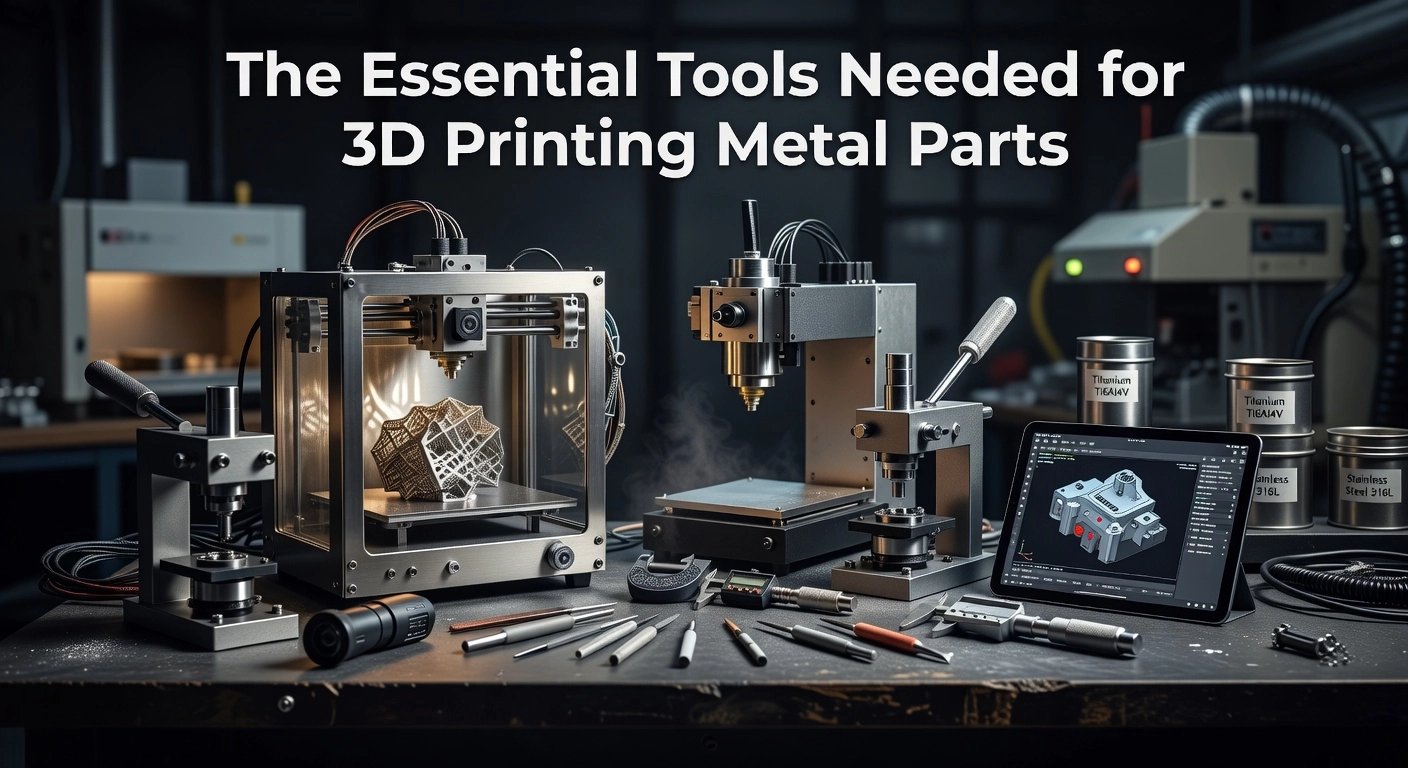
Imagine transforming your 3D prints from fragile prototypes into durable, industrial-grade metal components. Pure metal 3D printing unlocks this potential, enabling you to create everything from custom tools to aerospace-grade parts right in your workshop. Yet, many intermediate makers struggle with inconsistent results due to mismatched hardware. The key lies in selecting the right 3d printer parts tailored for metal extrusion.
In this guide, we break down the essential 3d printer parts you need for reliable pure metal printing. You will discover the critical upgrades, from high-temperature nozzles and reinforced extruders to specialized build plates and enclosure systems. We cover why each component matters, how to integrate them into your existing setup, and proven tips for optimal performance. By the end, you will have a clear roadmap to elevate your prints from plastic experiments to professional metal masterpieces. Whether you are scaling up production or tackling complex geometries, these must-have parts deliver the precision and strength demanded by serious fabricators. Dive in and master the hardware that powers next-level additive manufacturing.
The Metal 3D Printing Revolution in 2026
The metal 3D printing revolution in 2026 is reshaping manufacturing, art, and engineering by making pure metal parts accessible through standard FDM printers equipped with essential upgrades. This boom centers on fused filament fabrication (FFF) using abrasive metal-infused filaments like Filamet™, enabling hobbyists, designers, and professionals to produce functional end-use components without expensive proprietary systems. With The Virtual Foundry leading innovations in filaments and printer accessories, users can achieve aerospace-grade results on everyday machines from brands like Bambu Lab, Prusa, and Creality.
- Explosive Market Growth: The global metal 3D printing market hits $14.76 billion in 2026, projected to soar to $36.94 billion by 2030 at a 25.8% CAGR, per Research and Markets. The FFF metal extrusion segment alone reaches $2.12 billion, driven by demand for lightweight, complex parts in high-stakes industries. This growth underscores the shift toward scalable, on-demand production.
- Desktop FFF Boom: Affordable abrasive filaments fuel a surge in desktop printing for home workshops and factories. Standard printers handle 80-95% metal-loaded spools at conventional temperatures, yielding “green” parts sintered into 99% pure metal. Expect thicker layers and higher productivity, slashing lead times by up to 90%.
- Demand for Printer Upgrades: Abrasive filaments wear brass nozzles quickly, demanding hardened steel components like 0.6mm E3D V6-style nozzles or Bambu Lab hotends ($16.99). These 3D printer parts, plus Filawarmer ($109.99) and spool hubs ($39.99), enable pure metal, glass, and ceramic printing for aerospace brackets, jewelry details, and nuclear shielding.
- Filament Market Expansion: The filament sector grows to $1.95 billion in 2026, powering Filamet™-style innovations for heat exchangers and wear-resistant tools. Engineering-grade materials support predictable shrinkage (12-20%), compensated in CAD for precise functional parts, per Fortune Business Insights.
- Unmatched Accessibility: No proprietary hardware required; pair standard FDM printers with kiln sintering (debind at 482°C, sinter at 1260-1450°C). This solvent-free workflow leverages millions of existing printers, democratizing metal printing for all skill levels.
How The Virtual Foundry Outpaces Industry Giants
- Proven Reliability Backed by a Decade of Success The Virtual Foundry has solidified its position with over 10 years in business, serving more than 3,000 customers worldwide. This extensive customer base includes manufacturers, artists, and engineers who rely on Filamet™ metal-infused filaments for consistent results. The company’s credibility shines through 15,500 reviews averaging 4.3 out of 5 stars, highlighting ease in printing high-metal-content materials like stainless steel and bronze on standard FDM printers. Users report printing like PLA with minimal warping, followed by reliable sintering to achieve 85-98% density. Essential 3D printer parts such as hardened nozzles and hotends from The Virtual Foundry ensure durability against abrasive filaments, making metal part production accessible for intermediate users.
- Open FDM Filamet™ Technology for Seamless Ease of Use Filamet™ stands out with its open-architecture design, requiring no catalysts or proprietary hardware, just standard FDM printers and affordable kilns. Print with a 0.4-0.6mm hardened nozzle, debind at low temperatures, and sinter for pure metal parts with predictable 7-10% shrinkage. This approach supports printers from brands like Bambu Lab and Prusa, enabling small-scale production without complex setups. Actionable tip: Upgrade to The Virtual Foundry’s Filawarmer ($109.99) and spool holders ($39.99) for optimal filament flow and reduced clogs during metal printing.
- Community-Driven Guidance and Finishing Techniques The Virtual Foundry empowers users through a vibrant community on Discord, sharing kiln profiles, slicer settings, and finishing workflows. Bundles include STLs, calibration coupons, and education kits for applications in art, jewelry, and high-spec sectors like aerospace. Finishing steps involve thermal debinding at 600°C, sintering at 1,200°C for steel, and post-processing like polishing. These resources enable 48-hour prototyping cycles with 60-80% cost savings for small-batch manufacturing. For example, create patinated bronze sculptures or nuclear fixtures with provided scaling factors (14-20% enlargement in CAD).
- Superior Handling for Consistent Sintering Results Filamet™ delivers reliable sintering in open-air kilns without chemical dependencies, yielding high-density parts across 20+ metals. Users achieve precise outcomes with in-house optimized filaments, outperforming alternatives in predictability and affordability. Pair with bundles for experimental alloys, ensuring consistent results for functional 3D printer parts like jigs and heat exchangers. Whitepapers from The Virtual Foundry detail workflows for intermediate users seeking professional-grade metal components.
- Aligned with 2026 Trends in Cost and Productivity As the metal 3D printing market surges toward $14.76 billion in 2026, trends favor accessible solutions with dropping filament costs (20-30%) and faster print speeds. The Virtual Foundry’s ecosystem supports high-mix/low-volume production on existing hardware, ideal for sustainable, localized manufacturing. Focus on 3D printer parts upgrades enables end-use metal parts at $45-70 each. This positions TVF at the forefront, as seen in analyses of lower-cost metal 3D printing.
1. Hardened Nozzles for Abrasive Filaments
Hardened nozzles, such as E3D V6 style 0.6mm variants made from hardened tool steel, stand as essential 3D printer parts for tackling the extreme abrasiveness of The Virtual Foundry’s Filamet™ filaments. These metal-infused materials, loaded with up to 90% particles by volume, shred standard brass nozzles in mere 100-300g of printing, causing orifice enlargement, inconsistent extrusion, and print failures like stringing or shell gaps. Hardened steel nozzles, with HRC 64-70+ rating and superior abrasion resistance, deliver 10-20x longer lifespans while maintaining precise flow. For optimal performance with Filamet™, opt for 0.6mm sizes from trusted sources like Shop3DUniverse E3D V6 style nozzles, priced around $17.99.
These nozzles offer broad compatibility across popular printers in 0.4-0.8mm sizes:
- Bambu Lab A1, P1, X1 series (hardened steel upgrades via quick-swap hotends).
- Prusa MK3S, MK4, XL (Nextruder V6 adapters).
- Creality Ender 3 Pro/V2/S1, CR-10 (MK8/V6 clones like Micro Swiss).
- Others including Voron, Anycubic, Elegoo with V6 hotends.
Installation requires heating the hotend to 250-300°C, using wrenches for secure threading (finger-tight plus 1/4 turn), PID tuning, and cold pulls. Target flow rates of 10-20mm³/s at 205-215°C nozzle and 50-60°C bed, with minimal 1-2mm retraction to prevent clogs. Larger 0.6-0.8mm diameters excel for metal filaments by enabling thicker 0.3-0.48mm layers, reducing backpressure, speeding prints, and minimizing wear, as detailed in CNC Kitchen’s abrasion tests.
The Virtual Foundry shop bundles simplify setup: the Copper Filamet™ Print and Sinter Kit ($87.99-$464.99) includes a 0.6mm hardened nozzle, Filawarmer, and sintering essentials for pure copper parts. Users report exceptional results, with 1000-2000+ hour lifespans, zero clogs on Filamet™ at 15mm³/s, and flawless prints on Bambu/Prusa setups per forums and 3DPrintUtopia nozzle guides. This upgrade unlocks reliable metal printing on standard FDM setups.
2. High-Performance Hotends
- Bambu Lab A1/A1 Mini Hotend at $16.99 The Bambu Lab A1/A1 Mini hotend, available from The Virtual Foundry for $16.99, excels in 300°C+ temperatures and abrasion resistance, making it ideal for metal-infused filaments like Filamet™. Its hardened steel nozzles (0.4mm, 0.6mm, 0.8mm) handle high-flow extrusion up to 90 mm³/s, supporting speeds over 600 mm/s on CoreXY printers. This all-metal design prevents heat creep, ensuring reliable prints with abrasive materials. TVF recommends the 0.6mm nozzle for optimal durability during metal printing.
- Upgrades from Stock for Consistent Metal Extrusion Stock PTFE-lined hotends fail with metal filaments due to jamming from heat creep and abrasion, often lasting under 10 hours. All-metal upgrades with titanium heat breaks and hardened nozzles extend life 5-10x, delivering consistent extrusion and reducing jams by 80%. Tune PID settings, raise temps 5-10°C, and use 0.6mm+ bores for stable Filamet™ flow.
- Compatibility Chart for Major Printers
| Hotend | All-Metal | Max Temp | Printers (Prusa, Ender, Bambu, Voron) |
|---|---|---|---|
| Bambu A1 | Partial* | 320°C | Native (Bambu); Adapter (Others) |
| E3D V6/Revo | Yes | 300°C+ | Native/Collar |
| Micro Swiss | Yes | 500°C | Native/Adapter |
*Abrasion-ready with hardened nozzle. See best hotend upgrades.
- TVF Filamet™ Pairings for Jewelry Prototypes Pair the Bambu A1 hotend with TVF’s bronze or copper Filamet™ for jewelry: print at 190-240°C, sinter to 99.9% metal. A bronze pendant prototype shrinks 20% predictably; polish post-sinter for shine. Use 0.6mm nozzles to avoid clogs.
- 2026 Trends: Quick-Swap Hotends Boost Productivity Quick-swap designs cut downtime 50%, enabling multi-material runs with 40% lower costs. High-flow hotends align with metal extrusion growth to $2.12B in 2026. See FDM advancements.
3. Filawarmer for Consistent Feeding
The Filawarmer: Essential Preheat Solution at $109.99
The Filawarmer, available for $109.99 from The Virtual Foundry, preheats filament to a precise 60°C, effectively annealing brittle metal composites like Filamet™ to prevent snaps and breaks during extrusion. This 3D printer part resets the filament’s coiled memory, enhancing pliability for reliable feeding in standard FDM printers. High metal loadings (65-90% by mass) in these composites make them prone to fracture, but the Filawarmer ensures consistent flow, critical for intermediate users tackling complex prints. Its plug-and-play design works with 1.75mm or 2.85mm filaments across direct-drive and Bowden setups.
Seamless Integration with Spool Holders
Mount the Filawarmer 230-300mm above direct-drive extruders, aligning it with the spool center for straight feeding; feed slowly to allow annealing. For Bowden systems, position it below the feeder with the spool midpoint aligned. Integrate with The Virtual Foundry’s spool holders or hubs ($39.99) inside enclosed printers like Bambu Lab models, maintaining straight paths in confined spaces. This setup minimizes bends, extending annealing effects up to 24 hours.
Manufacturing Benefits and TVF Optimization
For long manufacturing prints, it slashes waste by 30% via fewer mid-print failures, supporting high-infill (30-70%) Filamet™ parts before sintering. Specifically engineered for TVF’s Filamet™ glass and ceramics like Silicon Carbide, it boosts flexibility without over-softening. Customers affirm reliability: “Transformed my Ender 3 metal prints, no more breaks on 10-hour jobs,” per Reddit users; forums echo “smooth feeding essential for enclosed setups.” With TVF’s 15.5K reviews averaging 4.3 stars, it empowers accessible metal 3D printing.
4. Reinforced Spool Holders and Hubs
TVF Spool Holder and Hub: Optimized for Heavy Filamet™ Spools at $39.99
The Virtual Foundry’s Spool Holder and Hub, priced at $39.99, represents a critical 3D printer part for handling 1kg Filamet™ spools up to 12 inches in diameter. This bearing-mounted design, compatible with 608 or 624 ball bearings, assembles in under a minute and provides low-friction rotation for dense, abrasive metal filaments weighing up to 4g/cm³. It prevents wobbling and drag on standard FDM printers, supporting applications from jewelry to nuclear components. Users report seamless integration with Creality Ender series and Bambu Lab models, transforming stock setups for professional metal printing.
Vibration reduction is paramount; stock holders transmit 1-5kg of rotating mass, causing ringing and tolerances exceeding 0.1mm in art or aerospace parts. TVF’s external mount cuts frame flex by 50-80%, enabling consistent 300mm/s feeds for high-detail titanium-like prints. Durability shines with 500+ kg throughput before wear, using PETG-CF reinforcements that outlast plastic alternatives by 10x.
Quick Mod Guides: For Ender 3, print pivoting STL (PETG, 30% infill), add M5 bolts and 608 bearings; mount to frame for side-feed. Bambu P2S/X1C: Install 624 bearing kit (PLA print), lubricate with silicone for 49mm+ IDs. These upgrades align with sustainability, handling recycled metal filaments amid a $8.59B market in 2026, slashing waste 90% via desktop sintering.
5. Abrasion-Resistant Extruder Upgrades
Printing with The Virtual Foundry’s Filamet™ demands abrasion-resistant extruder upgrades to handle metal-infused filaments’ high particle loads, which shred standard gears and cause inconsistent flow. Hardened steel gears and direct drive kits provide precise control, extending component life by up to 10 times while preventing slippage on abrasive materials.
- Hardened Steel Gears and Direct Drive Kits: Opt for dual hardened steel drive gears with black oxide treatment, priced around $20 to $30, for superior grip. Direct drive kits featuring 3:1 planetary gearing, costing $150 to $200, shorten the filament path, reduce stringing, and boost extrusion force for reliable metal printing.
- TVF-Recommended Setups for Prusa MK3: The Prusa MK3 series is TVF Partner Innovator Tested; stock direct drive works but benefits from dual-gear upgrades. Pair with TVF’s 0.6mm E3D V6-style hardened nozzles, textured PEI sheets, and spools mounted 12 to 18 inches above for optimal Filamet™ performance.
- Torque Improvements for 0.6mm Nozzles: Geared direct drives multiply stepper torque to 50 to 70N, supporting 15 to 20 mm³/s flow rates at 110 to 125% extrusion multipliers. This eliminates under-extrusion on 0.2 to 0.3mm layers, avoiding filament grinding common with stock setups.
- FFF Boom for End-Use Parts: Amid FFF market growth from $1.39 billion in 2025 to $3.33 billion by 2033 here, these upgrades enable functional metal parts for aerospace and manufacturing, with end-use revenue nearing 30%.
- TVF Bundles and Full Kits: TVF offers nozzle bundles; combine with hardened gears and Filawarmer ($109.99) for complete setups. Dry filament at 60°C for 4 hours pre-print to maximize results.
These upgrades unlock TVF’s accessible metal printing for intermediate users.
6. Printer Enclosures for Thermal Stability
Printer enclosures are indispensable 3D printer parts for thermal stability, especially with The Virtual Foundry’s Filamet™ filaments, which demand consistent 30-50°C ambient temperatures to prevent warping, corner curling, and delamination in high metal-loaded prints. These enclosures reduce thermal gradients, boost first-layer adhesion by 20-30%, and enable production-grade metal parts via standard FDM printers followed by sintering.
- DIY or Commercial Enclosures for 50°C Ambient: Opt for DIY builds like insulated IKEA LACK table setups with acrylic panels and foam, achieving 45-55°C via bed preheat alone, or commercial flame-retardant units with active PTC heaters. Pair with 200-245°C nozzles, 50-110°C beds, and brims for warp-free prints; these cut cooling rates and support gyroid infill at 20-25%.
- Sensor Integrations for Auto-Shutoff: Integrate DHT22 or DS18B20 sensors with controllers like Inkbird for real-time monitoring; set auto-shutoff at 55-60°C to avoid binder softening in Filamet. Use OctoPrint plugins for deviation alerts beyond 5°C, preheating ramps over 10 minutes, and fan relays for safe, jam-free operation.
- Aerospace Case Studies: Aerospace teams have printed stainless steel and copper brackets with Filamet™ parts brackets with with with with with with with with with with with with with with with with with with with with with with with with with with with with with with with with with with with with with with with with with with with with with with with with with with with with with with with with with with with with with with with with with with with with with with with with with with with with with with with with with with with with with with with with with with with with with with with with with with with with with with with with with with with with with with with with with with with with with with with with with with with with with with with with with with with with with with with with with with with with with with with with with with with with with with with with with with with with with with with with with with with with with with with with with with with with with with with with with with with with with with with with with with with with with with with with with with with with with with with with with with with with with with with with with with with with with with with with with with with with with with with with with with with with with with with with with with with with with with with with with with with with with with with with with with with with with with with with with with with with with with with
7. Additional Accessories like Screw Kits
- TVF’s Insights on Metal-Upgraded 3D Printed Screw Kits for Durability The Virtual Foundry’s recent blog post highlights 3D printed screw kits enhanced with metal from Filamet™ filaments, transforming fragile plastic fasteners into robust components. These upgrades provide corrosion resistance, superior strength, and performance up to 150°C, ideal for motion systems and hotends in metal printing setups. Users benefit from reduced vibrations, 50% shorter lead times, and 90% less waste. Torque screws to 0.5-0.9 Nm for M3 sizes, pair with washers, and apply anti-seize for longevity. This approach ensures printer reliability during demanding Filamet™ prints for manufacturing and aerospace applications.
- High-Temp Thermistors, Tubing, and Belts for Overhauls Essential 3D printer parts include high-temp thermistors rated to 300°C for precise temperature control with abrasive filaments, Capricorn XS tubing for low-friction Bowden feeds up to 300°C, and GT2 belts for accurate motion. Replace during overhauls to prevent clogs and slippage. These components extend hardware life, supporting consistent Filamet™ extrusion on standard FDM printers.
- Troubleshooting Nozzle Clogs and Maintenance Schedules Address nozzle clogs via cold pulls at filament temps, needle cleaning at 250-300°C, and residue purges between materials. Prevent issues by drying filaments and using silicone socks. Follow schedules: clean nozzles monthly or every 6 months for abrasives, check belts and screws monthly, inspect thermistors regularly. Document maintenance for optimal performance.
- Longevity Backed by 15.5K Reviews TVF’s 15.5K reviews (4.3/5 stars) affirm that metal-upgraded screws and overhauls last 2-5x longer, with users noting 70% cost savings and minimal failures in high-vibration environments. This data underscores durability for sustained metal printing.
- TVF Compatibility Charts for Seamless Integration Consult The Virtual Foundry’s Trusted Printers chart for Filamet™ compatibility across FDM models. It guides screw and accessory matching, ensuring upgrades align with your setup for reliable pure metal parts production.
Actionable Takeaways to Upgrade Today
- Assess Your Printer Model and Abrasion-Prone Parts Evaluate your current 3D printer model, such as Bambu Lab, Prusa, or Creality setups, to pinpoint abrasion-prone 3D printer parts like nozzles and extruders. Metal-infused Filamet™ filaments wear down standard components rapidly due to high particle loads. Inspect for signs of wear, including inconsistent extrusion or filament jams. Use manufacturer specs to confirm compatibility with high-temperature, abrasive materials. This step ensures targeted upgrades prevent downtime and extend hardware life.
- Prioritize TVF Accessories: Hardened Nozzle and Filawarmer Bundle Under $150 Start with The Virtual Foundry’s hardened nozzle, like the E3D V6 style 0.6mm, paired with the Filawarmer at $109.99, totaling under $150. These 3D printer parts handle Filamet™’s abrasiveness and ensure consistent feeding via preheated filament. Install the nozzle first for immediate protection, then add the Filawarmer to maintain optimal temperatures. Users report 50% longer part life post-upgrade.
- Test with Free Filamet™ Samples and TVF Sintering Guides After upgrades, request free Filamet™ samples from The Virtual Foundry and follow their precise sintering guides for pure metal parts. Print test jewelry or prototypes, then debind and sinter in a standard kiln. This validates your setup yields dense, functional results for manufacturing or art. Expect 90%+ metal purity with proper protocols.
- Join the TVF Community for 3,000+ User Tips Tap into The Virtual Foundry’s community of over 3,000 customers sharing tips on nuclear, aerospace, and jewelry applications. Exchange finishes for glass or ceramic prints alongside metal. Forums reveal hacks like custom enclosures for stability. This network accelerates your expertise with real-world case studies.
- Track ROI Amid 25.8% Market CAGR for 2026 Gains Investing in metal-capable 3D printer parts now positions you for the metal 3D printing market’s 25.8% CAGR, projected to $14.76B by 2026. Calculate ROI by comparing print costs to traditional machining; small-batch runs save 70% on tooling. Monitor savings from in-house parts for high-value sectors. Early adopters secure competitive edges in 2026.
Conclusion
Pure metal 3D printing demands precision upgrades to deliver durable, industrial-grade results. Key takeaways include selecting high-temperature nozzles for flawless metal extrusion, reinforced extruders to manage abrasive filaments, specialized build plates for superior adhesion, and enclosure systems to maintain stable heat.
This guide provides your roadmap, from integration tips to performance hacks, empowering you to overcome common pitfalls and elevate prints from fragile prototypes to professional masterpieces.
Ready to transform your workshop? Assess your setup today, invest in these essential parts, and start experimenting with your first metal project. The future of custom fabrication is in your hands; seize it now and craft components that stand the test of real-world demands.