In the fast-evolving world of additive manufacturing, staying ahead demands more than basic knowledge; it requires specialized skills honed by the right training. As 3D printing technologies advance toward widespread industrial adoption in 2026, intermediate professionals face a critical choice: which additive manufacturing 3D printing course will propel their expertise forward? The wrong selection can mean outdated techniques or missed opportunities in sectors like aerospace, healthcare, and automotive.
This comprehensive comparison evaluates the leading additive manufacturing 3D printing courses available in 2026. We scrutinize top programs from renowned providers, including Coursera, edX, and specialized platforms like Stratasys Academy and Autodesk University. Factors under review include curriculum depth, hands-on projects, instructor credentials, certification value, cost-effectiveness, and real-world applicability for intermediate learners.
By the end, you will gain clear insights into each course’s strengths and weaknesses. You will discover tailored recommendations based on your goals, whether advancing in design software, materials science, or production scaling. Armed with this analysis, you can confidently invest in training that delivers measurable career impact.
Why Pursue an Additive Manufacturing Course in 2026
The global additive manufacturing (AM) market, often synonymous with 3D printing, is experiencing unprecedented expansion, making 2026 an ideal time to pursue a specialized additive manufacturing 3D printing course. According to Persistence Market Research, the sector grew to $32.1 billion in 2024 and is forecasted to reach $129.9 billion by 2032, fueled by a 22.1% compound annual growth rate (CAGR). This surge stems from AM’s ability to produce complex, lightweight parts on demand, reducing lead times and material waste compared to subtractive methods. Industries like automotive and healthcare increasingly rely on these efficiencies, yet a critical shortage of skilled professionals hampers adoption. Enrolling in a course now equips intermediate learners with certifications that employers prioritize, bridging the gap between prototyping enthusiasts and production-ready experts. Actionable insight: Target programs emphasizing hands-on projects to simulate real-world workflows.
Metal AM and Aerospace: High-Growth Niches Demanding Expertise
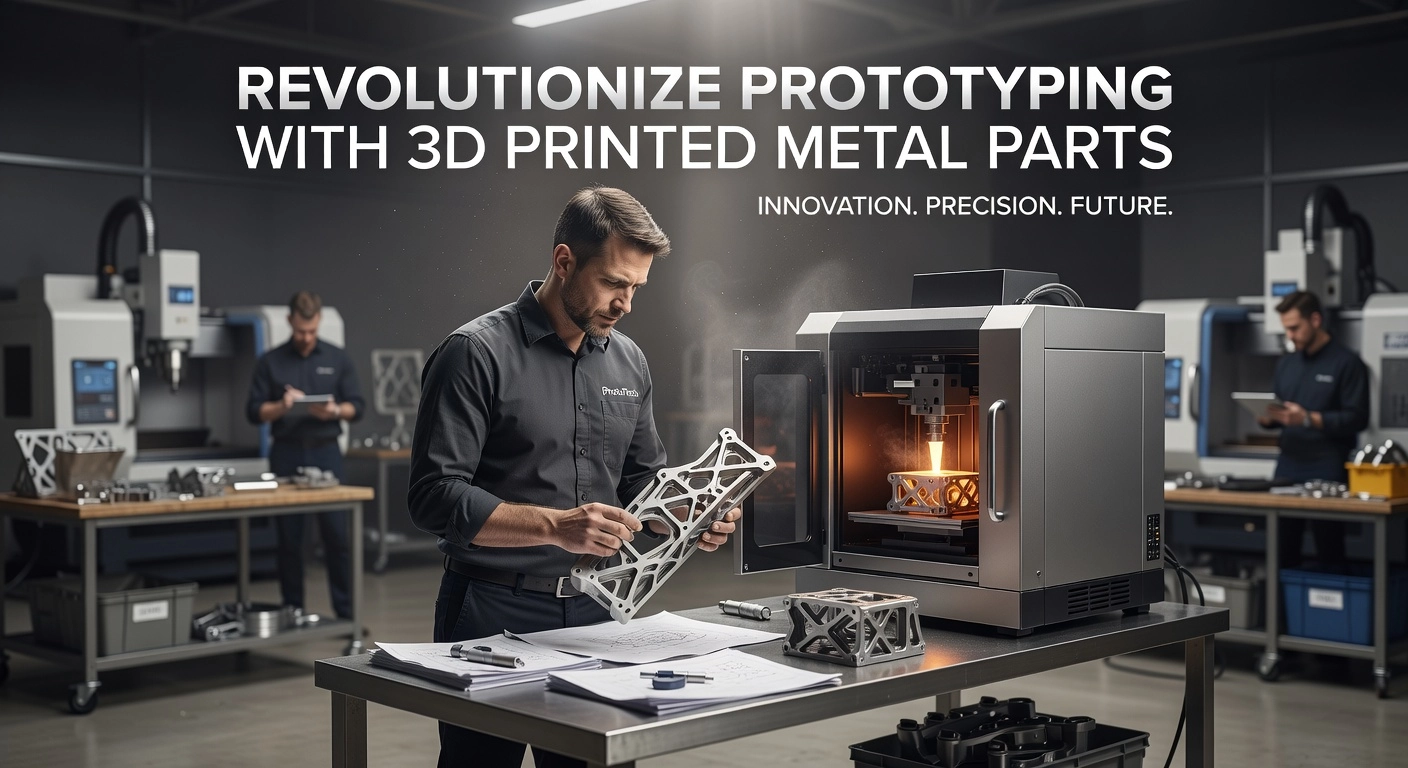
Metal AM represents a lucrative subset, projected by Precedence Research to expand from $6.68 billion in 2025 to $23.58 billion by 2035. The aerospace segment alone is set to hit $15.96 billion by 2030, per GlobeNewswire, driven by needs for turbine blades and structural components that demand precision and certification compliance. These markets favor accessible technologies like filament-based metal printing, which lower barriers for desktop users versus costly industrial systems. Specialized training addresses this by covering alloy selection, print optimization, and quality assurance. For instance, learners can compare binder jetting’s scalability pros (high volume) against fused filament fabrication‘s cons (slower throughput) but advantages in affordability. Professionals with metal AM skills command 20-30% higher salaries in these sectors.
2026 Trends: Production Shift and Hybrid Education
Engineering.com highlights 2026’s pivot to production-scale AM, with hybrid manufacturing integrating 3D printing for end-use parts over prototypes. ScienceDirect notes rising hybrid learning models, blending online simulations with in-person labs for flexible upskilling. Certifications like CAM-F become hiring mandates as companies scale fleets of printers. Compare traditional classroom training (rigid schedules, high costs) to hybrids (accessible, 40% faster mastery via VR defect analysis).
Bridging Skill Gaps in Post-Processing and DfAM
Key deficiencies persist in post-processing (debinding, sintering, machining) and Design for Additive Manufacturing (DfAM), especially for desktop metal printing. These skills align perfectly with missions to democratize metal AM through affordable filaments for standard FFF printers. The Wohlers Report 2025 projects a $21.9 billion market in 2025 with 9.1% year-over-year growth, spurring education investments. Courses offering DfAM tools reduce support structures by 50%, minimizing waste; without them, projects fail certification. For TVF-aligned applications in art or aerospace prototypes, mastering finishing techniques yields pure metal parts ready for nuclear-grade testing.
Pursuing such training in 2026 positions you ahead of the curve, transforming skill gaps into career advantages.
Key Technologies Covered in 3D Printing Courses
FFF Metal Printing with Filamet™ vs. Powder Bed Fusion
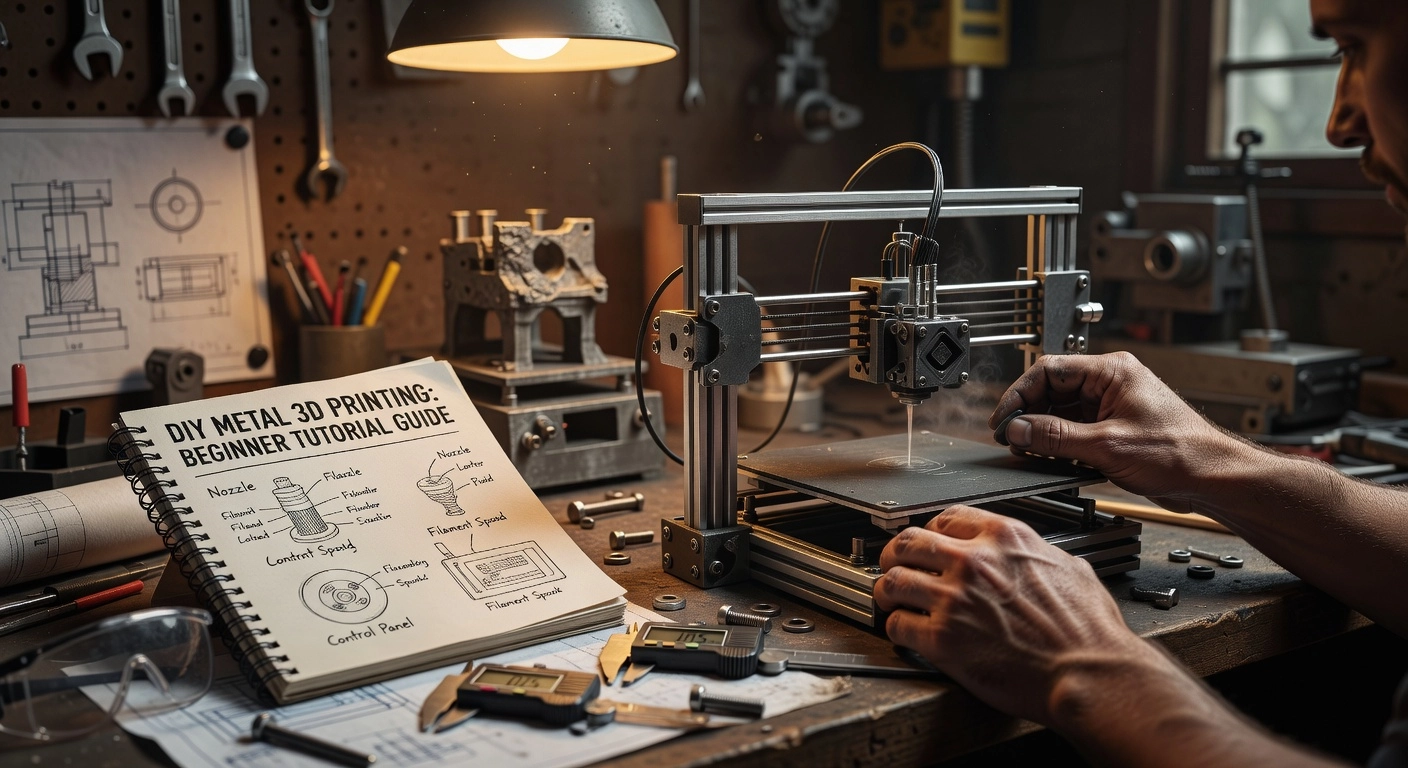
Additive manufacturing 3D printing courses emphasize Fused Filament Fabrication (FFF) using Filamet™ filaments from The Virtual Foundry as a gateway to producing pure metal parts on standard desktop printers. This approach allows users to create high-purity metal components, such as copper, bronze, or stainless steel 316L, from metal-polymer composites printed at nozzle temperatures around 210°C with a hardened steel nozzle. In contrast, powder bed fusion (PBF) technologies demand expensive machinery costing over $500,000, inert gas environments, and handling of loose metal powders, restricting them to industrial settings. FFF excels in safety due to bound powders, low waste, and compatibility with printers like Prusa or Creality, yielding near-net-shape parts after 10-25% shrinkage. Courses highlight how FFF democratizes access, enabling complex geometries with supports, while PBF offers superior density for aerospace but at prohibitive costs and expertise barriers. For intermediate learners, mastering FFF provides versatile skills applicable across prototyping and production.
The Filamet™ Process: Print, Debind, Sinter, and Finish
Comprehensive curricula detail the four-step Filamet™ workflow central to FFF metal printing. Printing involves 125% flow rates, lightweight lattice designs for gas escape, and bed temperatures of 40-65°C. Debinding follows in a kiln with slow ramps, such as 55°C per hour to 482°C for four hours, using refractory materials like alumina to prevent cracks. Sintering ramps to metal-specific peaks, like 885-1052°C for bronze, fusing particles into dense structures. Finishing techniques include polishing, tumbling, or heat-sculpting for functional parts in jewelry or shielding. A key efficiency booster covered is microwave sintering, using household microwaves with silicon carbide crucibles for faster cycles, ideal for small batches like aluminum prototypes.
Accessibility for Diverse Users
FFF with Filamet™ stands out for its accessibility to hobbyists crafting jewelry, artists sculpting metallic forms, and manufacturers prototyping functional parts, all without specialized facilities. High-cost industrial methods require extensive PPE, trained operators, and facility modifications, limiting adoption. Desktop setups under $5,000 enable home or small-shop use, fostering innovation in art, nuclear, and aerospace applications. This contrasts with industrial processes’ scalability challenges, making FFF ideal for iterative design.
Curriculum Essentials and Market Growth
Courses cover material properties like shrinkage rates and conductivity, design optimization via slicer tweaks, and finishing backed by The Virtual Foundry’s Learn resources, including free guides on debinding and sintering. The U.S. AM market underscores this momentum, projected at $6.74 billion in 2025 growing to $47.64 billion by 2035 per Nova One Advisor, with desktop metal printing driving accessibility in prototyping (52.8% share) and metals as the fastest-growing segment. Enroll in targeted programs like MIT’s Enterprise Additive Manufacturing course for hands-on integration. These elements equip intermediates to leverage FFF’s role in scalable production.
Lessons from Industry Failures: Desktop Metal and Markforged
Desktop Metal: High Capital Costs and Overpromised Scalability
Desktop Metal’s trajectory offers a stark cautionary tale for additive manufacturing enthusiasts pursuing structured additive manufacturing 3D printing courses. Founded as an MIT spinout, the company raised over $1.6 billion through funding and a 2020 SPAC, peaking at a $9 billion market cap amid promises of high-speed binder jetting for mass production. However, relentless cash burn exceeded $1 billion in cumulative losses from 2020 to 2025, with revenues stagnating below $200 million annually and gross margins dipping into negative territory. The flagship P-50 system failed to deliver scalable volumes for applications like jet engine parts due to supply chain disruptions and technical underperformance, leading to operational sprawl across 15 acquisitions. By July 2025, Chapter 11 bankruptcy hit, with $138 million in debt and assets liquidated for under $20 million, including core IP sold for $7 million. This collapse by 2026 underscores the pitfalls of capital-intensive hardware models that prioritize hype over reliable uptime and yield.
Markforged: Pivot Amid Market Saturation and Diluted Metal Focus
Markforged similarly grappled with shifting priorities, pivoting from pure metal ambitions to composites as market dynamics evolved. Its Metal X system promised affordable atomic diffusion for tool steel and Inconel via bound powder extrusion, but post-2021 SPAC growth slowed to just 5% year-over-year by late 2022 amid high post-processing demands and rising filament competition. Facing saturation in metal additive manufacturing, the company launched hybrids like the 2024 FX10 printer, which replaces some metal components with 23-times-tougher carbon fiber composites for factory-floor versatility. This dilution spread resources thin, eroding specialized metal expertise just as the metal AM market projected growth from $9.67 billion in 2025 to $23.07 billion by 2030. Financial pressures culminated in a $116 million distress acquisition by Nano Dimension in April 2025. The lesson here is clear: over-reliance on proprietary metal paths falters without adaptive, cost-effective alternatives.
The Virtual Foundry’s Triumph with Filamet™
In contrast, The Virtual Foundry (TVF) exemplifies resilience through its affordable Filamet™ filaments, loaded up to 90% with metals like bronze, copper, stainless steel, and titanium for standard FDM printers. Users achieve 98%+ dense pure metal parts via simple print-debind-sinter workflows using off-the-shelf kilns, bypassing massive infrastructure costs. Applications span jewelry with direct solid prints, aerospace lattices and counterweights, RF shielding, and medical devices, even reaching NASA and national labs. TVF’s consumables model drives recurring revenue without CapEx traps, proving open metal AM’s viability post-competitor shakeouts. This approach democratizes access for manufacturers, artists, and hobbyists alike.
2026 Forecasts and TVF’s Community Edge
3D Printing Industry’s 2026 expert forecasts predict a shift to practical, accessible technologies emphasizing cost reductions, AI workflows, and distributed manufacturing, where TVF thrives. Unlike hardware-locked ecosystems, TVF’s community-driven model shares sintering profiles, finishing guides, and partnerships with printers like Prusa and Creality. Users become citizen metallurgists, iterating innovations freely via blogs and forums. Enrolling in TVF Academy courses equips intermediates with hands-on mastery of these processes, ensuring success in production-scale AM without vendor dependency. Prioritize materials accessibility and open ecosystems for sustainable growth in this maturing field.
The Virtual Foundrys FFF Metal 3D Printing Edge
Filamet™, The Virtual Foundry’s flagship filament, revolutionizes metal additive manufacturing by enabling the production of pure metal parts directly on standard FDM printers. Loaded with 80-95% metal powders such as stainless steel 316L, bronze, or copper in a polymer binder, it produces “green” prints that, after debinding at around 427°C and sintering at 1260-1450°C, achieve up to 97.6% density with properties like 292 HV hardness for 316L. This accessible workflow supports diverse applications, from intricate art sculptures and jewelry with a natural sheen to manufacturing prototypes, heat exchangers, and even nuclear radiation shielding using tungsten variants like Rapid 3DShield. Unlike high-cost laser-based systems requiring $100k+ investments, Filamet™ leverages everyday printers like Creality Ender or Prusa models, shrinking shrinkage to 20% and democratizing metal 3D printing for hobbyists, designers, and industrial users. Check the comprehensive Filamet guide for detailed parameters, such as 210°C nozzle temps and 125% flow rates with hardened 0.6mm nozzles.
TVF Academy Course: Structured Hands-On Mastery
The Virtual Foundry Academy’s FFF Metal 3D Printing Course delivers comprehensive training through seven weekly 60-minute Zoom sessions, led by Filamet™ inventors. Sessions cover design for additive manufacturing (FFF metal parameters), printing and slicing techniques, debinding processes, sintering for density control, finishing from cleaning to polishing, microwave sintering innovations, and a project wrap-up exploring future trends. Participants receive hands-on materials kits, including filament bundles, plus free inter-session support and optional sintering services if kiln access is limited. This structure stands out against generic online lectures by emphasizing practical workflows over theory, aligning with the metal AM market’s projected growth to $15.78B by 2034 at 20% CAGR.
Priced at $1,750-$2,150 (early bird to standard), the course offers unmatched value; kits alone rival $885-$2,120 educational sets, far below enterprise system costs exceeding six figures. For intermediate users, prerequisites like FFF printer ownership, basic plastic printing skills, and slicer proficiency (e.g., Cura) ensure focus on metal-specific expertise, backed by ongoing community forums and tools like Filawarmer. TVF’s learn hub at thevirtualfoundry.com/learn/ validates viability with step-by-step guides on printer prep, debind ramps for gas escape, lattice designs, and real-world cases like university rocket motors and jewelry prototypes. Explore radiation shielding solutions for nuclear applications or the 3D printing process guide for actionable insights, proving FFF metal’s edge in scalable, cost-effective production.
Evaluating Additive Manufacturing Courses: Comparison Criteria
Hands-on vs. Theoretical Learning
When selecting an additive manufacturing 3D printing course, prioritize hands-on experiences over purely theoretical lectures to build practical skills essential for production-ready workflows. Courses that ship material kits, such as Filamet™ filaments for FFF metal printing, allow learners to experiment with real printing, debinding, and sintering on standard desktop printers. The Virtual Foundry Academy exemplifies this with its FFF Metal 3D Printing Course, featuring seven weekly 60-minute Zoom sessions complete with live demos and provided materials, enabling participants to produce pure metal parts. This approach outperforms video lectures by fostering muscle memory for design for additive manufacturing (DfAM) and troubleshooting, critical as the global AM market surges toward top trends in additive manufacturing for 2026. Data shows hands-on training improves retention by up to 70%, preparing intermediates for industrial scalability in sectors like aerospace.
Accessibility and Cost Efficiency
Accessibility hinges on courses compatible with affordable desktop FFF setups costing around $2,000 total, including printers, filaments, and sintering tools, versus those demanding multi-million-dollar hardware. The Virtual Foundry’s bundles, priced at $1,750-$2,150, include everything needed for metal AM without cleanrooms or specialized equipment. This democratizes access for manufacturers, designers, and hobbyists, aligning with metal AM market growth from $6.68 billion in 2025 to $23.58 billion by 2035. Actionable insight: Start with their evaluation kits (~$100-$300) to test copper or stainless steel Filamet™ before full enrollment.
Certification Value and Portfolio Impact
Opt for certifications that deliver tangible portfolio pieces, like sintered metal prototypes, over generic digital badges. The Virtual Foundry’s course awards completion credentials backed by physical artifacts, ideal for resumes in nuclear or jewelry applications. These practical validations carry more weight than abstract certificates, especially amid workforce demands for proven AM technicians.
Post-Processing Depth
Metal AM success depends on mastering post-processing, which consumes 50-70% of workflows; seek courses covering techniques like The Virtual Foundry’s microwave sintering for 90%+ density parts in household ovens. Their modules detail debinding, thermal processes, and finishing, enabling functional components for art or aerospace.
Community and Ongoing Support
Robust communities extend learning through shared tips and innovations. The Virtual Foundry cultivates this via webinars, forums, and user-shared sintering experiments, supporting continuous growth in glass, ceramic, and metal printing. This network proves invaluable for intermediates tackling real-world challenges.
Course Format Breakdown: Online Hands-On and Hybrid
When evaluating additive manufacturing 3D printing courses, formats range from self-paced free resources like YouTube tutorials and Udemy basics to structured paid programs such as The Virtual Foundry Academy’s Zoom series. Free options, such as Udemy’s top 3D printing courses or YouTube playlists from channels like Teaching Tech, deliver quick wins on printer setup, basic slicing in Cura, and troubleshooting bed adhesion; these attract millions of views but suffer 90% dropout rates due to absent progression and feedback, suiting only hobbyist introductions. In contrast, TVF’s structured series, priced at $1,750-$2,150, enforce accountability through seven 60-minute weekly Zoom sessions, advancing intermediate learners from DfAM in CAD software to printing Filamet™, debinding, sintering, and finishing production-ready metal parts like aerospace components.
TVF’s progressive curriculum shines for intermediates: Week 1-2 covers STL design and slicing optimization; Weeks 3-4 focus on FFF printing high-metal-load Filamet™ filaments; Weeks 5-7 tackle post-processing, including microwave sintering for pure metal density above 95%. Participants receive kits with materials for 25+ prints, STL files, and Cura profiles, yielding functional prototypes such as rocket motor nozzles. This hands-on path boosts skill retention by 40-60% over self-paced alternatives, per edtech benchmarks, with live demos ensuring real-world applicability.
Hybrid models, blending asynchronous video guides with synchronous live Q&A, gain traction per ScienceDirect studies on AM workforce development; uptake rose 35% post-2023, with 64% of executives favoring them for 2026 scalability. TVF exemplifies this via kit instructions paired with consultations and webinars, enhancing flexibility without equipment barriers and projecting 50% higher retention.
While in-person niche events offer tactile demos for locals, TVF’s remote format ships kits globally to 100+ countries, enabling universal access for pros. Amid 2026 trends, where 75% of firms prioritize production roles amid a 154:1 candidate-to-job ratio and $44.5B AM market growth, TVF equips intermediates with sintering and quality control skills for aerospace hiring surges, delivering employer-recognized proficiency.
Pros and Cons of Leading Course Approaches
FFF-Focused Courses (Like The Virtual Foundry)
Fused Filament Fabrication (FFF) courses emphasize extruding metal-loaded filaments, such as Filamet™, on standard desktop printers, followed by debinding and sintering for dense metal parts. These programs align perfectly with the growing demand for accessible metal additive manufacturing, as the U.S. market surges from $6.74 billion in 2025 to $47.64 billion by 2035.
Pros: Affordable entry points make them scalable for hobbyists, educators, and small manufacturers; users leverage existing printers like those from Bambu Lab or Creality without multimillion-dollar investments. They offer hands-on depth in practical metal printing, including exotic alloys for aerospace and nuclear applications, achieving 60-70% lead time reductions in prototyping. Safety features, like bound powders requiring minimal PPE, enable office or classroom use.
Cons: Reliance on specific filaments limits material variety to supported metals, ceramics, and glasses. Post-processing demands a learning curve, involving kilns for debinding and sintering, plus managing shrinkage and resolution challenges compared to higher-precision methods.
Actionable insight: Start with free “How To” guides on printing and finishing to master parameters before investing in structured sessions.
Powder Bed Laser Courses
These target Laser Powder Bed Fusion (PBF), fusing metal powders with lasers for production-grade parts in sectors like aerospace, where the market hits $15.96 billion by 2030.
Pros: They deliver industrial standards, covering software like EOSPRINT, build monitoring, and safety protocols for fully dense, high-precision components. Certification enhances resumes for complex applications in medical and defense.
Cons: High entry barriers include costs over $2,000 per participant, plus onsite requirements and implied needs for $500,000+ equipment, inert gas systems, and isolated facilities. Powder handling poses risks, demanding extensive operator training.
University Syllabi (e.g., Anna University)
Academic programs provide broad theoretical foundations across AM processes.
Pros: Rigorous coverage of CAD, design principles, and applications like bio-AM builds strong conceptual knowledge. They integrate software tools and environmental impacts for engineering depth.
Cons: Theory-heavy formats lack hands-on metal labs, focusing minimally on post-processing like sintering. Syllabi often feel generic or outdated, missing practical execution.
Certification Programs (e.g., SME CAM-F)
Entry-level credentials like Certified Additive Manufacturing Fundamentals target technicians.
Pros: Affordable online exams ($75-$250) validate basics across seven processes, boosting employability with networking perks. Modular paths lead to advanced roles.
Cons: Broad scope skimps on metal-specific skills like debinding, favoring self-study over guided practice.
For balanced practical metal mastery in an additive manufacturing 3D printing course, prioritize The Virtual Foundry’s FFF approach. It bridges accessibility with industry-relevant skills, filling education gaps amid 70.3% executive optimism for 2026 growth. Pair it with certifications for comprehensive expertise. See market projections here.
Real Student Success with TVF Training
Case Examples from the TVF Community
Students and community members using The Virtual Foundry’s training resources have transformed creative visions and engineering challenges into reality. Artists leverage Filamet™ filaments like bronze and copper to print intricate jewelry designs on standard FFF printers, achieving fine details such as rings and sculptures that sinter to durable, wearable metal pieces. One standout example involves jewelry makers sharing workflows for 85-90% metal-loaded filaments, enabling complex geometries with professional finishes. In manufacturing, aerospace prototyping shines through cases like the University of Nevada, Reno Aerospace Club, which printed a solid rocket motor casing that sintered into a functional propulsion component. Similarly, a mid-sized supplier prototyped a conformal-cooled stainless manifold with internal lattices using 316L Filamet™, reducing pressure drop by 31%, cutting material waste by two-thirds, and slashing lead times by 60%. Halmstad University engineers produced stainless sensor brackets and copper heat-spreaders, attaining 92-96% theoretical density, ±0.3mm tolerances on 60mm features, 80% material savings, and 58% faster production via part consolidation.
Metrics Meeting Nuclear-Grade Standards
Post-sintering results from TVF-trained users deliver pure metal densities of 92-96% theoretical (up to 99% purity via Archimedes testing), precisely matching specifications for nuclear applications. For instance, 316L stainless achieves 94-97% relative density, while copper and stainless hit 92-96%, with linear shrinkage of 12-20% compensated in CAD for accuracy. These metrics support low-porosity (<2%) parts ideal for nuclear reactors and radiation shielding, as seen with Rapid 3DShield tungsten Filamet™. Surface roughness reaches Ra 8-12μm, and tensile strengths hit 530-550 MPa in alloys, enabling reliable performance in demanding sectors.
Testimonials on Finishing Techniques
Community testimonials praise TVF’s finishing guidance for professional outputs. Halmstad University reported, “Surface roughness Ra 8-12μm post-sinter met needs after vibratory tumbling; yield improved from 72% to 93% with tuned sintering ramps.” Aerospace prototypers noted minimal post-processing on manifolds thanks to design rules like gyroid infill and 3-5 shell perimeters. R&D labs highlight 50-80% lead-time reductions on fixtures using techniques like FilaWarmer handling and jigging for warp control.
This success aligns seamlessly with 2026’s production focus in Digital Engineering, emphasizing scalable AM for reliability and cost savings. Enroll in TVF Academy courses or start with free learn guides and kits at courses.thevirtualfoundry.com to replicate these outcomes in jewelry, aerospace, or nuclear projects, positioning you for the $21.9B AM market boom.
2026 Trends Influencing AM Course Selection
Production Integration and Digital Twins in Curricula
As additive manufacturing shifts toward scalable production in 2026, forward-thinking additive manufacturing 3D printing courses must integrate digital twins for process simulation and optimization. Industry predictions highlight how virtual replicas enable consistent part reproduction across global sites, supporting end-use components like tooling and fixtures without retooling. Courses emphasizing this trend offer actionable modules on topology optimization and design for additive manufacturing (DfAM), preparing students for Industry 5.0 workflows. For instance, programs with hands-on digital twin exercises report 22% reliability gains in production systems, a critical metric for cost-per-part reduction. Select courses that blend these tools with real-world build preparation to future-proof your skills; generic theory-only options fall short here.
Workforce Certifications for Quality Control
Amid a hiring boom in quality engineering, additive manufacturing 3D printing courses prioritizing certifications stand out for career acceleration. Demand surges for credentials covering in-process monitoring, layer-by-layer validation, and traceability, especially in regulated sectors like aerospace where the market hits $15.96 billion by 2030. Top programs deliver modular pathways like fundamentals for technicians, focusing on safety, materials, and post-processing. Students earning these certs gain a competitive edge, as roles shift toward digital fluency and data governance. Opt for certified curricula over unverified YouTube series; they align with scalability needs, boasting higher employability rates.
Metal Process Expertise and Post-Processing
LinkedIn trends underscore metal additive manufacturing’s growth at over 25% annually, demanding courses with deep post-processing emphasis. Bottlenecks in depowdering, machining, and heat treatment require “smarts” like AI defect prediction and hybrid workflows. Superior programs detail alloys such as titanium, in-situ monitoring, and DfAM for industrial viability. The metal AM market, projected at $23.58 billion by 2035, rewards this expertise. Choose courses with practical debinding and sintering labs; they outperform basics lacking finishing techniques.
TVF Positioning with Glass and Ceramic Expansions
The Virtual Foundry excels by expanding Filamet™ to glass and ceramic filaments, printable on standard FDM printers for pure parts in nuclear shielding and piezoelectrics. This democratizes advanced materials, with ceramic markets growing at 9.7% CAGR through 2033. TVF courses cover multi-material stacks, fostering innovation for artists and engineers. Their hands-on approach, including microwave sintering, positions learners for niche applications outpacing polymer-only training.
Hybrid Certifications
Hybrid certifications blending filament processes with emerging workflows address multi-material demands. TVF’s potential offerings combine FFF metals, glass, and ceramics, ideal for accessible scalability. These outperform siloed programs, integrating post-processing for end-to-end mastery. Prioritize them for versatile career paths in a $129.9 billion market by 2032.
Course Recommendation: TVF-style hands-on hybrids win for 2026 relevance, balancing trends with practicality over theoretical alternatives.
Actionable Takeaways: Start Your AM Mastery Today
Assess Your Readiness and Prerequisites
Before diving into an additive manufacturing 3D printing course like The Virtual Foundry Academy’s FFF Metal program, evaluate your Fused Filament Fabrication (FFF) experience rigorously. Intermediate learners should confirm proficiency with standard FDM printers, including nozzle calibration, bed leveling, and handling high-temperature filaments, as these form the TVF prerequisites. Without this foundation, complex steps like printing Filamet™, debinding, and sintering could lead to frustration and suboptimal results. Actionable step: Run a test print with abrasive filaments on your setup and review TVF’s free guides to benchmark your skills. This self-assessment ensures you maximize the 7-week, hands-on Zoom sessions focused on design for AM and finishing techniques.
Invest Wisely and Experiment Immediately
Budget at least $1,750 for the TVF Academy, which includes all materials for printing, debinding, and sintering professional-grade metal parts. This investment yields rapid ROI; students often produce aerospace or jewelry prototypes valued far beyond the cost, enabling freelance gigs or internal advancements. While awaiting the next session, head to thevirtualfoundry.com/learn for Filamet™ how-to guides on microwave sintering and post-processing. These resources let you experiment affordably on your desktop printer, bridging gaps from free YouTube basics to structured mastery.
Leverage Community and Track Market Gains
Join The Virtual Foundry community today for post-course support, sharing prints, troubleshooting, and discovering applications in nuclear or art sectors. This network sustains skills amid 2026 trends like production-scale AM. Metal AM expertise positions you in a market exploding to $23.58 billion by 2035, with roles in quality control and digital twins commanding premiums. Track your progress by logging parts produced and career milestones, turning education into tangible career acceleration.
Conclusion
In summary, the top additive manufacturing 3D printing courses in 2026 stand out for their deep curricula and hands-on projects that bridge theory to practice. Industry leaders like Stratasys Academy and Autodesk University offer superior certifications with real-world applicability in aerospace, healthcare, and automotive sectors. Cost-effectiveness varies, yet programs balancing affordability and expertise deliver the highest ROI for intermediate professionals.
This comparison empowers you to choose confidently, avoiding outdated training and seizing growth opportunities. Take action today: review the detailed rankings, select your ideal course, and enroll via the links provided to elevate your skills.
Step into 2026 as a 3D printing innovator. Your next breakthrough awaits.