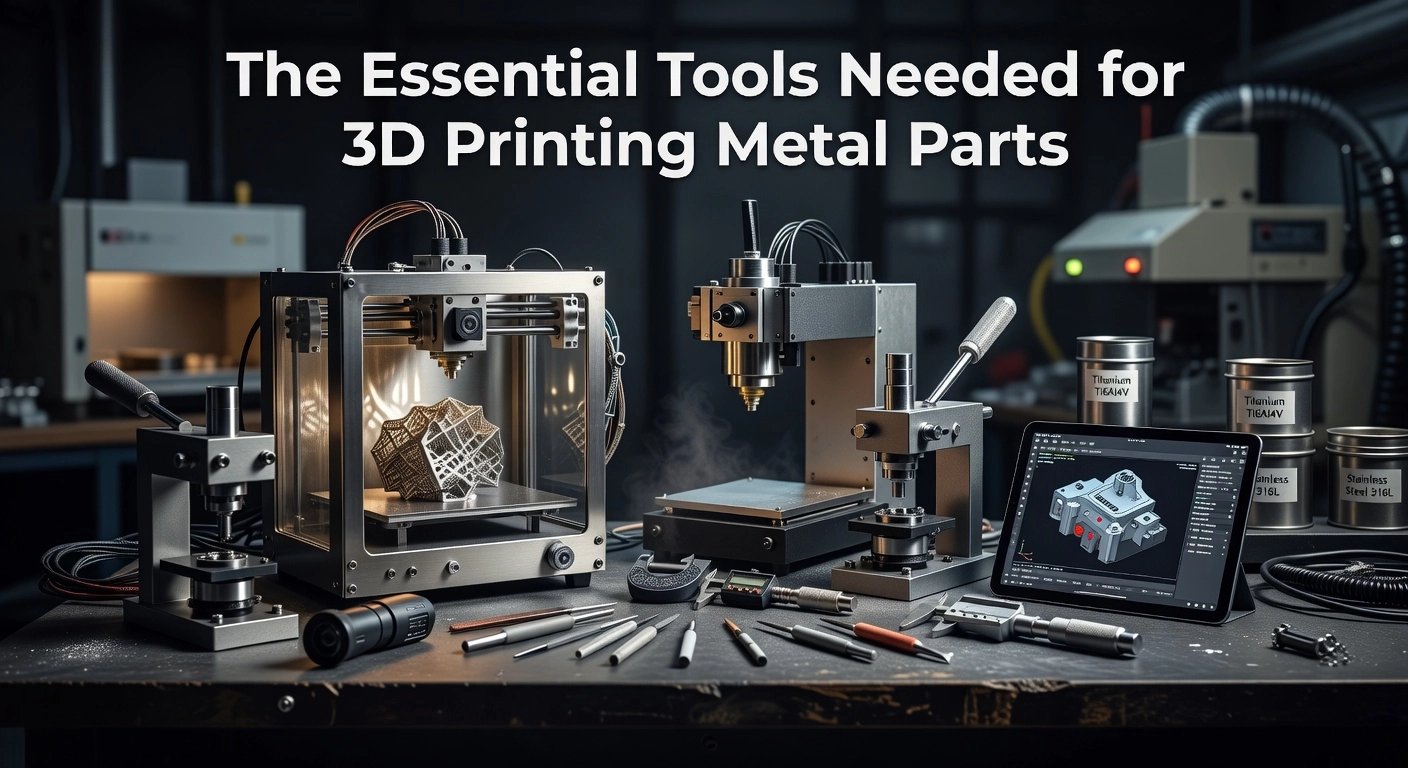
Imagine transforming your desktop 3D printer into a precision workshop for crafting stunning crowns. With Filamet, the metal-infused filament that bridges hobbyist printing and professional metallurgy, you can produce durable, intricate 3D printed crowns that rival traditional methods in quality and detail. No longer confined to basic prototypes, intermediate makers like you can now tackle advanced projects with confidence.
In this expert guide, we demystify the complete process of 3D printing crowns using Filamet. You will learn proven techniques for designing crown geometries optimized for metal sintering, selecting the right printer settings to handle Filamet’s density and abrasiveness, and executing flawless prints every time. We cover essential post-processing steps, including debinding and sintering, to achieve a polished, metal-ready finish. Expect insider tips on troubleshooting common pitfalls, material handling best practices, and scaling up for production runs. By the end, you will possess the authoritative knowledge to create 3D printed crowns that stand up to scrutiny in jewelry, dental, or custom fabrication applications. Dive in, and elevate your printing expertise today.
The Rise of 3D Printed Crowns in 2026
In 2026, 3D printed crowns are revolutionizing restorative dentistry by enabling same-day permanent restorations that deliver unmatched precision and efficiency. The process starts with an intraoral scan to capture the patient’s anatomy in minutes, followed by CAD design and direct printing using biocompatible resins, zirconia, or emerging metal filaments. Resin crowns print in as little as 20 minutes, with post-processing like curing and polishing completed in under 90 minutes total, slashing traditional lab waits from weeks to hours. This chairside workflow minimizes patient visits, reduces tooth preparation, and ensures custom fits for complex cases like bridges or high-wear molars. For intermediate users, integrating tools like SprintRay printers with shade-matching resins yields professional results; always verify material biocompatibility via FDA approvals for permanent use.
The global 3D printed crowns market hit $1.48 billion in 2025 and is projected to reach $2.77 billion by 2029, growing at a 13% CAGR, propelled by demand for crowns, bridges, and aligners amid rising dental disorders and cosmetic procedures. Dental 3D printing market report
Key trends include permanent viability from nano-hybrid resins and zirconia, offering low water absorption and 98% survival rates, yet metal FDM filaments like Filamet™ excel in durability and biocompatibility for posterior high-load areas. Sintered to pure metal, Filamet provides shear resistance superior to resins, ideal for gold or stainless steel crowns in biomedical applications. North America’s medical device 3D printing market, valued at $1.805 billion in 2024 including dental, highlights this shift, with UK practitioners adopting it for minimally invasive benefits that cut cavities and gum issues.
Beyond dentistry, Filamet enables jewelry and cosplay crowns, sintering FDM prints into artistic, wearable pieces from thousands of free STL models. Top digital dental trends for 2026 This versatility positions The Virtual Foundry’s technology as a game-changer for functional and creative projects alike.
Why Filamet Excels for 3D Printed Crowns
Filamet™ stands out in the production of 3D printed crowns due to its metal-filled FDM filament composition, which sinters to 100 percent pure metal, such as gold alloys, delivering exceptional biocompatibility and shear resistance. Traditional resin-based SLA methods, while precise for temporary restorations, fall short in durability; their flexural strengths typically range from 100-200 MPa, making them prone to fracture under occlusal loads and hydrolytic degradation over time. In contrast, sintered Filamet achieves densities near 100 percent, with mechanical properties exceeding 500 MPa in flexural strength for metals like stainless steel or bronze, ideal for permanent crowns and bridges that withstand daily biting forces. This pure metal outcome ensures long-term biocompatibility, minimizing cytotoxicity risks associated with resins. Dental professionals can leverage this for load-bearing applications, where shear bond strengths surpass 40 MPa, far outperforming SLA alternatives.
TVF’s Accessible Technological Edge
The Virtual Foundry’s Filamet™ harnesses standard FDM printers costing $200 to $2,000, paired with affordable kilns under $5,000, democratizing metal 3D printing for hobbyists, labs, and dentists. Post-print debinding and sintering transform printed parts into functional pure metal components using simple protocols, like 0.6mm hardened steel nozzles and refractory ballasts to prevent warping. This low-barrier entry, detailed on The Virtual Foundry’s products page, enables chairside customization without multimillion-dollar investments. Users print intricate crown geometries from intraoral scans, sinter at temperatures like 885°C for copper variants, and achieve predictable 20 percent shrinkage for precise fits.
Biomedical Applications and Community Innovation
TVF resources highlight Filamet’s suitability for biomedical uses, including gold-like alloys for crowns and bridges, outperforming resins in strength for permanent restorations amid a global dental 3D printing market projected at $4.1 billion in 2026. Community forums and Filamet™ collection share expert finishing guides, from polishing sintered surfaces to shade-matching with VITA standards. This fosters innovation, with users reporting success in jewelry-grade crowns adaptable to dental needs.
Aligning with 2026 minimally invasive dentistry trends, Filamet supports reduced tooth preparation through thin-walled, customized designs via digital workflows. Same-day production cuts visits, enhancing patient outcomes in a market growing at 13-20 percent CAGR. Explore full protocols at The Virtual Foundry.
Prerequisites for Metal Crown Printing
To successfully print 3D printed crowns using Filamet™, select an FDM printer equipped for high-temperature extrusion up to 240°C or higher, featuring an all-metal hotend with hardened steel nozzle to withstand the abrasive 80-96% metal loading. Models like the Prusa MK4 or Core One offer enclosed build chambers with active heating to 60°C, ensuring thermal stability and minimizing warping on intricate crown geometries. Budget-friendly Creality Ender 3 series, modified with enclosures and direct-drive extruders like Micro Swiss, reach 260°C reliably at print speeds of 20-40 mm/s. These setups deliver layer heights of 0.1-0.2 mm essential for precise marginal fits under 150 μm, as seen in dental prototyping.
Essential software includes CAD tools such as Fusion 360 for parametric modeling from intraoral scans or Blender for organic sculpting of 0.5-1 mm walls and 1-2 mm occlusal thicknesses. Pair with slicers like PrusaSlicer (free, with metal profiles) or Simplify3D ($149) for optimized settings: nozzle 220-250°C, bed 100-120°C, minimal fan (0-20%), and brims for adhesion. Getting started with Filamet provides community profiles to streamline workflows.
Choose Filamet™ variants like Copper (93% metal for warm jewelry aesthetics), 22k Gold (96% for ductility in prototypes), or 316L Stainless for corrosion resistance; biomedical studies highlight their potential biocompatibility, though verify ISO 10993 compliance for dental use. Biomedical Applications of Metal 3D Printing details gold alloys’ suitability for crowns.
Prioritize safety with nitrile gloves, P100 respirators, goggles, and HEPA-ventilated enclosures during printing to counter metal dust. For sintering at 1100°C (e.g., Copper: 1050-1100°C/5 hours), use kiln gloves, face shields, and programmable kilns like Paragon models with alumina crucibles. Intermediate skills in 3D modeling, support removal, and 20% shrinkage scaling suit dental lab techs and makers familiar with post-processing.
Designing Precision 3D Printed Crowns
Begin the design process for precision 3D printed crowns by importing the intraoral scan STL file into specialized CAD software such as exocad or 3Shape Dental System. High-resolution scans from devices like Medit capture the prepared tooth, antagonists, and occlusion with sub-50 micron accuracy, providing a digital foundation. Within the software, sculpt the crown digitally by waxing up cusps, fossae, and ridges to mimic natural anatomy, while integrating VITA 3D-Master shade matching for aesthetics; select shades like A2 or B3 and apply translucent layering for lifelike results. This step ensures proximal contacts and emergence profiles align perfectly, reducing chair time and enhancing patient comfort. For Filamet™ users, reference TVF’s anatomical libraries to accelerate customization.
Leverage parametric modeling to achieve a custom fit that minimizes tooth reduction to just 1-1.5mm occlusal and 1mm axial walls. Rule-based parameters automatically detect undercuts and optimize margins, delivering 100-150 micron tolerances that exceed traditional methods in marginal gaps as low as 14 ± 5 μm, per recent studies on additive precision. Scale walls to 0.8-1.2mm for strength, simulating conservative preps that preserve enamel. This approach, ideal for Filamet™ metal crowns, supports biocompatible gold or copper variants for high-shear dental applications.
Incorporate support structures for overhangs exceeding 45 degrees, particularly in subgingival crown margins, using tree or lattice designs in slicers like PrusaSlicer. Simulate Filamet™ sintering shrinkage of 18-20% by uniformly scaling the model 1.20-1.25x beforehand; test prints confirm isotropic contraction for pure metal density post-debinding. Symmetric supports prevent distortion during the 1000-1400°C sinter cycle.
Validate via section views at 50-100μm slices, checking gaps under 120μm per ISO standards and occlusal strength exceeding 800-1200N fracture load for posteriors. Digital die spacers of 40-80μm mimic cement space; cross-reference ISO 6872 for ceramics or ISO 9693 for metals. Chairside try-ins on printed dies finalize fit.
Export G-code with 0.1-0.2mm layer heights for Filamet™ detail, tilting at 45° to minimize supports and maximize Z-resolution. Use 20-40% infill and 3-4 perimeters for durability. For more on workflows, see 3D printing dental crowns models and fit tolerances. This precision paves the way for flawless printing.
Printing Crowns with Filamet Filament
To print 3D printed crowns with Filamet™ filament, begin by loading the spool strategically. Position it 12-18 inches above direct-drive extruders or beside Bowden systems to reduce friction. Activate a Filawarmer on the feeding strand for about one day to reset the metal particles’ shape memory, preventing brittleness. Calibrate your hardened steel nozzle (0.6-0.8mm diameter) to 235-245°C, set the bed to 60°C, and limit print speeds to 20-30mm/s. These parameters minimize clogging from the 80-90% metal filler, ensuring smooth extrusion for intricate crown geometries. Layer heights of 0.12-0.3mm and flow rates of 110-125% with 70-100% infill in a lines pattern further optimize results, as detailed in The Virtual Foundry’s print guide.
Dialing in Settings with Test Models
Always print test models first, such as Universal Calibration Rings, to fine-tune retraction and cooling. Metal-filled filaments like Filamet™ require minimal or no fan cooling to prioritize layer adhesion over rapid solidification. Reduce retraction distances to combat stringing, targeting clean travels at slow speeds. This step is crucial for crowns, where under-extrusion could compromise marginal fit, achieving densities up to 97.6% post-sintering.
First Layer Adhesion and Stability
Monitor the first layer closely using a glue stick on glass beds or powder-coated PEI sheets for superior grip. An enclosure maintains temperature stability during 2-4 hour prints, preventing warping on detailed crown margins. Heated beds at 60°C embed the filament deeply without over-squishing.
Post-Print Handling
Post-print, remove tree supports (40° angle, 2mm diameter) with pliers or cutters, then inspect for cracks, warping, or defects. Clean thoroughly before debinding to prepare for sintering in refractory ballast.
Troubleshooting Essentials
For stringing or clogs, use dry filament, tuned flow per TVF guidelines, and slower travels. Loosen feeder tension if breaks occur. These practices yield robust crowns ready for zirconium silicate Filamet finishing.
Sintering and Finishing for Pure Metal Crowns
Debinding and Sintering Process
After printing your 3D printed crowns with Filamet™, the next critical phase involves debinding to remove the polymer binder and sintering to achieve pure metal density. Select a debinding method based on the Filamet™ type, such as solvent debinding with acetone for thicker parts over 10mm or a thermal cycle for precision control. For copper Filamet™, apply a thermal ramp of 55.6°C per hour to 482°C with a 4-hour hold, resulting in 10-16% mass loss and a fragile brown part. Follow with sintering in a kiln at 1050-1200°C, using an inert argon atmosphere and a refractory crucible to prevent oxidation. Compensate for 12-18% linear shrinkage by scaling your CAD model 1.15-1.20 times larger beforehand; test with small coupons under 50mm to refine this factor. This process yields 99.5% theoretical density, as verified by Archimedes method, ensuring structural integrity for dental or jewelry applications.
Polishing for Intraoral-Ready Finish
Sintered crowns require progressive polishing to attain a mirror finish suitable for dental intraoral use. Begin by sandblasting to remove oxide scale, then progress through wet/dry sandpaper grits: 120, 400, 800, and 1200. Finish with 1-3μm diamond paste on a felt wheel using a rotary tool, achieving surface roughness below 0.2μm for biocompatibility and aesthetics. Limit material removal to 0.1-0.5mm to preserve fit; for example, a bronze crown prototype reduced from matte to specular shine in under 30 minutes. This method ensures smooth contours that mimic milled alloys while highlighting Filamet™’s pure metal luster.
Aesthetic Enhancements and Quality Testing
For jewelry crowns, apply electroplating with 0.5-5μm gold or rhodium layers after etching and cleaning, or use liver of sulfur patina on bronze for an antique effect sealed with wax; both maintain biocompatibility per ISO 10993 standards. Test the final part rigorously: verify fit with optical scanning against the original STL (tolerances ±0.1-0.2mm), assess strength via tensile tests (200-400MPa for bronze), and confirm weight loss under 20% post-sinter to indicate complete binder removal. Density exceeding 99% minimizes porosity risks.
Community Feedback Loop
Share your results, including density profiles, photos, and kiln curves, in The Virtual Foundry’s community forums. Members provide actionable feedback on slicer settings or warp prevention, fostering iterative designs that push Filamet™ boundaries for superior 3D printed crowns.
Applications in Dental Jewelry and Beyond
Dental Applications: Bridges, Implants, and Gold Filamet Longevity
In dental restorations, Filamet™ gold filaments produce 3D printed crowns, bridges, and implant frameworks with exceptional durability that surpasses resin temporaries. Resin-based crowns often fracture under loads of 500-1200N and last only weeks to months, while sintered gold Filamet™ yields fully dense, biocompatible alloys enduring clinical demands with over 1243N fracture resistance. This enables permanent solutions for bridges and implants, featuring lattice structures for optimal osseointegration and reduced stiffness mismatch with bone. Dental labs report ±35μm tolerances, minimizing adjustments and supporting same-day workflows. With the global dental 3D printing market projected at USD 4.3 billion in 2026, growing to USD 8.9 billion by 2030, gold Filamet™ addresses high-wear needs effectively.
Jewelry, Cosplay, and Prototyping Versatility
For jewelry and cosplay, print intricate 3D printed crowns with Filamet™, sinter to pure metal, or electroplate resin prints for a royal finish rivaling Etsy offerings, but with permanent metallic durability. Features like 0.5mm filigree and Voronoi patterns shine post-tumbling polish. Dental labs leverage Filamet™ prototypes for rapid iterations, slashing redesign time by days before lost-wax casting and validating fits with 20% mass reductions.
Industrial Parallels and Hybrid Workflows
Filamet™ mirrors aerospace and nuclear demands through precision, wear-resistant parts like topology-optimized brackets with 20-40% weight savings. Hybrid workflows combine FDM metals for frameworks with SLA resins for veneers, yielding 60-80% efficiency gains in complex restorations. Labs achieve reproducible, multi-material crowns outperforming single materials; start by printing Filamet™ lattices, then integrate resin aesthetics via CNC milling for superior results.
Actionable Takeaways for 3D Printed Crown Success
Source your Filamet™ filament directly from The Virtual Foundry to ensure quality and consistency for 3D printed crowns. Start with the gold variant, renowned for its biocompatibility and shear resistance in dental applications; always adhere to biomedical guidelines, such as ISO 10993 standards, for safe trials on temporary restorations. This approach minimizes risks while yielding pure metal parts post-sintering, with densities exceeding 99% for durable fits under 150μm marginal gaps.
Join The Virtual Foundry’s vibrant community for invaluable resources, including user-shared sintering profiles optimized for gold Filamet™, ready-to-print crown designs, and expert troubleshooting forums. Hobbyists and professionals alike report resolving warping issues in under 24 hours through collective insights.
Experiment with streamlined same-day workflows: intraoral scanning, FDM printing, and sintering in under 8 hours using a compact furnace, slashing turnaround from weeks to hours for a decisive competitive edge in practices.
Track the explosive market growth, valued at $1.48 billion in 2025 and surging to $2.77 billion by 2029 at a 13% CAGR; invest in metal FDM today to seize 2026 opportunities in dental prosthetics. Scale seamlessly from prototypes to production with TVF’s accessible technology, enabling high-volume output without prohibitive costs.
Conclusion
In this expert guide, we’ve equipped you with essential takeaways: designing crown geometries optimized for metal sintering, dialing in precise printer settings to manage Filamet’s unique properties, mastering post-processing through debinding and sintering for a professional finish, and troubleshooting pitfalls to scale your production confidently. These proven techniques transform your desktop 3D printer from a hobby tool into a precision workshop, delivering durable, intricate crowns that match traditional metallurgy.
The value is clear: intermediate makers like you can now achieve pro-level results without expensive equipment. Take action today; source your Filamet filament, load your optimized model, and print your first crown. Share your successes in the comments below or on social media. Unlock the future of custom metalwork; your breakthrough creation awaits.