Imagine a world where you can build intricate objects layer by layer, straight from a digital blueprint, without wasting materials or relying on massive factories. This revolutionary process powers everything from custom prosthetics to aerospace components, and it goes by the name of 3D printing. Yet, many newcomers wonder about the precise additive manufacturing 3d printing meaning and how it reshapes modern production.
At its core, additive manufacturing refers to techniques that construct three-dimensional objects by sequentially adding material, in stark contrast to traditional subtractive methods like machining, which carve away excess. This blog post delivers a clear, authoritative analysis tailored for beginners. You will discover the fundamental principles behind additive manufacturing, explore popular 3D printing technologies such as FDM and SLA, and uncover real-world applications across industries like healthcare, automotive, and consumer goods. We will also examine advantages, limitations, and future trends, equipping you with the knowledge to appreciate this technology’s potential. By the end, you will confidently grasp the additive manufacturing 3d printing meaning and its role in tomorrow’s innovations.
Defining Additive Manufacturing
Additive manufacturing, often synonymous with 3D printing, represents a transformative industrial process for creating three-dimensional objects. It builds these objects layer by layer from a digital 3D model, typically generated using computer-aided design (CAD) software or 3D scanners. This approach stands in stark contrast to traditional subtractive manufacturing methods, such as CNC machining, which start with a solid block of material and remove excess through cutting, milling, or grinding to reveal the final shape. According to the MIT Sloan explanation and TWI Global, additive manufacturing deposits or fuses materials like metals, polymers, ceramics, or composites precisely where needed, eliminating the need for molds or extensive tooling. For beginners, this means turning a digital file into a physical part without generating piles of scrap, making it ideal for prototyping and production alike.
Core Principles: Selective Material Addition and Waste Reduction
At its foundation, additive manufacturing adheres to the principle of adding material only where required, slicing the digital model into thin layers (often 20 to 100 microns thick) and building sequentially. This “addition-only” method dramatically cuts waste, potentially reducing it by up to 90 percent compared to subtractive processes that can discard 80 to 95 percent of raw material as chips. As detailed in analyses like Amazemet on waste reduction, this efficiency supports sustainability by lowering energy consumption by up to 25 percent in certain applications and enabling powder recycling. Consider a simple metal bracket: subtractive machining might waste most of a billet, while additive builds it directly, optimizing resource use. The Virtual Foundry exemplifies this with Filamet™, a filament that allows standard desktop printers to produce metal parts via fused deposition modeling (FDM), followed by sintering for pure metal density. This accessibility empowers hobbyists, artists, and manufacturers to experiment without industrial-scale investment.
To grasp it simply, picture stacking LEGO bricks layer by layer to form a precise structure from a blueprint (additive manufacturing), versus carving a sculpture from a solid block of wood, where shavings litter the floor (subtractive). This analogy highlights versatility and minimal waste, enabling designs with internal voids or overhangs that would collapse in traditional carving.
Evolution from Prototyping to Production Powerhouse
Additive manufacturing traces its roots to the 1980s as rapid prototyping, with pioneers like Charles Hull inventing stereolithography in 1984 and Scott Crump developing FDM in 1989. Initially focused on plastic models for design validation, it evolved through the 2000s into metal capabilities for aerospace and medical uses, spurred by open-source innovations like RepRap. By 2026, per the Wohlers Report, the global market reached $24.2 billion in 2025 revenues, up 10.9 percent year-over-year, shifting toward production-scale adoption with services comprising 48 percent of the market. Metal additive manufacturing leads growth at a 24.7 percent CAGR, driven by sectors like aerospace demanding lightweight, resilient parts. The Virtual Foundry has thrived here by democratizing metal printing, offering Filamet™ for jewelry, art, nuclear, and beyond, fostering a community for finishing techniques.
Unlocking Complex Geometries
Additive manufacturing shines in fabricating intricate geometries impossible with conventional methods, such as internal lattices for strength-to-weight optimization or conformal cooling channels in tooling. These designs achieve 20 to 50 percent weight savings via topology optimization, vital for rocket nozzles or custom implants. Beginners can start by exploring free CAD tools to design such features, printing prototypes affordably with filament-based systems like those from The Virtual Foundry. This capability positions additive manufacturing as a complement to traditional processes, enhancing supply chain resilience in 2026’s maturing landscape.
3D Printing as a Subset of Additive Manufacturing
While additive manufacturing and 3D printing are frequently used interchangeably in everyday conversations, a precise understanding reveals that 3D printing represents a subset of the broader additive manufacturing umbrella. According to industry experts at PostProcess Technologies and Ultimaker, 3D printing typically describes accessible, desktop-scale processes geared toward prototyping and hobbyist use, such as fused deposition modeling (FDM). These methods extrude thermoplastic filaments layer by layer on affordable printers, ideal for quick iterations in design or education. In contrast, additive manufacturing encompasses a full spectrum of industrial techniques, including those for high-precision, production-ready parts that demand material traceability, rigorous post-processing, and certification. This distinction matters for beginners entering the field, as it guides choices between casual experimentation and scalable manufacturing.
The overlap between the terms arises from their shared foundational principle: building objects layer by layer from digital 3D models, typically in thicknesses of 0.05 to 0.3 mm, which drastically reduces waste compared to traditional subtractive methods like CNC machining. Both start with CAD files sliced into layers via software, enabling rapid creation without molds. However, additive manufacturing extends far beyond prototyping to encompass optimized workflows for high-volume production, incorporating advanced materials like metals and ceramics, automated quality controls, and repeatability for end-use applications. For instance, what begins as a simple FDM print on a desktop machine can evolve into full additive manufacturing through sintering processes that yield dense, functional metal components.
Consider practical examples to illustrate this. FDM shines for hobbyists crafting custom prototypes, such as scale models or jewelry molds using standard printers and filaments. On the industrial side, powder bed fusion techniques, like selective laser melting, produce aerospace components from titanium alloys, achieving over 99% density after post-processing for mission-critical strength. The Virtual Foundry’s Filamet™ filament bridges this gap, allowing standard FDM printers to create pure metal parts via accessible sintering, empowering manufacturers, artists, and engineers without multimillion-dollar equipment.
This semantic confusion is evident in market data, where projections for “3D printing” and additive manufacturing are strikingly similar. Fortune Business Insights forecasts the 3D printing market at $28.55 billion in 2026, while Coherent Market Insights pegs additive manufacturing at $31.48 billion, reflecting synonymous usage amid rapid growth (CAGR around 20-24%). For deeper insights, explore The Virtual Foundry’s blog on 3D printing vs. additive manufacturing differences, which details metal-specific workflows and community-driven finishing techniques. As production adoption accelerates, grasping this subset relationship unlocks opportunities for innovation across scales.
AM vs Traditional Subtractive Manufacturing
Material Efficiency: A Game-Changer in Production
Additive manufacturing dramatically outperforms traditional subtractive methods like milling and turning in material usage. Subtractive processes start with a solid block of material and remove up to 90 percent of it as waste chips or swarf, leading to high scrap rates and increased raw material costs. In contrast, AM builds parts layer by layer using only the exact amount needed, resulting in up to 90 percent less waste overall. This efficiency shines in metal printing, where excess powder can be recycled at rates exceeding 95 percent. For beginners, this means lower environmental impact and cost savings, especially with filaments like Filamet™ that enable desktop printers to produce near-zero waste metal parts after sintering. Actionable insight: Calculate your project’s waste by comparing a CNC block’s volume to the final part’s, revealing AM’s edge immediately. For more details, see this comparison of additive vs. subtractive manufacturing.
Unlocking Design Freedom with Lattices and Optimization
AM excels where subtractive manufacturing falters, offering unparalleled design freedom through features like internal lattices and topology optimization. Subtractive tools cannot access hollow interiors or create intricate undercuts without multiple setups, limiting part complexity. AM enables lightweight lattice structures, such as gyroid patterns, for applications in aerospace components or jewelry, reducing weight while maintaining strength. Topology optimization software redistributes material into organic shapes that maximize performance, like bionic-inspired implants or heat exchangers with internal cooling channels. These capabilities are impossible to machine traditionally, making AM ideal for custom designs. Hobbyists and manufacturers can experiment using free tools like Fusion 360 to generate optimized models printable on standard FDM printers.
Cost Advantages for Low-Volume and Custom Production
For low-volume runs under 100 units, AM slashes costs by eliminating expensive tooling and setups required in subtractive methods. Traditional CNC demands custom fixtures and long lead times, making prototypes or custom parts uneconomical. AM’s digital workflow allows rapid iterations at a fraction of the price, perfect for personalized medical devices, art pieces, or spare parts. Per-part costs in AM decrease with scale but remain competitive for customs, often hybridizing with subtractive finishing for precision. This shift supports supply chain resilience, as on-demand printing cuts inventory needs.
The U.S. AM market underscores this trend, projected at $8.20 billion in 2026 per Nova One Advisor, fueled by supply chain reshoring and decentralized production.
Visualizing the Contrast
An infographic would powerfully illustrate these differences: depict a subtractive block yielding a waste pile (90 percent marked) next to an AM build forming a lattice part (minimal supports). Include icons for cost savings and the $8.20B market arrow. Tools like Canva make this beginner-friendly. This visual reinforces AM’s role in modern manufacturing. For further reading, explore subtractive vs. additive insights.
The Seven Categories of Additive Manufacturing
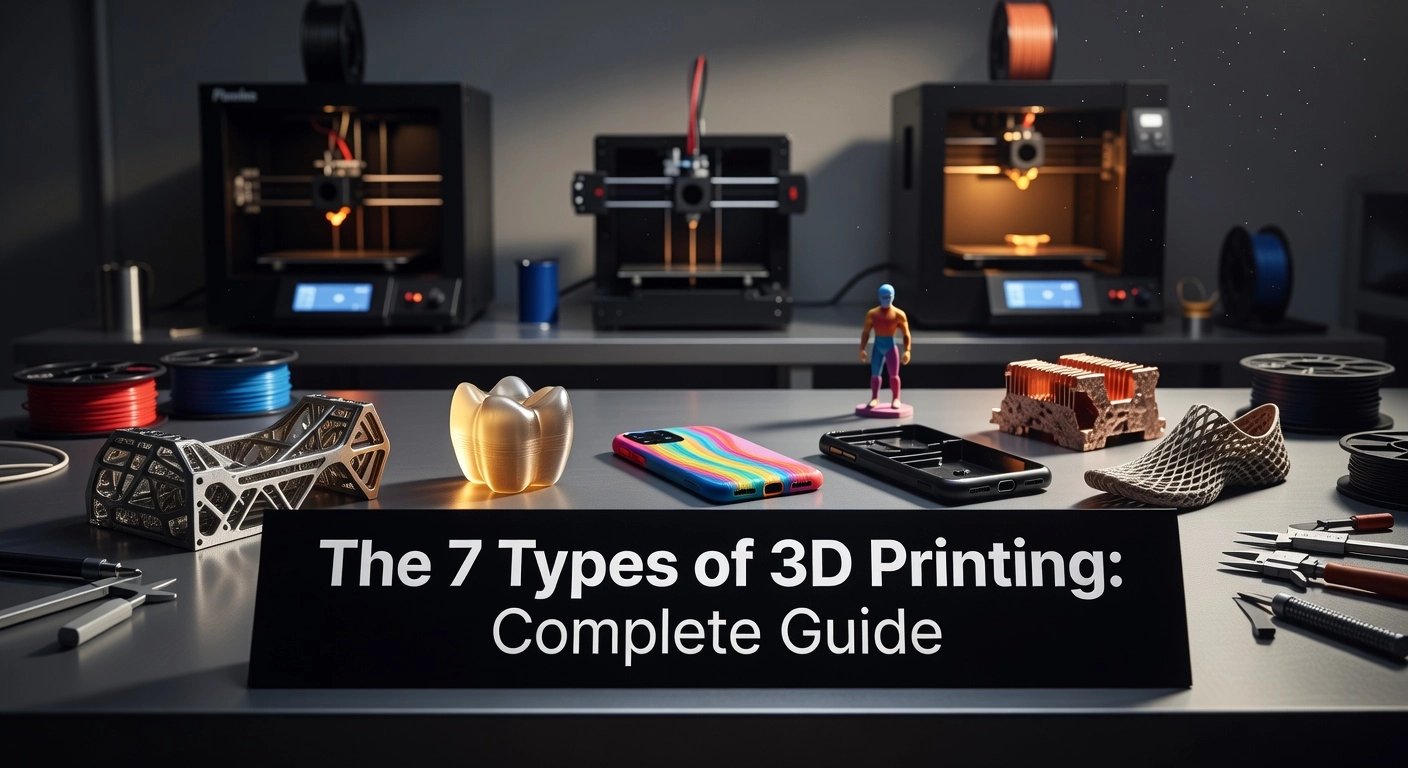
To fully grasp the meaning of additive manufacturing in 3D printing, beginners must understand its seven standardized categories, as defined by ISO/ASTM 52900 and detailed by Loughborough University’s Additive Manufacturing Research Group. These categories classify processes by how materials are deposited and consolidated layer by layer from digital models. Each offers unique advantages for prototyping, production, or customization, with varying complexity, cost, and material compatibility. For novices, this framework demystifies why certain technologies suit desktop setups while others demand industrial environments. Among them, material extrusion stands out as the most accessible entry point, powering affordable hobby printers that anyone can operate in a home workshop.
Vat Photopolymerization involves a vat of liquid photopolymer resin cured layer by layer via UV light, as in stereolithography (SLA) or digital light processing (DLP). It excels in high-resolution parts with smooth surfaces, ideal for dental models or intricate jewelry prototypes. Beginners appreciate its detail, though it requires post-curing and resin handling precautions. Material Extrusion, commonly known as Fused Deposition Modeling (FDM) or Fused Filament Fabrication (FFF), melts thermoplastic filament through a heated nozzle and deposits it precisely. This process is the most beginner-friendly for desktop use, with printers under $500 enabling quick setups for functional prototypes like custom tools or enclosures. No cleanroom is needed, and materials like PLA or ABS are widely available, fostering experimentation without steep learning curves.
Powder Bed Fusion (PBF) spreads thin layers of metal, polymer, or ceramic powder, then uses a laser or electron beam to fuse particles selectively, as in Selective Laser Melting (SLM) or Direct Metal Laser Sintering (DMLS). It produces dense, high-strength metal parts for aerospace or medical implants, with unfused powder providing built-in support. Binder Jetting jets liquid binder onto a powder bed to bind layers, followed by sintering; it supports metals like stainless steel at lower costs and faster speeds than PBF, though infiltration may enhance strength for sand molds or full-color models. These powder-based methods dominate metal-capable additive manufacturing due to their ability to achieve 90-99% density. In contrast, traditional filament extrusion struggles with pure metals because of heat limitations.
Material Jetting drops photopolymer or wax droplets like an inkjet printer, curing them with UV light for multi-material, full-color prototypes with exceptional precision. Directed Energy Deposition (DED) directs thermal energy to melt wire or powder as it deposits, suiting large-scale metal repairs in aerospace, often hybridizing with CNC machines. Sheet Lamination bonds and cuts sheets of paper, metal, or ceramic using adhesives or ultrasonic welding, enabling low-cost large parts with embedded features.
Filamet™ from The Virtual Foundry revolutionizes this landscape by enabling metal FDM on standard printers like Bambu Lab models. This metal-powder-filled filament (80-90% loading for steel, bronze, or titanium) prints at 200-240°C with a hardened nozzle, followed by debinding and sintering in a kiln to yield pure metal parts at 90%+ density after shrinkage. It democratizes metal printing for manufacturers, artists, and hobbyists, bypassing multimillion-dollar industrial systems. According to Precedence Research, metal additive manufacturing will surge from $7.59 billion in 2026 to $23.58 billion by 2035 at a 13.44% CAGR, driven by aerospace demands and desktop innovations like Filamet™. Beginners can start small, scaling to production with community-shared finishing techniques, positioning additive manufacturing as an accessible powerhouse for future innovation.
2026 Market Growth and Statistics
The additive manufacturing industry, encompassing 3D printing technologies, demonstrated robust momentum in 2025 with global revenues reaching $24.2 billion, a 10.9 percent increase from the previous year, according to the Wohlers Report 2026 as summarized by TCT Magazine. This growth signals the sector’s entry into a maturity phase, where expansion slows from explosive early rates but stabilizes through higher utilization of installed systems and a pivot toward production applications. Printing services captured 48 percent of revenues, surging 15.5 percent year-over-year, while materials and software followed at 20 percent and 6 percent respectively. Regionally, Asia-Pacific led with 19.8 percent average growth, fueled by manufacturing investments, underscoring uneven but strategic advancement. For beginners, this maturity means more reliable supply chains and cost efficiencies, making AM accessible beyond prototyping.
Looking ahead, analysts forecast the global market at $31.48 billion in 2026, expanding to $114.45 billion by 2033 with a compound annual growth rate (CAGR) of 20 to 24 percent, per Coherent Market Insights. Hardware will dominate at 59.3 percent share, with fused deposition modeling (FDM) printers holding 26.6 percent due to their versatility. North America is projected to command 34.7 percent of the market, while Asia-Pacific accelerates fastest. This trajectory highlights AM’s role in enabling complex, customized parts that traditional methods cannot match efficiently.
Metal additive manufacturing stands out as the fastest-growing segment, valued at $7.59 billion in 2026 and projected to reach $23.58 billion by 2035 at a 13.44 percent CAGR, driven by demand in high-stakes sectors. Innovations like filament-based metal printing, such as The Virtual Foundry’s Filamet™, allow standard desktop FDM printers to produce sinterable pure metal parts for aerospace, jewelry, and art, democratizing access without multimillion-dollar equipment.
In the U.S., the market hits $8.20 billion in 2026, per sector analyses including Mordor Intelligence, powering aerospace (31 percent share) with lightweight components and automotive lightweighting at 15.12 percent CAGR. Examples include engine nozzles reducing weight by 25 percent.
These statistics imply a profound shift from prototyping to production-scale manufacturing, emphasizing supply chain resilience, waste reduction up to 90 percent, and AI-optimized designs. For beginners and hobbyists, this opens opportunities to leverage accessible tools like Filamet™ for real-world parts, joining a community focused on metal, glass, and ceramic innovations as production matures.
Democratizing Metal Additive Manufacturing
Challenges of Traditional Metal Additive Manufacturing
Traditional metal additive manufacturing processes, such as binder jetting and powder bed fusion, present formidable barriers for beginners and small-scale users. These systems often require upfront investments exceeding $100,000, with many industrial models costing $400,000 or more, making them accessible only to large enterprises. Operational challenges compound the issue: metal powders range from $300 to $600 per kilogram, while facilities demand inert gas environments, specialized safety protocols, and extensive post-processing like hot isostatic pressing or machining, which add hundreds of dollars per part. Build speeds remain slow at 5 to 10 cubic centimeters per hour, leading to weeks-long lead times for prototypes. In 2025, global additive manufacturing revenues hit $24.2 billion, yet metal AM, projected at $7.59 billion in 2026, stays dominated by high-volume sectors like aerospace due to these inefficiencies. For hobbyists, artists, or designers, outsourcing becomes the norm, but it sacrifices control and incurs unpredictable costs.
Introducing Filamet™ Filament: Accessible Metal Printing for FDM Printers
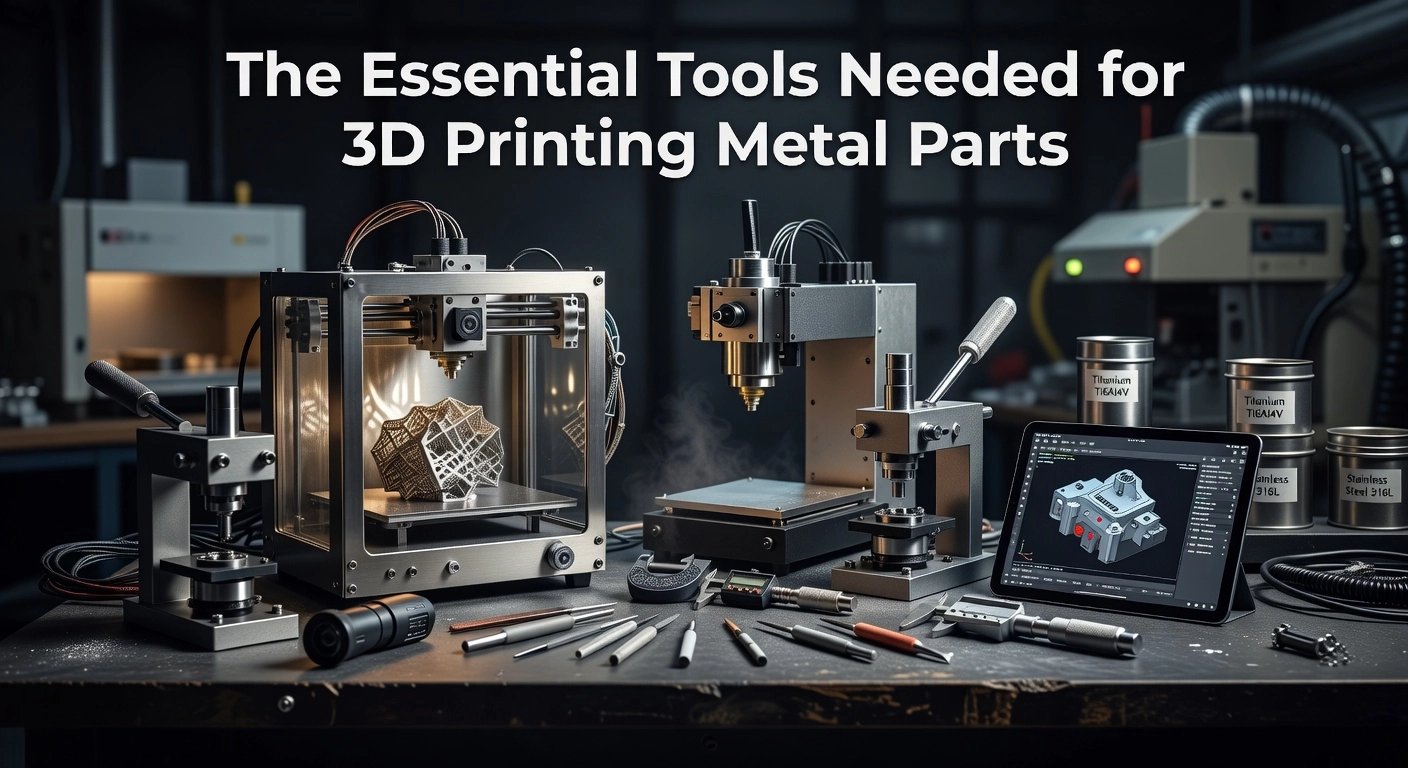
The Virtual Foundry’s Filamet™ filament transforms this landscape by enabling metal additive manufacturing on standard desktop FDM printers. Loaded with 80 to 95 percent metal powder, such as stainless steel 316L, 17-4PH, copper, or bronze, bound in a biodegradable polymer, it prints like conventional filament. Users employ a hardened steel nozzle of 0.6 millimeters, layer heights of 0.2 millimeters, and high infill for robust green parts. Post-printing, a simple debinding and sintering cycle in a benchtop kiln, costing around $1,000, yields fully dense, pure metal components with over 99 percent density and predictable 12 to 20 percent shrinkage, easily compensated in CAD software. This process achieves material utilization above 90 percent, slashing waste by 80 to 90 percent compared to subtractive methods. Beginners can produce professional-grade metal parts at a fraction of industrial costs, with per-unit expenses dropping to $45 to $70 for low volumes.
Applications Across Industries on Desktop Setups
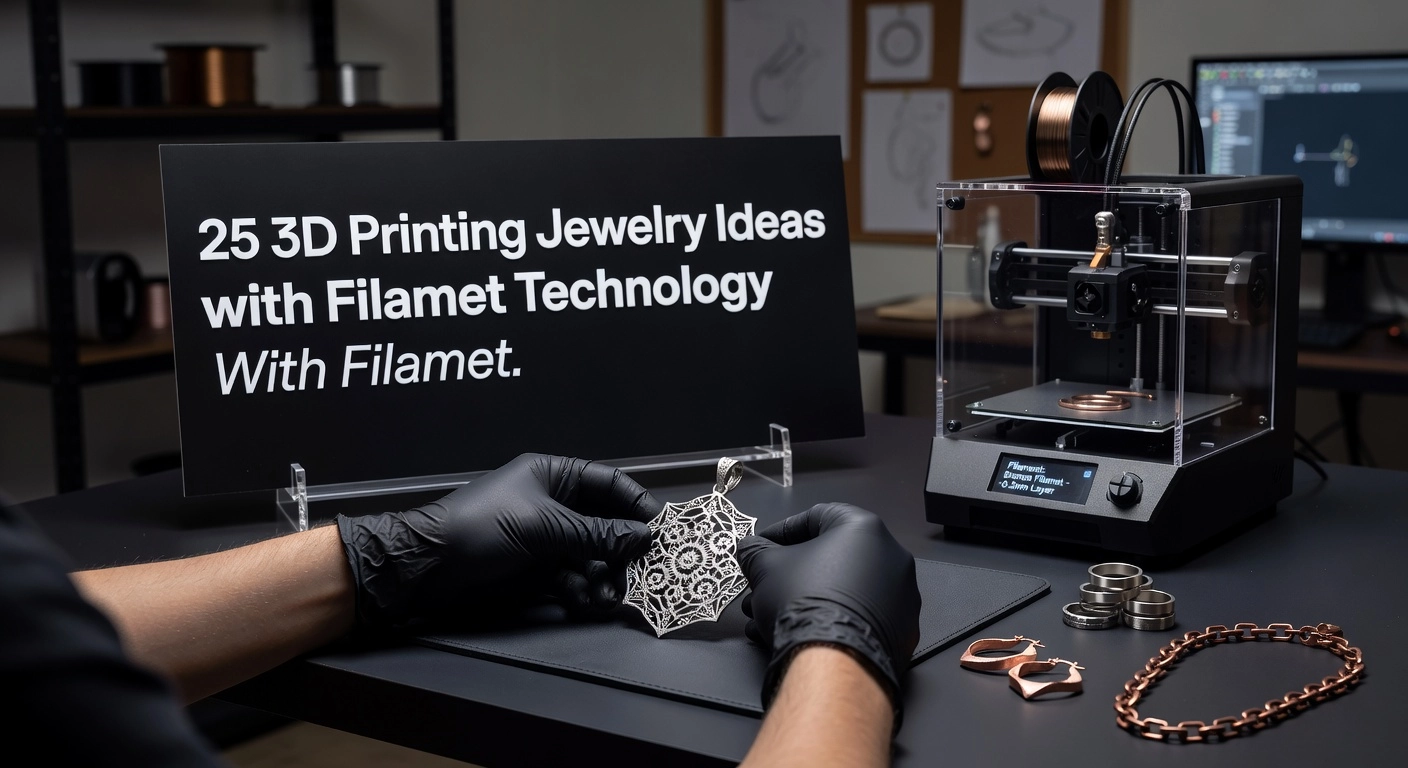
Filamet™ unlocks diverse applications, from jewelry and art to aerospace prototypes, all feasible on desktop systems totaling $1,500 to $3,000. Jewelry makers craft intricate filigree, custom inlays, and coins without costly casting molds, achieving fine details in hours. Artists create gallery-worthy sculptures with complex geometries and patinas unachievable via traditional means. In aerospace, prototypes like brackets, heat exchangers, or lattice structures emerge rapidly; for instance, copper heat spreaders cost under $50 per unit and finish in under 48 hours. Other uses include tooling fixtures, healthcare porous implants mimicking bone, and radiation shielding with tungsten. These 48- to 96-hour CAD-to-metal workflows empower manufacturers, designers, hobbyists, and educators, aligning with 2026 trends toward production-scale desktop metal printing.
Partnerships Fueling 2026 Growth
The Virtual Foundry’s partnership with Bambu Lab exemplifies democratization efforts. Their 2024 distribution agreement introduced the Universal Metal Expansion, certifying Bambu Lab printers like the A1, P1S, and X1C for Filamet™ use without add-ons like AMS. In 2026, as Bambu Lab’s ecosystem evolves with models like the P2S, this collaboration accelerates adoption, supported by community-shared profiles for seamless integration. Such alliances reduce barriers further, enabling scalable metal printing amid a metal AM market growing at 13.44 percent CAGR to $23.58 billion by 2035.
Desktop Accessibility vs. Industrial Demands
Desktop Filamet™ setups contrast sharply with industrial hardware needs. Upfront costs plummet from $100,000-plus to under $3,000, per-part expenses save 30 to 70 percent for low volumes, and lead times shrink to days versus weeks. No powders, gases, or vast spaces required; just a printer and kiln suffice, with safety limited to standard precautions. This shift supports 2026’s desktop innovations, where bound-metal filaments drive 18 percent materials CAGR, fostering supply chain resilience and sustainability through minimal waste.
How The Virtual Foundry Succeeds Where Others Fail
Failures of Enterprise-Focused Metal 3D Printing Giants
Large companies in the additive manufacturing space have struggled to deliver accessible metal 3D printing solutions, often due to sky-high costs and overwhelming complexity that confined their technologies to enterprise environments. Systems from these players demanded investments exceeding $150,000 to $200,000, including proprietary printers, debinding stations, and industrial sintering furnaces, making them impractical for small businesses, designers, or hobbyists. Technical hurdles like precise shrinkage compensation, inert gas atmospheres, and lengthy production cycles further limited adoption, as these setups required specialized teams and facilities. Economic pressures, including rising interest rates and slower-than-expected market growth, exposed the flaws in their capital-intensive models, leading to bankruptcies and acquisitions by 2025. For beginners exploring the meaning of additive manufacturing in 3D printing, these failures highlight a critical lesson: true democratization demands simplicity and affordability, not locked-in ecosystems. As global AM revenues hit $24.2 billion in 2025, up just 10.9 percent year-over-year, the industry shifted from hype to practical execution.
The Virtual Foundry’s Affordable and Open Strategy
The Virtual Foundry stands out by prioritizing materials innovation over expensive hardware, with its flagship Filamet™ filament priced at around $85 per spool, enabling pure metal parts on everyday printers like the Creality Ender 3 or Bambu Lab X1. This bound metal deposition (BMD) approach uses high-metal-load filaments (88-94 percent metal powder) printed via standard FDM, followed by accessible debinding and sintering in desktop kilns costing $1,000 to $5,000. Users need only a hardened nozzle (0.6-0.8mm), slicer settings like 220°C hotend temperature and 60-80mm/s speed, and 50-100 percent infill for robust green parts. Post-processing yields 95-99 percent dense pure metals, such as copper or stainless steel 316L, with predictable 12-20 percent shrinkage. This open model avoids proprietary lock-in, allowing custom alloys for sectors like aerospace and jewelry. Beginners can start with sampler kits from $111, scaling from prototypes to production without massive upfront costs.
Community Support and Proven Pure Metal Results
Central to The Virtual Foundry’s success is its robust community and detailed finishing guides, fostering experimentation and reliability. Step-by-step resources cover slicer profiles for Cura or PrusaSlicer, debinding at 400-600°C, and sintering profiles like 1052°C for copper or 1250-1350°C vacuum for stainless steel, including crucibles and carbon supports. Users achieve functional parts with matching alloy properties, such as Rockwell hardness in stainless brackets or conductivity in copper components. Active forums like r/TheVirtualFoundry on Reddit showcase real-world wins, from microwave-sintered aluminum on Ender 3 printers to titanium successes shared by hobbyists and labs. These testimonials validate Filamet™‘s edge, with users praising ease over alternatives. For those grasping additive manufacturing 3D printing meaning, this ecosystem turns beginners into proficient metal printers.
2026 Trends and Leadership in Desktop Metal FDM
Looking to 2026, desktop metal FDM surges with the metal AM market projected at $7.59 billion, growing at 13.44 percent CAGR to $23.58 billion by 2035, driven by filament accessibility. Broader 3D printing hits $28.55 billion, with FDM holding 26.6 percent share and desktop shipments nearing 4.5 million units. Trends emphasize production scalability, AI-optimized post-processing, and waste reduction up to 90 percent, aligning perfectly with The Virtual Foundry’s approach. User forums like r/3Dprinting echo this, highlighting flawless stainless and copper prints amid partnerships like Bambu Lab. The Virtual Foundry leads accessible metal AM, bridging hobbyists, artists, and manufacturers from garages to factories, proving materials-first innovation triumphs in a maturing $31.48 billion global market.
Future Trends Shaping AM in 2026 and Beyond
Production over Prototyping for Supply Chain Resilience
Additive manufacturing is evolving rapidly from a prototyping tool to a core production method, enhancing supply chain resilience in 2026 and beyond. This shift allows manufacturers to produce end-use parts, tooling, and fixtures on demand, replacing physical inventories with digital files for just-in-time manufacturing. By enabling distributed production near points of use, AM reduces lead times, transportation costs, and risks from geopolitical disruptions or tariffs. For beginners, consider aerospace examples where companies print complex titanium components directly, achieving scalability and repeatability through improved material stability and automation. Actionable insight: Integrate AM into your workflow by starting with digital inventories to cut logistics vulnerabilities by up to 50 percent, as seen in recent industry analyses from Design News.
Metal AM Dominance with 24.7 Percent CAGR
Metal additive manufacturing leads the charge with a projected 24.7 percent compound annual growth rate through 2026, outpacing other segments due to its role in high-value industries like aerospace and automotive. Valued at $7.59 billion in 2026, the metal AM market is forecast to reach $23.58 billion by 2035, driven by demand for lightweight alloys such as titanium and nickel. This dominance stems from the ability to create intricate, high-performance parts impossible with traditional methods. Beginners can leverage this trend by exploring metal filaments for initial designs, ensuring parts meet certification standards for production. Key data point: Metal AM’s growth reflects broader market maturity, with global AM revenues hitting $24.2 billion in 2025 at 10.9 percent year-over-year increase.
AI Integration for Design and Monitoring, Reducing Waste
Artificial intelligence is revolutionizing AM by optimizing generative design and real-time process monitoring, slashing waste by 20 to 30 percent. Tools like AI-driven software convert simple 2D images into complex 3D models, while machine learning predicts defects and adjusts parameters mid-print for flawless results. In-situ sensors create a digital thread from design to production, boosting repeatability and sustainability through energy-efficient operations. For newcomers, start with free AI design platforms to experiment, reducing scrap rates and material costs significantly. This integration aligns with Industry 5.0, emphasizing human-centric customization via digital twins.
Post-Processing Automation per 2026 Surveys
The 2026 Additive Post-Processing Survey reveals automation as essential for scaling AM production, addressing labor-intensive steps like support removal and surface finishing. Respondents from aerospace and medical sectors prioritize integrated workflows to handle multi-material variability and ensure quality. Automated depowdering and curing systems eliminate bottlenecks, enhancing throughput and safety amid tightening environmental regulations. Beginners should invest in modular post-processing tools early; for instance, pair them with standard printers to achieve production-grade finishes. This maturity positions post-processing as the linchpin for AM’s shift to high-volume manufacturing.
Desktop Accessibility via Filaments like Filamet
Filaments such as Filamet from The Virtual Foundry make metal AM accessible on everyday desktop FDM printers, lowering barriers for hobbyists, artists, and manufacturers. Users print bound-metal parts like stainless steel 316L, then debind and sinter in affordable kilns to yield pure, functional components for jewelry, art, or aerospace prototypes. This innovation supports varied applications without industrial hardware, fostering community-driven discoveries in metal, glass, and ceramics. Practical tip: Beginners can print and finish small batches at home, scaling to professional use as confidence grows. By 2026, such desktop solutions expand engineering filaments, democratizing high-performance printing globally.
Key Takeaways and Actionable Steps
Core Meaning of Additive Manufacturing
Additive manufacturing, at its essence, revolutionizes production through a layer-by-layer construction process that builds three-dimensional objects directly from digital models. This innovative approach contrasts sharply with traditional subtractive manufacturing, enabling unprecedented design freedom, reduced waste, and customization at scale. For beginners, understanding this core principle unlocks the potential of 3D printing as a gateway to advanced fabrication. The technology’s true power lies in its ability to transform industries by allowing complex geometries that were previously impossible or cost-prohibitive. As explored earlier, additive manufacturing encompasses diverse methods, with 3D printing serving as an accessible entry point via processes like fused deposition modeling (FDM).
Explosive Market Growth and Metal Dominance
The additive manufacturing sector underscores its maturity with global revenues projected at $31.48 billion in 2026, reflecting a compound annual growth rate (CAGR) of around 20-24 percent through 2033. Metal additive manufacturing stands out as the fastest-growing segment, valued at $7.59 billion in 2026 and expected to reach $23.58 billion by 2035 at a 13.44 percent CAGR, driven by demands in high-stakes fields like aerospace and automotive. This surge highlights a shift from prototyping to full-scale production, bolstered by desktop innovations that make metal printing viable without industrial-scale investments. Trends such as AI integration and post-processing advancements further amplify efficiency, cutting waste by up to 90 percent and enhancing supply chain resilience. These statistics affirm additive manufacturing’s role as a cornerstone of modern manufacturing.
Actionable Step 1: Begin with FDM Printers and Filamet™
Equip yourself with a standard FDM printer and The Virtual Foundry’s Filamet™ filament to produce pure metal parts affordably. This filament, loaded with metal powders, prints like conventional plastic but yields dense metal after sintering. Beginners can start with simple designs, such as brackets or jewelry prototypes, achieving professional results on printers under $500. Follow TVF’s guidelines for print settings, typically 0.2mm layer heights and enclosed builds for optimal green part strength. Post-print, debind and sinter in a kiln to reveal gleaming metal components suitable for manufacturing or art.
Actionable Step 2: Leverage the TVF Community for Sintering Expertise
Dive into The Virtual Foundry’s vibrant community forums and resources for proven sintering tips tailored to Filamet™. Members share kiln schedules, support structures, and troubleshooting for metals like copper, bronze, and stainless steel. This collective knowledge base, enriched by user experiments, accelerates your learning curve and minimizes trial-and-error costs. Engage by posting your prints for feedback, discovering advanced techniques like color-infused metals for artistic applications.
Actionable Step 3: Verify Printer Compatibility
Consult The Virtual Foundry’s trusted printers list to ensure seamless Filamet™ performance, focusing on models with direct drives and heated chambers. Compatible systems like those from established desktop brands prevent filament jams and warping. Cross-reference specs such as nozzle sizes (0.4-0.6mm brass or hardened steel) and bed adhesion methods for reliable outcomes.
Experiment boldly with custom designs, from intricate sculptures for artists to functional prototypes for designers. This hands-on approach not only builds skills but also taps into additive manufacturing’s creative potential, fostering innovation across hobbies and professional pursuits.
The Virtual Foundry
Start Metal Additive Manufacturing at Your Desktop
Filamet™ brings true metal fabrication to standard FDM printers. With alloys from copper to tungsten, the same additive principles that drive aerospace innovation are now accessible to every maker.
Conclusion
In summary, additive manufacturing builds complex objects layer by layer from digital blueprints, minimizing waste compared to traditional subtractive methods. Key technologies like FDM and SLA enable precise fabrication, while applications span healthcare prosthetics, automotive parts, and consumer products. These innovations deliver unmatched customization, efficiency, and scalability across industries.
This guide has demystified 3D printing for beginners, providing clear principles and real-world insights to empower your journey. Armed with this knowledge, you can now appreciate its transformative potential.
Ready to dive in? Experiment with a beginner-friendly 3D printer, explore free design software, or prototype your first custom creation today. The future of manufacturing starts with your next print, layer by layer.
(128 words)