Could it really be this simple? Early proof of concept is indicating YES! it is.
TVF Partner Innovator Highball has done some great work with microwave sintering. It is still very new and in the developmental / experimental phase. But you should still know about it. The future of microwave sintering is very bright.
The steps are very similar to what you’re used to… Bury your print in Refractory Ballast in a Crucible, put that crucible in your heating unit and run a time / temperature profile for debind and sinter.
What’s different with microwave sintering are the tools and the time. Instead of a kiln, you use a regular microwave. Instead of the heating elements being located in the microwave, they are a part of the crucible.
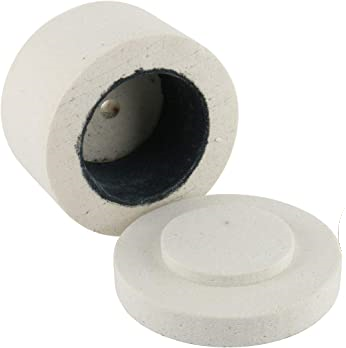
Commercially, these crucibles are called Microwave Kilns. They are a standard refractory material lined with silicon carbide. That silicon carbide concentrates and directs the heat. It’s very much like a Hot Pocket. You put the cardboard sleeve around the Hot Pocket and that carboard sleeve has a special lining that concentrates the heat.
An example of calibrating a microwave
The first step is to calibrate your microwave so you understand the temperatures it can reach with your microwave kiln. Put your empty microwave kiln in the microwave. Run the microwave at lower power for 5 minutes, then test the temperature of the microwave kiln. Next run it for more minutes and test, etc. Then do all of that again at medium power, then again at high power.
As of this writing, the only material that has been debound and sintered using this method is Aluminum 6061 Filamet™. The process is open for experimentation!
TVF’s recent webinar about Microwave Sintering has lots of information in it as well.
Here, you’ll see Highball’s microwave calibration:
Estimates: 10/13/22 LOW: ~6°F/min, ~200°F max M-LOW: ~10°F/min, ~600°F max MEDIUM: ~16.5°F/min, ~1200°F max HIGH: ~22°F/min, ~1800°F max
skeleton bone names, body bone names, bone name of human body, bones name in body, human bones name, human skeleton bone names, names of the bones, skeletal system bones name, sintering, microwave sintering
what is silicon used for, advantages of sintering, firing pottery in a microwave, what happens if you microwave uranium, microwave foundry, microwave kiln for metal
Understanding Microwave Sintering Technology
Microwave sintering is an innovative technique that leverages microwave energy to facilitate the sintering process of metal parts. This method differs from traditional sintering by utilizing microwave kilns, which allow for more efficient energy transfer and can lead to quicker processing times.
The technology works by heating the metal powder directly, resulting in a more uniform temperature distribution and reduced thermal gradients. This can significantly enhance the mechanical properties of the final product, making it an attractive option for manufacturers looking to optimize their production processes.
Benefits of Microwave Sintering for Metal 3D Printing
Microwave sintering offers several advantages over conventional sintering methods, including reduced energy consumption and shorter processing times. By using microwave energy, users can achieve higher temperatures more rapidly, which can lead to faster production cycles and lower operational costs.
Moreover, this technique allows for the sintering of complex geometries that may be challenging to achieve with traditional methods. As a result, manufacturers can create intricate designs with enhanced mechanical properties, expanding the possibilities for metal 3D printing applications.
Essential Tools and Equipment for Microwave Sintering
To successfully implement microwave sintering, specific tools and equipment are required, the most critical being a microwave kiln. These kilns are designed to withstand high temperatures and can accommodate various metal powders, making them essential for this process.
In addition to the kiln, users may also need temperature monitoring devices to ensure accurate readings during the sintering process. Proper setup and calibration of the equipment are crucial to achieving optimal results and ensuring the integrity of the final product.
Experimental Insights and Case Studies
Numerous experiments have been conducted to explore the capabilities of microwave sintering, particularly with materials like Aluminum 6061 Filamet™. These studies provide valuable insights into the process parameters and outcomes, helping users understand the practical applications of this technology.
One notable case study involves Highball’s series of experiments, which are documented in a comprehensive video playlist. This resource showcases the calibration and testing processes, offering practical guidance for users looking to adopt microwave sintering in their own projects.
Post-processing is often required for metal 3D prints to enhance surface finish, achieve precise dimensions, and improve mechanical properties. This can include processes like sanding, polishing, or heat treatment, depending on the desired outcome.
What are the common applications of metal 3D printing?
The common applications of metal 3D printing include aerospace components, automotive parts, medical implants, and tooling. These industries benefit from the ability to create complex geometries and lightweight structures, enhancing performance and reducing material waste.
What is the process of metal 3D printing?
The process of metal 3D printing involves using advanced filaments, like those from The Virtual Foundry, to create parts layer by layer. This technique allows for intricate designs and efficient production of metal components tailored for various applications.
What are the benefits of using a metal 3D printer?
The benefits of using a metal 3D printer include the ability to create complex geometries, reduced material waste, faster prototyping, and the production of durable parts suitable for various industries, enhancing both efficiency and innovation in manufacturing processes.
Can metal 3D printing produce complex geometries?
Metal 3D printing can produce complex geometries. This technology allows for intricate designs and structures that are often impossible to achieve with traditional manufacturing methods, making it ideal for various applications in multiple industries.
What types of metals can be 3D printed?
The types of metals that can be 3D printed include stainless steel, aluminum, titanium, and various metal alloys. These materials offer diverse properties suitable for numerous applications across different industries.
Can metal 3D printing be used for aerospace applications?
Metal 3D printing can be effectively used for aerospace applications. Its ability to produce lightweight, complex geometries and custom parts makes it ideal for enhancing performance and reducing costs in the aerospace industry.
What is the cost of metal 3D printing?
The cost of metal 3D printing varies based on factors such as material type, print size, and complexity. Generally, it can range from a few hundred to several thousand dollars per part, depending on these variables.
What are the limitations of metal 3D printing?
The limitations of metal 3D printing include high material costs, slower production speeds compared to traditional methods, and the requirement for specialized equipment and expertise to achieve optimal results. Additionally, certain geometries may be challenging to print effectively.
What metals can be used in 3D printing?
The metals that can be used in 3D printing include stainless steel, aluminum, titanium, and bronze. These materials are ideal for creating durable and complex parts across various industries.
How does metal 3D printing differ from traditional manufacturing?
Metal 3D printing differs from traditional manufacturing in that it builds parts layer by layer, allowing for complex geometries and reduced material waste, whereas traditional methods often involve subtractive processes that can limit design flexibility and increase waste.
How does a metal 3D printer differ from a plastic one?
Metal 3D printers differ from plastic ones primarily in the materials they use and the printing processes involved. While plastic printers utilize thermoplastics that melt and solidify, metal printers work with metal powders or filaments, requiring higher temperatures and specialized techniques for effective metal part production.
Can metal 3D printing be used for aerospace industry?
Metal 3D printing can be effectively utilized in the aerospace industry. It allows for the production of lightweight, complex components that enhance performance and reduce costs, making it an ideal solution for aircraft manufacturing and parts replacement.
How strong are 3D printed metal parts?
The strength of 3D printed metal parts can be comparable to traditionally manufactured metals, depending on the material and printing process used. High-quality filaments like those from The Virtual Foundry can produce durable and functional components suitable for various applications.
How does metal 3D printing improve product design?
Metal 3D printing enhances product design by enabling complex geometries, reducing material waste, and allowing for rapid prototyping, which accelerates the design process and fosters innovation in creating tailored solutions for specific applications.
How does metal 3D printing compare to traditional machining?
Metal 3D printing offers greater design flexibility and reduced material waste compared to traditional machining, enabling the production of complex geometries and customized parts more efficiently.
What are the benefits of metal 3D printing?
The benefits of metal 3D printing include reduced material waste, complex geometries that traditional methods can't achieve, faster prototyping, and the ability to create lightweight yet strong components, making it ideal for various industries.
What are the applications of metal 3D printing?
The applications of metal 3D printing are diverse and include aerospace components, automotive parts, medical implants, and intricate tooling. This technology enables the production of lightweight, customized, and complex designs that traditional manufacturing methods may not achieve.
Can a metal 3D printer be used for jewelry making?
Metal 3D printers can indeed be used for jewelry making. They allow for intricate designs and precise detailing, enabling jewelers to create unique and customized pieces with metal materials.
Can a metal 3D printer produce functional parts?
Metal 3D printers can indeed produce functional parts. Utilizing advanced materials like those offered by The Virtual Foundry, these printers create durable and precise components suitable for various applications across multiple industries.
Can metal 3D printing be used for medical implants?
Metal 3D printing can be effectively used for medical implants. It allows for the creation of custom, biocompatible components tailored to individual patient needs, enhancing the fit and functionality of implants in various medical applications.
What materials enhance metal 3D printing durability?
The materials that enhance metal 3D printing durability include high-strength alloys, such as stainless steel and titanium, as well as specialized filaments like those offered by The Virtual Foundry, which provide improved mechanical properties and resistance to wear.
How does temperature affect metal 3D prints?
Temperature significantly influences metal 3D prints by affecting material flow, adhesion, and overall print quality. Proper temperature settings are crucial for achieving optimal layer bonding and minimizing defects in the final product.
What are best practices for metal 3D printing?
The best practices for metal 3D printing include ensuring proper material preparation, optimizing print settings for temperature and speed, maintaining a clean build environment, and using appropriate post-processing techniques to enhance the final part quality.
Can metals be recycled in 3D printing?
Metals can indeed be recycled in 3D printing. Many metal 3D printing processes allow for the reuse of metal powders, reducing waste and promoting sustainability in manufacturing.
What industries benefit most from metal 3D printing?
The industries that benefit most from metal 3D printing include aerospace, automotive, medical, and manufacturing. These sectors leverage the technology for creating lightweight, complex parts, reducing material waste, and enabling rapid prototyping.
What advancements are being made in metal 3D printing?
Advancements in metal 3D printing include the development of more efficient printing techniques, improved material formulations, and enhanced post-processing methods, all aimed at increasing accessibility, reducing costs, and expanding application possibilities across various industries.
How to select metal for 3D printing projects?
Selecting metal for 3D printing projects involves considering factors such as the desired mechanical properties, the specific application, and compatibility with your 3D printer. Evaluate options like strength, weight, and thermal conductivity to make an informed choice.
What post-processing methods improve metal print quality?
Post-processing methods that improve metal print quality include heat treatment, which enhances strength and ductility, and surface finishing techniques like polishing or sandblasting, which refine surface texture and remove imperfections for a smoother final product.
Are there safety concerns with metal 3D printing?
Safety concerns with metal 3D printing include potential exposure to harmful metal powders and fumes, which can pose health risks if proper ventilation and protective equipment are not used. Additionally, the high temperatures involved can lead to fire hazards if not managed correctly.
metal 3d printing, metal 3d printer, virtual foundry, metal printing, 3d print metal, 3d metal printing