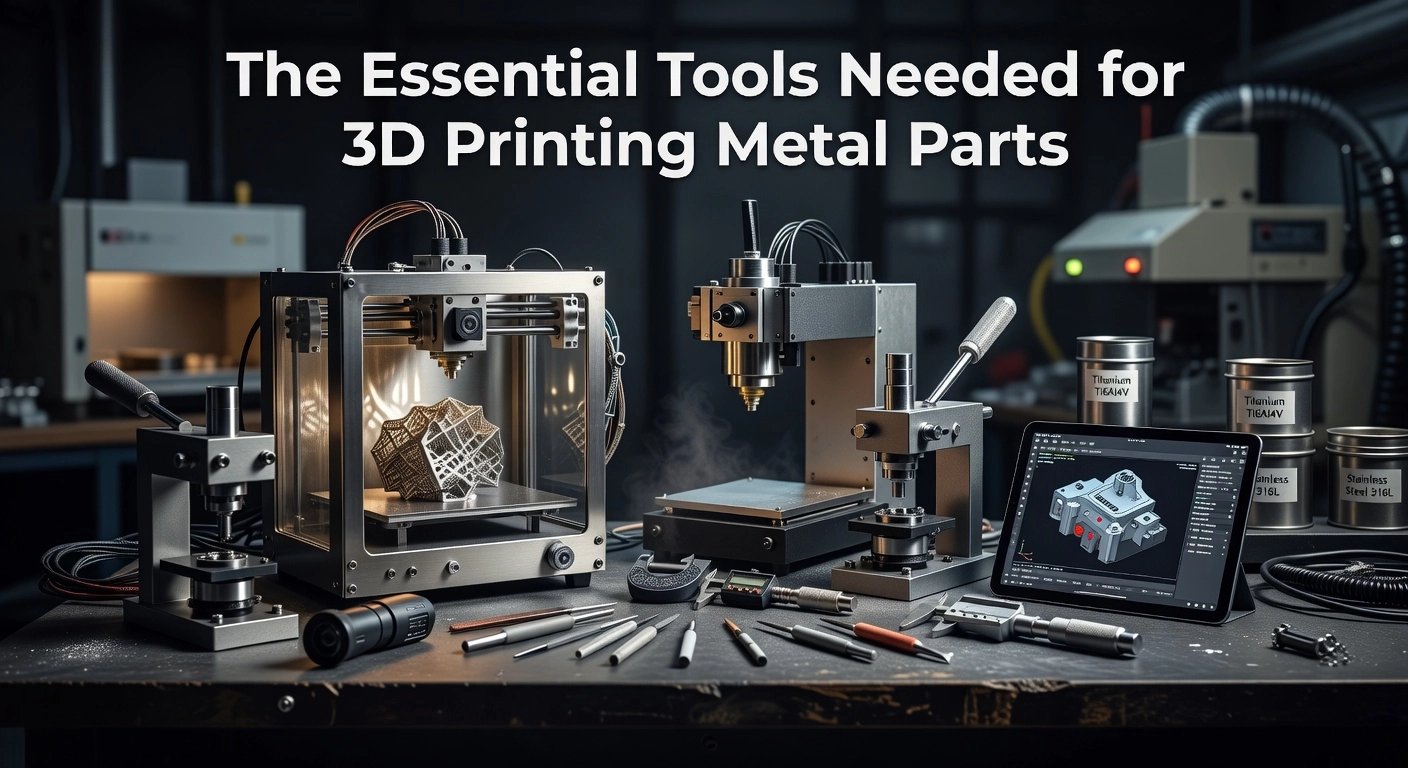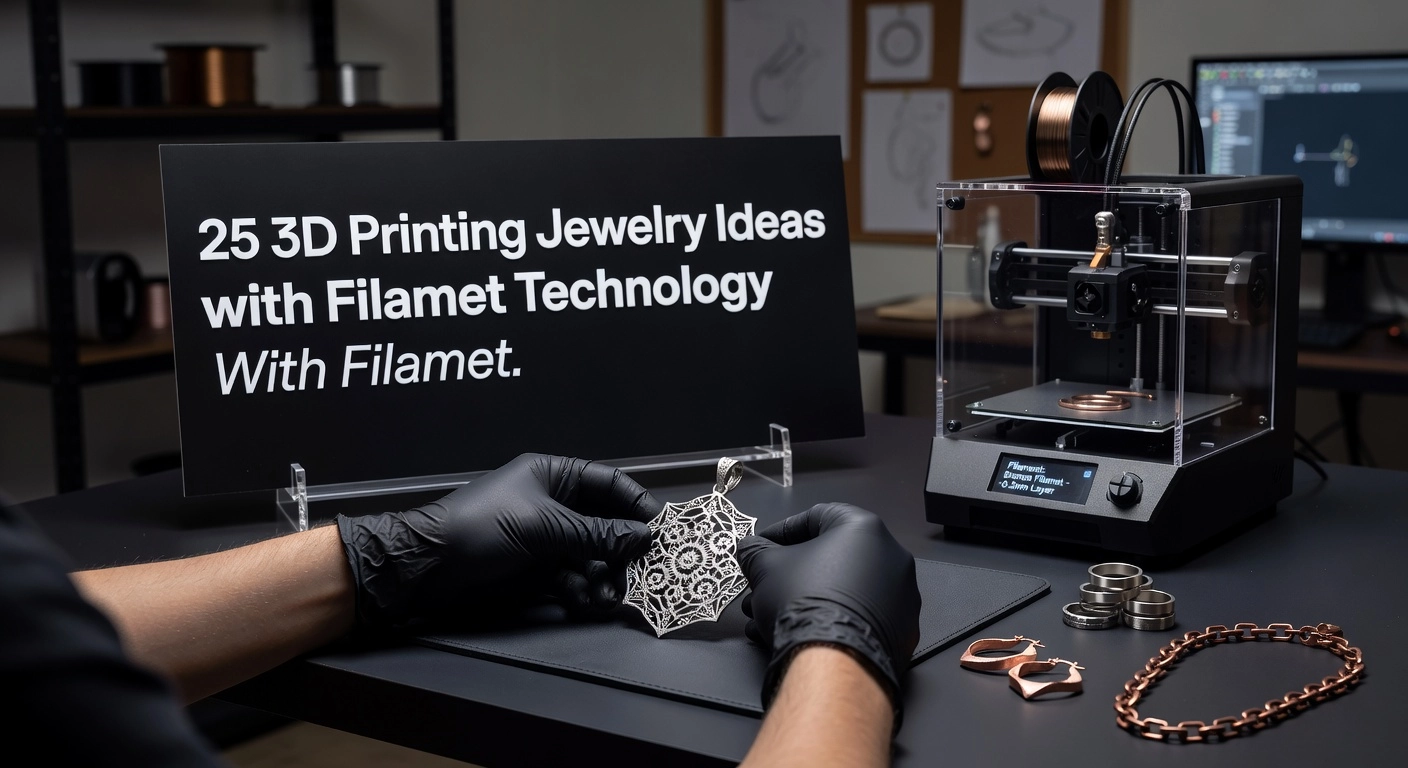
Imagine holding a complex prototype in your hands, one that began as a simple digital file and materialized layer by layer before your eyes. This transformative capability defines the 3d printing additive manufacturing process, a technology that has reshaped industries from aerospace to medical devices. For those already familiar with basic FDM or SLA printing, the true mastery lies in understanding the intricate steps that ensure precision, efficiency, and reliability.
In this comprehensive tutorial, you will unlock the full 3d printing additive manufacturing process, starting with advanced design optimization for slicers and moving through material selection, printer calibration, and print execution. We cover troubleshooting common pitfalls like warping or adhesion failures, along with pro tips for multi-material prints and surface finishing techniques. By the end, you will possess the authoritative knowledge to produce professional-grade parts consistently, scaling your projects with confidence. Whether you aim to prototype innovations or customize production runs, these insights equip you to harness additive manufacturing at an intermediate level and beyond.
What Is Additive Manufacturing and 3D Printings Role
Additive manufacturing (AM), as defined by the ISO/ASTM 52900:2021 standard, refers to processes that join materials layer by layer to create objects from 3D model data. This approach stands in direct contrast to subtractive manufacturing methods, such as CNC milling or turning, which start with a solid block of material and remove excess to achieve the desired shape. Subtractive techniques often result in substantial waste, with scrap rates exceeding 90% for complex parts, while AM builds precisely from the bottom up, minimizing material use and enabling intricate internal structures like lattices or conformal cooling channels. Recognized by ANSI and endorsed by Wohlers Associates, this layer-by-layer deposition supports a wide range of materials, including polymers, metals, ceramics, and composites, guided by CAD files in formats like STL. For intermediate users, understanding this distinction is crucial, as it underpins the 3D printing additive manufacturing process’s efficiency in prototyping and low-volume production.
3D Printing as the Popular Subset of AM
3D printing represents the most accessible subset of AM, with Fused Filament Fabrication (FFF) or Fused Deposition Modeling (FDM) leading adoption through its extrusion of thermoplastic filaments via heated nozzles. Originally optimized for polymers like PLA and ABS, FFF has advanced to metal applications using specialized filaments such as Filamet™ from The Virtual Foundry. These metal-infused filaments, loaded with 80-95% powder (e.g., stainless steel 316L, copper, or tool steel), print on standard desktop printers with hardened nozzles at 195-235°C and 100% infill. Post-printing, green parts undergo debinding to remove binders and sintering at 1260-1450°C, yielding >99% pure metal with 90-97% density. This evolution allows hobbyists, designers, and manufacturers to produce functional metal parts without multimillion-dollar equipment, as detailed in TVF’s guides.
2026 Market Context
The global AM market reached $24.2 billion in revenues by 2025, according to the Wohlers Report 2026, reflecting a 10.9% year-over-year increase driven by services and materials. Within this, the metal AM segment hit $11.18 billion in 2026, projecting a 15.58% CAGR to $23.07 billion by 2031, fueled by aerospace, defense, and medical demands. Filament-based methods contribute to this growth by enabling scalable production on existing FFF infrastructure.
Democratizing Production with Filament-Based AM
Accessible filament-based AM lowers entry barriers to under $10,000, versus high-capital alternatives, democratizing metal part production for artists, jewelers, and engineers. It slashes waste by up to 90% compared to traditional machining, deposits near-net shapes, and cuts prototyping costs by 70% with 50-80% faster lead times. Complex geometries, like aerospace heat sinks or nuclear shielding, become feasible in-house.
For precise definitions and workflows, consult The Virtual Foundry’s resources at thevirtualfoundry.com, including their “Intro to FFF Metal 3D Printing” guide, which clarifies process distinctions and shares community recipes.
Fundamentals of the Metal 3D Printing Process
The metal 3D printing additive manufacturing process using filament extrusion represents a breakthrough in accessibility, allowing intermediate users to produce high-density pure metal parts on standard FFF printers. At its core, this process, powered by The Virtual Foundry’s Filamet™, follows three essential stages: printing the green part, debinding to remove the polymer binder, and sintering for densification. During printing, the filament extrudes layer by layer to form a fragile “green” structure that captures intricate geometries impossible with traditional subtractive methods. Debinding then thermally extracts the binder, typically up to 427°C over 2-6 hours in a kiln with refractory ballast, yielding a porous “brown” part. Finally, sintering at material-specific temperatures, such as 885°C for bronze or 1232°C for 316L stainless steel, fuses metal particles through diffusion, achieving 90-97% density—often up to 97.6% for stainless alloys—with shrinkage of 7-25% that users must scale for in their designs.
Filamet™ Composition and Printer Compatibility
Filamet™ filament is engineered with 80-95% metal powder by weight, blended into a thermoplastic polymer binder like PLA, making it compatible with everyday FFF printers equipped only with a hardened steel nozzle (0.4-0.8 mm). This high powder loading—around 82-90% for bronze or copper and 86-93% for stainless steels—ensures efficient densification while maintaining extrudability. For instance, printing a complex heat sink for aerospace prototyping starts with scaling the model 15-20% to account for shrinkage. Users benefit from TVF’s comprehensive Filamet FAQ, which details alloys like 316L stainless, tool steels, and tungsten for applications in tooling, jewelry, and nuclear shielding.
Optimized Printing Parameters
Key parameters from TVF guidelines ensure reliable results: nozzle temperatures of 195-235°C (start at 220°C), bed at 40-65°C, and 70-100% infill with rectilinear patterns to support shrinkage and gas escape. Print speeds range from 20-80 mm/s, layer heights 0.1-0.3 mm, and flow rates 110-125%, with minimal cooling and tree supports at 40° angles. See TVF’s printing guide for high-speed printer tweaks up to 240°C. These settings yield parts ready for debinding without specialized hardware.
Filament Extrusion vs. Powder Bed Fusion
Filament extrusion offers TVF’s open-hardware advantage, with setups under $10K including a basic printer and kiln, versus powder bed fusion’s $500K+ systems requiring inert chambers and powder handling. While powder bed achieves 99%+ density directly, filament extrusion delivers comparable properties post-sintering through safe, office-friendly workflows. This enables complex internal channels for custom jewelry or heat exchangers.
Additive manufacturing via this process delivers 70% prototyping cost savings over CNC machining and 50-80% faster lead times, turning designs into metal parts in days. For more on getting started, visit TVF’s Filamet guide.
Prerequisites for Filamet Metal 3D Printing
Before diving into the 3D printing additive manufacturing process with Filamet™, ensure your setup meets these essential prerequisites to achieve reliable green parts ready for debinding and sintering. These recommendations are tailored for intermediate users familiar with FFF/FDM printing, drawing from proven workflows that yield over 90% density pure metal components.
Hardware Requirements
Filamet™ filaments, loaded with 80-95% metal powder, are highly abrasive, so equip your printer with hardened steel nozzles in the 0.4-0.6mm range to withstand wear; brass nozzles degrade after printing just 100g of material. A 0.4mm nozzle suits fine details in stainless steel, while 0.6mm handles denser tungsten effectively without clogs. Opt for enclosed printers like those in The Virtual Foundry’s trusted list, including Creality Ender series or Prusa models, to maintain temperature stability and minimize warping during prints at 210-230°C nozzle and 40-50°C bed temperatures. Direct-drive extruders with dual gears excel for the filament’s 3-5x density over PLA. Add a Filawarmer to precondition spools, reducing brittleness. For slicers like PrusaSlicer or Orca, start with 100% infill, 15-40mm/s speeds, and 110-135% flow rates. See detailed setups in the TVF Metal 3D Printing Guide.
Accounting for Sintering Shrinkage
Sintering induces 15-20% linear shrinkage, so scale models 15-20% larger in your CAD software or slicer (e.g., 120% X/Y, up to 126% Z). This compensates for isotropic contraction during kiln firing at 1260-1450°C, targeting 90-97% density. Test with witness coupons: a 10mm cube scaled to 12mm yields precise results. Thin walls and overhangs self-support during firing due to Filamet™’s formulation. Adjust per material; copper shrinks less than tungsten.
Safety and Handling
Prioritize ventilation for printing fumes via enclosed printers or exhaust fans, and during debinding off-gassing at up to 482°C. Wear nitrile gloves when handling brittle green parts or post-sinter polishing to avoid metal dust. Filamet™’s encapsulated design eliminates loose powders, enhancing desktop safety without cleanrooms or chemicals.
Compatible Materials
Key options include 316L stainless steel for corrosion resistance, copper for heat exchangers, and tungsten for high-density aerospace and nuclear shielding applications.
TVF Community Resources
Access TVF printer profiles and whitepapers via The Virtual Foundry’s Discord and blogs for alloy-specific recipes, sintering ramps, and shared OrcaSlicer profiles. These community-driven assets accelerate your workflow.
Step 1: Printing the Green Part
The first critical step in the 3D printing additive manufacturing process with Filamet™ is printing the green part, the initial as-printed object made from metal-polymer composite filament. This filament, loaded with 80-90% metal powder by volume in a thermoplastic binder, extrudes layer by layer on standard FFF printers to form a fragile, porous structure. Success here ensures the part withstands debinding and sintering for >99% pure metal with 90-97% density. Intermediate users must prioritize dense extrusion to minimize voids, which could lead to cracks later. Orient parts vertically for optimal strength, and always dry filament at 45-55°C for 4 hours beforehand to prevent moisture-related inconsistencies.
Optimal Printing Parameters
Achieve optimal flow by setting the extruder temperature to 195-235°C, tailored to the material, such as 200-215°C for copper or bronze Filamet™ and up to 225°C for stainless variants; this range prevents binder degradation while ensuring smooth extrusion of the dense filament. Maintain bed temperature at 40-60°C, or up to 65°C on glass or PEI surfaces, to promote adhesion without warping; apply glue stick or Dimafix for reliability. Limit print speed to 20-40 mm/s, ideally 20-35 mm/s, to guarantee consistent layering and high green density. Use a hardened steel nozzle of 0.4-0.6 mm to resist abrasion, with layer heights of 0.15-0.25 mm and a flow multiplier of 110-135%. Disable or minimize part cooling fans, as they can cause uneven binder distribution. These parameters, refined through extensive testing by The Virtual Foundry, enable desktop printers to produce production-ready green parts. For detailed profiles, consult the TVF Filamet printing guide.
Build Settings for Maximum Strength
Maximize structural integrity with 100% infill using rectilinear, concentric, or gyroid patterns, eliminating gaps that hinder uniform binder escape during post-processing. Specify 3-5 perimeters or walls to create a robust shell capable of handling manual support removal or transport. Avoid supports whenever possible by limiting overhangs to under 45°; if essential, use the same Filamet™ material at 70% dense infill for easy pre-debinding removal. Scale models 14-20% larger in slicing software to compensate for sintering shrinkage, ensuring final dimensions match designs precisely. These settings yield green parts strong enough for complex geometries in aerospace tooling or nuclear shielding applications.
Demonstration Examples
On a Prusa MK3S, print intricate jewelry molds or pendants with bronze Filamet™ at 0.2 mm layers, 100% infill, and 30 mm/s speed; the resulting green part sinters into detailed, polished pieces ideal for artists and jewelers. Similarly, fabricate heat sinks with copper Filamet™ on an Ender 3 Pro at 20-30 mm/s and 3 perimeters, capturing fine fins and channels for thermal management in electronics. These examples showcase how accessible hardware produces functional metal components, slashing prototyping costs by 70% compared to traditional methods.
Troubleshooting Nozzle Clogs
Nozzle clogs from powder settling are common; prevent them with direct-drive extruders, minimal retraction, and regular maintenance. Perform cold pulls at 220°C, and purge using The Virtual Foundry’s 3D Clean™ kits, non-abrasive thermoplastic sticks extruded at 230°C+ to clear residues safely. Replace nozzles proactively after 1-2 kg of Filamet™ usage.
Visualizing Shrinkage: Pre- and Post-Sinter Chart
Sintering induces 12-20% linear shrinkage, uniform with proper calibration. Use this TVF-optimized chart to scale accurately:
| Dimension | Green (Pre-Sinter) | Sintered (Post-Sinter) | Shrinkage % |
|---|---|---|---|
| XY Plane (Large, e.g., 15 mm dia.) | 15-17 mm | 13-14 mm | 12-18% |
| XY Plane (Small, e.g., 4 mm dia.) | 4.4-4.5 mm | 4 mm | ~13% |
| Z-Axis (Height) | Varies | 18-20% total | 18-20% |
Print calibration coupons first, as detailed in the 3D printing process guide. With a solid green part, proceed confidently to debinding.
Step 2: Debinding the Binder Removal
Following the printing of your green part with Filamet™ filament, the next pivotal phase in the 3D printing additive manufacturing process is debinding, which removes the polymer binder to create a fragile yet handling-stable brown part. This step transforms the printed structure, held together by 10-50% binder by volume, into a porous metal skeleton ready for sintering. Incomplete binder removal can lead to defects like cracks, swelling, or suboptimal density later, while overly aggressive processes risk part collapse. Thermal debinding stands out as the most reliable and accessible method for Filamet™, leveraging controlled heating to pyrolyze and evaporate the binder without introducing hazardous chemicals.
Thermal Debinding: Controlled Heating Up to 427°C
Thermal debinding occurs in programmable catalytic or solvent-assisted furnaces, with temperatures ramping slowly up to 427°C (800°F) over 8-24 hours, depending on part size and material. For stainless steel Filamet™, a typical profile includes a ramp to 204°C (400°F) for a 2-hour hold to initiate decomposition, followed by a gradual increase to 427°C for another 2-6 hour hold, all under inert atmospheres like nitrogen to prevent oxidation. Larger parts exceeding 50mm require extended times, often 20-24 hours total, with ramp rates not exceeding 1°C per minute to allow decomposition gases to escape through developing pores. Pack parts in refractory materials such as alumina crucibles or charcoal for support and oxygen scavenging. This method suits box ovens widely available to intermediate users, ensuring uniform heating within ±38°C variance. Data from thermogravimetric analysis shows binders like PLA in Filamet™ fully decompose by 90% at these conditions, leaving minimal residue for structural integrity.
Monitoring Weight Loss for Success
Weigh your green part before debinding and the brown part afterward; expect 15-20% mass reduction, confirming 90% binder removal. For a 100g stainless steel green part, this translates to 15-20g loss, verifiable with a precision scale. Inspect visually for cracks, especially in thick sections over 4mm or high-powder loads above 80%, and measure dimensions to anticipate 15-25% sintering shrinkage. Successful brown parts remain rigid without crumbling, paving the way for high-density outcomes above 92%.
The Virtual Foundry Guidance for Hobbyists
The Virtual Foundry recommends standard box ovens or pottery kilns for thermal debinding, accessible to hobbyists and small-scale users. Verify oven accuracy with an external thermometer, maintain 15-25mm clearance around parts in reusable crucibles, and follow TVF’s material-specific profiles available at thevirtualfoundry.com/debind-sinter. For those without equipment, leverage TVF partner services or community hubs for professional debinding, ideal for artists crafting jewelry or designers prototyping aerospace components. This approach democratizes the process, requiring under $10K in total setup.
Unlike powder-based methods that often rely on toxic solvents like nPB or cyclohexane for initial binder extraction, Filamet™ thermal debinding avoids flammables and PPE demands entirely, enhancing safety and sustainability. Powder processes may use vapor degreasers for wax removal, but they introduce environmental risks and slower penetration in dense structures.
2026 Tip: Automated Monitoring for Production Scale
In 2026, integrate real-time sensors like thermocouples and gas analyzers into debinding furnaces for closed-loop control, tracking weight loss inline via AI-optimized software. This reduces defects by 50%, supports serial production of heat sinks or nuclear shielding, and aligns with the metal AM market’s 15-25% CAGR surge to $23B by 2031. See detailed debinding methods in this Texas A&M overview hosted by TVF. With debinding mastered, your parts advance to sintering for pure metal density.
Step 3: Sintering for Pure Metal
After successfully debinding your brown part, the 3D printing additive manufacturing process advances to the transformative sintering stage, where the metal particles fuse into a dense, functional pure metal component. This high-temperature step, typically conducted at 1260-1450°C in an inert or reducing atmosphere such as hydrogen or argon, lasts 4-12 hours depending on the material and part size. During this phase, solid-state diffusion eliminates porosity, achieving densities exceeding 99% of theoretical values for materials like stainless steel, tool steels, and tungsten from Filamet™ filaments. For instance, stainless steel 316L or 17-4PH sinters at 1250-1350°C with a 1-4 hour hold, yielding 3.45-4.15 g/cc density, while tool steels like H13 or M300 require around 1232°C for 4 hours to reach over 95% density. The controlled ramp rates, often 111°C per hour upward followed by slow cooling, prevent cracking and ensure microstructural integrity. Pack your brown part in refractory crucibles with alumina or sintering carbon ballast to maintain an oxygen-free environment, scavenging any residual oxides for optimal results.
Predicting Shrinkage for Precise Dimensions
Sintering induces 10-20% linear shrinkage, primarily from binder removal and densification, making dimensional prediction essential in the 3D printing additive manufacturing process. The Virtual Foundry provides material-specific shrinkage data and profiles via their master metal sintering step-by-step guides, allowing users to scale CAD models by factors like 1.15-1.20 (e.g., 15% linear for 85% volumetric shrinkage in tool steel). Print test coupons or use 100% infill with uniform walls to validate; for parts over 50mm, extend hold times to minimize anisotropy. Actionable insight: Compensate upfront in your slicer by oversizing, then verify post-sinter with calipers or 3D scanning. This approach ensures near-net-shape accuracy, avoiding costly reprints.
Unmatched Benefits of Sintered Metal Parts
Sintering unlocks complex geometries, such as internal lattices or conformal cooling channels, impossible or prohibitively expensive via CNC machining. Users achieve up to 90% material savings compared to subtractive methods, as additive builds only deposit material where needed, reducing waste dramatically. Lead times drop by 50-80%, with prototyping costs slashed by 70%, ideal for manufacturers and designers. These parts exhibit strengths like 429 MPa in high-density steels, supporting production-scale applications.
Real-world examples highlight this power: Tungsten Filamet™ produces nuclear shielding components, like radiation-attenuating grids for fusion diagnostics, sintering to over 99% dense pure tungsten as a lead alternative. Tool steel dies from H13 or M300 Filamet™ enable hot forging inserts with intricate cooling, detailed on TVF products page.
Safety and Support Essentials
Prioritize professional furnaces like TVF’s FireX series, capable of 1288°C with UL certification, to mitigate risks such as off-gassing, thermal stresses, or gas leaks. Wear PPE including respirators and heat-resistant gloves; ventilate adequately and follow H2/argon protocols. TVF’s community, kits, and troubleshooting resources, including slower ramps to prevent blistering, ensure safe success. With these steps, intermediate users produce aerospace-grade parts reliably, advancing toward full metal AM industrialization.
Post-Processing and Finishing Techniques
Once sintering yields your high-density pure metal part (>95% density) from the 3D printing additive manufacturing process with Filamet™, post-processing elevates it from functional prototype to production-ready component. This phase, comprising up to 27% of total costs, addresses surface roughness (Ra 10-50μm as-sintered), residual stresses, and support remnants while enhancing tolerances to ±0.1mm. For intermediate users, mastering these techniques unlocks applications in jewelry, aerospace, and tooling, with TVF’s community recipes providing optimized parameters.
Support Structures and Removal Techniques
Print supports as soluble (e.g., PVA dual-extrusion) for intricate overhangs or breakaway types for accessible geometries, scaling models 15-20% to account for shrinkage. Manual removal uses flush cutters or pliers on breakaway supports, followed by coarse sanding (80-grit) to eliminate scars without distorting thin features. Chemical methods dissolve PVA in agitated water baths (4-8 hours at 40°C), ideal for cavities in bronze Filamet parts, reducing damage risk by 80%. Post-removal, progressive polishing (220-2000 grit) or CNC milling achieves mirror finishes and ±0.05mm precision on critical surfaces, as seen in tungsten heat sink prototypes.
Specialized TVF Finishing Methods
Tumbling in ceramic media (6-12 hours, 50-60Hz vibration) delivers high-gloss uniformity for jewelry, transforming copper Filamet rings with 90% detail retention and batch efficiency for 50+ pieces. Aerospace components benefit from protective coatings like nickel plating (5-15μm thick) or anodizing, boosting corrosion resistance by 45% and enabling nuclear shielding compliance. These TVF-recommended workflows cut lead times 30% versus manual methods.
Quality Checks and Validation
Verify part integrity via density measurement using Archimedes’ principle (target 90-97% for stainless 316L), detecting voids early. Conduct tensile testing per ASTM E8/E8M on sintered samples (5mm/min crosshead), yielding strengths like 500MPa for tool steel, ensuring anisotropy compensation.
Advanced Hybrid Workflows
Integrate CNC post-sintering for sub-0.01mm tolerances on interfaces; print near-net shapes, then mill holes in H13 Filamet tooling, slashing waste 50%. This hybrid approach, popular in aerospace, aligns with 2026 trends toward automated production scaling.
How The Virtual Foundry Succeeds Where Others Fail
The Accessibility of Open FFF Filamet™ Technology
The Virtual Foundry has revolutionized the 3D printing additive manufacturing process through its open fused filament fabrication (FFF) approach with Filamet™ filament. This filament, loaded with up to 90% metal powder in a thermoplastic binder, prints on standard desktop FFF printers using hardened nozzles at 195-235°C and 100% infill. Users scale models by 15-20% to account for predictable shrinkage during post-processing, enabling the production of green parts that debind and sinter into >99% pure metal components with 90-97% density. Unlike closed systems that demand massive upfront investments, TVF’s model requires only off-the-shelf hardware, eliminating vendor lock-in and allowing seamless hardware upgrades. This openness ensures scalability for manufacturers scaling from prototypes to production without hardware overhauls. For intermediate users, start with printers like those from Prusa or Creality, priced at $200-2,500, paired with a $100 hardened nozzle set for immediate compatibility.
Advanced Material Edges and Custom Alloy Development
TVF excels with Filamet™ variants boasting 80-90% metal loading across 20+ alloys, including copper, bronze, stainless 316L and 17-4PH, H13 tool steel, and tungsten. These high loads yield sintered parts with exceptional strength for demanding applications like aerospace heat sinks, nuclear shielding, jewelry, and tooling. Custom formulations, such as radiation-resistant tungsten or electromagnetic composites, develop in weeks for clients in national labs and universities, far surpassing standard material limitations. Community-shared recipes detail precise sintering profiles, ramp rates, and hold times to achieve uniform density. Actionable insight: For a tungsten part, use a 0.6mm nozzle, print at 210°C, debind to 427°C, then sinter at 1450°C in a hydrogen atmosphere for optimal results. This flexibility drives 50-80% faster lead times and 70% prototyping cost savings compared to traditional methods.
Proven Affordability, Safety, and Growth in 2026
Entry into TVF’s metal 3D printing additive manufacturing process costs under $10K: a basic FFF printer, filament at $150-300/kg, kiln at $1,000-5,000, and minimal tools. This OpEx model avoids powder handling risks like explosions, fires, or specialized ventilation, making it ideal for labs, garages, and small shops. TVF reports sustained growth and hiring into 2026, amid a metal AM market projected at $11.18B with 15.58% CAGR to $23.07B by 2031. Filament-based processes surge with 13.5% CAGR, supporting industrialization shifts to serial production and automation. Real-world evidence includes 90% material waste reduction and per-part costs dropping to $62 per iteration for low-volume runs. Users benefit from TVF Academy courses at $1,750, including materials, for hands-on mastery.
Community Hubs Driving Unmatched Innovation
TVF’s Community Hub and Discord platforms centralize user-generated shrink maps, fixtures, workflows, and validated recipes, transforming novices into expert metallurgists. Shared insights accelerate development by 25%, uncovering applications like rocket motors, medical crowns, and piezoelectric sensors. This open ecosystem fosters peer support on green-part handling, design rules like uniform walls and fillets, and kiln setups. Participants report resolving curling issues via optimized profiles in days. In contrast to isolated approaches, TVF’s network de-risks adoption and spurs collective R&D.
As the filament AM leader in 2026, TVF positions users for supply-chain resilience in aerospace (16-18% CAGR) and healthcare, capitalizing on market maturation toward affordable, open systems for complex geometries like lattices and internal channels.
Key Benefits and 2026 Market Trends
Quantified ROI in the 3D Printing Additive Manufacturing Process
Adopting the 3D printing additive manufacturing process with Filamet™ filament delivers substantial return on investment, particularly for intermediate users scaling from prototypes to production. Companies achieve up to 70% cost reductions in prototyping and small-batch manufacturing by eliminating traditional tooling and slashing lead times from weeks to days. This efficiency stems from the process’s low capital requirements, often under $10,000 for a complete setup including standard FFF printers and sintering ovens. For context, the global 3D printing filament market, valued at $14.7 billion in 2023, is projected to surge to $84.87 billion by 2033 at a 21.65% CAGR, underscoring the explosive demand for accessible materials like Filamet™. Actionable insight: calculate your ROI by tracking material savings (up to 90% less waste) and production speed gains; many users recoup investments within 3-12 months through in-house part creation.
2026 Market Trends: From Prototyping to Serial Production
The additive manufacturing landscape in 2026 marks a pivotal shift, with usage transitioning from 70% prototyping dominance to serial production workflows. This evolution enables full-rate builds, automation, and digital thread integration for repeatable end-use parts. In aerospace, the sector drives a 16-18% CAGR, fueled by lightweight, topology-optimized components that reduce weight by up to 70%. Intermediate practitioners can capitalize by designing for production-scale sintering, ensuring 90-97% density in metals like stainless steel or tungsten. Overall market revenues hit $24.2 billion in 2025, growing toward $28-34 billion, with filament-based processes leading accessibility.
Sustainability and Life Cycle Advantages
Sustainability enhances the appeal of this 3D printing additive manufacturing process, with biodegradable filaments rising 35% in adoption amid eco-focused manufacturing. Life cycle assessments reveal 20-50% lower energy use for complex parts compared to subtractive methods, thanks to precise layer-by-layer deposition and minimal waste. Filamet™ supports this by enabling recycled metal powders in filaments, aligning with green supply chains.
The Virtual Foundry Applications and Future Outlook
The Virtual Foundry excels in nuclear shielding with tungsten Filamet™, achieving densities up to 19.3 g/cc for superior gamma radiation blocking, and jewelry scaling via copper/bronze for intricate designs at 78% cost savings. Looking ahead, AI monitoring optimizes prints in real-time, detecting failures and ensuring “born-qualified” parts. Regulatory paths from FAA and NRC pave certification for aerospace engines and nuclear components through structured testing protocols. These advancements position Filamet™ users at the forefront of industrialized metal AM.
Real-World Applications and Examples
Aerospace Heat Sinks with Copper Filamet
In the 3D printing additive manufacturing process, Copper Filamet™ shines for aerospace applications, particularly in fabricating conformal heat sinks. These intricate structures feature lattice infills and optimized cooling channels that enhance thermal management for brackets, manifolds, and satellite substrates. Users scale designs by 15-20% to account for sintering shrinkage, achieving over 99% dense pure copper parts with exceptional conductivity. This approach delivers 50% faster prototyping cycles compared to traditional methods, slashing lead times from weeks to days. Aerospace engineers report up to 80% material savings through weight-optimized lattices, enabling part consolidation that reduces assembly complexity. TVF’s accessible workflow supports flight-qualified components via topology optimization.
Art and Jewelry: Intricate Bronze Designs
Artists and jewelers leverage Bronze Filamet™ in the 3D printing additive manufacturing process to create stunning, sinterable pure metal pieces. Designs with filigree details, parametric rings, undercuts, and organic textures, impossible via casting, print on standard FFF printers at 195-235°C with 100% infill. Post-sintering at 1260-1450°C yields 98-99% dense bronze, ready for tumbling, polishing, or patination. A custom pendant might involve solvent debinding followed by kiln sintering, compensating for 12-20% shrinkage in CAD. This enables rapid iterations in days, ideal for bespoke small batches, with double-digit scrap reductions and sustainable made-to-order production.
Nuclear: Tungsten Parts for Radiation Shielding
Tungsten Filamet™ excels in nuclear applications within the 3D printing additive manufacturing process, producing high-density radiation shields denser than lead. Custom collimators, handling tools, and debris filters incorporate conformal lattices for 30% improved performance. Printed green parts debind thermally to 427°C then sinter for pure tungsten, qualified through CT scans and irradiation tests. North American utilities have adopted these for non-safety components, expanding to reactors with rapid design tweaks.
TVF Customer Stories, ROI, and Scaling Tips
TVF’s 2026 community showcases stories from 3000+ users, including NASA labs prototyping rocket parts and jewelers scaling jewelry lines. Benchmarks reveal 50-70% lead time cuts, 70-90% prototyping savings, and 90% waste reduction. To scale from hobbyist to enterprise, form a dedicated team with 1-2 printers for jigs; experiment with DfAM; validate ROI via CT scans; integrate hybrid workflows for JIT production. This framework builds centers of excellence, transitioning low-critical parts to full serial builds.
Actionable Takeaways for Your Metal AM Journey
Begin your metal additive manufacturing journey with The Virtual Foundry Filamet™ by ordering sample packs of materials like copper, bronze, or stainless steel 316L. These enable immediate testing on standard FFF printers with hardened nozzles at 195-235°C and 100% infill, scaled 15-20% to account for shrinkage. Strictly follow TVF’s step-by-step guides for your first green part print, debinding to 427°C, and sintering at 1260-1450°C to yield >99% pure metal parts at 90-97% density. Success here builds confidence for complex geometries unattainable via subtractive methods.
Join the vibrant TVF community forums to discover user-shared recipes for custom profiles and proudly showcase your sintered parts, fostering innovation in jewelry, tooling, or heat sinks. Calculate ROI tailored to your application using TVF-provided tools and stats: achieve 70% prototyping cost reductions, 90% material savings versus machining, and setups under $10K amid a metal AM market surging to $24.2B in 2025.
For aerospace heat sinks or nuclear shielding, explore advanced options like tungsten Filamet™. Contact TVF experts for personalized support, scaling consultations, and production workflows to maximize efficiency.
Conclusion
In mastering the 3D printing additive manufacturing process, you have gained essential skills in advanced design optimization for slicers, precise material selection paired with printer calibration, effective troubleshooting of issues like warping and adhesion failures, and pro techniques for multi-material prints plus surface finishing. These steps empower you to produce professional-grade parts with consistency and efficiency.
This knowledge transforms hobbyists into pros, unlocking scalable projects across industries. Now, apply these insights to your next prototype; experiment boldly, iterate relentlessly, and share your results in the comments below. The future of manufacturing starts with your print bed. Unleash your creativity today and build what was once impossible.