Imagine a world where intricate aerospace components, medical implants, and even architectural prototypes emerge layer by layer from digital designs, revolutionizing production speed and waste reduction. This is no longer science fiction. It is the reality powered by additive manufacturing technologies 3D printing, a suite of processes that build objects from the ground up rather than subtracting material like traditional methods.
As industries grapple with supply chain disruptions and demands for sustainability, these technologies offer transformative potential. For intermediate practitioners and engineers seeking deeper insights, this analysis dissects the core additive manufacturing technologies 3D printing, from powder bed fusion and directed energy deposition to binder jetting and material extrusion. We evaluate their mechanical properties, cost efficiencies, and scalability across sectors like automotive, healthcare, and consumer goods.
Readers will gain a clear framework for selecting optimal processes, understanding material limitations, and anticipating future advancements such as multi-material printing and hybrid systems. Armed with this knowledge, you can navigate the complexities of implementation and drive innovation in your operations.
Understanding Additive Manufacturing Basics
Additive manufacturing (AM), widely recognized as 3D printing technologies, revolutionizes production by fabricating objects layer by layer from digital 3D models. This process begins with a computer-aided design (CAD) file sliced into thin layers, which a printer deposits material to build the part incrementally. In stark contrast, subtractive methods like CNC machining start with a solid block of material and carve away excess to achieve the desired shape, often resulting in substantial waste and limitations on internal geometries. AM’s additive approach enables the creation of intricate structures, such as lattices or hollow interiors, that traditional machining cannot replicate without multiple assemblies. For intermediate users, understanding this foundational difference highlights why AM excels in rapid iteration and complex part realization. Additive manufacturing vs. subtractive manufacturing
Core Advantages Driving Adoption
AM delivers unparalleled design freedom, allowing topology optimization and organic shapes impossible with conventional tooling. Reduced material waste is another hallmark; only the necessary volume is used, aligning with sustainability imperatives by cutting scrap rates by up to 90% compared to subtractive processes. Customization shines in prototyping, where iterations occur in hours rather than weeks, and extends to low-volume production for personalized items like orthopedic implants or aerospace brackets. Manufacturers benefit from on-demand manufacturing, slashing inventory needs and lead times. Actionable insight: integrate AM early in design workflows to exploit these benefits, using software like Fusion 360 for simulation. Additive vs. subtractive manufacturing
Market Maturity per Wohlers Report 2026
The Wohlers Report 2026 underscores AM’s evolution, reporting global revenues hit $24.2 billion in 2025 with 10.9% year-over-year growth. This deceleration from prior double-digit surges signals market maturity, with production utilization rising as companies shift from prototyping to end-use parts. Asia-Pacific led at 19.8% growth, fueled by automotive and electronics sectors.
3D Printing’s Pivotal Role
As the most accessible AM method, 3D printing via material extrusion (e.g., FDM) empowers hobbyists, artists, and manufacturers with desktop printers under $500. It supports diverse applications, from artistic sculptures to functional prototypes, democratizing advanced fabrication.
ASTM Standards Framework
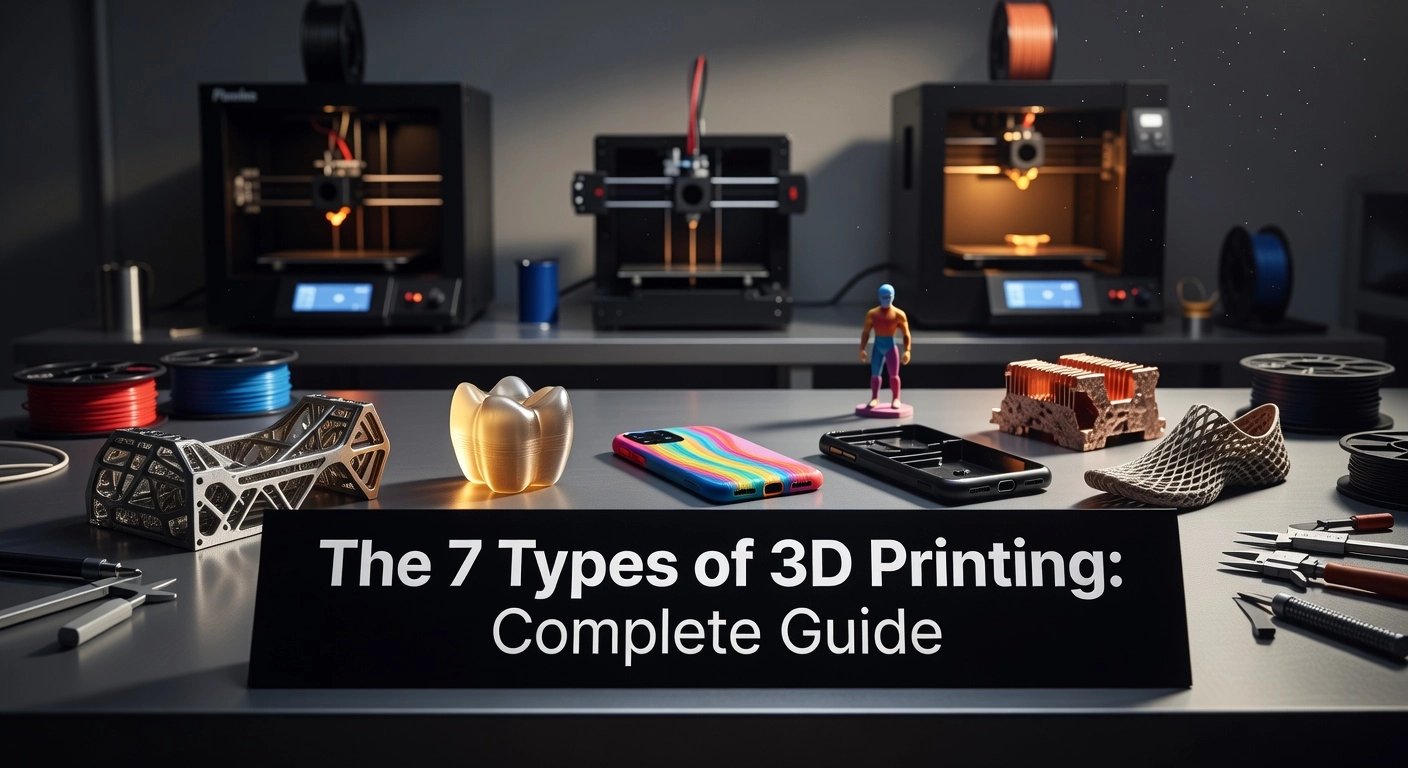
ASTM International’s F42 committee, via ISO/ASTM 52900, classifies AM into seven categories: vat photopolymerization, material extrusion, powder bed fusion, binder jetting, material jetting, directed energy deposition, and sheet lamination. These standards ensure quality, interoperability, and safety, forming the bedrock for scalable adoption. Additive manufacturing vs. subtractive manufacturing
The Seven ASTM Categories of AM Technologies
Additive manufacturing technologies, standardized by ASTM International in collaboration with ISO (ISO/ASTM 52900), are classified into seven distinct categories based on how materials are joined layer by layer. This framework provides clarity for engineers, manufacturers, and designers navigating 3D printing options, from desktop setups to industrial production. As the global AM market reaches $28.27 billion in 2026 with a projected CAGR of 20.3% through 2030, understanding these categories reveals opportunities for scalable applications, particularly in metals where accessibility drives adoption. For intermediate users, selecting the right process hinges on factors like material compatibility, resolution, cost, and post-processing needs. Wohlers Associates on the seven AM processes.
1. Vat Photopolymerization
Vat photopolymerization cures liquid photopolymer resin using UV light from lasers or projectors, creating layers as a build platform moves through the resin vat. Processes like Stereolithography (SLA) and Digital Light Processing (DLP) excel in high-detail prototypes with resolutions down to 25-50 micrometers, producing smooth, watertight surfaces ideal for dental models, jewelry, and microfluidic devices. Advantages include exceptional accuracy and speed for intricate small parts, but limitations arise from resin toxicity, brittleness, and the need for post-curing and washing, restricting use to non-functional prototypes. In 2026 trends, biocompatible resins advance personalized medicine, with AI optimizing cure patterns for 20% faster builds. Actionable insight: Pair with hybrid workflows for functional testing by combining with CNC finishing.
2. Material Extrusion
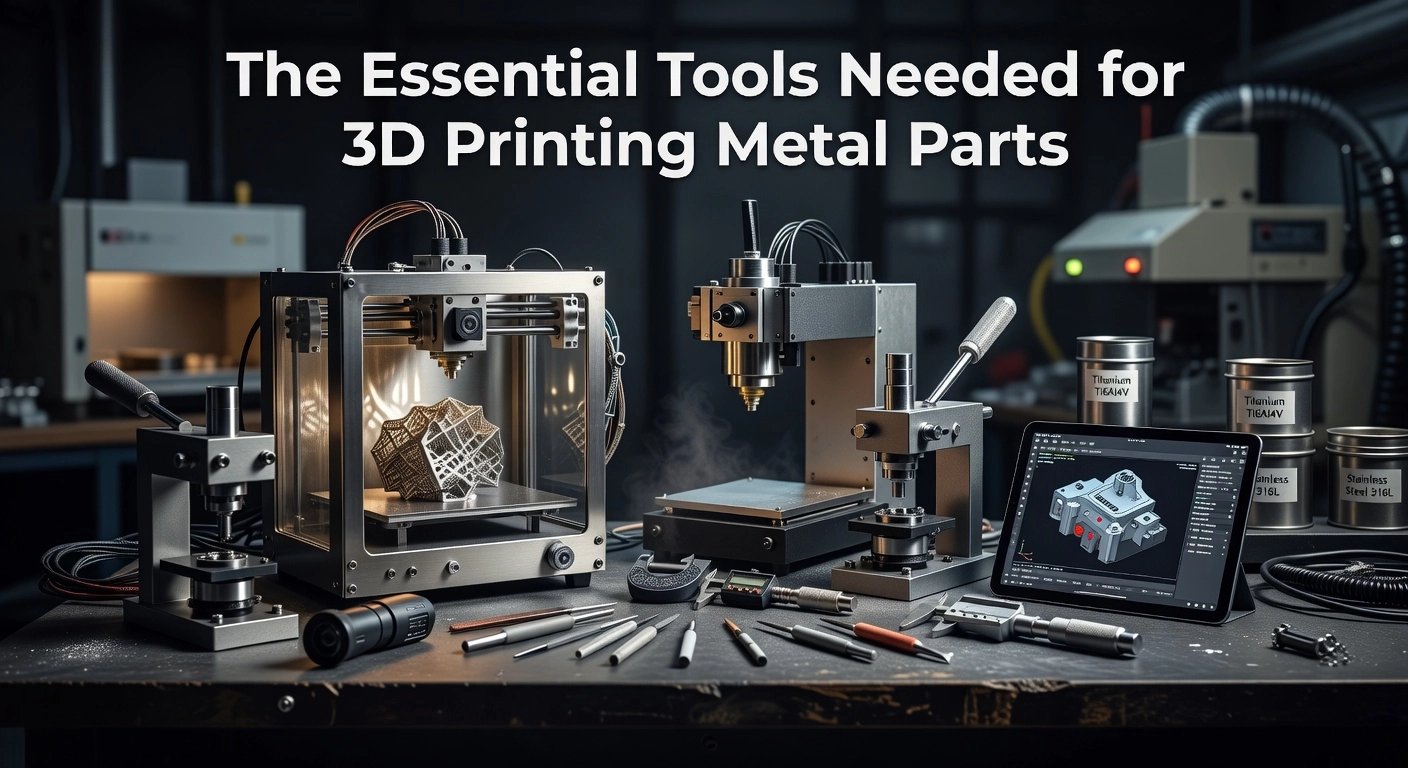
Material extrusion, including Fused Deposition Modeling (FDM) and Fused Filament Fabrication (FFF), deposits semi-molten filament through a heated nozzle, building parts layer by layer on standard desktop printers. The Virtual Foundry’s Filamet™ filaments, loaded with metal particles in PLA or ABS binders, enable printing pure metal parts like stainless steel 316L or titanium Ti6Al4V, followed by debinding and sintering to achieve 99% density without proprietary hardware. This democratizes metal 3D printing for hobbyists, artists, jewelers, and aerospace manufacturers, supporting applications from custom tools to nuclear components at low cost. Strengths lie in affordability and material variety, though layer lines and anisotropy require sintering for strength. Trends show 15-20% annual growth in metal filaments, fostering supply chain resilience. Altair on AM categories. Start with a Prusa printer and kiln for prototypes under $500.
3. Powder Bed Fusion
Powder bed fusion uses lasers or electron beams to fuse metal powders, such as Ti6Al4V or Inconel 718, layer by layer in an inert atmosphere. Selective Laser Melting (SLM) and Electron Beam Melting (EBM) produce aerospace turbine blades and implants with near-wrought properties and complex lattices, holding over 50% of the metal AM market. Benefits include recyclable powders and high strength, but high equipment costs, thermal stresses, and support structures demand expertise. Multi-laser systems now boost speeds fivefold for production.
4. Binder Jetting
Binder jetting deposits liquid binders onto powder beds via inkjet heads, forming “green” parts later sintered for density. It supports full-color sand molds or metal tooling, offering speed and no melting stresses, though 20% shrinkage and multi-step processing limit precision. Ideal for high-volume prototypes.
5. Material Jetting, Directed Energy Deposition, and Sheet Lamination
Material jetting drops and UV-cures photopolymers for multi-color medical models, providing top resolution but brittle results. Directed energy deposition (DED) melts wire or powder for large repairs like turbine blades, enabling multi-material gradients at lower costs via wire-fed variants, yet requiring post-machining. Sheet lamination bonds and cuts material sheets for low-cost architectural models, embedding sensors effectively, but struggles with internal complexities. Additive manufacturing market report. These processes suit niche hybrids, with 2026 AI integration enhancing scalability across AM technologies.
Deep Dive into Material Extrusion for Metals
Material extrusion for metals, a subset of fused deposition modeling (FDM) or fused filament fabrication (FFF), utilizes specialized filaments loaded with high concentrations of metal powders, typically 80-95% by mass, embedded in a thermoplastic binder like PLA or ABS. Users print “green” parts on standard desktop FDM printers equipped with hardened steel nozzles to withstand the abrasive material. These green parts, which initially hold shape through the binder, undergo debinding to remove the polymer and sintering to fuse metal particles, achieving densities of 80-100% of theoretical values depending on material and optimization. For instance, copper Filamet™ filaments reach 97-99% density post-sintering, while stainless steel variants hit 95-98%, enabling functional parts with mechanical properties rivaling traditionally manufactured components. This process scales designs layer by layer from CAD files, with printing parameters like 195-220°C nozzle temperatures, 20-40 mm/s speeds, and minimal cooling ensuring strong interlayer adhesion. Linear shrinkage of 12-20% necessitates upfront CAD scaling by 1.2-1.25x for accuracy.
Post-processing begins with thermal debinding in a programmable kiln, ramping slowly to 400-600°C with extended holds (e.g., 8 hours at 240°C) to burn out the binder without defects like cracking or blistering. Mass loss, around 10-20% of the green part weight, is monitored visually and by weight checks. Sintering follows in a high-temperature kiln under inert atmospheres like argon or hydrogen, with profiles tailored to metals: copper at 1050°C for 1-3 hours yields pure copper parts, while stainless steel 316L sinters at 1250-1350°C for similar durations, producing dense, machinable components. Supports and refractory packing prevent warping during the 14-20% shrinkage. Master metal sintering step-by-step guides from The Virtual Foundry provide precise profiles, ensuring success rates above 95% for users.
This approach excels in accessibility, leveraging affordable printers like Prusa MK4 or Creality Ender series, costing under $1,000, paired with off-the-shelf kilns for a total setup below $10,000, far from the $500,000+ required for powder bed fusion systems. No specialized enclosures, inert gas handling, or powder safety protocols are needed, opening metal additive manufacturing to hobbyists, jewelers, and small manufacturers.
The Virtual Foundry’s Filamet™ filaments lead with up to 95% metal loading across 14+ alloys, including tungsten for nuclear shielding, Inconel for aerospace brackets, and bronze for intricate jewelry lattices. Densities routinely exceed 95%, supporting applications from artistic sculptures to heat sinks with complex internal channels. Comprehensive Filamet Q&A details optimizations for these sectors.
Compared to powder methods, material extrusion offers 60-80% lower costs, an open ecosystem with community-shared profiles, and faster cycles (prints under 5 hours plus overnight sintering), versus proprietary barriers and high waste in powder systems. This positions it ideally for prototyping and low-volume production in maturing markets projected at $24.2B globally in 2025. Explore the 3D printing process.
2026 AM Market Growth and Statistics
The additive manufacturing technologies and 3D printing sector entered a phase of maturity in 2025, with global revenues reaching $24.2 billion, reflecting a 10.9% year-over-year increase according to the authoritative Wohlers Report 2026. This growth, though moderated from pre-pandemic highs above 20%, underscores a pivotal shift from prototyping dominance to production utilization, as printing services captured 48% of revenues at $11.6 billion. Analysts highlight rising capacity utilization, ROI focus, and regional dynamics, with Asia-Pacific surging 19.8% while the Americas grew 12.6%. For intermediate practitioners, this evolution signals opportunities in scalable workflows, particularly for metal AM accessible via standard FDM printers and filaments like Filamet™, enabling cost-effective entry into end-use production.
Global Market Projections
Forecasts for 2026 paint a robust picture. Coherent Market Insights projects the global market at $31.48 billion in 2026, expanding to $114.45 billion by 2033 at a compound annual growth rate (CAGR) of 24%. Hardware will lead with 59.3% share, driven by industrial printers (69.6%) and sectors like aerospace and automotive. An alternative outlook from Research and Markets estimates $28.27 billion in 2026, climbing to $59.27 billion by 2030 (CAGR 20.3%), fueled by rapid prototyping, lightweight components, and on-demand customization. These variances stem from scope differences, yet consensus emphasizes metals and composites as high-growth materials.
US Market and Aerospace Momentum
In the US, Nova One Advisor forecasts $8.20 billion in 2026, surging to $47.64 billion by 2035 (CAGR 21.9%), with hardware exceeding 65% share and metals accelerating. The aerospace segment exemplifies this, expanding from a $6.21 billion base in 2025 toward $7.5 billion in 2026 (CAGR 20.8%), per recent analyses. Complex geometries like fuel nozzles demand metal AM precision, boosting filament-based solutions that bypass expensive powder bed systems. Wohlers Q1 2026 update reinforces production shifts, advising investments in hybrid AM-CNC cells for supply chain resilience.
This trajectory positions accessible metal extrusion, as offered by The Virtual Foundry, to capture demand in aerospace, nuclear, and beyond. Manufacturers should prioritize sintering expertise and community-driven finishing to leverage these trends effectively.
Key 2026 Trends in Additive Manufacturing
Production Shift: Hybrids (AM + CNC) and Line Integration for Scalable Manufacturing
Additive manufacturing technologies have matured significantly by 2026, transitioning from prototyping to core production roles with global revenues hitting $24.2 billion in 2025 at 10.9% year-over-year growth, as detailed in the Wohlers Report 2026. Hybrid systems combining AM with CNC machining lead this shift, enabling precise layer-by-layer deposition followed by subtractive finishing for high-tolerance metal parts. Manufacturers achieve greater throughput by integrating these hybrids into production lines, supported by IoT sensors and digital threads for real-time traceability. For example, facilities expand capacity with multi-axis setups handling alloys like Inconel and tool steels, slashing lead times in aerospace and defense while boosting redundancy. Actionable insight: Invest in hybrid cells to cut costs by 30-50% on complex geometries, as line integration raises installed capacity utilization from under 20% to over 40%. This scalability positions AM as a strategic supply chain tool.
Metal AM Advances: Cheaper Filaments and Metals Outpacing Polymers
Metal additive manufacturing surges ahead in 2026, outpacing polymers with over 25% annual growth fueled by innovations like Cold Metal Fusion and affordable metal-loaded filaments. These processes use laser-fused powders or particle-infused plastics on standard FDM printers, yielding dense parts post-sintering without multimillion-dollar machines. The Virtual Foundry’s Filamet™ exemplifies this accessibility, allowing hobbyists and manufacturers to produce 80-100% pure metal components for jewelry, aerospace, and nuclear applications via simple debinding and kiln sintering. Market data shows metal segments dominating investments, with projections to $47.64 billion in the US by 2035 at 21.9% CAGR. Engineers benefit from reduced total cost of ownership under $20,000 per setup, enabling high-volume runs of intricate titanium or steel parts. Key takeaway: Adopt filament-based metal AM to democratize production, targeting sectors where polymers fall short in strength and heat resistance.
AI and Automation: Design Optimization, Swarm Printing, Easier Material Setups
AI transforms 2026 additive manufacturing by optimizing designs in real-time, generating lighter structures via generative tools and predicting failures with in-situ sensors. Swarm printing deploys robot teams for large-scale builds, sharing nozzles and cutters to accelerate metal architecture projects. Automation simplifies setups with tool-swapping systems and smarter slicers that simulate material behaviors for variable-density prints. This cuts trial-and-error by 70%, producing “born-qualified” parts ready for end-use. For intermediate users, integrate AI software with Filamet™ workflows to automate parameter tuning on Prusa or Creality printers. Result: Faster iteration and 10x efficiency gains in complex assemblies.
Multi-Material Printing: Engineering Filaments for Complex, Functional Parts
Multi-material capabilities mature in 2026, enabling gradients of rigid-flexible or conductive-structural properties in single prints using advanced engineering filaments. High-performance options like carbon-fiber composites and bio-derived polymers support functional parts for electronics and implants. Four-plus nozzle systems minimize waste, trickling to mid-range printers for seamless color-material shifts. The Virtual Foundry’s metal-glass-ceramic filaments expand this, fostering community-driven innovations in hybrid components. Practical step: Experiment with multi-filament profiles to create aerospace fixtures 50% lighter yet stronger.
Sustainability Focus: Waste Reduction in Accessible Desktop Metal Processes
Sustainability drives 2026 trends, with desktop metal AM achieving 96% material efficiency through recyclable powders and filaments, slashing CO2 emissions by 38% versus traditional casting. Processes like filament extrusion minimize scrap via precise deposition and circular recycling loops. The Virtual Foundry leads here, empowering users with low-waste Filamet™ for net-zero goals in distributed manufacturing. AI further reduces failed prints, while policy incentives boost adoption. Insight: Track cradle-to-gate metrics to certify sustainable parts, enhancing market resilience. These trends collectively propel AM toward indispensable, eco-efficient production.
Why Proprietary Metal AM Systems Have Struggled
Proprietary metal additive manufacturing systems, often priced at $100,000 or more, have encountered substantial barriers to widespread adoption, particularly among small and medium-sized enterprises (SMEs), hobbyists, and artists. Industrial-grade printers frequently exceed $300,000, with total ownership costs ballooning due to ancillary expenses like powder handling, inert gas systems, and facility modifications that can match the machine price. Metal powders alone cost $400 to $800 per kilogram for advanced alloys, while post-processing accounts for 30 to 50 percent of expenses, including sintering and machining. Maintenance downtime reaches 15 to 20 percent annually, with service contracts adding $50,000 to $100,000 yearly, and skilled labor shortages exacerbate the challenge, as technicians command salaries from $50,000 to $130,000. These factors result in payback periods longer than 24 months, rendering such systems uneconomical for resource-constrained users who turn to service bureaus or conventional methods instead.
Scalability Challenges and Overpromising in Proprietary Systems
Many proprietary metal AM platforms promised revolutionary production speeds and reliability but struggled to deliver at scale. Initial hype focused on high-throughput capabilities for applications like aerospace components and medical implants, yet real-world performance revealed mechanical glitches, inconsistent sintering, and build times far slower than traditional CNC machining. Support structures complicated designs, and variability in material density hindered repeatability, leading to high rejection rates in production environments. As economic pressures mounted in 2026, these gaps became evident, with systems failing to transition seamlessly from prototyping to volume manufacturing.
Vendor Lock-In Stifling Innovation
Closed ecosystems in proprietary hardware tie users to specific materials, software, and parameters, creating dependency that limits flexibility. Customers face restricted material options and cannot easily experiment with third-party alternatives, which 51 percent of users cite as a cost barrier. This lock-in suppresses community-driven innovation, as shared parameters, mods, and upgrades common in open platforms remain inaccessible. In contrast, open architectures foster alliances and rapid iteration, essential for long-term advancement in additive manufacturing technologies and 3D printing.
Exposed Flaws in a Maturing Market
The Wohlers Report 2026 underscores market maturity, valuing the global AM sector at $24.2 billion in 2025 with 10.9 percent year-over-year growth, a deceleration signaling execution over speculation. Proprietary metal systems show low utilization rates, particularly among SMEs, with service providers handling most volume due to underutilized in-house machines. Downtime and slow throughput lag behind hybrids like AM plus CNC, highlighting flaws in scalability amid shifting trends toward production integration.
Open systems, however, demonstrate enduring stability with over 10 years of refinement, earning average ratings of 4.3 out of 5 from 15,500 reviews across established platforms. This reliability empowers diverse users, paving the way for accessible metal printing solutions that prioritize community and affordability.
The Virtual Foundry’s Success Formula
For over a decade, The Virtual Foundry has established itself as a leader in additive manufacturing technologies and 3D printing by delivering reliable Filamet™ filaments to more than 3,000 customers worldwide. These users, ranging from individual hobbyists to research institutions, produce pure metal parts through a straightforward process of printing, debinding, and sintering. With 15,500 genuine reviews averaging 4.3 out of 5 stars, the company’s track record demonstrates consistent quality and user satisfaction. Filamet™ filaments, loaded with 60-92% metal by mass, enable standard FDM printers to output parts achieving 80-100% theoretical density post-processing. This longevity underscores a materials-focused strategy that prioritizes accessibility and repeatability in metal 3D printing.
Open FDM Compatibility: Democratizing Metal Printing Across Industries
The cornerstone of The Virtual Foundry’s approach lies in Filamet™’s seamless compatibility with open-architecture FDM printers from various manufacturers. Users equip a hardened steel nozzle (0.6-0.8mm) and standard slicer software to print intricate metal designs, eliminating the need for specialized hardware. This opens metal additive manufacturing to manufacturers creating conformal cooling inserts, jewelers crafting custom bronze jewelry, and designers prototyping functional components. Actionable benefits include up to 75% cost reductions in prototyping, lead times shortened from weeks to days, and 90% less material waste compared to traditional methods. Predictable shrinkage of 13-20% linear allows precise scaling via calibration coupons, ensuring tolerances as tight as ±0.3mm on 40mm features. Such versatility positions Filamet™ as a bridge from desktop experimentation to professional production.
Custom Filaments Driving Community Innovation
The Virtual Foundry fosters innovation through bespoke filaments like Basalt Moon Dust Filamet™, which simulates lunar regolith with 60-62% basalt loading and sinters to fully dense ceramics. These custom blends extend to piezoelectric ceramics, doped Molybdenum Telluride, and foundry sand, enabling applications in space research and advanced materials testing. A vibrant community shares results via dedicated forums and Discord channels, accelerating discoveries in short-run manufacturing. Users experiment with 3D pens for quick prototypes or full printers for complex geometries, all while maintaining PLA-like printability at 1.60-1.75g/cc density. This collaborative ecosystem not only spurs novel uses but also refines techniques through crowd-sourced sintering trials.
Expert Finishing Guidance for User Confidence
Comprehensive tutorials on debinding and sintering empower users with precise, heat-only protocols tailored to each filament. For instance, bronze requires debinding at 482°C for 4 hours followed by sintering at 885-1052°C for 5 hours in a programmable kiln with refractory ballast. Stainless steel and tool steel follow multi-stage ramps to 1232°C, minimizing distortion through wicking setters and gas flow control. Video resources and FAQs detail variables like hold times for larger parts, building confidence for repeatable outcomes. Direct support ensures quick resolutions, transforming novices into proficient metal printers.
High-End Sector Validation Without Barriers
Filamet™ excels in aerospace with Inconel 718 for lattice brackets and copper heat-spreaders achieving 38% mass reduction and 12°C lower thermal gradients. In nuclear applications, Rapid 3DShield™ Tungsten filament delivers lead-free radiation shielding equivalent to dense alloys, ideal for reactor cooling channels. These successes stem from open workflows that bypass multimillion-dollar setups, supporting hybrid FDM-CNC processes for R&D and production. As the global additive manufacturing market grows toward $35.79 billion by 2030 at over 20% CAGR, The Virtual Foundry’s formula of accessible materials, community support, and proven expertise ensures sustained leadership in democratizing metal 3D printing.
Real-World Applications and Case Examples
Jewelry Applications
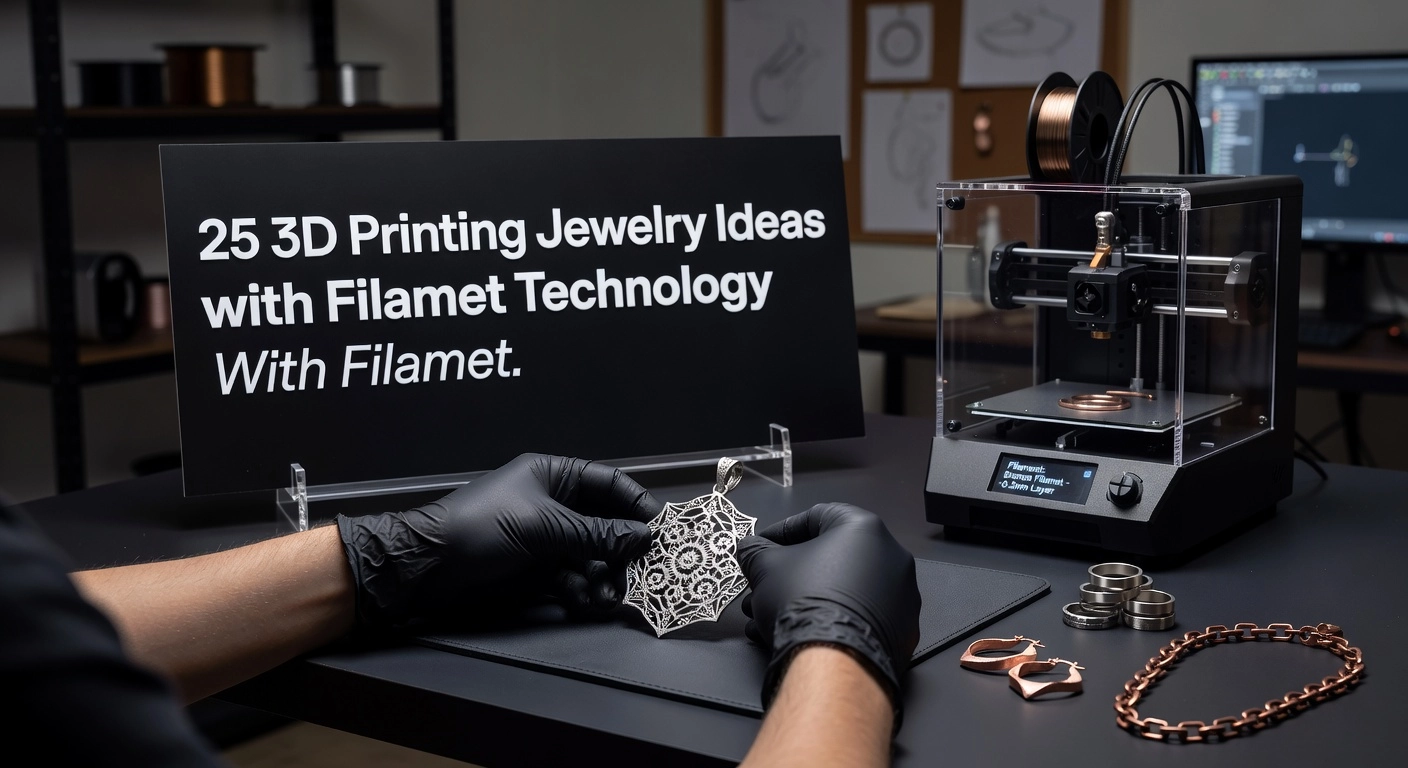
Additive manufacturing technologies and 3D printing have transformed jewelry design by enabling intricate lattices, filigree, and parametric structures unattainable through traditional casting. The Virtual Foundry’s Filamet™ filaments, loaded with high metal concentrations, allow standard FDM printers to produce green parts that, after debinding and sintering, yield high-density copper or bronze pieces with predictable 10-20% shrinkage. Jewelers achieve 99.9% pure copper finishes through tumbling, polishing, and selective patina application, minimizing material waste and prototyping time. For gold-like aesthetics, sintered composites mimic 18K alloys while offering corrosion resistance. A case in point is custom copper rings, iteratively prototyped for perfect ergonomics and uniquely patinated for bespoke appeal. Actionable insight: Start with scale models in slicing software to account for shrinkage, ensuring wearable precision on desktop setups.
Aerospace Prototyping
In aerospace, these technologies excel at creating lightweight prototypes with topology optimization, achieving 30-50% weight reductions in components like brackets and fuel nozzles. Filamet™ enables affordable metal extrusion for initial testing, sintering to titanium-equivalent densities without multimillion-dollar machines. This supports rapid iteration, cutting development cycles from months to weeks while enhancing fuel efficiency and reducing emissions by up to 525 megatons industry-wide. Certified parts demonstrate structural integrity under extreme conditions. For instance, lattice-infused designs maintain strength at 40% less mass. Designers should integrate hybrid workflows, combining printed prototypes with CNC finishing for flight-ready validation.
Art and Hobby Creations
Artists and hobbyists leverage conductive tungsten filaments from The Virtual Foundry to craft dense, detailed sculptures on consumer printers. These 75-92% tungsten-loaded PETG/PLA binders sinter to metal-like heft, ideal for kinetic pieces or radiation-shielded art. Conductivity enables embedded electronics, such as LED-lit models or interactive illusions. Community examples include counter-rotating chess sets and massive counterweights. Post-processing involves optional sintering for permanence. Tip: Use enclosed printers to handle high densities, fostering endless customization.
Nuclear Sector Innovations
Specialized composites via additive manufacturing produce radiation-resistant parts, like boron carbide-filled or tungsten-enhanced filaments for neutron shielding. The Virtual Foundry’s offerings withstand high pressures and gamma exposure in bioshields. A notable case printed 42-foot reactor columns with zigzag joints in 14 days, tolerating 20 psi concrete loads at 1/16-inch tolerances, slashing costs over steel molds. These enable lead-free, lightweight alternatives. Engineers recommend fiber-reinforced pellets for scalability.
Community-Driven User Stories
User feedback highlights rocket engines printed with metal filaments, hot-tested for monolithic designs, and piezoelectric sensors from PVDF composites for robotics. Community-shared aerospikes and bed sensors reduce EMI by over 100x, aiding gait recognition. These validate Filamet™ in extreme applications, with over 3,000 customers reporting success. Insights point to AM’s production maturity, projecting broader adoption by 2030.
The Virtual Foundry
Leading Additive Technology for Desktop Metal Fabrication
Filamet™ pushes FFF additive manufacturing into territory previously reserved for powder-bed and binder-jetting systems — at a fraction of the cost. 14+ alloys, 95%+ density, standard FDM hardware.
Conclusion: Actionable Takeaways
In summary, additive manufacturing technologies and 3D printing enthusiasts at the intermediate level can immediately leverage The Virtual Foundry’s Filamet™ filaments on standard FDM printers like Prusa or Creality models to experiment with metal parts. This approach yields near-pure metal components, achieving 80-100% density post-processing, ideal for prototyping in aerospace or artistic designs. Begin by loading Filamet™ into your existing setup; users report success with copper, bronze, and stainless steel variants for jewelry lattices or functional nuclear prototypes.
Next, adhere strictly to The Virtual Foundry’s debinding and sintering guides, which detail kiln-based binder burnout followed by high-temperature consolidation. These resources ensure optimal shrinkage compensation and part integrity, backed by over 3,000 customers’ real-world results.
Join The Virtual Foundry’s vibrant community to share prints, from intricate art sculptures to aerospace brackets, accelerating innovation through collective expertise.
Stay ahead by monitoring 2026 trends, such as AI-driven design optimization that enhances lattice structures and reduces material waste amid a market projected to reach $31.48 billion globally.
Finally, invest in this accessible technology to sidestep proprietary system vulnerabilities, future-proofing operations as AM matures with 24% CAGR through 2033.